Memory技术

Search documents
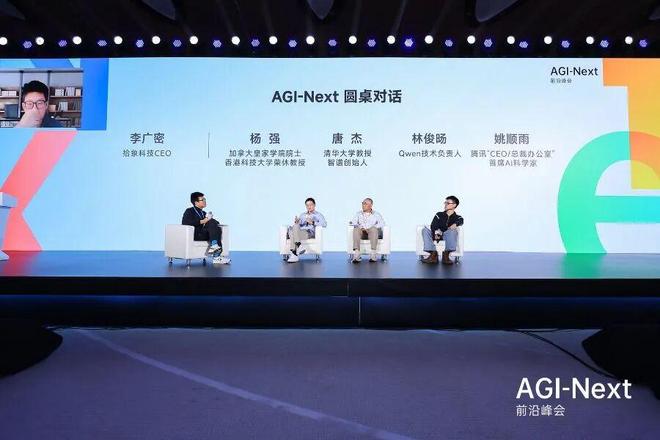
中国AI模型四巨头罕见同台发声
2 1 Shi Ji Jing Ji Bao Dao· 2026-01-11 06:39
Core Insights - The AGI-Next summit highlighted the challenges and opportunities for Chinese large model companies, featuring prominent figures in AI discussing new paradigms and advancements in technology [2][4]. Group 1: AI Market Dynamics - The Chinese large model market is showing significant differentiation between To C (consumer) and To B (business) segments, with distinct underlying logic for each [4]. - In the To C market, most users do not require high intelligence from models, leading to a trend of vertical integration where model and application layers are closely coupled for better user experience [4][5]. - Conversely, in the To B market, higher intelligence correlates with increased productivity and willingness to pay, creating a head effect where top models command higher subscription fees [5][6]. Group 2: Future AI Paradigms - The next generation of AI is expected to focus on context capture rather than just model parameter competition, emphasizing the importance of understanding user context for better responses [5]. - There is a belief that signals of autonomous learning will emerge by 2025, although current attempts lack the pre-training capabilities seen in leading companies like OpenAI [8]. - The potential for AI to evolve autonomously and act proactively is seen as a key feature of future paradigms, though it raises significant safety concerns [9]. Group 3: Technological Advancements - Memory technology is anticipated to develop linearly, with breakthroughs expected in the near future as algorithms and infrastructure improve [10]. - The gap between academia and industry in large model development is narrowing, with more academic institutions gaining access to computational resources, fostering innovation [11]. - The industry faces efficiency bottlenecks, with the need to achieve greater intelligence with less investment becoming a driving force for new paradigms [11]. Group 4: AI Agent Development - The evolution of AI Agents is seen as a critical change for the AI industry by 2026, moving from human-defined goals to AI autonomously defining objectives [13]. - The ability of AI Agents to address long-tail problems is highlighted as a significant value proposition for AGI [13]. - The commercialization of AI Agents faces challenges related to value, cost, and speed, necessitating a balance between solving real human issues and managing operational costs [14].