
Nigiro Challenge

Search documents
AI如何才能通过“终极考验”?让它重走人类来时的路
Guan Cha Zhe Wang· 2026-01-20 01:08
Core Idea - The article discusses the evolution of artificial intelligence (AI) and proposes a new testing framework called the "Nigiro Challenge" to evaluate AI's ability to understand and create language systems, drawing parallels with the historical development of writing and civilization [1][15][18]. Group 1: AI and Language Understanding - The Nigiro Challenge aims to assess whether AI can invent and systematize a writing system to record its civilization, similar to how humans developed writing [15][17]. - The challenge reflects on the limitations of the Turing Test, suggesting that it may not adequately measure true intelligence or understanding in AI [14][17]. - The article emphasizes the importance of social interaction in the development of intelligence, proposing that AI should demonstrate its capabilities through the creation of a unique writing system [15][18]. Group 2: Historical Context of Writing - The origins of writing are traced back to ancient practices such as tokens for counting and seals for confirming ownership, which laid the groundwork for the development of cuneiform writing [6][10]. - The emergence of cuneiform writing around 3500-3000 BCE is linked to the increasing complexity of society, necessitating a system for recording transactions and information [11][12]. - The article highlights that the development of writing was a collective human achievement, reflecting the growth of social complexity and the need for communication [11][18]. Group 3: AI Development and Challenges - The article discusses the evolution of tokenization in AI language models, from word-level to subword-level approaches, and the significance of the Transformer architecture in processing language [12][14]. - It raises philosophical questions about whether AI truly understands language or merely manipulates symbols based on statistical relationships [14][15]. - The Nigiro Challenge serves as a framework to explore the essence of intelligence, prompting a reevaluation of what constitutes understanding in both humans and AI [18].

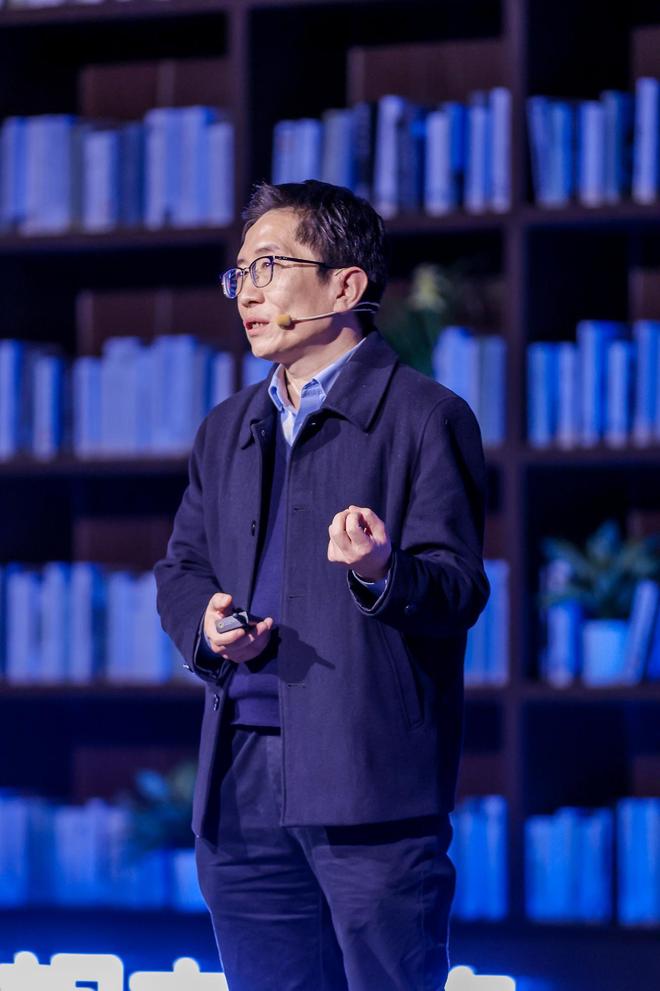
如何判断AI拥有能和人类相比的智能水平?王献华提出Nigiro Challenge
Xin Lang Cai Jing· 2026-01-18 04:04
Core Viewpoint - The article discusses the evolution of human intelligence through the invention of writing and introduces the "Nigiro Challenge" as a new test to evaluate whether artificial intelligence possesses true intelligence, questioning the validity of the Turing Test [1][2]. Group 1 - The invention of writing is highlighted as a significant milestone in the development of human intelligence within a social context [2]. - The "Nigiro Challenge" proposes a "social virtual character creation test" for general artificial intelligence, examining if AI can invent its own writing system through social interactions [3]. - If AI can create its own writing system, it may be considered a qualified member of human society, as the ability to independently invent writing is a tangible manifestation of civilization [3].
如何判断AI智能水平?图灵测试有问题,中国学者提出新方法
Guan Cha Zhe Wang· 2026-01-18 03:24
Core Idea - The article discusses the evolution of human intelligence through the invention of writing and introduces the "Nigiro Challenge" as a new test to evaluate whether artificial intelligence possesses true intelligence, questioning the validity of the Turing Test [1][2]. Group 1: Turing Test Reflection - The Turing Test, proposed by Alan Turing in 1950, suggests that if a machine's behavior is indistinguishable from that of a human in a text-based conversation, it can be considered intelligent [1]. - Concerns have been raised about the Turing Test's effectiveness, with some scholars suggesting it merely reflects the questioner's intelligence rather than the machine's capabilities [1]. Group 2: Nigiro Challenge Proposal - The Nigiro Challenge is a proposed test that examines whether artificial intelligence can develop its own writing system through social interactions with other intelligent agents [3]. - If AI can independently create a writing system, it may be recognized as a "qualified member" of human society, indicating a level of intelligence similar to that of humans [3].