Omnichannel retail

Search documents
Carter's Retail Momentum Builds: Can Comparable Sales Stay Strong?
ZACKS· 2026-03-13 17:55
Core Insights - Carter's, Inc. (CRI) is experiencing positive momentum in its retail business, driven by improving consumer demand and enhanced engagement across physical and digital platforms [1][4] - The company's strategy focuses on strengthening brand appeal, introducing new products, and investing in demand creation initiatives to attract new customers [1][4] Retail Performance - In Q4 2025, Carter's retail segment saw net sales increase by 9.4% year over year, with comparable sales rising by 4.7%, marking the third consecutive quarter of positive comps [2][9] - The growth was fueled by strong e-commerce traffic, broad demand across baby, toddler, and kids' categories, and higher average unit retail prices [2][9] - The baby category continued to show strength, achieving its sixth consecutive quarter of growth, indicating resilient demand for core products [2] Digital and Omnichannel Strategy - Carter's is enhancing its digital and omnichannel capabilities, which are crucial for retail momentum [3] - Investments are being made to connect physical stores with the e-commerce platform, allowing for a seamless shopping experience [3] - The company is improving its website experience, utilizing targeted digital marketing, and integrating store and online inventory to create a more connected shopping journey [3] Future Outlook - Carter's anticipates its retail business will remain a key growth driver, supported by ongoing investments in marketing, product innovation, and digital capabilities [4] - Management aims to attract higher-income consumers and reduce promotional activities to enhance pricing power [4] - Despite challenges such as tariffs and cost pressures, sustained traffic growth and an improved product mix could help maintain positive comparable sales [4] Valuation and Market Performance - Carter's shares have increased by 7.5% over the past three months, contrasting with a 17.6% decline in the industry [7] - The company trades at a forward price-to-earnings ratio of 11.69X, significantly lower than the industry average of 22.39X [10]



Reliance Retail acquires beauty brand Pahadi Local
Yahoo Finance· 2026-03-10 10:10
Group 1 - Reliance Retail has acquired the Pahadi Local brand from Pahadi Goodness Private Limited, enhancing its presence in India's beauty and wellness market [1] - Pahadi Local focuses on nature-led formulations inspired by Himalayan ingredients, combining traditional wellness practices with modern formulation science [1][2] - The founding team of Pahadi Local will continue to guide the brand's creative direction and product development post-acquisition [2] Group 2 - Reliance Retail plans to expand Pahadi Local's reach through its omnichannel retail system, including physical stores and digital commerce [2] - The brand collaborates with women-led self-help groups in Ladakh and Himachal Pradesh, supporting local livelihoods and initiatives in healthcare, education, and environmental preservation [3] - Apricot kernel oil is highlighted as a key ingredient for Pahadi Local, recognized for its value in the industry and among consumers [3] Group 3 - Isha Ambani, executive director of Reliance Retail, emphasized the importance of authenticity and innovation in curating brands, positioning Pahadi Local as a valuable addition to their beauty ecosystem [4] - The acquisition aligns with Reliance Retail's strategy of investing in scalable Indian brands across beauty, wellness, fashion, and lifestyle sectors [4]
Target's $2B Investment Drives Store Upgrades & Digital Momentum
ZACKS· 2026-03-09 17:35
Core Insights - Target Corporation (TGT) is planning to invest over $2 billion in 2026 to enhance its physical and digital capabilities, aiming to improve customer experience and drive profitable growth after a challenging retail environment [1][9] Investment Strategy - A significant portion of the investment, approximately $1 billion, will be directed towards store expansion and remodeling, including the opening of more than 30 new stores and completing 130 full-store remodels to enhance the in-store experience [2] - The company is also focusing on technology investments, particularly in AI-driven personalization and digital tools, to improve customer and employee experiences [3] Omnichannel Approach - Target's stores play a crucial role in its omnichannel model, with nearly 97% of sales fulfilled through stores, which serve as hubs for services like Drive Up, order pickup, and same-day delivery [4] Sales Growth Expectations - Management anticipates low-single-digit sales growth in 2026, with potential acceleration to low to mid-single-digit growth over time, supported by technology investments and store upgrades [5] Stock Performance and Valuation - TGT stock has increased by 28.9% over the past three months, outperforming the industry growth of 12% [6] - The forward 12-month price-to-earnings ratio for TGT is 15.10, which is lower than the industry average of 33.31, indicating a favorable valuation [8] Earnings Estimates - The Zacks Consensus Estimate for TGT's fiscal 2026 earnings suggests a year-over-year growth of 4.9%, with a projected growth of 7.5% for fiscal 2027 [10]

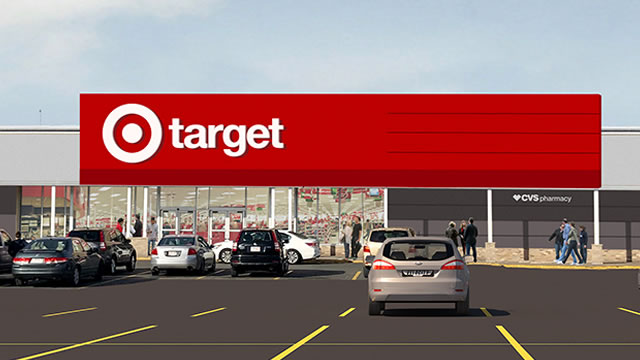
Amazon to open its largest-ever retail store with massive big-box location planned in Chicago suburbs
New York Post· 2026-01-22 21:50
Core Insights - Amazon is planning to open its largest retail store in Orland Park, Chicago, covering 230,000 square feet, with a potential opening next year [1][5][12] - The store will feature a division between retail and fulfillment areas, with separate entrances for online order pickups and third-party delivery drivers [2][6] - Despite dominating e-commerce, Amazon aims to capture the in-store shopping market, which still accounts for over 80% of U.S. retail sales [3][5][8] Store Details - The new store will be located on a 35-acre plot and will include a mix of groceries, general merchandise, and prepared food [1][5] - The fulfillment section will operate independently from the retail space, allowing for efficient online order assembly [2][6] Community Impact - The project is seen as a significant commercial investment for Orland Park, with potential to generate substantial sales tax revenue for the community [9][8] - The local government has approved the project without providing financial incentives to Amazon [11]

WMT Sees Broad-Based Digital Gains: Is the 20%+ Growth Sustainable?
ZACKS· 2026-01-20 14:40
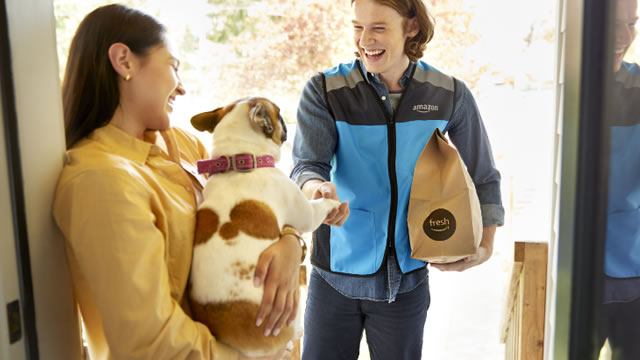
Core Insights - Walmart Inc.'s third-quarter performance showcased strong digital momentum, with global e-commerce sales increasing by 27% year over year [1][9] Walmart U.S. Performance - E-commerce sales in Walmart U.S. grew by 28%, driven by strong store-fulfilled pickup and delivery, marketplace expansion, and advertising [2][9] - Approximately 35% of store-fulfilled digital orders were delivered in under three hours, with sales through expedited delivery channels rising nearly 70% [2] Sam's Club Performance - Sam's Club U.S. experienced a 22% growth in e-commerce, supported by the adoption of digital tools like Scan & Go, curbside pickup, and delivery [3] - Scan & Go penetration reached 36%, an increase of 450 basis points year over year, while club-fulfilled delivery saw triple-digit growth [3] Walmart International Performance - E-commerce sales in Walmart International advanced by 26%, with strong performance in marketplace and store-fulfilled pickup and delivery across various markets, including China and Flipkart [4] - Nearly one-third of Walmart's international business is now digital, indicating the scale of its global digital operations [4] Digital Trends and Future Outlook - The trends of faster delivery, expanding marketplace, and deeper advertising integration suggest that digital growth is becoming integral to shopping behavior [5] - The sustainability of Walmart's e-commerce growth, exceeding 20%, will depend on its ability to efficiently scale its omnichannel platform across markets and formats [5] Competitor Insights - Costco reported a 20.5% increase in digitally enabled comparable sales, reflecting member engagement with digital tools [6] - Target's digital comparable sales rose by 2.4%, driven by same-day delivery growth of over 35%, indicating the importance of same-day fulfillment for sustaining digital momentum [7] Stock Performance and Valuation - Walmart's shares have risen by 28.6% over the past year, outperforming the industry's growth of 27.7% [8] - The company trades at a forward price-to-earnings ratio of 40.63, higher than the industry average of 36.81 [10]

Pardon the Disruption: What’s Amazon’s future running grocery stores?
Yahoo Finance· 2026-01-20 11:00
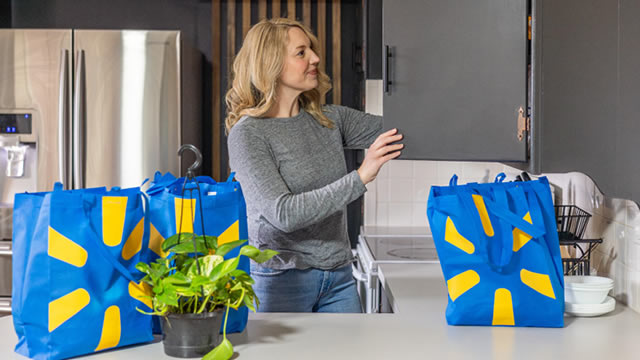
Core Insights - Amazon Fresh faces a critical decision: either scale the brand through deeper adjustments or discontinue it to allocate resources more effectively [1][2][3] Group 1: Current State of Amazon Fresh - Amazon Fresh has approximately 50 locations and is perceived as underwhelming compared to competitors, lacking significant differentiation beyond its smart cart technology [2][3] - The grocery sector remains challenging for Amazon, as most consumers still prefer traditional food retail outlets, necessitating a physical presence for success [3][4] - Amazon's history with physical retail has been mixed, with various ventures launched and closed, indicating a struggle to establish a strong foothold in the grocery market [5][6] Group 2: Innovations and Strategies - In 2025, Amazon focused on e-commerce innovations, particularly enhancing its same-day delivery service for perishables across over 2,000 locations, breaking down barriers between its marketplace and grocery business [7][8] - The same-day perishables service has reportedly exceeded expectations, with indications that customers are responding positively to the ability to add fresh items to their orders without high delivery fees [9][11] - Building consumer trust in the online grocery shopping experience remains a challenge, as many shoppers prefer to select their produce in-store [12][13] Group 3: Future Directions - If Amazon successfully establishes itself as a trusted online grocery provider, it may not need to maintain physical Amazon Fresh stores, with speculation that the company could phase them out by 2026 [14] - Amazon's upcoming big-box store is expected to focus on e-commerce fulfillment, potentially dedicating more space to warehousing than traditional retail, which could enhance its logistics capabilities [18][20] - The company is exploring how physical stores can integrate with its online ecosystem, indicating a long-term strategy to enhance its omnichannel presence [21][20]
Walmart Stock Hits 52-Week High: Should You Stay Invested?
ZACKS· 2026-01-14 13:41
Core Insights - Walmart Inc. reached a new 52-week high of $120.51, closing at $120.36, indicating strong investor interest and confidence in its business model and resilience in a challenging retail environment [1][8] Performance Summary - Over the past six months, Walmart shares increased by 26.2%, outperforming the industry growth of 21.3%, the Zacks Retail – Wholesale sector's gain of 8.7%, and the S&P 500's advance of 14.8% [2] - Compared to key peers, Walmart's performance is notable, with The Kroger Co. rising 6.3%, while Costco and Target saw declines of 2.8% and 14.5%, respectively [2] Drivers of Stock Rally - Walmart's stock strength is attributed to consistent execution and strategic investments, particularly its everyday low-price strategy, which appeals to value-focused consumers [4] - E-commerce growth is a significant driver, with Walmart enhancing delivery options and integrating digital capabilities with its physical stores [5] - Higher-margin businesses, such as Walmart Connect and Sam's Club memberships, are contributing positively to earnings and customer retention [6] Long-Term Growth Strategy - Ongoing investments in technology, automation, and supply-chain efficiency are aimed at enhancing long-term productivity [9] - International operations and marketplace expansion are expected to provide additional growth opportunities, with a focus on markets with visible returns [10] Near-Term Challenges - Consumer spending remains cautious, with a shift towards essentials impacting profitability in discretionary categories [11] - Cost pressures from investments in wages and technology are a concern, although improvements in automation and supply-chain efficiency are anticipated to mitigate these costs over time [12] Earnings Estimates - Recent upward revisions in earnings estimates for fiscal years 2026 and 2027 reflect steady analyst expectations despite a mixed operating environment [13] Valuation Insights - Walmart currently trades at a forward price-to-earnings multiple of 41.02, above the industry average of 36.31, indicating that a significant portion of positive outlooks may already be priced in [14] - Compared to peers, Walmart's valuation is higher than Target and Kroger, which trade at 14.09 and 11.68, respectively, while Costco has a higher premium at 45.32 [14] Investment Strategy - The stock's recent performance and premium valuation suggest that investors may consider maintaining positions while looking for clearer signals on margin improvement and growth opportunities [16]
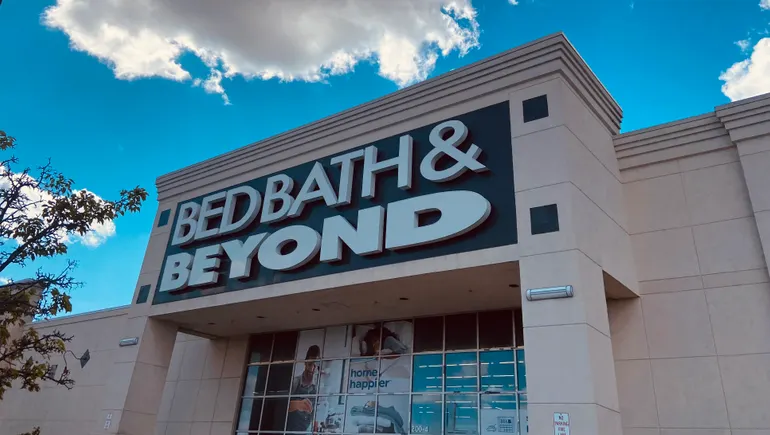
Bed Bath & Beyond operating chief out as Marcus Lemonis takes on CEO role
Retail Dive· 2026-01-05 17:30
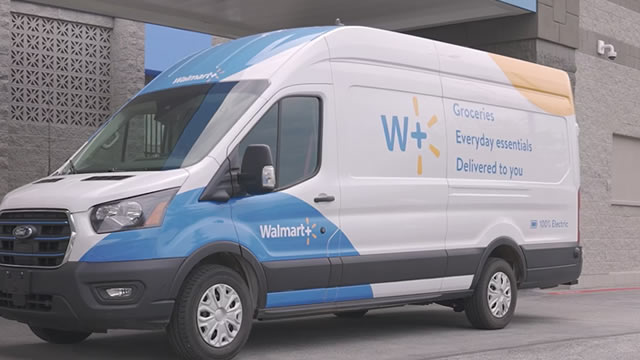
Core Insights - Bed Bath & Beyond is implementing a new business strategy alongside C-suite changes, with Marcus Lemonis expanding his role to include CEO [2][9] - The company's strategy focuses on moving beyond traditional retail, emphasizing home ownership and making related services more accessible [3][4] Strategy Overview - The strategy is built on three pillars: omnichannel retail and commerce; digital, financial, insurance, and blockchain services; and an AI-powered home operating system [4][5] - The first pillar involves an asset-light model and international licensing, utilizing AI for services like home warranties and insurance [5] - The second pillar focuses on financial tools and mortgage-related solutions, addressing key financial moments in the home lifecycle [6] Acquisition and Leadership Changes - The company is nearing the completion of its acquisition of The Brand House Collective, with its CEO set to lead a new division [7] - Lemonis indicated plans for further acquisitions and investments to fill category gaps and enhance business synergies [8] Company Philosophy - The company aims to rebuild rather than simply turn around, prioritizing trust, disciplined capital deployment, and affordability over short-term margins [8]
7 Reasons to Buy WMT Stock Like There's No Tomorrow
The Motley Fool· 2026-01-01 18:00
Core Viewpoint - Walmart is positioned as a strong investment opportunity due to its robust growth, strategic execution, and expansion into various sectors, outperforming the S&P 500 both year-to-date and over the past five years [1][2]. Group 1: Financial Performance and Market Position - Walmart's stock has increased over 24% year-to-date, indicating strong market performance [1]. - The company is trading at a forward price-to-earnings ratio of over 36, nearing its 52-week high of $117, yet still presents growth potential [2]. - Walmart's market capitalization stands at $888 billion, with a current stock price of $111.45 [8]. Group 2: E-commerce and Advertising Growth - Walmart's e-commerce business has shown impressive growth, with a 27% increase in the latest quarter, leveraging its physical stores as distribution hubs [5]. - The advertising segment, Walmart Connect, has grown by 33% in the U.S. and is expected to become a significant profit center, similar to Amazon Ads [6]. Group 3: Grocery and Essentials Dominance - Over 50% of Walmart's revenue is derived from its grocery business, which generated more than $276 billion in sales in fiscal 2025, making it the largest grocery seller in the U.S. [7]. - The grocery segment remains resilient, particularly during inflationary periods, driving consistent customer traffic [4]. Group 4: Global Expansion and Diversification - Walmart operates over 3,000 stores in Mexico and 400 in Canada, and holds a majority stake in India's Flipkart, which may go public soon, enhancing shareholder value [8]. - The company is expanding into high-margin sectors such as healthcare and financial services, creating new revenue streams [9]. Group 5: Operational Excellence - Walmart has a history of raising dividends for over 50 consecutive years and reported a free cash flow of $8.8 billion in its latest earnings report, showcasing strong operational cash flow [12]. - The company is recognized for its effective management and execution of strategic plans, evolving into an ecosystem beyond traditional retail [13].
AutoZone Stock in Focus: How Strong Is Its Setup Heading Into 2026?
ZACKS· 2025-12-30 15:55
Core Insights - AutoZone, Inc. (AZO) is a leading specialty retailer and distributor of automotive replacement parts and accessories in the U.S., benefiting from strong DIY and commercial business performance as well as omnichannel strategies [2] Financial Performance - AutoZone reported record sales for 36 consecutive years, with Q1 fiscal 2026 revenues of $4.6 billion, reflecting an 8.2% year-over-year increase [3] - The company anticipates continued growth in fiscal 2026, driven by strong performance in DIY and commercial sectors [3] Expansion Strategies - AutoZone is expanding its market penetration through the rollout of mega hubs, with 137 locations established by the end of Q1 fiscal 2026, aiming for over 200 mega hubs [4] - The company plans to open 350 to 360 new stores in fiscal 2026, compared to 304 net new stores in fiscal 2025, with a focus on international markets like Mexico and Brazil [5] Omnichannel Efforts - The company's omnichannel initiatives, including next-day shipping and in-store pickup, are enhancing customer experience and driving online traffic [6] - A transformation of the distribution network aims to improve inventory availability and delivery speed [6] Share Repurchase Program - AutoZone's robust share buyback program saw $1.5 billion in shares repurchased in fiscal 2025 and $431.1 million in Q1 fiscal 2026, with over $1.7 billion remaining under its repurchase authorization [7] Capital Expenditures and Debt - The company plans to increase capital expenditures from $1.4 billion in fiscal 2025 to $1.6 billion in fiscal 2026, focusing on technology investments and store expansion [8] - AutoZone's total debt-to-capital ratio stands at 1.63, significantly higher than the industry average of 0.90, indicating high leverage [10] Margin Pressures - A noncash LIFO accounting charge of $98 million impacted gross margin, operating profit, and earnings per share in Q1 fiscal 2026, with expectations of additional charges of about $60 million for the next three quarters [11]