RWAFi

Search documents
巴曙松:探索新的环境下资本市场的结构性融合趋势
Xin Lang Cai Jing· 2025-12-22 10:07
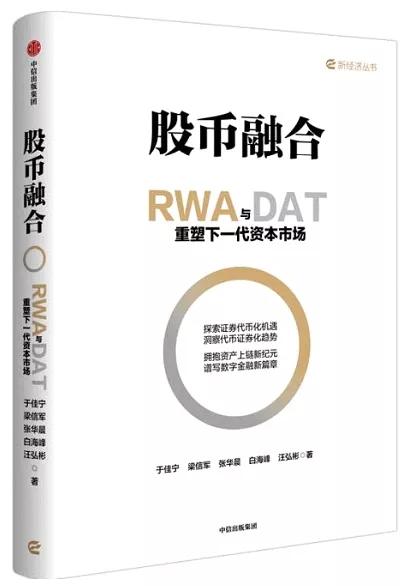
Core Insights - The article discusses the structural transformation of global capital markets, highlighting the convergence of traditional financial systems and blockchain-based digital asset markets, leading to the formation of a new generation of capital market architecture [1][2]. Group 1: Market Evolution - Capital markets have undergone several paradigm shifts, with technological advancements driving changes in asset definition and recording, moving from reliance on specific national registries to a global distributed ledger [2]. - The current fourth paradigm evolution is characterized by the ability to standardize, segment, and exchange various asset types, including stocks, bonds, and native digital assets, on a programmable protocol layer [2][3]. Group 2: Driving Forces of Convergence - The convergence process is driven by technological innovations and market practices, such as the tokenization of Real World Assets (RWA) under regulatory compliance, which enhances liquidity and combinability of traditional financial instruments [3]. - Compliant digital asset financial products, like Bitcoin ETFs, provide institutional pathways for native digital assets to enter mainstream investment portfolios [3]. - Stablecoins have established a near-real-time payment and settlement network globally, serving as critical infrastructure for the new market [3][4]. Group 3: Bidirectional Interaction - The integration is not one-sided; traditional securities are exploring issuance and trading on decentralized systems, while native digital assets are being integrated into traditional financial frameworks through compliant pathways [3]. - Companies are beginning to include cryptocurrencies like Bitcoin and stablecoins in their balance sheets, raising new questions for traditional corporate valuation models [3]. Group 4: Liquidity and Governance Changes - Stablecoins act as a "digital cash layer" connecting fiat and crypto assets, enabling near-real-time cross-border capital allocation and altering the traditional financial market's segmented structure [4]. - Decentralized Autonomous Organizations (DAOs) and on-chain voting mechanisms are transforming static shareholder registries into dynamic governance participation maps, prompting new considerations for corporate boundaries and regulatory frameworks [4]. Group 5: Regulatory Developments - Recent advancements in regulatory frameworks across major financial jurisdictions are pushing the convergence trend to a critical point, reducing compliance uncertainties for institutional investors [5][6]. - The U.S. Congress passed several significant acts in 2025, providing clearer institutional frameworks for the definition, issuance, and trading of digital assets, which facilitates the transition to a next-generation market structure [6]. Group 6: Analytical Framework - The book "Stock-Coin Convergence: RWA and DAT Reshaping the Next Generation Capital Market" aims to provide a systematic analysis framework for the changes in the financial sector, covering technology, market, and policy dimensions [8]. - It explores the historical context of digital assets entering traditional finance and the mechanisms of core elements like digital currency ETFs, RWA tokenization, and stablecoins [8][9]. Group 7: Future Perspectives - The book emphasizes the need for a clear analytical tool for policymakers, financial practitioners, and investors to navigate the profound changes in capital markets [8]. - It presents a dual narrative approach, discussing both "tokenization of securities" and "securitization of tokens" as two sides of the same coin, while embedding numerous case studies and interviews to provide a comprehensive understanding of market dynamics [9].