
Risk-off sentiment

Search documents
X @CoinDesk
CoinDesk· 2026-03-31 14:48
MACRO: U.S. gas prices hit $4/gallon, up 35% since the Iran conflict began.Risk-off sentiment is growing as markets react to higher energy costs and uncertainty. https://t.co/pNtJv1bST6 ...
Market Retreats as Volatility Spikes: Tech Leads Sell-Off While Commodities Surge
Stock Market News· 2026-03-27 16:07
Market Overview - U.S. equity markets are experiencing a significant pullback, with a "risk-off" sentiment prevailing on Wall Street as investors rotate out of high-growth sectors into traditional safe havens [1] - The CBOE Volatility Index (VIX) has surged over 5% to reach 28.89, indicating increased market anxiety as the first quarter concludes [1] Major Index Performance - The Nasdaq Composite (^IXIC) is leading the decline, down 248.10 points, or 1.16%, trading at 21,159.98 [2] - The S&P 500 (^GSPC) has fallen 0.84% to 6,422.56, while the Dow Jones Industrial Average (^DJI) is down 447.68 points, or 0.97%, currently at 45,512.43 [2] Small-Cap and Treasury Yields - Small-cap stocks, represented by the Russell 2000 (^RUT), are also declining, down 0.59% [3] - The 30-Year Treasury Yield (^TYX) has increased to 4.949%, reflecting concerns about long-term interest rates [3] Commodities and Safe Havens - Commodities are experiencing significant gains, with Gold Futures (GC=F) up 3.26% to $4,552.70 and Silver (SLV) gaining 5.50% [4] - The energy sector shows strength, with Crude Oil Futures (CL=F) rising 3.65% to $97.93 per barrel, contributing to bearish sentiment in the broader market [5] Corporate Earnings and Stock Performance - Carnival Corporation (CCL) reported an estimated EPS of $0.18 for Q1 2026, highlighting the health of the travel and leisure sector [6] - Major tech stocks, including Nvidia (NVDA), Apple (AAPL), Microsoft (MSFT), and Alphabet (GOOGL), are under selling pressure as investors shift away from AI-driven tech [6] Speculative Moves in Micro-Cap Stocks - Several micro-cap stocks, such as Artelo Biosciences Inc. (ARTL) and Onconetix Inc. (ONCO), saw significant speculative gains of 149.8% and 83.2%, respectively, though these moves are isolated from the broader market trend [7] Upcoming Market Events - Investors are looking ahead to major earnings reports, including Nike Inc. (NKE) on March 31st, which will be closely monitored as a bellwether for global consumer health [8] - Upcoming economic data regarding inflation and manufacturing activity is anticipated to influence Federal Reserve policy decisions [9]



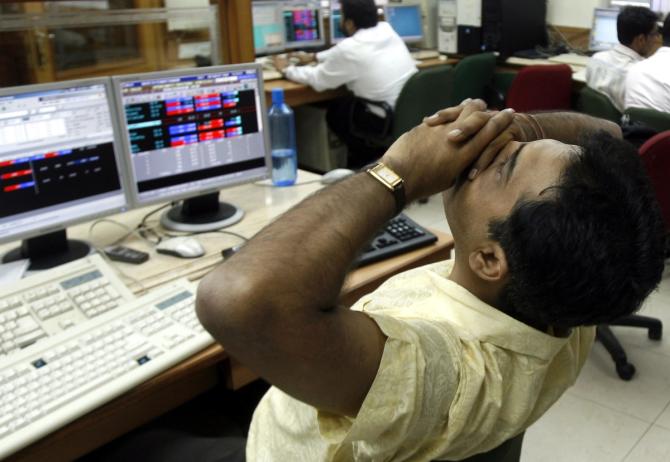
Stock Market Crash: ₹4 Lakh Crore Wiped Out as Sensex Falls 800 Points, Nifty Near 23,000
Rediff· 2026-03-27 05:41
Market Overview - Indian stock markets, including Sensex and Nifty, experienced a significant decline due to the ongoing US-Iran conflict, rising crude oil prices, and persistent foreign fund outflows, leading to a risk-averse environment [1][3][6] - The BSE Sensex fell by 926.92 points to 74,346.53, while the NSE Nifty dropped by 280.95 points to 23,025.50 in early trade [4][6] Geopolitical and Economic Factors - The US-Iran conflict remains a critical concern, with geopolitical tensions contributing to a risk-off sentiment among investors [6][11] - Crude oil prices have surged above $100 per barrel, intensifying inflationary pressures in India, which heavily relies on crude imports [6][10][11] - Foreign Institutional Investors (FIIs) have been offloading equities, with a reported outflow of Rs 1,805.37 crore, while Domestic Institutional Investors (DIIs) purchased stocks worth Rs 5,429.78 crore [12] Global Market Trends - Global markets are increasingly sensitive to geopolitical developments, with the US markets experiencing sharp declines, including a 2.4% drop in the Nasdaq Composite, marking a correction territory [8][9] - The Dow Jones fell over 400 points, and the S&P 500 dropped 1.7%, indicating a broader market downturn influenced by macro risks [8][9] Sector Performance - Among the 30-Sensex firms, major laggards included Bajaj Finance, Larsen & Toubro, and Reliance Industries, while gainers included Tata Consultancy Services and HCL Tech [7]

Gold and Silver Wipe Out $2 Trillion on Monday Market Opening, Will Bitcoin and Crypto Follow?
Yahoo Finance· 2026-03-23 11:02
Core Insights - Gold and Silver experienced a significant market crash, losing over $2 trillion in market value within hours due to geopolitical tensions [1][6] - Both metals officially entered bear markets, with Gold and Silver prices dropping nearly 10% and more than 22% from their all-time highs respectively [2][5] Market Performance - Gold prices fell by 5-7% in recent sessions, with weekly losses around 10%, marking the largest decline since 2011 [2] - Silver performed worse, dropping over 14% for the week and briefly falling below crucial support levels of $69-$80 per ounce [5] Contributing Factors - The crash was driven by profit-taking, institutional liquidation, and a stronger US dollar, leading to a total market capitalization loss of $2 trillion for Gold and Silver [6] - Analysts identified rising treasury yields as a key factor, increasing the opportunity cost of holding non-yielding commodities like Gold and Silver, which prompted margin calls and forced selling [7] Market Behavior - Despite ongoing conflicts involving the U.S., Israel, and Iran, Gold did not rally as expected and instead moved in correlation with risk assets, resembling equity behavior rather than its traditional role as a safe-haven asset [8]
Bears Eye Next Leg Lower as Energy Shock, Trump Ultimatum Roil Markets
Investing· 2026-03-23 08:56
Market Overview - Asian stocks experienced a decline, with Japan, South Korea, and India showing significant losses due to heightened fears of a US-Israel escalation with Iran following President Trump's ultimatum [1] - Gold prices plummeted by 7.5%, erasing all gains made in 2026, as the Iran crisis and concerns over interest rates diminished demand for bullion [1] - Oil prices rose amid volatility, remaining near recent highs after Trump issued a 48-hour ultimatum to Iran regarding the reopening of the Strait of Hormuz [1] - Bitcoin fell below $68,000 as fears related to Iran triggered a broader risk-off sentiment in the market [1] - Copper prices dropped to a three-month low, reflecting diminished risk appetite due to the ongoing Middle East conflict, raising concerns about growth and inflation [1] Economic Impact - The conflict has disrupted shipments of essential commodities, including petrochemicals, fertilizers, sulfur, and helium, which could lead to serious global economic repercussions [2] - Major US indexes saw significant declines, with the Nasdaq, S&P 500, and Dow dropping approximately 2.0%, 1.5%, and 1.0% respectively, marking a fourth consecutive weekly loss as oil futures surged [3] - Investors are closely monitoring upcoming economic data, including consumer sentiment reports and import price indices, for indications of public reaction to the Middle East conflict and its impact on inflation [4][5] Energy Sector - The International Energy Agency (IEA) reported that over 40 energy sites across nine Middle Eastern countries have been severely damaged due to the conflict, risking prolonged disruptions to global supply chains [1] - Goldman Sachs has raised its Brent oil price forecasts, anticipating higher oil prices for an extended period due to the ongoing geopolitical tensions [1]


Sensex, Nifty Tumble as Middle East Conflict Fuels Oil Price Surge
Rediff· 2026-03-23 06:03
Core Viewpoint - The escalating tensions in the Middle East and rising crude oil prices have led to a significant decline in the Indian stock market, particularly affecting the Sensex and Nifty indices [4][6]. Market Performance - The BSE Sensex fell by 1,555.62 points, or 2%, to 72,977.34, while the NSE Nifty dropped by 479.95 points, or 2%, to 22,634.55 during early trade [5]. - Major laggards among the Sensex firms included Tata Steel, State Bank of India, Bajaj Finance, Bharat Electronics, Titan, and Adani Ports, with HCL Tech being the only firm to gain [5]. Global Market Impact - The bearish trend in global equity markets, coupled with continuous foreign fund outflows, has heightened investor concerns regarding Indian equities [6]. - Asian markets, including South Korea's Kospi and Japan's Nikkei 225, experienced significant declines, with Kospi dropping nearly 6% [8][9]. Geopolitical Factors - The ongoing conflict in the Middle East, particularly the tensions between the US and Iran, has raised fears of potential supply disruptions in global energy markets, impacting investor sentiment [10]. - Brent crude oil prices increased by 0.62% to $112.9 per barrel, reflecting the heightened geopolitical risks [7]. Foreign Investment Trends - Foreign Institutional Investors (FIIs) sold equities worth Rs 5,518.39 crore on Friday, while Domestic Institutional Investors (DIIs) purchased stocks worth Rs 5,706.23 crore [11]. - In total, foreign investors have withdrawn Rs 88,180 crore (approximately $9.6 billion) from Indian equities this month [11].
Stock Market Today, March 19: Brent Crude's $119 Spike Rattles Markets
Yahoo Finance· 2026-03-19 21:39
Market Overview - The S&P 500 fell 0.27% to 6,606.49, the Nasdaq Composite slipped 0.28% to 22,090.69, and the Dow Jones Industrial Average lost 0.44% to 46,021.43, driven by volatile oil prices [1] - Oil prices pressured markets, with Brent crude briefly spiking above $119 a barrel before closing at $108 [4] Company Performance - Energy companies like ExxonMobil and Chevron extended gains, while Canadian Natural Resources surged 60% over the past six months [2] - Micron Technology's stock fell despite strong quarterly results due to investor concerns about broader spending [2] - Alibaba Group dropped sharply following disappointing earnings [2] - Gold miner Newmont tumbled nearly 9% due to plummeting bullion prices [3] - GE Aerospace and Boeing faced declines amid broad aerospace selling [3] Economic and Market Sentiment - Strikes on Middle Eastern energy facilities heightened fears of sustained elevated energy prices even after the conflict ends [5] - The Federal Reserve's comments on inflation contributed to a risk-off sentiment, negatively impacting tech stocks, industrials, and consumer staples [5] - Mortgage rates reached their highest level in three months [5] Investment Outlook - JPMorgan Chase lowered its 2026 year-end target for the S&P 500, citing concerns that the Iran conflict could slow global growth [6] - The firm noted that the assumption of short-lived elevated oil prices has led to complacency among investors [6]
Why US stock market Dow Jones futures crash today: Dow, S&P 500 and Nasdaq futures turn deep red - Oil surge hits airlines, travel stocks and tech shares
The Economic Times· 2026-03-12 11:27
Market Reaction - The Dow Jones futures dropped more than 300 points to 47,144, indicating a weak start for Wall Street due to rising geopolitical tensions and surging oil prices [21] - S&P 500 futures fell 35 points to 6,744, while Nasdaq futures decreased over 113 points to 24,870 as investors reacted to the market pullback [21] Oil Price Surge - Brent crude oil surged close to $100 per barrel, while West Texas Intermediate (WTI) crude jumped above $91, reflecting immediate market fears following attacks on oil tankers in Iraqi waters [6][10] - The spike in oil prices raised concerns about inflation and economic growth, as higher energy costs typically lead to increased transportation and manufacturing expenses [1][16] Impact on Key Sectors - Airlines and travel companies experienced significant losses, with stocks like Southwest Airlines and American Airlines dropping around 2% due to increased fuel costs [14][22] - Technology stocks also declined, contributing to the drop in Nasdaq futures, as growth stocks are often negatively impacted during periods of geopolitical uncertainty [14][22] Inflation Concerns - The rise in oil prices poses a risk of increasing inflation, complicating the Federal Reserve's potential interest rate decisions [16][17] - If crude oil prices remain above $90 or $100 per barrel, inflation could rise again, making it challenging for the Federal Reserve to cut interest rates in the near future [17][18] Investor Sentiment - Investors are shifting to a risk-off mode, moving money out of equities and high-risk assets in favor of safer investments amid rising geopolitical tensions [2][19] - The upcoming Personal Consumption Expenditures (PCE) Price Index will be closely monitored as it may influence future Federal Reserve policy [18][21]


Bank stocks slip as Maha farm loan waiver adds to FPI worry
The Economic Times· 2026-03-10 00:29
Group 1 - The announcement of a farm loan waiver by the Maharashtra government has led to a significant decline in banking stocks, particularly affecting state-owned lenders with higher exposure to agricultural loans [1][3][8] - The Bank Nifty index experienced a drop of 3.1%, marking its steepest single-day decline since April 2025, with a maximum intraday fall of 4.3% [1][8] - The Nifty PSU Bank index fell nearly 4%, while the Nifty Private Bank index decreased by 2.8%, indicating sharper losses among state-run banks [1][3][8] Group 2 - The farm loan waiver allows eligible farmers with outstanding dues of up to ₹2 lakh to receive a waiver, with an additional incentive benefit of up to ₹50,000 for those who have regularly repaid their loans [5][8] - Analysts suggest that the sell-off in banking stocks presents a potential buying opportunity, despite the current market downturn [3] - Persistent selling by foreign investors has contributed to the decline in private sector lenders, as these investors typically liquidate more liquid assets during uncertain times [6][8]
Oil Shock Sends Wall Street Reeling: S&P 500 and Dow Tumble as Geopolitical Tensions Flare
Stock Market News· 2026-03-09 16:07
Market Overview - The U.S. stock market is experiencing significant volatility due to escalating geopolitical tensions in the Middle East, with Brent crude oil prices spiking to nearly $120 per barrel, the highest in almost four years [1] - Major indexes are showing bearish momentum, with the S&P 500 down 1.10%, the Dow Jones Industrial Average down approximately 1.11%, and the Nasdaq Composite down 1.16% [2] - The CBOE Volatility Index (VIX) has increased by more than 30% over the past week, indicating a "risk-off" sentiment among investors [2] Sector Performance - The technology sector is facing challenges from rising energy costs and new regulatory hurdles, with Nvidia shares down 1.9% due to impending export controls on AI chips, impacting Advanced Micro Devices which fell 2.4% [3] - Apple shares are down 2.5% amid concerns over rising memory prices and supply chain disruptions affecting hardware margins [4] - Microsoft and Alphabet are both trading approximately 1.5% lower as investors rotate out of high-growth software stocks [4] - The transportation sector is heavily impacted by rising fuel prices, with major airlines like Delta Air Lines, American Airlines, and United Airlines seeing stock declines of over 3% [5] - Retail stocks are also suffering, with Best Buy down 4.4% and Williams-Sonoma down 4% as higher oil prices are expected to increase gasoline costs and reduce discretionary spending [5] Energy Sector - Energy companies such as Exxon Mobil, Chevron, and Occidental Petroleum are gaining interest as potential beneficiaries of the supply crunch, referred to as "chaos trades" [6] - Tesla is down 1.5% despite announcing plans for a new Supercharger facility, as broader macroeconomic concerns overshadow company-specific developments [6] Economic Indicators - Upcoming economic data releases will focus on inflation, with the Consumer Inflation Expectations for February released today, which will inform the Federal Reserve's view on long-term price stability [7] - The Consumer Price Index (CPI) data will be released on Wednesday, followed by the Producer Price Index (PPI) on Thursday and a secondary estimate of Q4 GDP on Friday, all of which are critical for assessing the risk of "stagflation" [8]
