Silicon Carbide (SiC)

Search documents
New BZPACK mSiC® Power Modules Are Designed for Demanding Applications in Harsh Environments
Globenewswire· 2026-03-19 12:00
Core Insights - Microchip Technology has launched its BZPACK mSiC® power modules, designed to meet High Humidity High Voltage High Temperature Reverse Bias (HV-H3TRB) standards, enhancing reliability and system integration in power-conversion environments [1][2] Product Features - The BZPACK mSiC power modules exceed the 1,000-hour HV-H3TRB standard, making them suitable for industrial and renewable energy applications, featuring a Comparative Tracking Index (CTI) of 600V and stable Rds(on) across temperature ranges [2] - The modules are available in various topologies, including half-bridge, full-bridge, three-phase, and PIM/CIB configurations, allowing designers to optimize for performance, cost, and system architecture [1] - A compact, baseplate-less design with Press-Fit, solderless terminals and optional pre-applied Thermal Interface Material (TIM) simplifies production and reduces system complexity [3] Market Positioning - Microchip's mSiC MOSFETs, part of the MB and MC families, are AEC-Q101 qualified and support common gate-source voltages (VGS ≥ 15V), ensuring ease of integration in industrial and automotive applications [4] - The company has over 20 years of experience in SiC device development, aiming to provide lower system costs and faster time to market for customers [5] Availability - The BZPACK mSiC power modules are now available in production quantities for purchase directly from Microchip or through sales representatives [6]



ROHM to Showcase Cutting-Edge Power Electronics Solutions at APEC 2026
Globenewswire· 2026-03-19 01:00
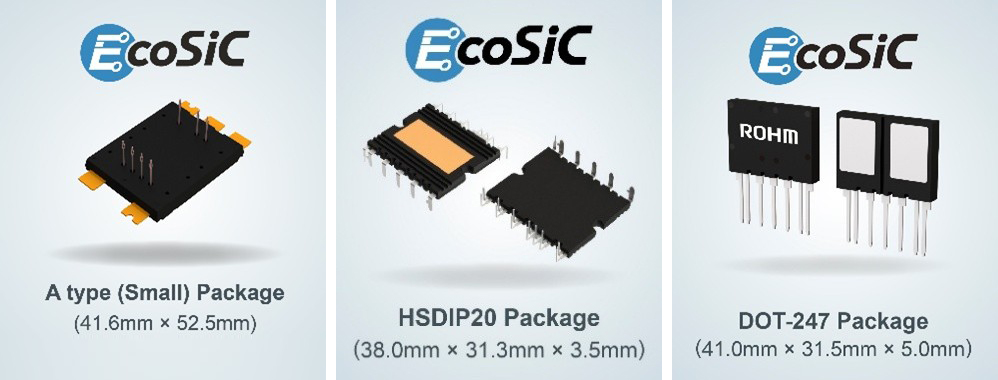
Core Insights - ROHM Semiconductor U.S.A., LLC will participate in APEC 2026, showcasing its innovative power solutions and technologies aimed at enhancing efficiency, performance, and reliability across various applications [1][4]. Group 1: Event Participation - APEC 2026 will take place from March 22–26 at the Henry B. Gonzalez Convention Center in San Antonio, TX [1]. - ROHM will exhibit at Booth 1443, featuring interactive product demonstrations and the latest advancements in Silicon Carbide (SiC) and Gallium Nitride (GaN) technologies [2][4]. Group 2: Product Offerings - ROHM will present EcoSiC™ power modules in compact HSDIP20 and DOT-247 packages, targeting improved power density and thermal management for AI server power supplies [4]. - The company will showcase EcoGaN™ 650V GaN HEMTs in collaboration with Murata Power Solutions, highlighting their application in AI server power supply units [5]. Group 3: Industry Collaboration - ROHM will collaborate with TAMURA Corporation to feature a gate driver module compatible with ROHM's SiC modules for various applications including server UPS and energy storage systems [5]. Group 4: Technological Innovations - The EcoSiC™ power module lineup aims to enhance efficiency and reliability in electrified powertrains, with specific products like the TRCDRIVE pack™ for traction inverters [6]. - ROHM will introduce the LogiCoA™ power supply platform, which combines analog and digital control for improved power efficiency and cost-effectiveness [8]. Group 5: Interactive Experiences - Attendees can participate in a "Fortune Wheel Game" to learn about ROHM's EcoSiC™ module concept and evaluate motor-drive and converter applications [9]. - A research paper on a High-Bandwidth LLC Bus Converter will be presented by Professor Kazuhiro Umetani, focusing on power delivery to next-generation AI processors [10].

ROHM has Introduced Reference Designs for Three-Phase Inverters Featuring New SiC Power Modules
Globenewswire· 2026-03-17 21:00
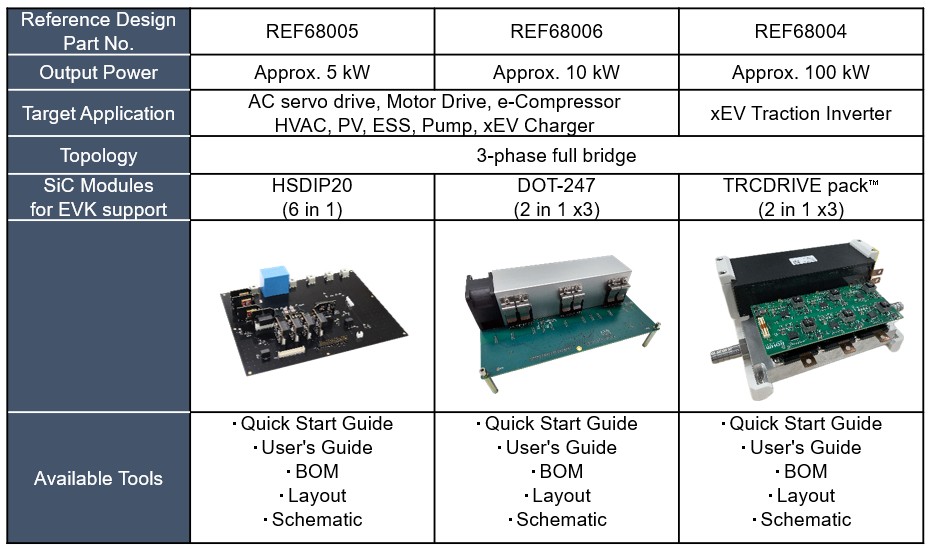
Core Insights - ROHM Semiconductor has released reference designs for three-phase inverter circuits featuring EcoSiC™ SiC molded modules, aimed at reducing the workload for device evaluation [1][2][11] Group 1: Reference Designs and Applications - The reference designs "REF68005", "REF68006", and "REF68004" support output power levels up to the 300kW class, facilitating the adoption of SiC modules in automotive and industrial applications [2] - These designs are available for users to create drive circuit boards and can be accessed through ROHM's website [1][3] Group 2: Product Availability and Support - Three types of SiC modules compatible with the reference designs are available for purchase through online distributors like DigiKey and Farnell [3] - ROHM provides various support resources, including simulation tools and thermal design support, to assist in the evaluation and implementation of their products [4][5] Group 3: EcoSiC™ Brand and Technology - EcoSiC™ is a brand of silicon carbide devices that offer performance advantages over traditional silicon devices, with ROHM developing essential technologies for SiC evolution [7] - The company has established an integrated production system throughout the manufacturing process, reinforcing its position as a leading SiC supplier [7]
ROHM's New SiC Power Modules Now Available for Online Purchase!
Globenewswire· 2026-03-12 21:00
Core Insights - ROHM Semiconductor has launched new SiC molded modules: TRCDRIVE pack™, HSDIP20, and DOT-247, aimed at enhancing energy efficiency in power conversion amid global power supply concerns [1][10] Product Details - TRCDRIVE pack™ is a 2-in-1 SiC molded module designed for xEV traction inverters up to 300kW, featuring ROHM's 4th Generation SiC MOSFETs with low ON resistance, achieving a power density 1.5 times higher than standard SiC modules [3] - HSDIP20 is available in 4-in-1 and 6-in-1 configurations, suitable for xEV onboard chargers, EV charging stations, and server power supplies, integrating all necessary circuits for high-power applications into a compact module [4] - DOT-247 is a 2-in-1 SiC module ideal for industrial applications like PV inverters and UPS systems, maintaining versatility while achieving high power density and supporting various circuit configurations [5] Pricing Information - TRCDRIVE pack™ is priced at $650.0 per unit (tax excluded) [2] - HSDIP20 is available for $180.0 per unit (tax excluded) [2] - DOT-247 is priced at $100.0 per unit (tax excluded) [2] Applications - TRCDRIVE pack™ is targeted for automotive applications, specifically for xEV traction inverters [3] - HSDIP20 is applicable in automotive onboard chargers, DC-DC converters, and industrial equipment such as EV charging stations and server power supplies [4][5] - DOT-247 is suitable for applications in electric power take-off systems, PV inverters, and UPS systems [6] Brand and Technology - EcoSiC™ is ROHM's brand for devices utilizing silicon carbide, which offers superior performance compared to silicon, with an integrated production system established for SiC manufacturing [6]
Is ON Semiconductor Stock Outperforming the Dow?
Yahoo Finance· 2026-03-12 13:57
Core Insights - ON Semiconductor Corporation (ON) has a market capitalization of $23.3 billion, positioning it as a significant player in the semiconductor industry, specializing in intelligent sensing and power solutions [1][2] - The company is recognized for its vertical integration of Silicon Carbide (SiC) and its leading position in automotive image sensors for Advanced Driver Assistance Systems (ADAS) [2] Stock Performance - ON's shares are currently trading 19.7% below their 52-week high of $73.76, reached on February 18, while gaining 5.8% over the past three months, outperforming the Dow Jones Industrial Average, which dropped by 2.6% in the same period [3][5] - Year-to-date, ON's shares have increased by 9.4%, contrasting with a 1.3% decline in the Dow Jones Industrial Average, and have rallied 38.2% over the past 52 weeks, significantly outpacing the Dow's 14.4% increase [5] Earnings Report - Following the fourth-quarter earnings release on February 10, ON's shares rose by 3.5%. The company reported an adjusted EPS of $0.64, exceeding analysts' expectations of $0.62, with revenue of $1.5 billion, which met market forecasts but represented an 11.2% decline year-over-year [7] - Despite the revenue drop, ON's strong free cash flow margin of 31.7% during the quarter contributed to positive investor sentiment [7] Competitive Position - ON has outperformed its competitor, Texas Instruments Incorporated (TXN), which gained 12% over the past 52 weeks, although ON has lagged behind TXN's 14.5% year-to-date rise [8] - Analysts maintain a moderately optimistic outlook for ON, with a consensus rating of "Moderate Buy" from 33 analysts and a mean price target of $68.03, indicating a 14.8% premium to its current price levels [8]

Epiworld International Co., Ltd.(H0085) - PHIP (1st submission)
2026-03-11 16:00
Hong Kong Exchanges and Clearing Limited, The Stock Exchange of Hong Kong Limited and the Securities and Futures Commission take no responsibility for the contents of this Post Hearing Information Pack, make no representation as to its accuracy or completeness and expressly disclaim any liability whatsoever for any loss howsoever arising from or in reliance upon the whole or any part of the contents of this Post Hearing Information Pack. Post Hearing Information Pack of Epiworld International Co., Ltd. 瀚天天成 ...
Wolfspeed(WOLF) - 2026 Q2 - Earnings Call Presentation
2026-02-04 22:00
Wolfspeed FY26 Q2 Earnings February 2026 © 2026 Wolfspeed, Inc. All rights reserved. Wolfspeed® and the Wolfstreak logo are registered trademarks and the Wolfspeed logo is a trademark of Wolfspeed, Inc. NON-GAAP MEASURES & FORWARD LOOKING STATEMENTS Non-GAAP Financial Measures: This presentation highlights the Company's financial results on both a GAAP and a non-GAAP basis. The GAAP results include certain costs, charges and expenses that are excluded from non-GAAP results. By publishing the non-GAAP measur ...

Vishay Intertechnology 1200 V SiC MOSFET Power Modules in Industry-Standard SOT-227 Package Increase Power Efficiency
Globenewswire· 2026-01-28 16:00
Core Insights - Vishay Intertechnology, Inc. has launched five new 1200 V MOSFET power modules aimed at enhancing power efficiency for medium to high frequency applications across various sectors including automotive, energy, industrial, and telecom systems [1][2]. Product Features - The new power modules, VS-SF50LA120, VS-SF50SA120, VS-SF100SA120, VS-SF150SA120, and VS-SF200SA120, incorporate the latest generation of silicon carbide (SiC) MOSFETs and are available in the industry-standard SOT-227 package [1][3]. - Each module features a SiC MOSFET integrated with a soft body diode, which results in reduced switching losses and improved efficiency for applications such as solar inverters, electric vehicle chargers, and large-scale battery storage systems [2][4]. - The modules provide continuous drain current ranging from 50 A to 200 A, with low on-resistance values down to 12.1 mΩ, and a maximum operating junction temperature of +175 °C [4][5]. Design and Compatibility - The compact SOT-227 package allows these devices to serve as drop-in replacements for existing solutions, facilitating the adoption of new SiC technologies without the need for redesigning PCB layouts [3][4]. - The molded package offers electrical insulation up to 2500 V for one minute, which helps in reducing costs by eliminating the need for additional insulation between the component and heatsink [3]. Availability - Samples and production quantities of the new power modules are currently available, with lead times of 13 weeks [5].


Allegro MicroSystems Simplifies SiC Power Design for AI Data Centers and EVs with Expanded Power-Thru(TM) Gate Driver Portfolio
Globenewswire· 2026-01-05 15:00
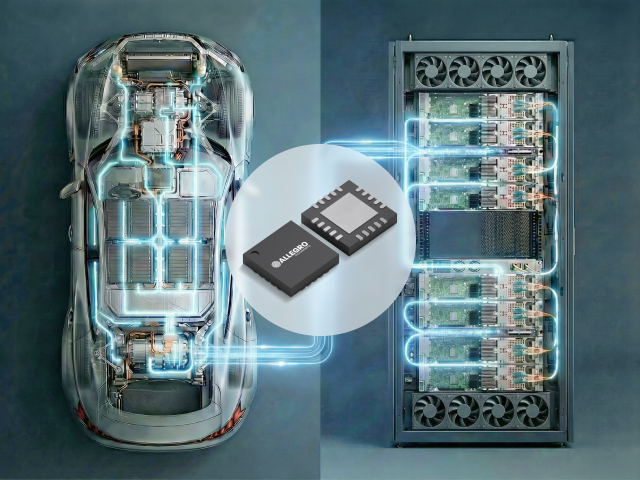
Core Insights - Allegro MicroSystems has launched the AHV85003/AHV85043 chipset, expanding its Power-Thru™ isolated gate driver portfolio, which now includes a complete ecosystem for high-voltage silicon carbide (SiC) designs in AI data centers, electric vehicles, and clean energy systems [1][3] Group 1: Product Features - The new chipset simplifies power conversion design by eliminating the need for external isolated bias supplies, resulting in the industry's smallest solution footprint and reduced bill of materials (BOM) for achieving maximum power density in 800V systems [1] - Allegro's Power-Thru™ isolated gate drivers integrate signal and power across a single isolation barrier, reducing common-mode capacitance by up to 15 times and improving electromagnetic interference (EMI) performance by up to 20dB [2][7] - The expanded portfolio supports a multi-source SiC strategy, allowing designers to easily swap between SiC FETs from different vendors without redesigning their boards, with selectable gate-to-source voltages of 15V, 18V, and 20V [3] Group 2: Implementation Options - The AHV85311 integrated solution includes an isolation transformer for an all-in-one route to accelerate time-to-market, while the new AHV85003/AHV85043 chipset allows designers to optimize for cost and layout by selecting their own external transformer [4] - This dual offering provides customers with flexibility, whether they prefer the plug-and-play speed of an integrated solution or the granular control of a chipset, while maintaining high efficiency [5] Group 3: Company Overview - Allegro MicroSystems leverages over three decades of expertise in magnetic sensing and power ICs to enhance efficiency, performance, and sustainability across automotive, clean energy, and industrial automation sectors [6]

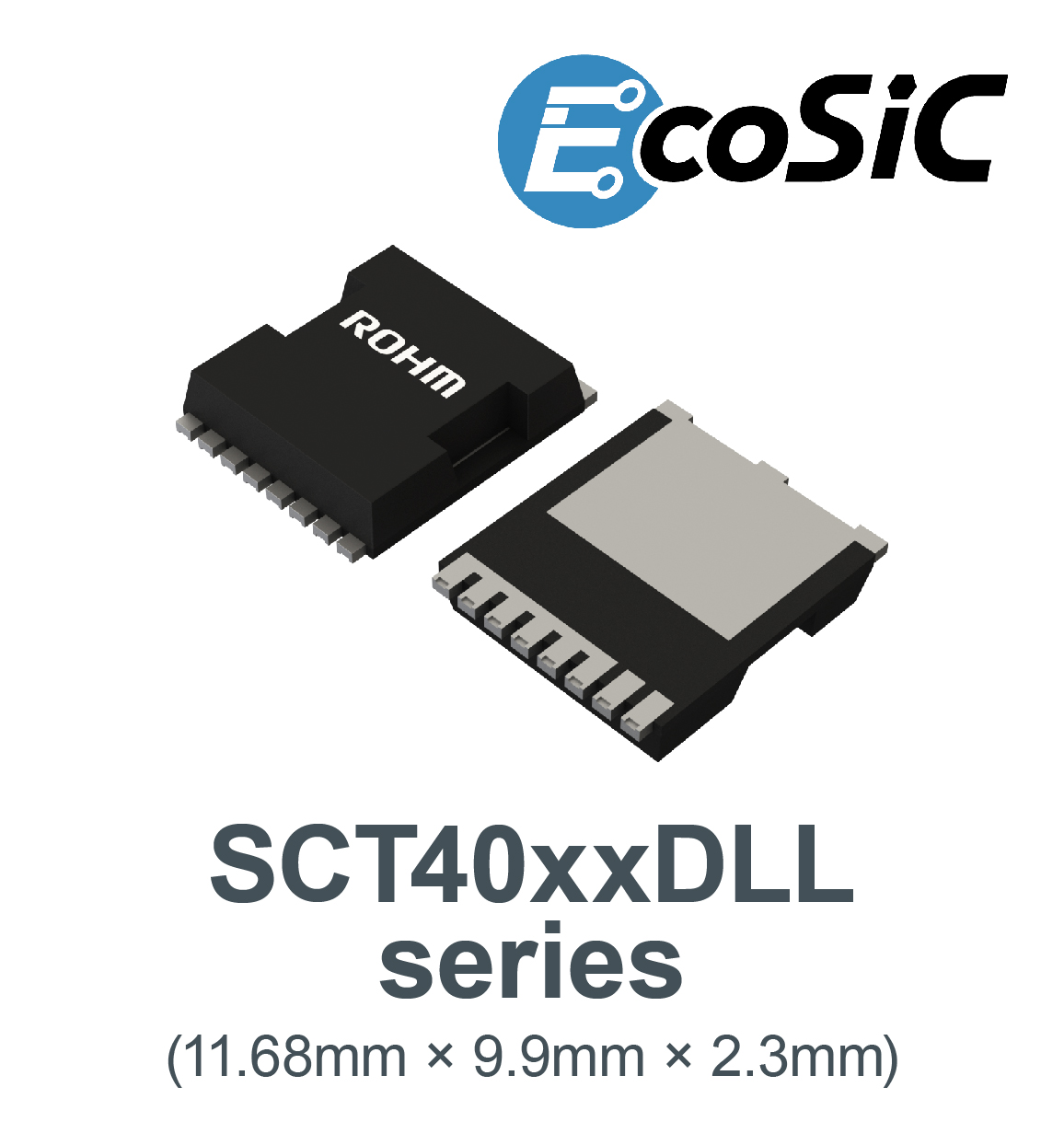
ROHM Launches SiC MOSFETs in TOLL Package: Achieving Both Miniaturization and High-Power Capability
Globenewswire· 2025-12-04 22:00
Core Insights - ROHM Semiconductor has commenced mass production of the SCT40xxDLL series of SiC MOSFETs in TOLL packages, which provide approximately 39% improved thermal performance compared to conventional packages [1][3] - The new products are designed to meet the increasing demand for higher power density in applications such as AI servers and compact PV inverters while maintaining a low profile [2][3] Product Features - The SCT40xxDLL series reduces component footprint by approximately 26% and achieves a low profile of 2.3mm thickness, which is about half that of conventional packaged products [3] - The series supports a drain-source rated voltage of up to 750V, allowing for lower gate resistance and increased safety margin for surge voltages, contributing to reduced switching losses [3] - The lineup consists of six models with on-resistance ranging from 13mΩ to 65mΩ, with mass production starting in September 2025 [4][8] Applications - The new SiC MOSFETs are suitable for various applications, including power supplies for AI servers, data centers, PV inverters, and energy storage systems (ESS) [5] - The products are also applicable in consumer equipment for general power supplies [5] Brand and Technology - ROHM's EcoSiC brand focuses on silicon carbide (SiC) devices, which are recognized for their superior performance compared to traditional silicon [5] - The company has developed essential technologies for SiC evolution, including wafer fabrication, production processes, packaging, and quality control methods, establishing itself as a leading SiC supplier [5]