
Store optimization

Search documents
Is Kohl's closing more stores? Here's what we know.
Yahoo Finance· 2026-03-18 16:12
Nearly one year ago, Kohl's had just shuttered more than two dozen stores. Now, the retailer is holding steady on its store count. The Menomonee Falls, Wisconsin-headquartered retailer has 1,150 stores currently, which comes after the closing of 27 stores in the first four months of 2025. Among its current stores, "well over 90% are profitable," CEO Michael Bender said during Kohl's March 10 earnings call discussing the company's 2025 fiscal year performance. For now, the company does not foresee closin ...

Grocery Outlet to close dozens of stores after overexpansion
Yahoo Finance· 2026-03-07 11:00
Core Viewpoint - Grocery Outlet is closing 36 stores as part of an optimization plan to address financially underperforming locations and correct rapid expansion, while still planning to open 30 to 33 new stores this year [2][4][7] Group 1: Store Closures - The closures will take effect by the end of this year and include 24 stores in the eastern U.S. region [6] - The decision follows a rigorous analysis identifying stores without a viable path to sustained profitability [4] - The company has not indicated that layoffs will accompany the store closures [3] Group 2: Financial Performance - Grocery Outlet reported a net loss of $225 million for fiscal year 2025, compared to a net income of $39 million in 2024 [4] - In the fourth quarter of 2025, the company reported a net loss of $218 million, with shares falling more than 43% over the past year [5] - Despite the losses, net sales increased by 7.3% from 2024 to 2025 [4] Group 3: Strategic Plans - The optimization plan aims to strengthen long-term profitability and cash flow generation, improve operational execution, and align with a disciplined new store growth strategy [7] - The company operates more than 560 stores across 16 states, focusing on affordability and targeting value-seeking customers [6]
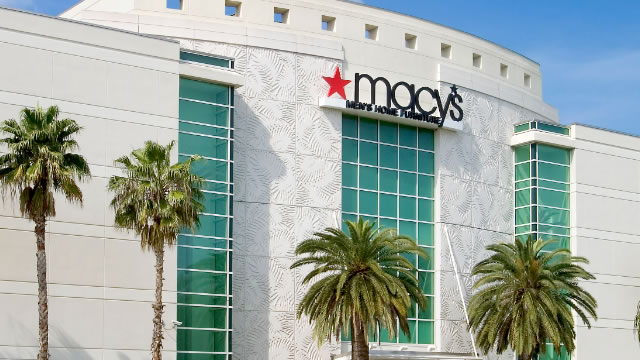
Macy's Store Rationalization Sharpens Focus on Higher-Return Markets
ZACKS· 2026-01-19 18:15
Core Insights - Macy's Inc. is implementing a disciplined store rationalization program to enhance returns and long-term profitability through its Bold New Chapter strategy, focusing on high-performing locations and markets [1][5] Sales Performance - In the third quarter of fiscal 2025, total net sales saw a modest decline year over year, attributed entirely to store closures, with 64 non-go-forward stores closed last year, impacting approximately $160 million in sales from the prior year [2][11] - Excluding the impact of store closures, Macy's sales grew by about 2.9%, indicating the strength of the remaining portfolio [2] Comparable Store Sales - Comparable sales for go-forward locations increased by approximately 2.3% during the quarter, outperforming the overall Macy's brand [3][11] - The Reimagine 125 stores achieved a stronger comparable sales growth of roughly 2.7%, demonstrating the effectiveness of focused investments in higher-quality locations [3] Expense Management - Store rationalization has led to a reduction in SG&A expenses by about $40 million year over year, contributing to an improvement in SG&A leverage by nearly 90 basis points [4][11] - The company continues to reinvest in its go-forward business while maintaining cost discipline [4] Strategic Focus - Macy's store rationalization strategy reflects a transition to a leaner, return-driven operating model, enhancing capital efficiency and positioning the business for sustainable long-term growth [5] Valuation and Estimates - Macy's shares have increased by 78.1% over the past six months, outperforming the industry growth of 57.8% [10] - The company is currently trading at a forward 12-month price-to-sales ratio of 0.27X, below the industry average of 0.52X [12] - The Zacks Consensus Estimate for Macy's fiscal 2025 earnings indicates a year-over-year decline of 16.7%, while fiscal 2026 estimates suggest a slight increase of 1.7% [13]


Carter’s(CRI) - 2026 FY - Earnings Call Transcript
2026-01-12 17:32
Financial Data and Key Metrics Changes - The company reported strong performance in its direct-to-consumer (DTC) business and wholesale channels, exceeding expectations during the holiday period [11][12] - The fourth quarter marked the third consecutive quarter of comparable store growth, with the company successfully maintaining higher average unit retail (AUR) prices without a decline in unit sales [12][14] - Overall revenue from the identified 150 stores for closure is approximately $110 million, with many being marginally profitable or losing money [26] Business Line Data and Key Metrics Changes - The company has diversified its approach across wholesale, international, and retail channels, with all age categories outperforming expectations [11] - The DTC business accounted for about one-third of U.S. retail revenue, indicating a well-penetrated e-commerce operation [29] - The wholesale business is approximately $1 billion of the total $3 billion revenue, with a significant portion coming from exclusive brands developed for major retailers [35] Market Data and Key Metrics Changes - The company is focusing on attracting new consumers, particularly Gen Z parents, who are more open to higher-priced products [14][15] - The shift in consumer shopping behavior post-pandemic has led to a need for store closures and a focus on enhancing the brand's presence in relevant retail environments [22][23] Company Strategy and Development Direction - The company aims to invest in product design and demand creation to resonate with today's young consumers [6][8] - A strategic focus on brand identity is emphasized, allowing each brand to develop its unique identity rather than applying a one-size-fits-all approach [41] - The company plans to close 150 underperforming stores while also remodeling and relocating stores to better serve consumers [22][23] Management's Comments on Operating Environment and Future Outlook - Management acknowledges the challenges posed by rising prices and tariffs but emphasizes the importance of maintaining brand value through quality and style [17][18] - The company expects to achieve growth in sales and earnings by 2026, focusing on long-term sustainable and profitable growth rather than short-term discounts [39][40] - Management is optimistic about the potential for growth in the wholesale business, particularly with key accounts that are focused on attracting new parents [32][33] Other Important Information - The company is enhancing its marketing investments to drive productivity and consumer engagement, particularly through social media and influencers [10][9] - The transition from private label to branded products on platforms like Amazon is seen as a growth opportunity for the company's core brands [36] Q&A Session Summary Question: What are the biggest challenges noticed since the new CEO took over? - The CEO highlighted the need for investment in product design and demand creation to align with consumer expectations [6] Question: Can you elaborate on the holiday performance? - The CEO noted strong performance across all channels, with the ability to maintain higher prices without losing unit sales [11][12] Question: What is the strategy for store closures? - The company plans to close 150 stores identified as low-margin, with expectations of transferring some revenue to nearby locations [22][26] Question: How does e-commerce fit into the overall strategy? - E-commerce is a significant part of the business, accounting for about one-third of retail revenue, and is expected to grow as stores close [29] Question: What is the outlook for growth in 2026? - Management remains optimistic about achieving growth in sales and earnings by focusing on sustainable and profitable growth strategies [39][40]

Torrid (CURV) - 2026 Q3 - Earnings Call Transcript
2025-12-03 22:32
Financial Data and Key Metrics Changes - For Q3 fiscal 2025, the company reported sales of $235 million, down from $263.8 million in the prior year, reflecting a decline of 10.5% [15][16] - Adjusted EBITDA was $9.8 million, representing a margin of 4.2%, compared to $19.6 million and a margin of 7.4% a year ago [18] - Net loss for the quarter was $6.4 million, or $0.06 per share, compared to a net loss of $1.2 million, or $0.01 per share last year [18] Business Line Data and Key Metrics Changes - Strong performance was noted in denim, non-denim, dresses, and intimates, all generating positive comparable growth, while tops and jackets categories faced significant challenges [5][6] - Tops accounted for approximately half of the year-over-year sales miss, with a shift towards fashion-forward designs impacting core assortments [5][6] - The footwear category experienced an estimated $12.5 million in lost sales due to a strategic pause, with plans to scale back to historical sales levels of approximately $40 million in 2026 [8][9] Market Data and Key Metrics Changes - Comparable sales declined by 8.3%, with the tariff-related pause in the shoe category contributing approximately 400 basis points to this decline [16] - The company noted that 70% of demand is now originating online, reflecting a shift in consumer preferences towards digital channels [19] Company Strategy and Development Direction - The company is focused on enhancing product offerings through sub-brands and an opening price point strategy to increase market share and customer acquisition [9][10] - A comprehensive review of the spring-summer 2026 buying strategy has been completed, with a commitment to balance investments across categories [7][10] - The store optimization strategy remains a cornerstone of the company's transformation, with plans to close approximately 180 stores in fiscal 2025 [13][19] Management's Comments on Operating Environment and Future Outlook - Management expressed disappointment with overall performance but highlighted corrective actions being taken to address assortment issues [4][5] - The company expects to see sequential improvement in knit and woven performance by the end of Q4, with confidence in returning categories to growth [7][10] - Full-year net sales are now expected in the range of $995 million to $1.002 billion, with Adjusted EBITDA projected between $59 million and $62 million [20] Other Important Information - The company has implemented enhanced guardrails in the merchandising process and is actively addressing near-term assortment gaps [6][7] - Marketing investments increased by $2.7 million to $15.7 million, supporting customer acquisition and brand visibility [17] Q&A Session Summary Question: Can you elaborate on some of the product missteps? - Management identified tops as the primary area of revenue miss, with corrective actions being implemented to address the issue [22][23] Question: What changes are being made to ensure a balanced assortment? - The company is embedding a balanced approach into the assortment architecture, focusing on both opening price points and core products [33][35] Question: What is the outlook for sub-brands? - The sub-brand strategy remains unchanged, with positive momentum expected to continue into 2026 [42][45] Question: How will store closures impact the leverage profile? - Store closures are expected to create a more flexible expense profile, leading to substantial EBITDA margin expansion in 2026 [46][47] Question: What are the competitive landscape observations? - Management noted that the challenges faced were largely self-inflicted, with opportunities to recapture customer interest through improved product offerings [56][57]

Torrid (CURV) - 2026 Q1 - Earnings Call Transcript
2025-06-05 21:30
Financial Data and Key Metrics Changes - The company reported net sales of $266 million for Q1, down from $279.8 million in the prior year, with comparable store sales declining by 3.5% [20][24] - Gross profit decreased to $101.4 million from $115.4 million, with gross margin declining by 320 basis points to 38.1% due to planned promotional initiatives [25][26] - Adjusted EBITDA was $27.1 million, representing a 10.2% margin, compared to $38.2 million and 13.7% in the previous year [28] - Net income for the quarter was $5.9 million, or $0.06 per share, down from $12.2 million, or $0.12 per share, in the prior year [27] Business Line Data and Key Metrics Changes - The performance of sub-brands such as Festi, Belle Isle, Nightfall, and Retro Chic exceeded expectations, achieving sales 2 to 6 times higher than planned [6] - Online sales demand is approaching 70% of total sales, with expectations to reach 75% by 2026 [9] - The company plans to increase the delivery frequency of existing sub-brands from 6-8 times a year to 12 times annually, aiming for sub-brands to represent up to 30% of the portfolio by 2026 [7] Market Data and Key Metrics Changes - The company closed 35 stores in 2024 and plans to close approximately 180 stores in 2025, with 60 closures targeted in the first half of the year [10][30] - The closures are expected to have a negligible impact on net sales, as the company retains about 60% of customers post-closure [11][30] Company Strategy and Development Direction - The company is focusing on enhancing product assortment, driving customer growth, and executing a store optimization plan [5] - A strategic shift towards online sales is evident, with plans to optimize the retail footprint to better align with customer demand [12][36] - The company is diversifying sourcing to reduce exposure to China, with current exposure in the low single digits [13] Management's Comments on Operating Environment and Future Outlook - Management noted that consumer behavior remains price and value-conscious, but there is a positive response to new product offerings [20] - The company expects to mitigate approximately $20 million of tariff impact through expense reductions and strategic marketing investments [31] - The outlook for fiscal 2025 includes net sales guidance of $1.03 billion to $1.055 billion, reflecting the pause in the footwear business [31] Other Important Information - The company ended the quarter with $23.7 million in cash and access to $117.3 million in additional liquidity [21] - Inventory totaled $149.6 million, a 3.3% increase year-over-year, with expectations for a decrease in comparable store inventory by mid to high single digits by year-end [29] Q&A Session Summary Question: Can you discuss the cadence of new product launches for the second half? - The company plans to launch a new sub-brand, Lovesick, in August and Studio Luxe in September, with existing brands launching monthly by year-end [40] Question: What trends are seen with new customers following their initial sub-brand purchase? - Positive movement in customer acquisition and reactivation is noted, with a high attachment rate of 90% for core products purchased alongside sub-brands [44][46] Question: Why is there a sizable sales growth deceleration expected in Q2? - The pause in the shoe business, primarily sourced from China, is expected to impact sales by approximately $40 million to $45 million for the year [50][51] Question: How does the promotional strategy coexist with new product launches? - The company will maintain a promotional cadence, responding to consumer value orientation while continuing to drive newness through product launches [58] Question: What is the rationale behind the acceleration of store closures? - The shift towards online shopping preferences among customers necessitates the closure of underperforming stores, allowing for resource reallocation to digital investments [62]
Torrid (CURV) - 2025 Q4 - Earnings Call Transcript
2025-03-20 20:30
Financial Data and Key Metrics Changes - For the fourth quarter, the company generated sales of $275.6 million and adjusted EBITDA of $16.7 million, exceeding expectations on both the top and bottom line [8][20] - Comparable sales were down 0.8%, marking a significant sequential improvement, with regular price comp trends increasing by 1.6% [8][20] - The company ended the fiscal year with $48.5 million in cash, an increase of $36.8 million compared to the previous year [9][18] - Gross profit was $92.6 million, with a gross margin decline of 90 basis points to 33.6% due to lower volume relative to last year [21] - The net loss for the quarter was $3 million, or negative $0.03 per share, compared to a net loss of $4.1 million, or negative $0.04 per share, in the prior year [23] Business Line Data and Key Metrics Changes - In apparel, the company delivered a positive Q4 comp driven by strength in denim, non-denim bottoms, sweaters, and dresses, which reached an all-time high demand [9] - Inventory levels increased by 4% year-over-year, primarily due to higher in-transit levels, but were down 18% on a two-year basis [10][25] - The new sub brands are expected to comprise approximately 7% to 10% of total receipt investment for the year, self-funded by a reduction in depth across less productive choices [10] Market Data and Key Metrics Changes - The company experienced some choppiness in business during early weeks of the quarter due to macro and consumer uncertainty, but saw a trend line improvement as the quarter progressed [7][8] - The company is targeting to close an additional 40 to 50 stores in fiscal 2025, with the potential for the number to increase as store performance is evaluated [17][27] Company Strategy and Development Direction - The company is focused on three strategic priorities: enhancing product assortment, driving customer growth, and executing a store optimization plan [10][28] - 2025 is designated as the year of the product, with more new items introduced in the first half than in the past six years, aiming to broaden assortments to cater to a wider range of fashion aesthetics [11] - The company is modernizing its core assortment while maximizing the potential of sub brands, which command higher margins and are attracting younger customers [14][70] Management's Comments on Operating Environment and Future Outlook - Management expressed cautious optimism, controlling spending while remaining flexible and agile in response to the uncertain consumer environment [7][8] - The company is taking a prudent approach to guidance, with full-year sales expected to range between $1.08 billion and $1.1 billion, reflecting a careful outlook given the current environment [28][30] - Management noted improvements in customer engagement and traffic trends, indicating a solid fundamental strength of the Torrid customer base [33][36] Other Important Information - The company successfully closed 35 stores in fiscal 2024 and is targeting to close an additional 40 to 50 stores in fiscal 2025, which is expected to reduce fixed costs and free up capital for growth investments [17][27] - The company ended the year with $158 million in liquidity and reduced total debt to $288.6 million, further strengthening its balance sheet [24] Q&A Session Summary Question: What are the latest thoughts on the health of the Torrid consumer? - Management indicated that the fundamental strength of the Torrid customer remains intact, with positive traffic trends but cautious conversion in the short term [33][34] Question: Can you quantify the impact of the 40 to 50 additional store closures this year? - The majority of closures will happen in Q4, with benefits expected to flow through financials in the next year rather than immediately [37][39] Question: Do you anticipate this being a prolonged campaign of closings? - Management does not see this as a prolonged project, with opportunities to reassess the real estate portfolio in the next few years [42][44] Question: What is your guidance embedding on the tariff impact of the year? - Guidance includes all known tariffs, with a flexible sourcing structure to mitigate risks [55][56] Question: How do you think about the puts and takes on gross margin and SG&A throughout the year? - Management expects a little higher SG&A in the first half due to shifted marketing expenses but overall G&A should remain consistent with the prior year [78]