TOD(以公共交通为导向的发展模式)

Search documents
成都轨道交通运营里程突破750公里 世界级轨道交通线网 改变的不只是出行
Si Chuan Ri Bao· 2025-12-16 00:04
Core Insights - Chengdu's metro system has expanded to 18 lines and over 750 kilometers, marking a significant milestone in urban transportation development [2][5][20] - The evolution of Chengdu's metro network reflects a shift from merely facilitating transportation to reshaping urban living and social interactions [7][10][19] Group A: Transportation Development - The recent opening of the first phase of Line 13 and Line 30 enhances Chengdu's metro network, which began with the first line in 2010 [2] - Chengdu's metro system is now a primary mode of transportation for citizens, with a projected daily ridership of 6.15 million by 2025 [6][20] - The green travel rate in Chengdu has reached 77.6%, the highest among major cities in China [6] Group B: Urban Transformation - The metro network's structure has evolved into a "ring + radial + tangential" model, facilitating urban expansion and regional development [10][11] - The opening of new lines has accelerated the development of surrounding areas, leading to the emergence of modern urban centers [11][12] - Chengdu's metro is a catalyst for a multi-center urban structure, enhancing connectivity and resource sharing among cities in the Chengdu metropolitan area [12][20] Group C: Economic Impact - Chengdu's metro system has fostered a comprehensive industrial ecosystem, with a local supply rate of 71.63% for the new trains on Line 13 [17] - The city has attracted over 570 rail-related enterprises, creating a full industrial chain that includes R&D, design, construction, and maintenance [18] - A new rail transit industry fund has been established to invest in key technology and innovative enterprises within the "pan-rail transit" sector [19]

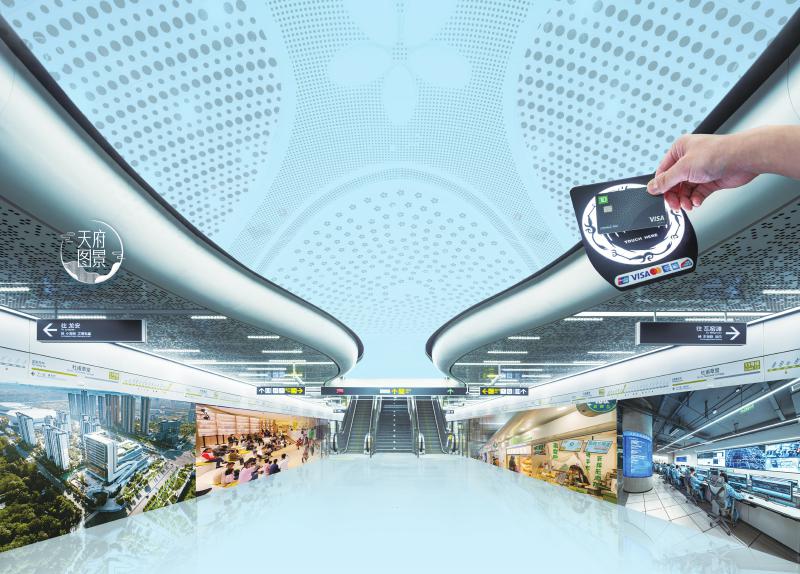
世界级轨道交通线网 改变的不只是出行
Si Chuan Ri Bao· 2025-12-15 21:57
Core Insights - Chengdu's rail transit system is recognized for its role in promoting green travel and urban development, with a daily passenger volume projected to reach 6.15 million by 2025 and a green travel ratio of 77.6%, the highest among major Chinese cities [2][3] - The concept of transportation is evolving from merely facilitating travel to reshaping lifestyles and social interactions, as seen in the shift towards Transit-Oriented Development (TOD) [3][4] - Chengdu's TOD projects have led to the development of over 11 million square meters of urban space, integrating residential, commercial, and recreational areas, thereby enhancing the quality of life for residents [4][5] Group 1: Urban Development and Transportation - The rail network in Chengdu is transforming the city's geographical layout, facilitating the growth of new urban areas and enhancing regional development [5][6] - The opening of new lines, such as the 18th line connecting the city center to the Eastern New District, is accelerating the development of modern urban centers and promoting a multi-center urban structure [5][6] - The integration of surrounding cities into the Chengdu metropolitan area is being supported by the expansion of rail services, fostering industrial clusters and collaborative development [5][6] Group 2: Economic Impact and Industry Growth - Chengdu's rail transit system is not only driving passenger numbers but also fostering a robust industrial ecosystem, with a local supply rate of 71.63% for new trains, indicating strong local manufacturing capabilities [9][10] - The city has attracted over 570 rail transit-related enterprises, creating a comprehensive industrial chain that includes research, design, construction, and maintenance services [10][11] - A new urban transit industry fund has been established to invest in key technology firms within the rail sector, promoting innovation and collaboration among various stakeholders [11][12] Group 3: Community and Lifestyle Changes - The TOD model is reshaping community interactions and living patterns, encouraging residents to choose homes along transit lines and fostering social activities around transit hubs [3][4] - Events like community sports activities highlight the role of rail transit in enhancing local engagement and community spirit [3][4] - The development of vibrant commercial spaces around transit stations is creating new social and economic opportunities for residents [4][5]
杭州7月份土拍收官 伟星房产溢价28.13%拿下一宗宅地
Zheng Quan Ri Bao· 2025-07-30 00:19
Core Insights - The land auction in Hangzhou on July 29 concluded with three residential plots sold, generating a total revenue of 5.035 billion yuan [1] - The auction continued the trend of "hot core areas and cold non-core areas," with companies adopting a more rational approach to land acquisition [2] Group 1: Auction Highlights - The Shiqiao unit plot in Gongshu District attracted significant attention, with a starting price of 1.49 billion yuan and a final sale price of 1.913 billion yuan, resulting in a floor price of 19,627 yuan per square meter and a premium rate of 28.13% [2] - The winning bidder, Weixing Property, reported a total sales revenue of 7.16 billion yuan in the first half of 2025, ranking 58th among the top 100 real estate companies [2] - The plot's proximity to Metro Line 3 and its favorable development conditions contributed to the competitive bidding, reflecting optimism about regional value and future premium potential [2] Group 2: Market Trends - The other two plots in Xihu District and Linping District saw subdued performance, with the Xihu plot acquired at the base price due to high competition pressure and the Linping plot sold with a minimal premium of 1.16% [2] - The current market shows a preference for core areas with clear development conditions, while companies are cautious about non-core or complex development sites [3] - Local companies like Weixing Property are actively participating in land auctions, while many out-of-town firms are forming joint ventures with local companies to leverage their development capabilities [3] Group 3: Overall Market Conditions - The total revenue from the Hangzhou land auction market in July reached 10.2 billion yuan, indicating a strong demand for quality plots in core areas while non-core areas continue to see low premium transactions [3] - The new housing market in Hangzhou is becoming increasingly competitive, pushing companies to enhance product differentiation through design, green building standards, and improved usable area [3][4] - The land market in Hangzhou is stabilizing, but the differentiation between core and non-core areas is becoming more pronounced, with a shift in land acquisition strategies from scale expansion to value cultivation [4]