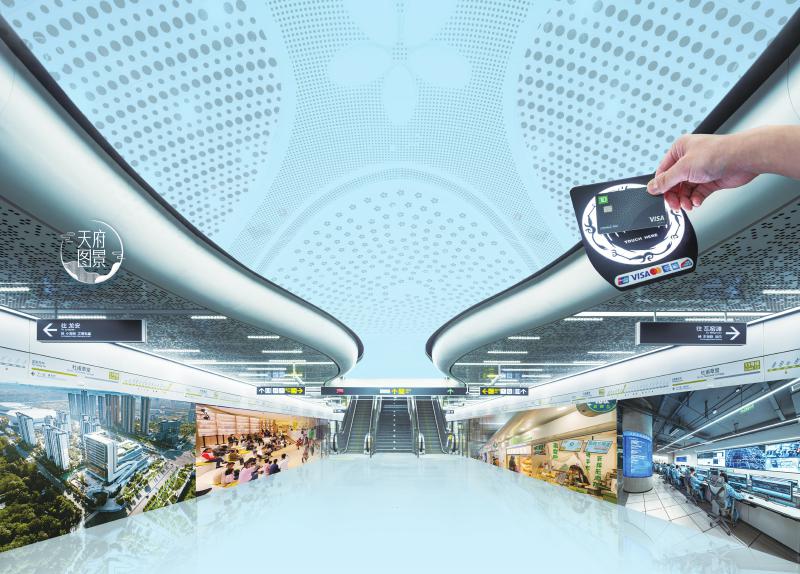
成都地铁

Search documents
成都地铁客运量超1663万人次
Xin Lang Cai Jing· 2026-01-04 20:03
Group 1 - During the New Year holiday, Chengdu Metro's passenger volume reached 16.63 million, highlighting its role as a "city window" for observing the festive atmosphere and vitality of Chengdu [1] - To enhance passenger service, Chengdu Metro implemented several measures, including adding "guidance posts" at key stations, adjusting turnstile and escalator directions based on real-time passenger flow, extending operational hours by 50-60 minutes, and adding 52 additional train services [1] - Major stations for New Year activities, such as Financial City Station, Chunxi Road Station, and Xibo City Station, recorded passenger volumes of 46,800, 239,200, and 67,200 respectively, while over 20 stations near scenic spots collectively saw a total passenger volume of 1.64 million [1] Group 2 - The newly opened Dufu Caotang Station on Line 13 experienced a passenger volume of nearly 14,000 during the holiday, indicating its successful debut [2] - The "Night Tour of Jinjiang" attracted many visitors, with Dongmen Bridge Station on Line 2 and Jiuyan Bridge Station on Line 13 being the main access points to the waterfront [2] - Tianfu Square Station, located near cultural venues like the Chengdu Museum and Sichuan Science and Technology Museum, recorded a cumulative passenger volume of over 443,200 during the holiday [2]
宜居宜业 向善向上彰显人文城市温度
Xin Lang Cai Jing· 2025-12-30 20:11
Core Viewpoint - Chengdu is focusing on creating a livable and culturally rich city, emphasizing humanistic values and sustainable development as it approaches the end of the 14th Five-Year Plan and the beginning of the 15th Five-Year Plan [2][8]. Group 1: Urban Environment and Infrastructure - Chengdu has implemented a comprehensive urban environment improvement initiative, targeting ten key areas of public concern, which has enhanced the city's aesthetics and livability [3]. - The city has expanded its metro network, with the total operational mileage exceeding 750 kilometers, improving urban connectivity and commuting experiences [3]. - Traffic management innovations, such as "AI traffic lights" and "variable lanes," have significantly reduced congestion and improved commuting efficiency [3]. Group 2: Housing and Health - Chengdu is developing a multi-tiered supply system for affordable rental housing, with 224,000 housing units planned and approximately 75,000 units operational, providing support for young residents and new citizens [4]. - The city has established 13 smart rehabilitation centers and initiated six major health actions for the elderly, contributing to a modern healthcare infrastructure [4]. - The local modern traditional Chinese medicine industry is approaching a market value of 30 billion yuan [4]. Group 3: Sustainable Development - Chengdu's annual electricity sales have surpassed 100 billion kilowatt-hours, marking it as the first provincial capital in central and western China to achieve this milestone, reflecting its commitment to green and low-carbon development [5]. - The city has been recognized for its outdoor sports destinations, enhancing its appeal as a nature-friendly urban environment [5]. Group 4: Cultural and Creative Industries - Chengdu has been designated as the first "City of Chinese Bookstores," with over 3,600 bookstores and reading spaces, enriching the cultural landscape [6][7]. - The city has made significant strides in the digital cultural and creative industry, with the animated film "Ne Zha" achieving a box office of 15.9 billion yuan, ranking among the top five globally [7]. - A comprehensive policy package to support the digital cultural and creative industry has been introduced, establishing a solid foundation for its growth [7]. Group 5: Tourism and Civil Society - Chengdu's tourism sector has received accolades, with several destinations recognized for their quality, enhancing the city's reputation as a tourist hub [8]. - The city has been acknowledged for its overall civilizational achievements, with a county-level city receiving a national award for its civilizational standards [8]. - Chengdu aims to harmonize development outcomes with the aspirations of its citizens, focusing on creating a warm and inviting urban environment [8].

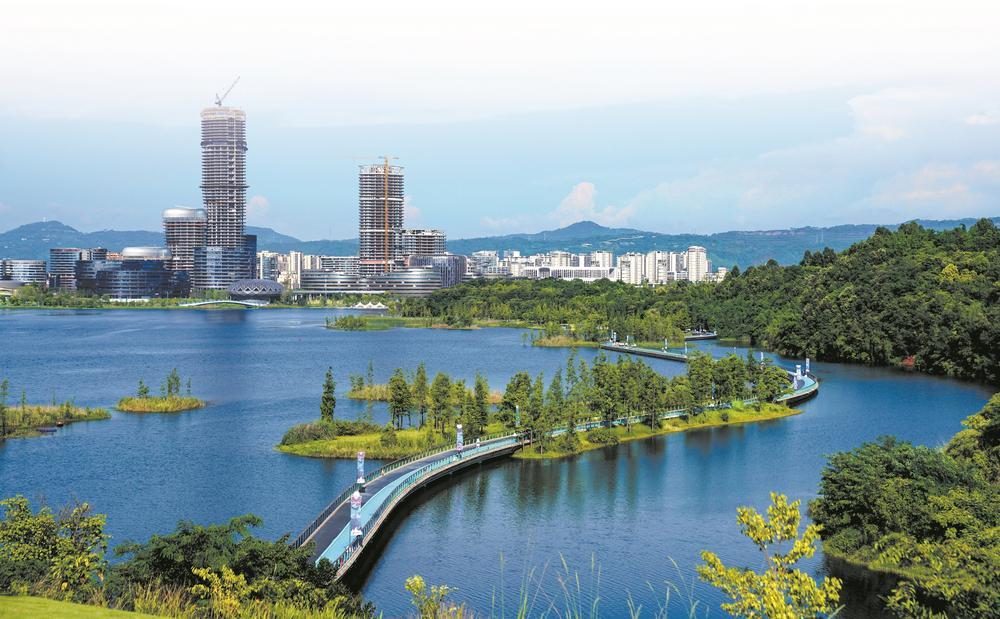
世界级轨道交通线网 改变的不只是出行
Si Chuan Ri Bao· 2025-12-15 21:57
Core Insights - Chengdu's rail transit system is recognized for its role in promoting green travel and urban development, with a daily passenger volume projected to reach 6.15 million by 2025 and a green travel ratio of 77.6%, the highest among major Chinese cities [2][3] - The concept of transportation is evolving from merely facilitating travel to reshaping lifestyles and social interactions, as seen in the shift towards Transit-Oriented Development (TOD) [3][4] - Chengdu's TOD projects have led to the development of over 11 million square meters of urban space, integrating residential, commercial, and recreational areas, thereby enhancing the quality of life for residents [4][5] Group 1: Urban Development and Transportation - The rail network in Chengdu is transforming the city's geographical layout, facilitating the growth of new urban areas and enhancing regional development [5][6] - The opening of new lines, such as the 18th line connecting the city center to the Eastern New District, is accelerating the development of modern urban centers and promoting a multi-center urban structure [5][6] - The integration of surrounding cities into the Chengdu metropolitan area is being supported by the expansion of rail services, fostering industrial clusters and collaborative development [5][6] Group 2: Economic Impact and Industry Growth - Chengdu's rail transit system is not only driving passenger numbers but also fostering a robust industrial ecosystem, with a local supply rate of 71.63% for new trains, indicating strong local manufacturing capabilities [9][10] - The city has attracted over 570 rail transit-related enterprises, creating a comprehensive industrial chain that includes research, design, construction, and maintenance services [10][11] - A new urban transit industry fund has been established to invest in key technology firms within the rail sector, promoting innovation and collaboration among various stakeholders [11][12] Group 3: Community and Lifestyle Changes - The TOD model is reshaping community interactions and living patterns, encouraging residents to choose homes along transit lines and fostering social activities around transit hubs [3][4] - Events like community sports activities highlight the role of rail transit in enhancing local engagement and community spirit [3][4] - The development of vibrant commercial spaces around transit stations is creating new social and economic opportunities for residents [4][5]