Tech war

Search documents
The Chinese billionaire accused of stealing Britain’s chip industry
Yahoo Finance· 2025-11-01 11:00
Core Viewpoint - The situation surrounding Nexperia and its CEO Zhang Xuezheng highlights the intersection of technology transfer, geopolitical tensions, and the implications for the automotive supply chain in Europe, particularly amid a global chip shortage [3][4][5]. Company Overview - Nexperia, a semiconductor company, was acquired by Zhang's Wingtech in 2019, representing a significant investment in the semiconductor sector [10][11]. - The company specializes in power chips essential for modern vehicles, especially electric ones, and has faced supply chain disruptions that threaten car production across Europe [5][10]. Recent Developments - The Dutch government seized control of Nexperia under a Cold War-era law, citing concerns over Zhang's alleged plans to transfer technology to China and misuse company resources for personal gain [7][22]. - Zhang has been removed as CEO by a Dutch court, and his absence has raised questions about the company's future operations [7][20]. Geopolitical Context - The seizure of Nexperia has been interpreted as part of the broader tech war between the U.S. and China, with the Dutch government acting in response to U.S. export restrictions [4][21]. - The situation has escalated tensions with China, which has blocked exports of Nexperia products and instructed local staff to disregard orders from the Netherlands [6][20]. Financial Implications - Zhang's net worth has significantly decreased from $2.2 billion to an estimated $1 billion, reflecting the financial strain on his business ventures [12]. - Allegations have emerged that Zhang placed excessive orders worth $200 million with his other company, WingSky Semi, raising concerns about financial mismanagement [18]. Industry Impact - The ongoing crisis has raised national security concerns in the UK, where Nexperia operates a major facility, and has implications for the broader European automotive industry due to the critical role of semiconductors [5][15]. - The potential transfer of technology from Nexperia to China has been a focal point of scrutiny, with Dutch officials emphasizing the need to preserve European production capabilities [22].

Is the China ban fueling Nvidia stock short interest?
Finbold· 2025-09-17 15:09
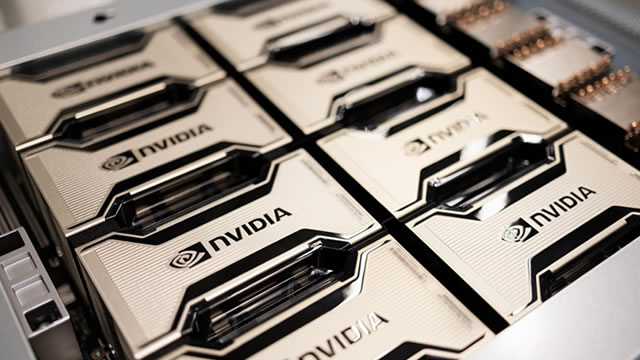
Core Viewpoint - Nvidia's stock experienced a decline of 2.78% following reports of a ban imposed by China on its chips, reflecting the ongoing tensions in the tech sector between the U.S. and China [1][3]. Group 1: Stock Performance - Nvidia shares are currently trading at $170.51, approximately 7.5% below their 52-week high, with a total float of 23.3 billion shares and a short interest of only 0.84%, indicating limited potential for a short squeeze [1]. - The stock's average true range (ATR) is 4.65, while the relative volume (RVOL) is at 0.53, suggesting that selling momentum has not significantly increased despite the recent price drop [2]. Group 2: Company Relations and Market Impact - CEO Jensen Huang expressed disappointment over the ban, stating that Nvidia has contributed significantly to the Chinese market over the past 30 years, but acknowledged the larger geopolitical issues at play between China and the U.S. [3]. - Nvidia has excluded China from its financial forecasts due to uncertainties related to ongoing U.S.-China tech negotiations [3]. - The U.S. government has already restricted Nvidia's AI chip exports, including the H20 server chip, citing national security concerns, with a new export license potentially costing Nvidia a 15% share in H20 sales in China [4]. Group 3: Regulatory Challenges - China's State Administration for Market Regulation (SAMR) has initiated an antitrust investigation into Nvidia's $6.9 billion acquisition of Mellanox, and there are reports of pressure on Nvidia to halt production over security concerns, which the CEO has denied [5]. - Nvidia recently announced a £11 billion ($15 billion) investment in British AI infrastructure, indicating a strategic move to strengthen its position in Europe amid the challenges in China [5].