US sanctions

Search documents
X @Bloomberg
Bloomberg· 2026-04-08 01:46
Changpeng Zhao, who built Binance into the world’s largest cryptocurrency exchange before pleading guilty to anti-money laundering and US sanctions violations, gives his version of the company’s legal crisis in a memoir published Tuesday https://t.co/Il5bGunG3f ...
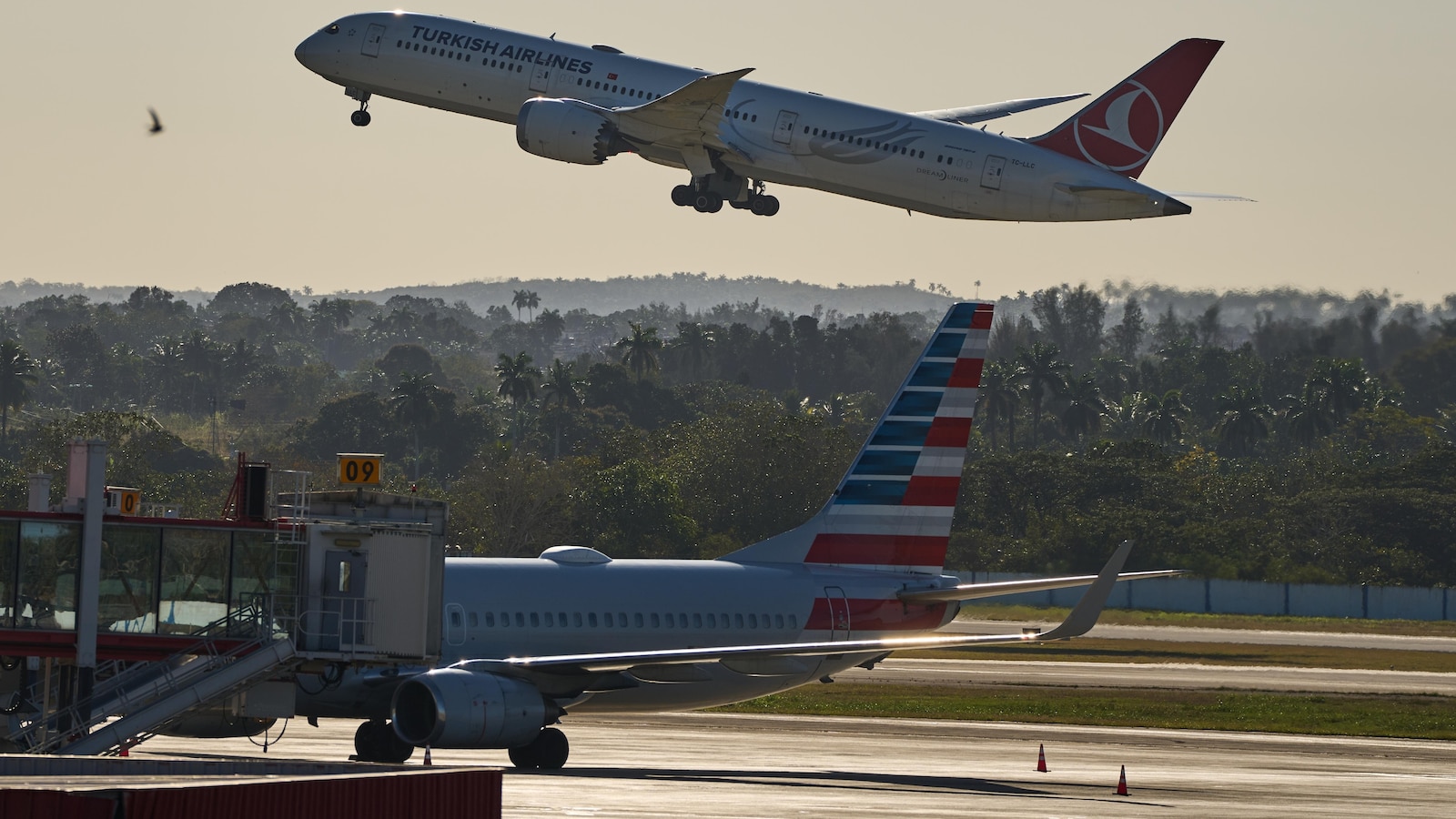
Airlines can no longer refuel on island as US blockade deepens energy crisis: Cuba
ABC News· 2026-02-09 18:43
Core Viewpoint - Cuban aviation officials have issued a warning regarding a fuel shortage for airlines, which is part of a broader energy rationing effort due to U.S. sanctions impacting Cuba's fuel resources [1][3]. Aviation Industry Impact - Airlines have been notified of the fuel shortage, which is unprecedented for Cuba, a country already familiar with crises [2]. - The fuel rationing is expected to affect long-haul flights from countries like Russia and Canada, crucial for Cuba's tourism economy, while shorter regional flights may not be significantly disrupted [4]. - Air Canada has announced the suspension of flights to Cuba in response to the fuel shortage [4]. Economic Consequences - The fuel shortage poses a significant challenge to Cuba's tourism sector, which previously generated $3 billion annually [6]. - The energy crisis has led to the suspension of major cultural events and reduced bank operating hours, further straining the economy [6][7]. - Public transportation in Havana has been severely affected, with the bus system nearly non-functional due to power outages and fuel shortages [6]. Government Response - Cuban President Miguel Díaz-Canel has acknowledged the crisis and indicated that further measures will be implemented [8]. - U.S. sanctions have intensified, particularly following political changes in Venezuela, exacerbating Cuba's economic difficulties [8]. Social Impact - The ongoing crisis has resulted in power outages lasting up to 10 hours, fuel shortages, and a lack of essential goods, reminiscent of the economic depression during the 1990s [9].

Chevron Amasses Largest Fleet in Almost a Year to Ship Venezuelan Oil
Yahoo Finance· 2026-01-26 17:01
Core Viewpoint - Chevron Corp. is significantly increasing its oil shipments from Venezuela, utilizing its largest fleet in nearly a year, following U.S. efforts to control the country's oil sector after the ousting of leader Nicolas Maduro [2][3]. Group 1: Fleet and Shipments - Chevron has dispatched 15 vessels this month to transport at least 200,000 barrels of oil per day, a notable increase from nine ships in the previous month and the highest number since March [3]. - The increase in shipments follows the disappearance of the so-called dark fleet, as the U.S. has committed to cracking down on illicit oil trading [3]. Group 2: Partnerships and Compliance - The U.S. has engaged traders such as Trafigura Group and Vitol Group to assist in selling up to 50 million barrels of oil [3]. - Chevron's shipments are directed to U.S. refiners, including Valero Energy Corp. and Phillips 66, with Boscan crude oil from its Petroboscan project accounting for about half of all shipments [4]. - Chevron asserts full compliance with U.S. sanctions [5].

Intel, AMD Accused of Allowing Chips in Russian Missiles
Yahoo Finance· 2025-12-10 21:08
Core Viewpoint - Microchip manufacturers Intel, AMD, and Texas Instruments are facing lawsuits for allegedly allowing their technology to be used in Russian-made weapons that have harmed civilians in Ukraine [1][2]. Group 1: Lawsuits and Allegations - The lawsuits, filed by a law firm on behalf of Ukrainian civilians, accuse the companies of "willful ignorance" regarding the resale of restricted chips to Russia, which were used in drones and missiles [2]. - Specific incidents cited in the lawsuits include attacks between 2023 and 2025 that resulted in civilian casualties, with some attacks involving Iranian-made drones containing components from Intel and AMD [2]. - The lawsuits claim that the companies exhibited "domestic corporate negligence" by failing to implement adequate export control and diversion-prevention systems [5]. Group 2: Company Responses - Intel stated that it does not conduct business in Russia and suspended all shipments to Russia and Belarus following the outbreak of the war, asserting compliance with U.S. export laws and sanctions [4]. - Texas Instruments and AMD have also claimed compliance with sanctions and have ceased business in Russia since the war began, with Texas Instruments expressing strong opposition to the use of its chips in Russian military equipment [5]. - The attorney representing the plaintiffs referred to the companies as "merchants of death," criticizing them for undermining U.S. sanctions [5].


Analysis: how latest US sanctions may put significant amount of Russian oil supply at risk
Invezz· 2025-10-24 12:58
Core Insights - The latest US sanctions on two major Russian oil companies are expected to significantly impact the oil market [1] - Following the announcement of these sanctions, oil prices experienced a surge [1] Company Impact - The sanctions target two of the largest Russian oil companies, which may lead to a reduction in their market share and operational capabilities [1] - The response from these companies to the sanctions could influence their future profitability and market positioning [1] Industry Implications - The sanctions are likely to create volatility in global oil prices, affecting supply and demand dynamics [1] - Other oil-producing nations may adjust their strategies in response to the sanctions and the resulting market changes [1]
US Sanctions Against Russian Oil Trigger Concerns in China
Yahoo Finance· 2025-10-23 09:14
Core Insights - US sanctions on Russian energy companies are significantly impacting China's oil industry, with both state and private refiners facing challenges in maintaining supply while avoiding penalties [1][2] - Approximately 20% of China's crude oil imports, equating to about 2 million barrels per day in the first nine months of this year, originate from Russia, making it a crucial source for refining into products like diesel and gasoline [1] Sanctions and Compliance - The US government's blacklisting of Rosneft PJSC and Lukoil PJSC is part of broader sanctions aimed at reducing financial support for Russia's war efforts in Ukraine, requiring transactions with these firms to be concluded by November 21 [2] - Chinese and Indian companies risk severe secondary penalties if they continue dealings with sanctioned entities, which could result in exclusion from western banking systems and global commodities markets [3] Market Dynamics - Compliance with sanctions may lead to a loss of access to discounted oil supplies, which have been essential for keeping energy costs low for industries and consumers in China and India [5] - The involvement of Lukoil in significant projects, such as Iraq's Basrah project and the Caspian Pipeline Consortium, poses additional challenges for buyers outside China and India [5] Political Response - China has publicly opposed unilateral sanctions that lack international legal basis and have not been authorized by the United Nations Security Council, indicating a potential geopolitical tension surrounding these sanctions [6]