
Wealth gap

Search documents
Juliana Stratton says ‘I am the fighter’ voters are ‘looking for’ after Illinois primary win
NBC News· 2026-03-18 22:04
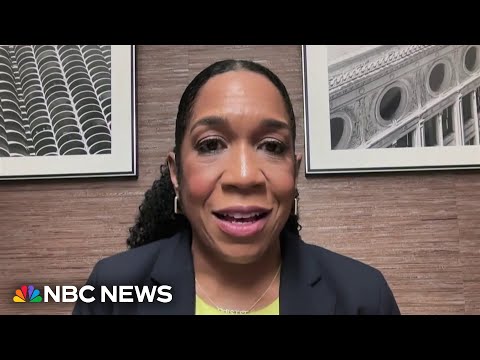
And joining me now, fresh off her primary victory, is Illinois Lieutenant Governor Juliana Stratton. Thank you so much for joining us, Lieutenant Governor. Really appreciate it.>> Thank you for having me. >> Well, congratulations on your win last night. I do want to start with your reaction to the victory.You do live in a reliably blue state. What is your strategy heading into November. Well, the strategy is to keep doing what I've been doing and why we were so successful last night.You know, I think that t ...

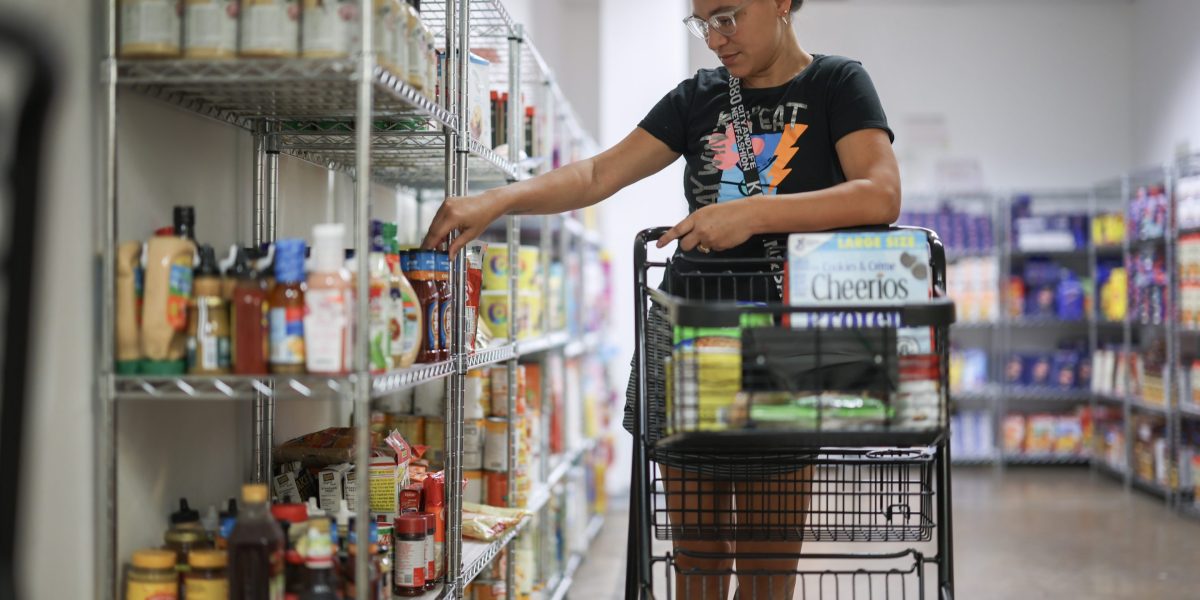
These 5 money stats reveal how typical Americans are doing in 2026 — and it's a stark picture. See how you compare
Yahoo Finance· 2026-03-03 19:00
It’s one thing to compare your wealth to the richest man in the world — Elon Musk, who has more than $670 billion to his name. Or President Donald Trump, worth more than $7 billion, according to Moneyweek (1). It’s another thing to look at how you’re faring relative to your neighbors. If you feel like you’re falling behind, the good news is equally bad news. Turns out a lot of people are falling behind. When you look closely at money stats revolving around typical Americans, a bleak picture emerges. T ...
X @Zhu Su
Zhu Su· 2026-02-22 05:22
British Hong Kong was an apartheid state with curfews for Chinese, and there was never any instrument resembling representative democracy much less direct democracy. To the extent that any Chinese ethnicity people in HK are nostalgic for this period, they are probably solely nostalgic that the gap between HK and mainland wealth was much bigger then than it is now. ...
Bessent Calls Trump Accounts 'Rainy Day Funds' And Slams 'Out of Touch' Critics As JPMorgan, BofA Back Plan
Yahoo Finance· 2026-01-30 23:01
Core Insights - The "Trump Accounts" program aims to create tax-advantaged investment accounts for approximately 25 million children born between January 1, 2025, and December 31, 2028, with an initial government-funded investment of $1,000 per child and annual contributions capped at $5,000 [4] Group 1: Program Overview - The Trump Accounts will serve as a "rainy day fund" for children when they reach adulthood, providing a financial safety net [1] - The program has already seen significant interest, with 600,000 sign-ups in the first week [3] Group 2: Wealth Gap Concerns - Critics argue that the program could exacerbate the wealth gap, as wealthier families can contribute the full $5,000 annually, while lower-income families may struggle to save [2] - Bessent dismissed these concerns, stating that the program is designed to target middle- and lower-income families [2] - He emphasized that many Americans cannot afford a $500 emergency expense, making the criticism politically motivated [3] Group 3: Corporate and Philanthropic Support - Bank of America and JPMorgan Chase announced they will match the government's $1,000 contribution for employees who open a Trump Account [6] - Notable philanthropists, including Michael Dell and Ray Dalio, have pledged significant contributions to the Trump Accounts, with Dell and his wife committing $6.25 billion [7] - Nicki Minaj has also committed to contributing between $150,000 and $300,000 to fund her fans' Trump accounts [6]
"The Principles of Ray Dalio" | 60 Minutes Archive
60 Minutes· 2025-12-18 21:22
In 2019, billionaire Ray Dalio told 60 Minutes the growing wealth gap in the country is a "national emergency." He warned that the issue "threatens to split us." This week, Treasury Secretary Scott Bessent announced Dalio as a new partner of the so-called "Trump Accounts" program, a tax-deferred investment vehicle for American children, intended to secure their financial future. Dalio pledged to make a $75 million donation to children in Connecticut. "60 Minutes" is the most successful television broadcast ...
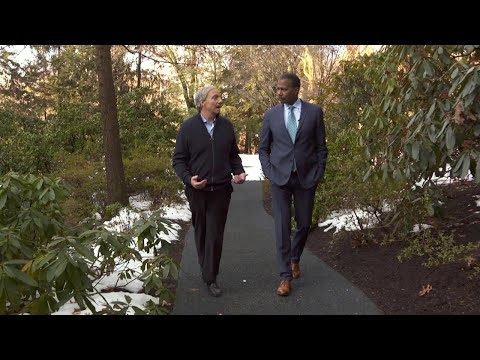
'I'm under no illusions': Facebook co-founder discusses Trump's new affordability pitch
MSNBC· 2025-12-08 02:47
Government Initiative Analysis - The initiative provides $1,000 for every newborn between 2025 and 2028, invested in the stock market, accessible at age 18 [1][4] - Parents can add an additional $5,000 per year to the account [1] - Concerns exist whether the program primarily benefits wealthy families as a tax shelter rather than aiding low-income children [2] Program Limitations - A $1,000 initial investment may not significantly impact college savings or home down payments for struggling families [5] - The account has a 10% penalty for withdrawals not used for specified purposes and is subject to taxes, making it less attractive than other investment schemes [8] - Middle and upper-class families may find better, more tax-efficient savings vehicles [9] Proposed Improvements - Suggestions include disproportionately funding accounts for families in low-income areas or those on Medicare to close the wealth gap [6] - The account should be tax-free and grow disproportionately for families that need it most [9] - Need financing vehicles to build dense apartment complexes quickly [21] Broader Economic Context - The initiative may shift responsibility onto individuals for economic planning instead of systemic solutions [10] - Billionaire philanthropy, like Michael Dell's donation, is a "band-aid" on the larger issue of wealth and income inequality [13][15] - The current administration's policies, such as lowering tax rates for the wealthy and cutting healthcare funding, contradict the initiative's goals [12]
Wealth gap shock: Nepal’s “nepo kids” & the Gen-Z uprising #shorts #nepal #politics #nepalprotest
Bloomberg Television· 2025-12-04 20:37
I was tired of living in a country where not my capabilities or my competence but the connection that people have takes them forward. >> We plan to have a very small peaceful protest. >> Did you stay off of social media or did you go back to posting. >> No, I went back to posting. I will never stop posting.It's fine even if I die but I will be dying picking up for my country. There is a huge class difference and all these people they get this opportunities not because they are capable of it just because the ...

Economic Headwinds Intensify: Job Cuts, Plummeting Sentiment, and Widening Wealth Disparities Signal Mounting Challenges
Stock Market News· 2025-11-23 03:38
Economic Overview - The U.S. economy is facing multiple challenges, including significant job cuts by major corporations, plummeting consumer confidence, and a historic freight company's bankruptcy [2][4] - The wealth gap is widening, with older demographics holding a significant portion of household equities [7][9] Corporate Restructuring and Job Losses - Tyson Foods is restructuring its beef operations, closing a major plant in Lexington, Nebraska, resulting in approximately 3,200 job losses, and reducing operations in Amarillo, Texas, affecting another 1,700 workers [3][8] - The company projects losses between $400 million and $600 million for its beef segment in fiscal year 2026 due to declining cattle supplies and high beef prices [3] Consumer Confidence and Job Market - U.S. consumer sentiment has dropped to 50.3 in October, the second-lowest level recorded, indicating widespread pessimism among households [5][8] - Job loss expectations among 18-34-year-olds are near record highs, with a 6.6% unemployment rate for new college graduates over the past year [6][8] Bankruptcy and Industry Strain - Port Elizabeth Terminal & Warehouse Corp., a 101-year-old freight company, has filed for Chapter 11 bankruptcy, citing surging business costs as a primary driver [4][8] - The logistics industry is experiencing a "Great Freight Recession," characterized by reduced shipping demand and rising operational expenses [4] International Travel Disruptions - Air China plans to significantly reduce flights between Chinese and Japanese cities, citing "plane availability," but this decision may also be influenced by rising political tensions [10]


Economist who popularized ‘K-shaped economy’ says this one wealth gap indicator is being overlooked
Fortune· 2025-11-13 17:42
Core Insights - The concept of a K-shaped economy highlights the growing divide between higher- and lower-income Americans, with some sectors recovering post-pandemic while others lag behind [1][3][4] Economic Disparities - Wage growth for the lowest-quartile income Americans has fallen to its lowest level in about a decade, while the highest income Americans are experiencing the fastest wage growth [4] - Subprime loans are increasing, indicating financial strain for many, while super prime loans are also on the rise among high-credit-score Americans [4] - The stock market reflects a K-shaped recovery, with earnings expectations rising for top companies while deflating for the majority of the S&P 493 [4] Consumer Sentiment - Consumer sentiment is split along income lines, with low-income Americans feeling significantly less confident about the economy compared to higher earners [5] - This sentiment shift is different from 2022, where market declines affected confidence across all income levels [5] Behavioral Implications - The differing sentiments may lead to varied consumer behaviors, increasing economic vulnerability [6] - Lower-income individuals may exhibit behaviors such as disengagement and reduced spending, while higher-income individuals may become overconfident and blind to risks [8] Political and Social Consequences - The K-shaped economy may exacerbate tensions between income classes, potentially leading to social unrest if lower-income Americans feel increasingly marginalized [9][10] - Historical parallels are drawn to social unrest linked to economic disparities, suggesting a risk of similar outcomes in the current context [9]

X @Wendy O
Wendy O· 2025-11-10 17:19
Retail deserves the same access to investments, banking, loans, and everything else that accredited investors have.The wealth gap in America is widening causing more turmoil than we already have, ...