disinflation

Search documents
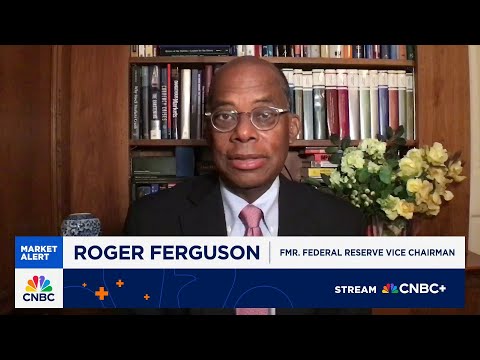
Dimon warns higher inflation risks being “skunk at a party” #shorts #jamiedimon #inflation
Bloomberg Television· 2026-03-02 20:37
How off sides would this market be if there were truly a deflationary shock given the fact that there seems to be comfort with the idea of disinflation right now. >> Well, I think that's true, but I think that that was true before this war. So, if you look at, you know, my view is that the price asset price is kind of high, credits are kind of low.It's kind of a lot of complacency in the market. I'm not sure, you know, we look at risk. We look at the broad range of outcomes and there are negative outcomes, ...

Investors are pausing longer U.S. exposures due to fiscal concerns: PWC
Youtube· 2026-02-24 04:53
Trade Balances and Economic Dynamics - The U.S. trade deficit in goods reached a historic high in 2025, indicating a reliance on foreign production, particularly in high-tech sectors like chip manufacturing from Taiwan [1] - The U.S. imports nearly half of its oil, with 70% of oil exports coming from Canada and Mexico, which are governed by the USMCA agreement [2][3] - Disruptions to USMCA could negatively impact manufacturing countries, including Japan, which depend on goods from Canada and Mexico [3] Tariff Policies and Economic Impact - The U.S. government is actively pursuing tariff policies under Section 122 of the Trade Act, which is legal if a balance of payments crisis is declared [4][5] - The U.S. has a significant surplus in services, particularly in technology, which contrasts with its goods trade deficit [6] - The focus on tariffs aims to address trade imbalances, but the U.S. government is also facing challenges with fiscal deficits and interest payments [7] Inflation and Price Levels - Recent tariffs have not led to significant inflation due to disinflationary forces, particularly in housing and energy prices [12][13] - Companies are beginning to pass on tariff costs to consumers, especially in sectors like automobiles and electronics, as consumer demand remains strong [15][16] - Potential geopolitical tensions, such as those in Iran, could disrupt oil supply and lead to price spikes, impacting inflation dynamics [19][21]

Fed Governor Miran: I don't see tariffs as major driver of inflation
CNBC Television· 2025-12-15 20:37
I don't see tariffs as being a major driver of inflation. Uh, you know, and I went through a lot I went through this in in in a lot of detail in my speech this morning about why I don't see that being the case. And I've been consistent about that being the case.Now, you might think that if I don't think that tariffs are driving inflation higher, then core goods will stay high for a long period of time, and that would be a problem if I wanted to cut rates. But I see so much disinflation in the pipeline becau ...

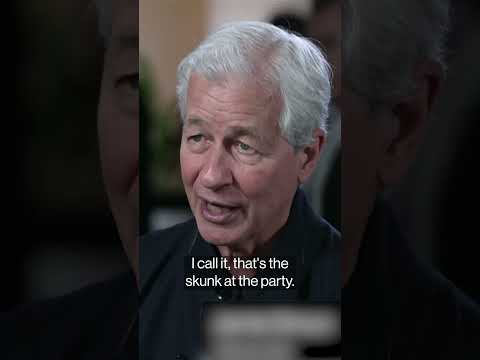
Expert Trader Says Stocks Are NOT In A Bubble
From The Desk Of Anthony Pompliano· 2025-10-03 21:00
Macroeconomic Shift - The research indicates a shift from a debt deflation mindset, prevalent since the 2008-2009 Great Financial Crisis (GFC), to a currency debasement mindset marked by large procyclical fiscal deficits [1] - The debasement mindset prioritizes protecting purchasing power against asset and monetary debasement, and asset inflation [1] - The research suggests this shift is a secular change lasting over a decade, with investors gradually recognizing its implications [1] Investment Strategy - The research favors equities, gold, Bitcoin, and real estate as preferred assets in the debasement era, viewing them as inflation hedges [1] - Dips in these assets are expected to be short-lived as investors prioritize protecting purchasing power [1] - Equities are considered inflation hedges because S&P earnings have generally tracked above inflation over the past couple of decades [1] - The S&P 500 is projected to reach 7,000 by 2026, based on anticipated earnings, margins, and reasonable multiples on sales and earnings [1] Bond Market - The research suggests bonds will have a place in portfolios, offering valuable diversification [1][6] - A cyclical period of disinflation is expected, driven by factors like weaker oil prices, a softening labor market, and lower shelter inflation [1][8] - The Federal Reserve's rate cuts are anticipated to influence bond yields, with potential for a bull steepening in the yield curve [1][10] Labor Market - The research suggests the weakening labor statistics may be both cyclical and structural, influenced by technology innovation like AI [1][25] - Immigration trends impact the labor market, affecting the break-even rate for job creation needed to maintain a constant unemployment rate [1][47] - The research describes a "malignant stasis" in the labor market, where the unemployment rate may not rise significantly, but underlying conditions could be fragile [1][50] Gold and Bitcoin - The fund is overweight both gold and Bitcoin, viewing them as positive assets in the debasement world [1][55] - Gold is expected to continue its secular bull market, with violent moves higher and longer-lasting trends than anticipated [1][58] - A rotation back into Bitcoin relative to gold is anticipated towards the year-end or in the next six months [1][60]
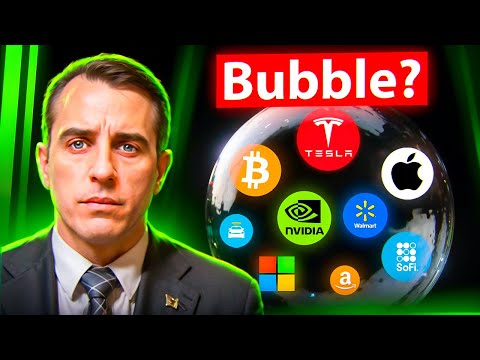
We're in a period of significant disinflation, says John Hancock's Emily Roland
CNBC Television· 2025-06-18 11:53
Housing Market & Disinflation - Housing inventory is at its highest level since 2020, indicating a potential slowdown in demand [3] - Home prices experienced a decrease last month, marking the first decline since January 2023 [4] - John Hancock believes housing disinflation will influence economic data, potentially leading the Fed to cut rates more than anticipated [4] Inflation & Tariffs - The analysis suggests that disinflation, particularly in the service-based economy, might offset the potential inflationary effects of tariffs [6] - Markets are overly focused on potential inflationary impacts of tariffs, while underlying disinflationary trends are being overlooked [2][5] Labor Market & Economic Growth - Initial claims are being closely monitored as indicators of potential cracks in the labor market, with a level approaching 260 signaling a more significant deceleration in growth [7][8] - Economic indicators, such as PMI data, suggest a slowing economy, and leading economic indicators have rolled back over [13] - While a recession is not anticipated, a gradual deceleration in growth is expected, with consumer spending showing signs of pullback [12] Fed Policy & Market Expectations - The Fed may be behind the curve in recognizing disinflationary data, similar to the market's oversight [10] - The bond market is pricing in only one to two rate cuts this year, which is viewed as inconsistent with current economic dynamics [10] - There's a possibility the Fed is already too late in adjusting its policies, potentially leading to more rate cuts than currently expected [9][10] Investment Strategy - John Hancock recommends locking in elevated income through high-quality bonds, given elevated bond yields [8] - The recommended investment strategy for the remainder of 2025 is to focus on income generation through high-quality bonds and dividend-paying stocks [14]
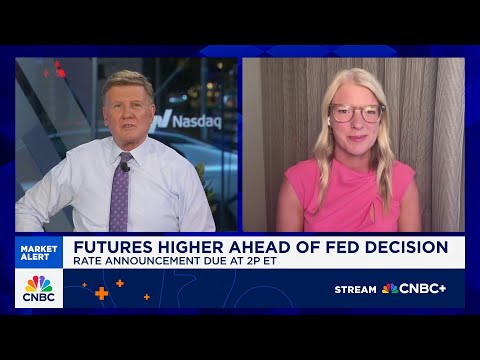
The Fed is not going to cut rates in this week’s meeting, says Roger Ferguson
CNBC Television· 2025-06-16 13:26
Fed's Monetary Policy Stance - The Fed is likely to maintain a vigilant stance and signal patience before cutting rates, potentially disappointing some [2][3] - The Fed is in a "wait and see" mode, hoping for further disinflation but remaining vigilant [2][3] - The Fed is unlikely to cut rates in the upcoming meetings [2] - The Fed needs to be cautious this year, given the impact of oil prices on headline inflation and the need to prevent spillover into core inflation [6] Inflation and Rate Cut Considerations - Cutting rates is not feasible with inflation at 3.8% [3] - The Fed is on guard against signaling a rush to cut rates, considering problematic short-term inflation expectations [4] - A "good rate cut" (due to easing inflation rather than economic weakness) would be desirable [7] - Achieving a "good rate cut" this year is unlikely due to persistent risks; greater clarity and continued disinflation are needed, possibly next year [8] - The Fed should not overemphasize recent good inflation news, as past patterns have been unfavorable [10] - The Fed was late in addressing the previous inflation surge [11] External Factors and Uncertainty - Geopolitical risks, such as the Straits of Hormuz situation, need to be considered [4][5] - Uncertainties surrounding tariffs, oil impact, and immigration reform add complexity to the Fed's decision-making [8]