eSIM普及

Search documents
iPhone Air 国行终定档!库克现身直播间带货iPhoneAir
Di Yi Cai Jing· 2025-10-13 14:53
Core Points - Apple CEO Tim Cook announced that the iPhone Air will be available for pre-order in China starting October 17 and officially on sale from October 22 [1] - The pricing for the iPhone Air in China is set at 7999 yuan for the 256GB version, 9999 yuan for the 512GB version, and 11999 yuan for the 1TB version, positioning it between the iPhone 17 and iPhone 17 Pro series [1] - The iPhone Air is Apple's first model that exclusively supports eSIM, relying on services from China Mobile, China Telecom, and China Unicom [1] Industry Developments - The launch of the iPhone Air is seen as a significant step towards promoting eSIM technology in China, with China Unicom and China Mobile both announcing the initiation of eSIM services [1] - China Unicom has launched a nationwide reservation channel for eSIM services, while China Mobile has received approval to conduct commercial trials for eSIM mobile services [1]

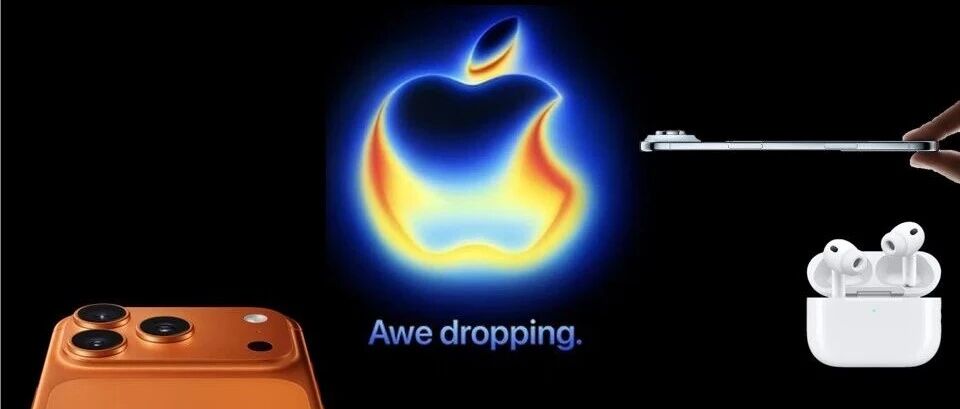
苹果 “Awe dropping” 发布会:硬件创新强势回归
Canalys· 2025-09-16 01:02
Core Viewpoint - Apple's September product launch is not just about releasing new iPhones but represents a clear strategic declaration, focusing on hardware innovation and ecosystem control [1][12] Group 1: iPhone Air - The introduction of iPhone Air marks a significant strategic shift, with Canalys predicting that its shipment volume will nearly double by the second half of 2025 compared to the previous Plus series [3][4] - iPhone Air is not a successor to Plus or mini but a redefinition of Apple's high-end product line, simplifying naming conventions and establishing itself as an independent category [4] - The design of iPhone Air utilizes ultra-thin titanium alloy, pushing engineering limits and serving as a testing ground for future innovations [4] - iPhone Air integrates Apple's self-developed 5G modem and wireless components, enhancing energy efficiency and reducing reliance on suppliers like Qualcomm [4] Group 2: eSIM Adoption - iPhone Air is Apple's first globally launched pure eSIM model, accelerating the industry's shift towards a no-physical-SIM card era [6] - While the U.S. market has fully adopted eSIM since the iPhone 14, other markets still rely on hybrid or physical SIM versions, with China having minimal eSIM penetration due to regulatory caution [6] - The introduction of iPhone Air is expected to drive regulatory changes in China, promoting eSIM adoption as the market for cellular-connected smartwatches grows [6][7] Group 3: IoT Devices and Ecosystem - Apple's strategy emphasizes making iPhones thinner to enhance ecosystem control, facilitating seamless device switching and connectivity experiences [9] - The Apple Watch is positioned as a core component of the ecosystem, with new features enhancing usability and health monitoring capabilities [10] - AirPods are evolving from audio accessories to multifunctional devices, deepening integration within the Apple ecosystem and enhancing user engagement through new health features and real-time translation capabilities [11] Group 4: Market Positioning - Apple's recent product launch reflects a return to its core identity, reclaiming industry leadership through bold hardware innovations and accelerating eSIM transformation [12][13] - The company is responding to market trends, with Canalys forecasting that by the end of 2025, a quarter of smartphones will have AI capabilities, up from 9% last year [13]