
水利工程管理

Search documents
新华社:“十四五”时期我国落实小型水库运行管护中央补助资金120亿元
Shui Li Bu Wang Zhan· 2026-02-26 07:37
Core Insights - Since the beginning of the 14th Five-Year Plan, China has allocated 12 billion yuan in central subsidies for the operation and maintenance of small reservoirs, addressing the historical issue of insufficient funding for their management [1] Group 1: Government Initiatives - The Ministry of Water Resources has emphasized the importance of county-level government responsibility in managing small reservoirs, which constitute approximately 95% of all reservoirs in China [1] - The government is actively exploring reforms in water conservancy management systems, focusing on the management of small reservoirs [1] Group 2: Impact on Water Management - Small reservoirs play a crucial role in flood control, agricultural irrigation, and water supply security [1] - The Ministry of Water Resources is promoting a professional management model for small reservoirs and is conducting pilot projects for real estate registration of reservoir projects [1] Group 3: Future Plans - There are plans to improve the operational mechanisms for major water conservancy projects, aiming to establish a comprehensive, intelligent, and efficient regulatory system for water management [1] - The goal is to achieve high-level operation and efficient management of water conservancy projects [1]
“十四五”时期我国落实小型水库运行管护中央补助资金120亿元
Xin Hua Wang· 2026-02-21 07:13
Core Viewpoint - Since the beginning of the 14th Five-Year Plan, China has allocated 12 billion yuan in central subsidies for the operation and maintenance of small reservoirs, addressing the historical issue of insufficient funding for their management [1] Group 1: Funding and Management - A total of 12 billion yuan has been allocated for the operation and maintenance of small reservoirs, which constitute approximately 95% of all reservoirs in China [1] - The Ministry of Water Resources has guided local governments to strengthen their responsibilities in managing small reservoirs, effectively resolving the "lack of funds" issue [1] Group 2: Reform and Innovation - The ongoing reforms in water conservancy engineering management systems are highlighted, with a focus on the management system of reservoirs [1] - The Ministry has promoted a professional management model for small reservoirs and is exploring pilot projects for real estate registration of reservoir projects [1] Group 3: Future Plans - Plans to improve the operational mechanisms of major water conservancy projects are in place, aiming to establish a comprehensive, intelligent, and efficient regulatory system for high-level operation and management of water conservancy projects [1]
【省水利厅】陕西加强堤防运行管理
Shan Xi Ri Bao· 2026-02-03 00:19
Core Viewpoint - The Shaanxi Provincial Water Resources Department has developed detailed regulations for the implementation of the "Dam Operation Management Measures" to enhance the safety and effectiveness of dam operations [1][2] Group 1: Regulations and Management - The regulations define the management scope of dams, including the dam itself and the protective areas along the riverbanks [1] - The regulations require the dam management department to supervise and manage the dams, coordinate safety responsibilities, and ensure funding for maintenance and repairs [1] - The regulations emphasize that the dam management unit is the main responsible entity for the implementation of dam operation management [1] Group 2: Safety Monitoring and Emergency Preparedness - The dam management unit must establish a safety monitoring system that includes monitoring water levels, subsidence, displacement, and seepage [1] - The regulations mandate the organization of safety risk inspections and the development of emergency response plans for flood control [1] - The dam management unit is responsible for analyzing, compiling, archiving, and managing monitoring data [1]
清水润泽江南 奏响太湖安澜“四重奏”
Xin Lang Cai Jing· 2026-01-19 21:15
Core Viewpoint - The article highlights the successful water management and ecological restoration efforts in the Taihu Lake region, showcasing the integration of technology and innovative water governance strategies to ensure water quality and supply, while enhancing the ecological environment [1][2][6]. Water Management Achievements - During the 14th Five-Year Plan period, Taihu Lake's water quality has consistently maintained a Class III standard, achieving safe summer conditions for 18 consecutive years [2]. - The Jiangsu Provincial Taihu Management Office has implemented a series of water diversion projects, including 11 instances of water diversion from the Yangtze River through the Wangyu River and 2 instances through the Xinmeng River, totaling 115 billion cubic meters of water diverted over five years, equivalent to 2.5 times the volume of Taihu Lake [3][4]. Technological Integration - The management office has established a digital governance information system for flood and drought prevention, enhancing decision-making capabilities through real-time data monitoring and sharing [6][10]. - Advanced technologies such as AI for monitoring water quality and automated systems for managing water pumps have been deployed, improving operational efficiency and ecological protection [7][11]. Ecological Restoration Efforts - The management office has conducted over 4,000 investigations of remote sensing changes to monitor key river and lake areas, contributing to the ecological restoration of Taihu Lake [10][11]. - The introduction of drones and AI technology for monitoring floating debris has significantly improved the efficiency of ecological management, allowing for precise and timely interventions [10][11]. Community Engagement and Education - The management office has actively engaged with local communities, providing services and educational programs to enhance public awareness of water conservation and management [12][14]. - Initiatives such as skill competitions and training programs for young professionals in the water management sector have been implemented to foster talent development and innovation [14].
珠江水利委员会组织完成直属工程标准化管理年度评价
Shui Li Bu Wang Zhan· 2025-12-26 02:02
Core Insights - The Pearl River Commission has completed the standardized management evaluation for six direct engineering projects for the year 2025, focusing on higher standards and stricter requirements for the Datengxia and Baise water conservancy hubs [1][2] - The evaluation process involved both organizational assessments and cross-peer evaluations, aiming to enhance the overall management capabilities of the projects [1] Group 1 - The Datengxia water conservancy hub is set to achieve the Ministry of Water Resources' standard management level by 2026, with expert guidance to clarify the path for standardization [1] - The Baise water conservancy hub has improved its overall image and information technology level, building on its previous standardization evaluation by the Ministry of Water Resources [1] - The other four hydropower projects managed by the commission have undergone cross-peer evaluations, promoting mutual learning among technical personnel to enhance management capabilities [1] Group 2 - Since the launch of standardized management for water conservancy projects in 2022, the Pearl River Commission has achieved full coverage of standardized management for six projects, establishing a mechanism for setting annual goals, quarterly follow-ups, and year-end evaluations [1] - Continuous standardization efforts have led to clearer operational management objectives, more standardized daily management, improved project images, and steadily enhanced modernization levels in management [1] - The next steps involve reinforcing guidance and supervision to ensure all direct projects implement standardized and refined management, thereby ensuring safe operations and maximizing benefits for high-quality development in the Pearl River Basin [2]
中国之声一线调研丨水利工程开放,何以激活“人水共生”城市新空间?
Yang Guang Wang· 2025-11-21 03:45
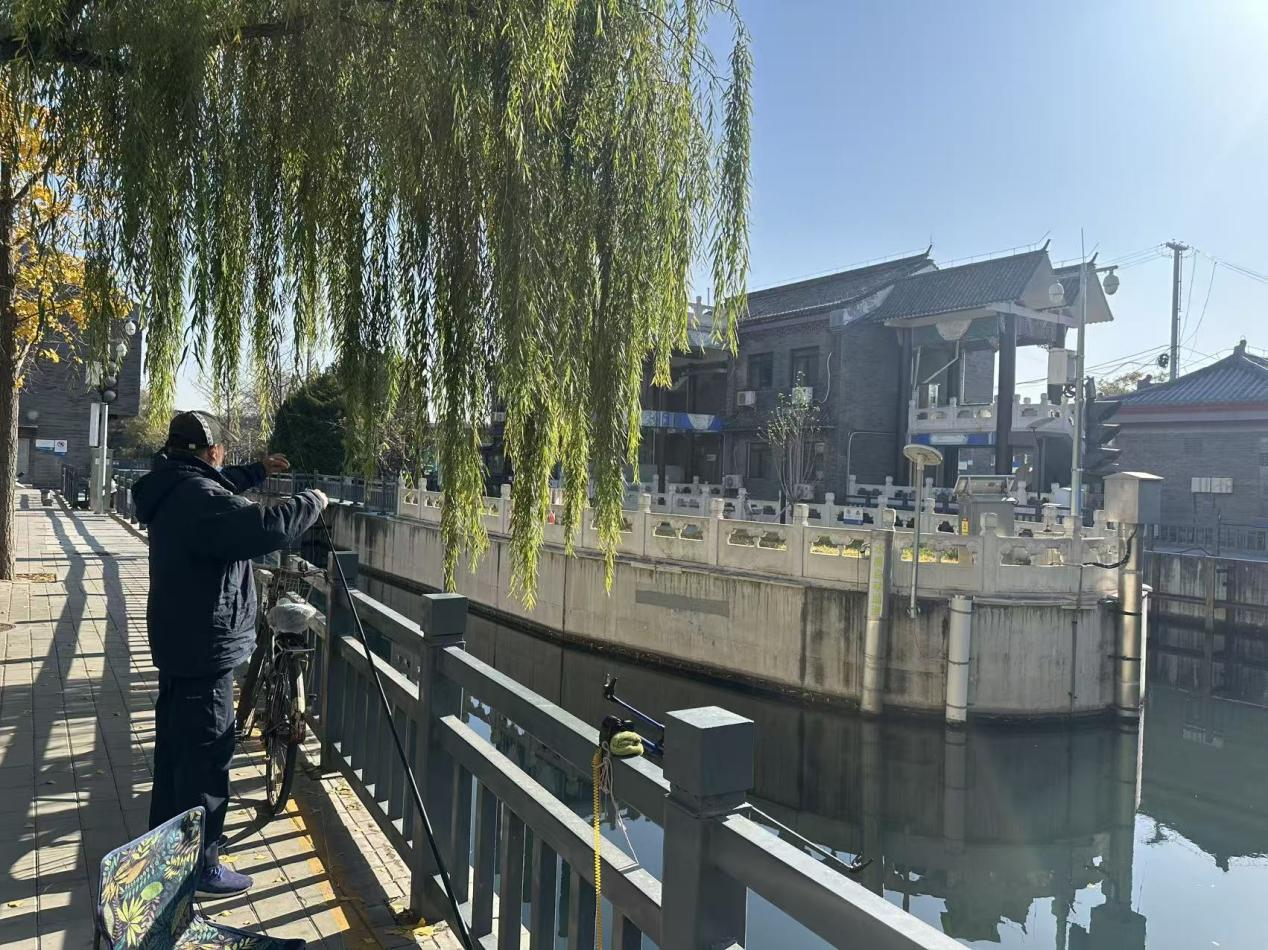
Core Insights - The article discusses the transformation of water conservancy projects in Beijing from closed to open spaces, enhancing public access and interaction with water resources [1][2][3] Group 1: Open Water Conservancy Projects - The North Hu Cheng River waterfront path project has connected eight previously isolated points, allowing for smoother pedestrian access around the city [2] - The opening of the Songlin Weir and Ship Lock area has created a 2700 square meter public space, enhancing the aesthetic and recreational value of the area [3] - The West Suburb Rainwater Regulation and Storage Project has seen a significant increase in visitor numbers, with projections to exceed one million in 2024 [4] Group 2: Community Engagement and Education - Water conservancy facilities are being opened to the public to foster a better understanding of their functions and importance, promoting water conservation awareness [6][8] - The management approach has shifted from a focus solely on water control to integrating water resources into urban life, enhancing community interaction [8] Group 3: Infrastructure Improvements - Enhancements to the open spaces include the addition of seating, lighting, and landscaping, creating a more inviting environment for residents [3][4] - The management of water conservancy projects is evolving to prioritize both safety and public enjoyment, reflecting a broader urban management philosophy [8]

成功应对94站次超警洪水 黄河2025年伏秋汛期平稳结束
He Nan Ri Bao· 2025-11-02 23:28
Core Insights - The Yellow River's flood and drought management during the 2025 summer-autumn flood season was successfully concluded, with the Yellow River Water Resources Commission effectively responding to 94 instances of flood exceeding warning levels, ensuring the safety of people's lives and property [1] Group 1: Flood and Drought Management - The Yellow River basin experienced significant weather fluctuations, with a notable drought from March to June followed by intense rainfall in July and August, and a marked increase in autumn rainfall, with October's cumulative rainfall nearly four times higher than the historical average [1] - The commission implemented a coordinated operation of 55 water projects across the upper, middle, and lower reaches of the river, significantly reducing peak flood flow from 6,900 cubic meters per second to 2,670 cubic meters per second, achieving a peak reduction rate of 61.3% [1] Group 2: Water and Sediment Regulation - The Yellow River's water and sediment regulation achieved multiple objectives, including drought relief and ecological water supply, with the Sanmenxia Reservoir discharging 335 million tons of sediment and the Xiaolangdi Reservoir discharging 222 million tons [2] - The total water storage in key reservoirs at the end of the flood season reached historical highs, with the Xiaolangdi Reservoir's water level at 270.20 meters, the highest for this time of year, and a total storage of 10.552 billion cubic meters in six reservoirs, the second highest for the same period [2] Group 3: Future Preparedness - As the Yellow River approaches the ice flood season, the commission plans to summarize this year's flood management experiences, address weaknesses, and maintain vigilance to ensure effective preparations for ice flood prevention [2]
长江水利委员会推进江垭和皂市水库现代化运行管理矩阵建设
Shui Li Bu Wang Zhan· 2025-09-03 03:51
Core Insights - The Yangtze River Water Resources Commission has conducted a survey on the operation and management of reservoir projects at the Li River Company, focusing on the modernization of the Jiangya and Zaoshi reservoirs [1] - The survey team acknowledged the achievements of the Li River Company in building a modern reservoir operation management matrix, emphasizing its role in promoting high-quality water conservancy development [1] Group 1 - The construction of a modern reservoir operation management matrix is a practical measure to advance high-quality water conservancy development and is essential for building "safe, ecological, and intelligent dams" [1] - The Li River Company is encouraged to enhance the matrix platform's construction, focusing on showcasing key highlights and strengthening its application in daily engineering management [1] - The company is urged to summarize experiences and highlight distinctive features to become a leader in modern reservoir operation management matrix construction [1] Group 2 - The Jiangya and Zaoshi reservoirs are among the first pilot reservoirs for the matrix initiative, tasked with exploring innovation and demonstrating leadership [2] - The Li River Company has strengthened coordination and resource integration, focusing on key projects such as the construction of a co-management mechanism and safety production risk control [2] - The digital application platform with Li River characteristics has been successfully implemented, notably during the flood defense in June, preventing potential water level crises in the Shimen River section [2]
数字孪生长江智慧纪巡财审协同监督系统首个试点项目落地
Shui Li Bu Wang Zhan· 2025-08-29 13:02
Core Viewpoint - The integration of big data and technology in anti-corruption efforts is a key task for the Central Commission for Discipline Inspection, aiming to enhance supervision effectiveness by 2025 [1] Group 1: Digital Supervision System Development - The Yangtze River Water Resources Commission is implementing a "Digital Twin Yangtze" supervision system, incorporating a collaborative supervision big data platform for financial and audit oversight [1] - The system development follows a "build while using, rolling optimization" principle, with initial modules for discipline supervision, inspection, financial supervision, and audit supervision completed [1] - Seven affiliated enterprises are participating in pilot projects, focusing on project management, contract management, and financial supervision [1] Group 2: Implementation of Financial Supervision System - The financial supervision system for the Lushui Reservoir reinforcement project has been officially launched, marking a significant step in implementing the Yangtze River Water Resources Commission's directives [2] - The system has successfully integrated and verified historical payment data for 82 transactions, streamlining the approval process to ensure traceability and transparency [2] - It covers eight core business areas, enhancing financial supervision and breaking down information barriers between financial and operational oversight [2] Group 3: Enhanced Supervision Mechanisms - The system establishes a comprehensive supervision framework that enhances precision and timeliness through a closed-loop monitoring approach [3] - It integrates multi-source data to create a dynamic visualization of project investment and execution, addressing traditional management issues [3] - An intelligent early warning mechanism is embedded to preemptively identify risks related to budget overruns and contract violations, shifting the focus from post-audit to proactive supervision [3]
新万福河水利工程管理成效颇为显著
Qi Lu Wan Bao· 2025-08-22 21:12
Core Viewpoint - The Xinwanfu River Branch Center in Jining City is advancing river basin governance through standardized, digitalized, and professional management to ensure regional water security [1] Group 1: Management and Governance - The Xinwanfu River Branch Center focuses on standardized management, having revised and improved over 10 operational management manuals and flood prevention plans, establishing a comprehensive management system covering project operation, flood emergency response, and river chief system implementation [1] - The governance project for the Xinwanfu River has been approved for implementation by the National Development and Reform Commission, with flood prevention standards raised from a 20-year return period to a 50-year return period, and drainage standards increased from a 3-year return period to a 5-year return period, benefiting areas along the river such as Rencheng, Yutai, and Jinxing [1] Group 2: Future Plans - The Xinwanfu River Branch Center will deepen the construction of flood prevention and disaster reduction systems along with a smart management platform, contributing to the development of "Smart Jining" and "Beautiful Jining" [1]