
人水共生

Search documents
两河治理,看见“幸福”模样
Xin Lang Cai Jing· 2026-01-12 22:06
Core Viewpoint - The governance of the two rivers marks a new starting point for "people-water symbiosis," focusing on ecological restoration and cultural tourism development, ultimately enhancing the quality of life for local residents [1] Group 1: Environmental Governance - The Bai Fu River aims to restore the ecological chain of the Wumeng Mountains, while the Zhang River seeks to activate the cultural and tourism potential of the Karst landscape [1] - Key engineering projects include dredging for clearer water and bank protection for safer living conditions, emphasizing the importance of improving local livelihoods [1] Group 2: Community Impact - The concept of "Happy Rivers and Lakes" transcends environmental metrics, embodying the joy of elderly people practicing Tai Chi by the river and children playing in the waves [1] - The stories of the two rivers will serve as a testament to the continuous improvement of people's lives in Guizhou [1]
治理的是河,更新的是城,着眼的是人
Ren Min Ri Bao· 2025-12-06 00:54
Group 1 - The article emphasizes the transformation of urban rivers, highlighting the shift from pollution and neglect to revitalization and ecological awareness, particularly in the context of Beijing's Liangma River [1][2] - It discusses the evolving relationship between people and rivers, illustrating how urban development has led to a reconceptualization of water spaces, moving from mere utility to a source of cultural and recreational value [2][3] - The narrative reflects a broader trend in urban development in China, transitioning from large-scale expansion to enhancing existing urban environments, focusing on quality of life and sustainable practices [3] Group 2 - The article underscores the importance of integrating various urban management sectors, such as water management, landscaping, and cultural tourism, to achieve cohesive river governance and urban development [3] - It highlights specific community-driven initiatives, such as the installation of new access points for individuals with mobility challenges, showcasing a commitment to inclusivity in urban planning [3] - The piece concludes with a vision for cities where water bodies enhance cultural identity and community engagement, suggesting that a harmonious relationship between people, rivers, and urban spaces can foster vitality and cultural richness [4]
人、河、城的协奏曲(现场评论)
Ren Min Ri Bao· 2025-11-30 22:01
Core Insights - The reconstruction of the relationship between people and rivers reflects an increased awareness of ecological civilization and an upgraded governance concept [1][2][4] - The integration of leisure, commerce, and culture along riverbanks enhances the quality of urban life and promotes a harmonious coexistence between people and rivers [3][4] Group 1: Ecological and Urban Development - The transformation of urban rivers is a response to historical pollution and neglect, leading to a revitalization that enhances the relationship between people and their environment [1][2] - The shift from large-scale urban expansion to improving existing urban spaces emphasizes the importance of water ecology, water life, and water economy [3][4] Group 2: Community Engagement and Governance - The implementation of user-friendly infrastructure, such as new rotating doors for accessibility, demonstrates a commitment to addressing community needs and enhancing public spaces [4] - Collaborative governance involving multiple departments and stakeholders is essential for effective urban river management and sustainable development [3][4]
中国之声一线调研丨水利工程开放,何以激活“人水共生”城市新空间?
Yang Guang Wang· 2025-11-21 03:45
Core Insights - The article discusses the transformation of water conservancy projects in Beijing from closed to open spaces, enhancing public access and interaction with water resources [1][2][3] Group 1: Open Water Conservancy Projects - The North Hu Cheng River waterfront path project has connected eight previously isolated points, allowing for smoother pedestrian access around the city [2] - The opening of the Songlin Weir and Ship Lock area has created a 2700 square meter public space, enhancing the aesthetic and recreational value of the area [3] - The West Suburb Rainwater Regulation and Storage Project has seen a significant increase in visitor numbers, with projections to exceed one million in 2024 [4] Group 2: Community Engagement and Education - Water conservancy facilities are being opened to the public to foster a better understanding of their functions and importance, promoting water conservation awareness [6][8] - The management approach has shifted from a focus solely on water control to integrating water resources into urban life, enhancing community interaction [8] Group 3: Infrastructure Improvements - Enhancements to the open spaces include the addition of seating, lighting, and landscaping, creating a more inviting environment for residents [3][4] - The management of water conservancy projects is evolving to prioritize both safety and public enjoyment, reflecting a broader urban management philosophy [8]

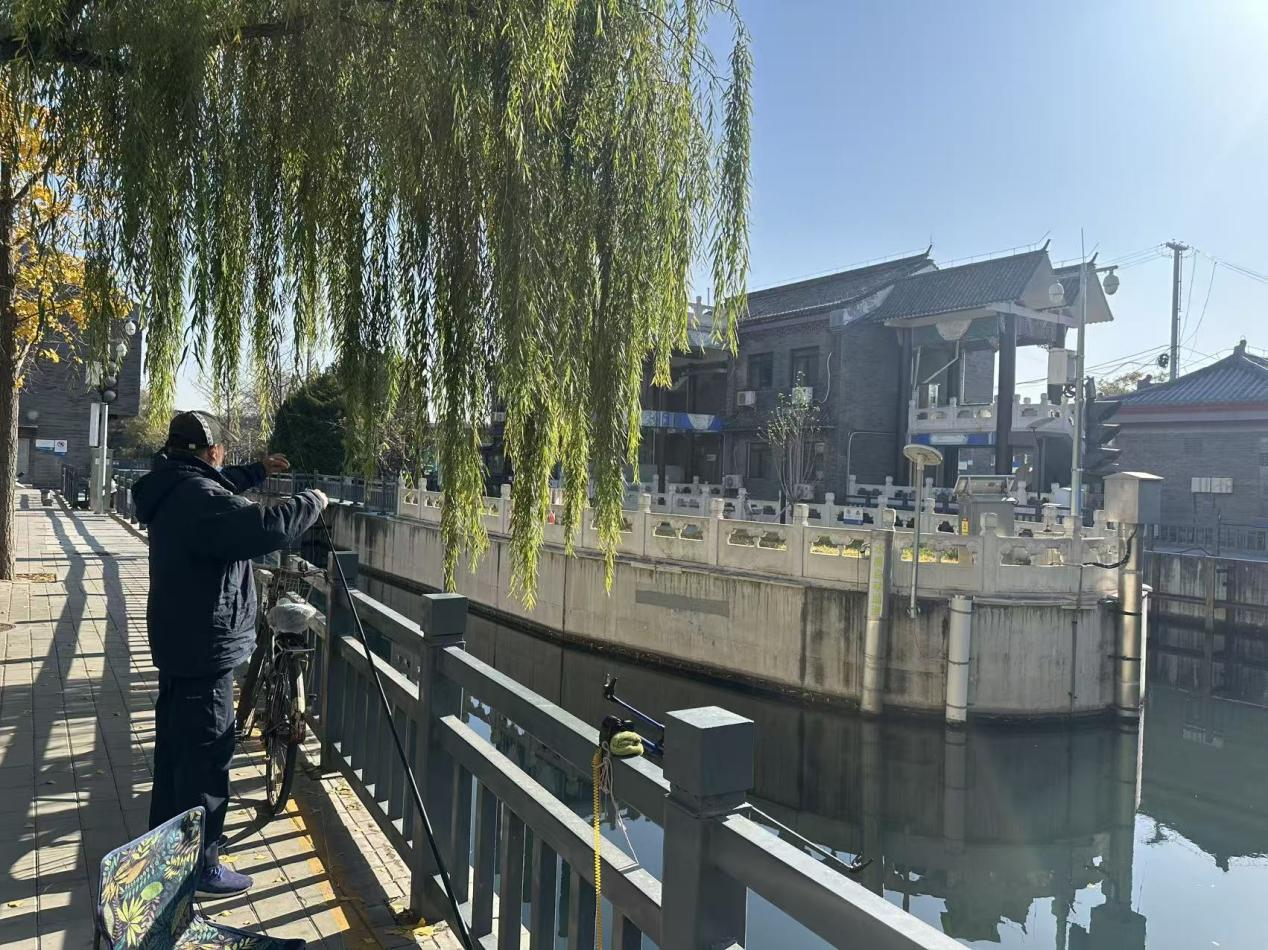
行走江河看中国|我家门前有条河
Zhong Guo Xin Wen Wang· 2025-10-13 07:19
Core Points - The article emphasizes the harmonious relationship between human life and nature, particularly through the lens of seasonal changes and ecological governance [2] Group 1 - The narrative illustrates how the smoke from riverside homes synchronizes with the pulse of the Yellow River, symbolizing a deep connection between people and their environment [2] - It highlights the transformation of grand ecological governance into everyday experiences, such as rain outside the window and meals under the eaves, creating a warm poetic expression of coexistence between humans and water [2]