Financial Regulation

Search documents
FCA CEO Nikhil Rathi signals shift towards fewer new rules
Yahoo Finance· 2026-02-23 12:00
Core Viewpoint - The UK's Financial Conduct Authority (FCA) is changing its approach to market failures, moving away from creating new rules as the default response, emphasizing a more outcomes-based approach instead [1][2]. Regulatory Approach - FCA CEO Nikhil Rathi indicated that not every issue requires significant interventions or new regulations, suggesting a shift in focus due to the post-Brexit regulatory landscape [1]. - The introduction of consumer duty is expected to reduce the need for extensive rules, as it aims to improve outcomes for consumers [2]. Regulatory Modernization - The FCA is also focusing on regulatory modernization, particularly concerning data reporting and compliance burdens, in response to rapidly evolving markets and technology, especially in AI [3]. - Concerns were raised about the potential impact of rising mortgage rates on borrowers, highlighting the need for careful monitoring in this area [3]. Retirement Outcomes - Rathi expressed concerns regarding retirement outcomes, noting that it is detrimental to society when individuals retire with incomes below expected living standards while their wealth is largely tied up in housing [4]. Communication and Transparency - The FCA is enhancing its communication regarding enforcement actions, despite some resistance from the Treasury regarding transparency [5]. - Industry voices have expressed concern that reduced rule-making may leave many companies unprepared for the implications of a less regulated environment [5][6]. Industry Preparedness - Some industry leaders, like Kenny MacAulay, have warned that while reduced regulations may be welcomed, many firms are ill-equipped to handle the challenges of a deregulated landscape, particularly in terms of cyber risk and data management [6].
X @The Wall Street Journal
The Wall Street Journal· 2026-02-16 14:37
The regulator is looking at allowing Chinese-registered companies to follow Chinese accounting rules when listing global depository receipts in London. https://t.co/6ZWuAqPUZe ...
国家金融监管总局 发布《行政许可实施程序规定》
Xin Lang Cai Jing· 2026-02-12 17:28
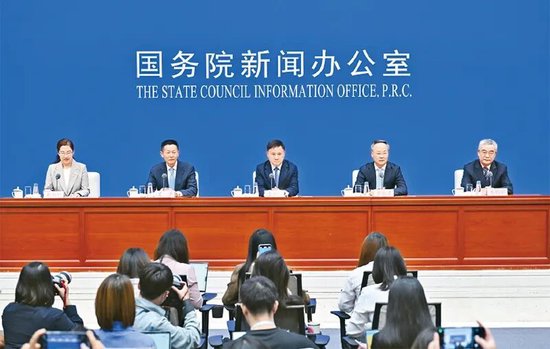
为进一步规范金融机构行政许可实施程序,优化工作流程,国家金融监管总局修订发布了《国家金融监 督管理总局行政许可实施程序规定》(以下简称《规定》),自2026年3月1日起施行。 《规定》的发布有利于提高国家金融监管总局系统行政许可工作规范性,压实金融机构主体责任,提升 市场准入工作质效。 公开征求意见期间,社会公众从条款理解、文字表述以及操作环节等方面提出了很好的意见和建议,国 家金融监管总局进行了认真研究,完善了部分条款表述,下一步将做好对行政许可申请人的培训和指导 工作,提高市场准入工作服务水平。据国家金融监管总局 (来源:衢州日报) 《规定》主要内容包括总则、申请与受理、审查、决定与送达、退出程序、法律责任、附则等七个章 节,共五十条。 转自:衢州日报 《规定》适应金融监管体制改革需要,明确分级分类办理机制,进一步完善了行政许可工作流程。 ...
X @The Block
The Block· 2026-02-11 19:12
Democrats press SEC's Atkins over dropped crypto cases, Trump industry ties as agency shifts strategy https://t.co/WUIPqb1YqV ...
CFTC 芝加哥执法团队撤空,年度罚没从 171 亿美元骤降至不足 1000 万
Xin Lang Cai Jing· 2026-02-10 16:58
Core Insights - The Chicago office of the CFTC, which is crucial for enforcement, has lost all of its enforcement lawyers, dropping from approximately 20 to zero after the last lawyer's departure this week [1] - In the fiscal year 2024, the CFTC initiated 58 enforcement actions resulting in $17.1 billion in monetary relief, while in fiscal year 2025, only 13 actions were taken with relief amounting to less than $10 million [1] - The Chicago office previously led significant cases against Binance and FTX, achieving settlements of $2.85 billion and $12.7 billion respectively [1]
As Prediction Markets Boom, the CFTC Is Losing Lawyers in Its Flagship Office
Barrons· 2026-02-09 20:55
Core Viewpoint - The Commodity Futures Trading Commission (CFTC) is facing a significant reduction in its enforcement staff, particularly in its Chicago office, which has seen a drop from approximately 20 trial lawyers to just one, amidst a rise in cryptocurrency scams [1]. Group 1: CFTC Enforcement Division - The Chicago enforcement division of the CFTC has historically been a key player in major enforcement actions since the agency's inception in 1975 [1]. - This division has been involved in prosecuting significant cases, including actions against traders on the Chicago Mercantile Exchange in the late 1980s and recent civil charges against cryptocurrency fraudsters like Sam Bankman-Fried [1].


X @The Economist
The Economist· 2026-02-09 04:20
The China Securities Regulatory Commission is becoming less leery of mainland firms pursuing initial public offerings in Hong Kong. But that could cause problems https://t.co/fuCqwH5OXA ...
X @Nick Szabo
Nick Szabo· 2026-02-07 07:00
RT Sayer Ji (@sayerjigmi)2/ 🔌 THE MANDELSON WIREIn 2010, a classified readout of a meeting between the UK Chancellor and US Treasury Secretary landed in Mandelson's inbox.He forwarded it to Jeffrey Epstein in five minutes flat. Epstein responded with questions about financial regulation worth billions to Wall Street.This wasn't gossip. It was an intelligence operation. 🔗 Link: Channel 4 / Dan Neidle investigation https://t.co/HmOH5623Pa ...
Treasury Secretary Scott Bessent Says US Has No Authority To 'Bail Out' Bitcoin
Yahoo Finance· 2026-02-06 22:31
Treasury Secretary Scott Bessent pushed back against speculation around a Strategic Bitcoin reserve, making clear that the federal government has no legal authority to support or "bail out" Bitcoin (CRYPTO: BTC) using public funds. No Bitcoin Bailout Authority During a House Financial Services Committee hearing on financial stability risks, a lawmaker questioned whether the U.S. government could support Bitcoin by directing banks to buy it or by deploying taxpayer funds into crypto markets. Don't Miss: S ...
中央金融委员会办公室 中央金融工作委员会发表署名文章
Xin Lang Cai Jing· 2026-02-06 11:14
Core Viewpoint - The speech by General Secretary Xi Jinping emphasizes the importance of high-quality financial development in China, outlining a strategic vision for building a financial power that aligns with China's unique characteristics and governance principles [2][3][4]. Group 1: Significance of Xi Jinping's Speech - The speech provides a comprehensive and systematic explanation of the direction, principles, and policies for financial work, enhancing the understanding of the essential laws and development paths of financial work under the leadership of the Communist Party [3][4]. - It highlights the necessity of adhering to the Party's centralized leadership in financial work, ensuring that financial development benefits the people and aligns with China's national conditions [3][4]. Group 2: Key Elements of Financial Development - The speech introduces the "Eight Persistences" which encapsulate the fundamental principles of China's financial development path, emphasizing the need for a people-centered approach and the importance of serving the real economy [9][10][30]. - It outlines the "Six Key Core Financial Elements" necessary for building a financial power, stressing that while China is a financial giant, it must transition from being large to strong [29][32]. Group 3: Building a Modern Financial System - The construction of a financial power is described as a complex system project involving six major pillars: financial regulation, markets, institutions, supervision, products and services, and infrastructure [11][32]. - A modern financial system must be adaptable, competitive, and inclusive, requiring a systematic approach to strengthen key areas and ensure balance among various components [11][32]. Group 4: Risk Prevention and Financial Stability - The speech underscores the critical importance of preventing systemic financial risks, which is essential for national security and sustainable development [12][33]. - It emphasizes the need for comprehensive financial regulation and proactive risk management to maintain stability and prevent crises [12][33]. Group 5: Financial Openness and Cultural Development - Expanding high-level financial openness is identified as a key characteristic of a financial power, with a focus on balancing openness with security [14][35]. - The cultivation of a distinctive financial culture that integrates traditional Chinese values with modern financial principles is deemed essential for guiding the industry and fostering ethical practices [15][36]. Group 6: Implementation and Reform - The speech calls for a commitment to implementing the principles outlined, focusing on risk prevention, regulatory strength, and promoting high-quality development [37][38]. - It advocates for reforms in the financial sector, including enhancing the central bank's role and improving the legal framework governing financial activities [40][41].