
Meatpacking

Search documents
America’s vanishing cattle herd drives 15% price hikes for beef
Fortune· 2026-02-15 00:25
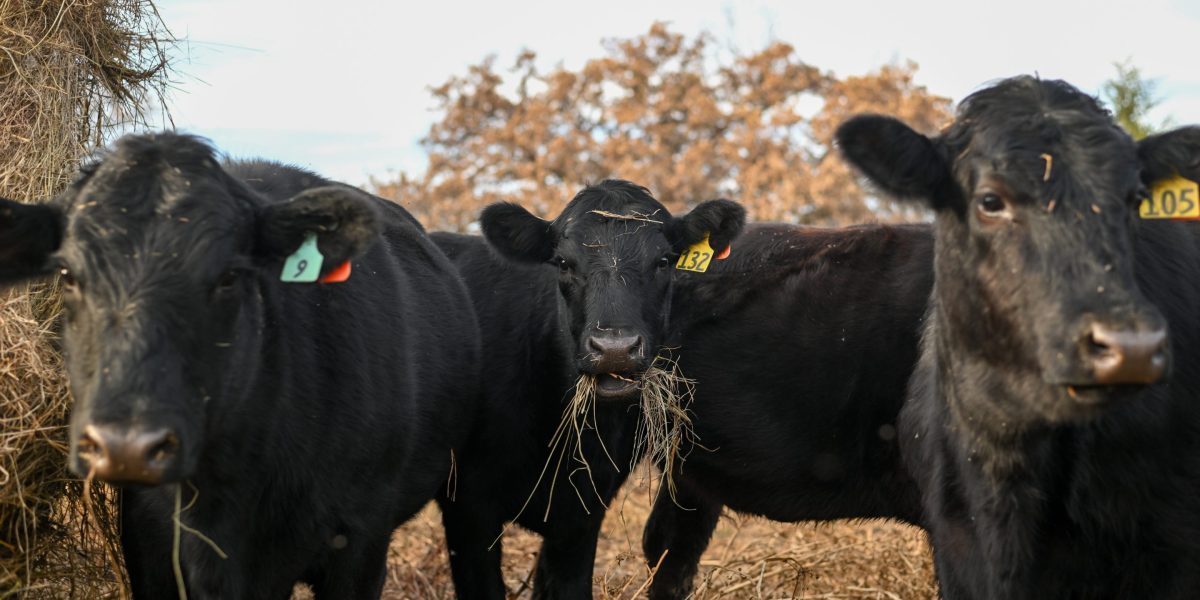
Core Viewpoint - The beef prices in the US have surged significantly, with the broad beef and veal category increasing by 15% over the past year, contrasting with more stable prices in other grocery items, indicating a complex supply chain issue exacerbated by a shrinking cattle herd and rising production costs [2][10]. Industry Analysis - The US cattle herd has decreased to its smallest size since the early 1950s due to droughts and higher production costs, leading to elevated beef prices that are expected to persist until at least 2028 [3][4]. - Ranchers, particularly cow-calf producers, are currently benefiting from high cattle prices, but they face rising operational costs due to inflation, making their profitability precarious [5][6]. - The ongoing cattle shortage has led to significant price increases for calves, with prices rising from $200-$500 five years ago to as much as $1,500 now, reflecting the tight supply situation [8][9]. - Major meatpacking companies like Tyson Foods are experiencing financial strain, with consecutive quarterly losses in their beef business, and have announced closures of beef processing plants due to decreased supplies [9][14]. Government and Policy Response - The White House is under pressure to address the beef price surge, with President Trump promising to increase competition in beef processing and investigating potential collusion among meatpackers [3][13]. - The federal investigation into the meatpacking industry highlights concerns over price fixing and market concentration, which have historically led to legal settlements costing companies hundreds of millions [13]. Market Dynamics - The average wholesale value of choice beef has increased by 16% from the previous year, indicating persistent price pressures in the market [9]. - Despite the potential benefits from increased imports of Argentinian beef, these supplies primarily address ground beef and do not provide an immediate solution to the cattle shortages [7]. - The slow replenishment of the cattle herd, indicated by only a 1% increase in the population of beef replacement heifers, suggests that the market will continue to face challenges in meeting demand [14].


X @The Wall Street Journal
The Wall Street Journal· 2025-12-23 21:10
Company Impact - Tyson Foods is closing its Lexington, Nebraska meatpacking plant [1] - The plant closure will impact over 3,000 workers [1] Industry/Local Economy - Lexington, Nebraska will be significantly affected by the plant closure [1]
X @The Wall Street Journal
The Wall Street Journal· 2025-12-23 11:37
Company Impact - Tyson Foods is closing its Lexington, Nebraska meatpacking plant [1] - The plant closure will impact over 3,000 workers [1]
X @The Wall Street Journal
The Wall Street Journal· 2025-12-09 23:34
Exclusive: The Trump administration is prodding ranchers and meatpackers to do something about soaring beef prices, while looking at increasing imports from Mexico and South America https://t.co/fwts30XseE ...
Trump Threatens ‘Severe' Tariffs on Canadian Fertilizer: Q&A
Youtube· 2025-12-09 14:12
Group 1 - The discussion highlights the profitability issues faced by farmers, particularly regarding machinery and fertilizer costs, which are influenced by imports from countries like Canada [5][6][8] - There is a plan to bolster domestic fertilizer production through severe tariffs on foreign imports, aiming to make fertilizer more affordable for American farmers [6][7] - The administration emphasizes the need to address skyrocketing input costs that are affecting farmers, while foreign-owned companies in the meatpacking sector continue to profit significantly [8][9] Group 2 - The administration expresses a preference for homegrown produce over cheaper foreign alternatives, although some products cannot be grown domestically due to climate limitations [11] - There is a focus on making American farmers stronger, with discussions around potential tariff revenue to provide additional relief [12][13] - The administration claims that the current economic situation is favorable, with significant investments flowing into the country, amounting to $18 trillion, which is unprecedented [21][22] Group 3 - Concerns are raised about the impact of Obamacare on health care premiums, with expectations that 22 million Americans will see their insurance costs rise due to expiring subsidies [23][24] - The administration's plan involves redirecting funds from insurance companies to individuals, allowing them to purchase their own health care, which is positioned as a more favorable approach [26][27][36] - The administration criticizes the current health care system as being overly beneficial to insurance companies, which have seen significant stock price increases [25][35] Group 4 - The discussion touches on the challenges faced in appointing U.S. attorneys due to the blue slip process, which is seen as a barrier to appointing qualified candidates [39][40] - The administration expresses frustration over the inability to appoint Republican U.S. attorneys in states with Democrat senators, highlighting a perceived imbalance in the political appointment process [41][42] - There is a call for reforming the blue slip process to allow for a more equitable appointment of U.S. attorneys, emphasizing the need for highly qualified candidates [43]

X @The Wall Street Journal
The Wall Street Journal· 2025-12-08 01:27
Exclusive: The Trump administration is prodding ranchers and meatpackers to do something about soaring beef prices, while looking at increasing imports from Mexico and South America https://t.co/4qKXMtVmM6 ...
Trump’s Market Maelstrom: Where Policy Meets Panic (and Profit)
Stock Market News· 2025-12-07 18:00
Group 1: Tariff Implications - The Supreme Court is reviewing the legality of President Trump's tariffs, with a decision expected in early 2026, potentially affecting $90 billion in tariff revenue for fiscal year 2025 [2] - U.S. households are projected to incur an additional cost of $1,100 in 2025 due to tariffs, with an estimated income loss of $1,700 per household [3] - The apparel sector, particularly Lululemon Athletica Inc. (LULU), has seen significant stock declines, with shares down over 50% year-to-date in 2025 due to tariff impacts [3] Group 2: Market Reactions - The auto industry has experienced volatility due to tariffs, with a 25% tariff on non-compliant vehicles causing significant stock drops for major automakers like General Motors and Ford [6] - Following a potential tariff pause, automaker stocks rebounded, indicating the market's sensitivity to tariff announcements [6] - The U.S. stock market experienced a significant crash in April 2025 due to new tariff policies, with the S&P 500 dropping 4.84% [10] Group 3: Consumer Impact - New tariffs could lead to a 107% increase in prices for Italian pasta, potentially causing a pasta shortage in American supermarkets by January 2026 [9] - The meatpacking industry, dominated by major players like JBS and Tyson Foods, is under scrutiny for rising food prices, which have been exacerbated by tariff policies [8] Group 4: Overall Market Volatility - Analysts note that 2025 has been characterized by unusual market volatility driven by tariffs, rate uncertainty, and geopolitical tensions [10] - Despite significant market declines, the S&P 500 managed a 17% overall advance in 2025, showcasing the market's resilience [10] - The market's reaction to tariff announcements often involves initial declines followed by recoveries, indicating a complex relationship between policy and investor sentiment [12]



Tyson Foods to close major beef plant, scale back operations as cattle supplies decline
Fox Business· 2025-11-24 20:35
Core Viewpoint - Tyson Foods is closing a major beef plant in Nebraska and scaling back operations in Texas due to declining U.S. cattle supplies, which has led to record-high beef prices [1][2][6]. Company Actions - The closure of the Lexington plant in Nebraska will affect approximately 3,200 employees, while the Amarillo plant will move to a single full-capacity shift, impacting around 1,700 workers [1][2]. - Tyson Foods plans to increase production at other facilities to meet customer demand and is committed to supporting affected employees through job placement and relocation benefits [2][5]. Industry Context - The U.S. cattle inventory has dropped to its lowest level in 70 years, contributing to a surge in beef prices, with beef and veal prices up 14.7% year-over-year [3][6][8]. - Despite rising prices, consumer demand for beef remains strong, with Americans spending over $40 billion on fresh beef in 2024, accounting for over half of all fresh-meat sales [12]. Financial Performance - Tyson's beef business reported adjusted losses of $426 million in the 12 months ending September 27, with projections of losses between $400 million to $600 million for the 2026 fiscal year [11].
The Trump Market: Where Every Tweet is a Catalyst (or a Catastrophe)
Stock Market News· 2025-11-23 18:00
Economic Impact of Tariffs - Trump's tariff policies are central to his economic strategy, with claims of strengthening the U.S. economy and curbing inflation, while the stock market has reportedly hit an "ALL-TIME HIGH for the 48th time in 9 months" [2][3] - A proposed $2,000 "tariff stimulus check" for middle-income Americans, funded by tariff revenues, raises skepticism among economists who argue that tariffs are typically paid by U.S. importers, leading to higher consumer prices [3][4] - Historical data shows that a significant increase in tariffs can negatively impact S&P 500 earnings, with Goldman Sachs estimating a 1-2% reduction in earnings per share for every five-percentage-point increase in tariff rates [4][6] Market Reactions and Volatility - Trump's announcements have led to significant market volatility, with major indices experiencing fluctuations despite achieving record highs, as seen on November 21, 2025, when the S&P 500 was down 2% despite a 0.92% rise in the US500 [5][12] - The VIX, a measure of market volatility, reached the mid-40s in April 2025, indicating extreme investor anxiety following tariff announcements [6][12] - The market's relationship with Trump's economic statements is characterized by unpredictability, with analysts noting that his pronouncements can trigger significant intraday market swings [11] Sector-Specific Impacts - Trump's directive for the Department of Justice to investigate the meatpacking industry over alleged price manipulation caused immediate stock price drops for major companies like JBS and Tyson Foods [8] - The pharmaceutical sector reacted sharply to Trump's price reduction promises for GLP-1 weight loss drugs, with stocks of companies like Novo Nordisk and Eli Lilly experiencing declines following his announcements [9][10] - Subsequent agreements to set drug prices at around $350 per month for Medicare and Medicaid recipients indicate a significant shift in the market landscape, although initial reactions were negative [10] Overall Market Sentiment - As of late November 2025, major indices showed a mix of gains and losses, reflecting the ongoing volatility and uncertainty in the market, with the S&P 500 down 2% despite a 1% increase on the same day [12] - The market continues to grapple with the implications of Trump's policies, oscillating between moments of optimism and underlying concerns about potential policy shifts [12]


X @The Wall Street Journal
The Wall Street Journal· 2025-11-21 22:14
Company Operations - Tyson Foods, America's largest meat supplier, plans to close one of its largest beef-processing plants in Nebraska [1] Industry Dynamics - A cattle shortage in the U S is squeezing meatpacking companies [1]