Autonomous Driving

Search documents
从具身到自驾,VLA和世界模型的融合趋势已经形成......
自动驾驶之心· 2025-12-18 00:06
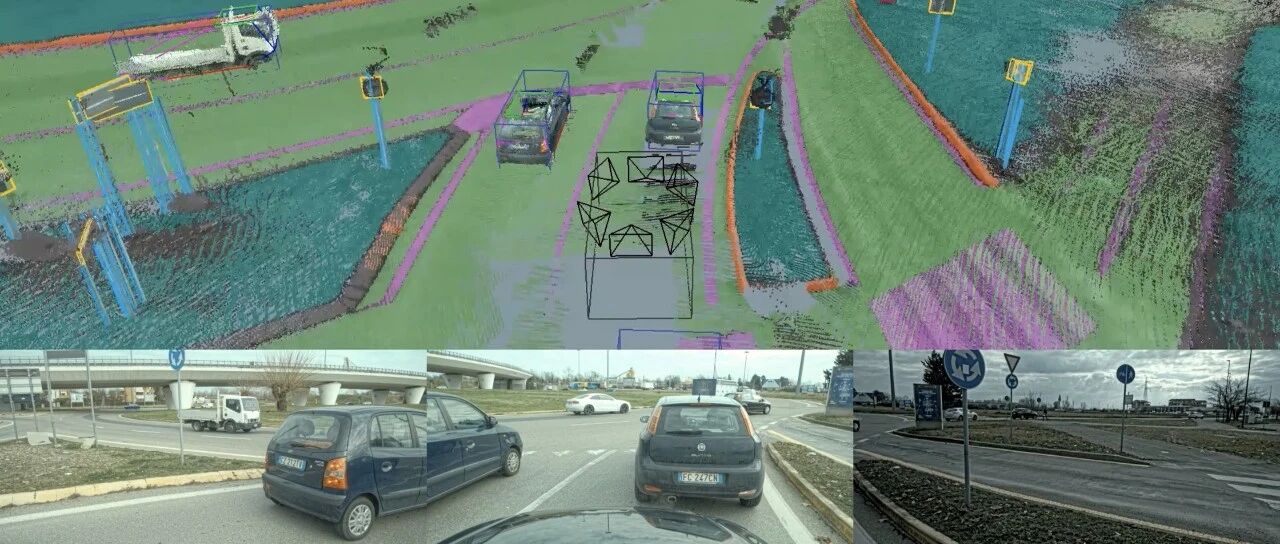
Core Insights - The article discusses the convergence of two leading directions in autonomous driving technology: Vision-Language-Action (VLA) and World Model, highlighting their distinct functionalities and potential for integration [1][2]. Summary of VLA - VLA, or Vision-Language-Action, is a multimodal model that integrates visual input, language commands, and action decisions, enabling vehicles to understand and execute driving instructions while providing explanations [4][5]. - The architecture of VLA consists of three layers: input (multimodal perception), middle (unified reasoning and decision-making), and output (vehicle control commands) [5][6]. - VLA aims to create a seamless interaction between human commands and driving actions, enhancing the interpretability and responsiveness of autonomous systems [6][11]. Summary of World Model - World Model is a generative spatiotemporal neural network that compresses high-dimensional sensor data into a compact internal state, allowing for future scenario predictions through internal simulations [8][9]. - Its architecture also follows a three-layer structure: input (multimodal temporal observations), core (state encoding and generative prediction), and output (future state representations) [9][10]. - The primary goal of World Model is to enable vehicles to simulate potential future scenarios, thereby improving decision-making and safety in complex driving environments [10][12]. Comparison of VLA and World Model - VLA focuses on human-vehicle interaction and interpretable end-to-end driving, while World Model emphasizes building a predictive and simulation-based system for future scenario analysis [11]. - The input for VLA includes sensor data and explicit language commands, whereas World Model relies on temporal sensor data and vehicle state assumptions [11]. - VLA outputs direct action control signals, while World Model provides future state representations rather than immediate driving actions [11]. Integration Potential - Both VLA and World Model share a common technical origin, aiming to address the fragmentation of traditional autonomous driving systems and enhance reasoning capabilities [12][16]. - The ultimate goal of both technologies is to equip autonomous systems with human-like cognitive and decision-making abilities [12][16]. - They face similar challenges in addressing corner cases and improving robustness, albeit through different methodologies [14][16]. Future Directions - The article suggests that the future of autonomous driving may lie in the deep integration of VLA and World Model, creating a comprehensive system that combines perception, reasoning, simulation, decision-making, and explanation [16][47]. - Companies like Huawei and XPeng are already exploring these integration paths, indicating a competitive landscape in the development of advanced autonomous driving technologies [47].

Google unveils 'Gemini 3 Flash' AI model focused on speed and cost
CNBC Television· 2025-12-17 16:42
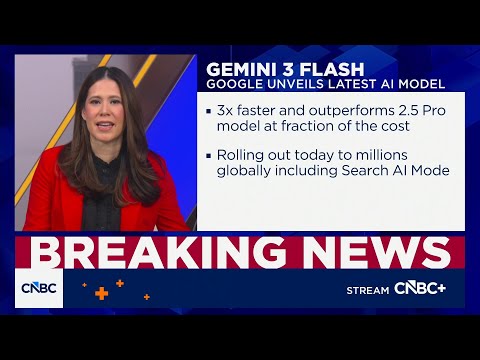
AI Development - Google announces Gemini 3 Flash, a new AI model prioritizing speed and margins over model prestige [1] - Gemini 3 Flash is designed for real-world applications within Google's products like Search, Ads, and Gmail, where speed and cost are crucial [2] - Google's ability to run AI at both ends of the market is attributed to its superior models and ownership of the AI pipeline [3] Autonomous Driving - Waymo - Waymo is in talks to raise over $15 billion at a valuation as high as $110 billion, more than double its last valuation [4] - Alphabet is leading the funding round, allowing outside investors to participate, providing Google with financial flexibility and potential for a future spin-off [5] - Analysts do not fully factor in Waymo's value into Alphabet's overall valuation, unlike the high expectations embedded in Tesla's forward PE multiple [6] - Waymo is delivering 450,000 rides per week without safety drivers, indicating a significant lead in the robo-taxi market [7] - Waymo's autonomous driving miles logged are significantly ahead of Tesla's [8] - Despite Tesla's vertical integration advantages, Waymo is currently demonstrating incredible scale [9]

Pony AI: Massively Expanded Fleet And A Path To Profitability
Seeking Alpha· 2025-12-17 09:24
Core Insights - Pony AI is focused on developing autonomous driving technology for various commercial applications, indicating a strong market positioning in the growing field of autonomous vehicles [1] Company Overview - Pony AI is currently experiencing a hypergrowth phase, suggesting significant expansion plans and potential for increased market share in the autonomous driving sector [1] Investment Perspective - The company is part of a broader trend in technology and financial markets, particularly in AI infrastructure and digital transformation, which may present investment opportunities [1]

【今晚播出】一场“无人”的马拉松 | 两说
第一财经· 2025-12-17 05:47
两说 Business Insights 继2024年在纳斯达克上市后,小马智行近日在港交所上市,成为首批实现"美股+港股"双重上市 的自动驾驶科技公司。如今已率先在北上广深四大一线城市提供全无人自动驾驶出租车服务。无人 驾驶安全吗?公众的接受度如何?创业公司在商业生态上如何谋势布局,站在"十五五"开局元年即 将到来之时,本期节目探讨如何在自动驾驶领域推动中国式创新,发展新质生产力?破茧成蝶的路 上,中国企业家如何面对不确定性?需要有怎样的精神内驱特质? 秦朔 人文财经观察家 更多精彩内容,敬请关注12月17日周三晚22:30 东方卫视 《两说》节目, 第一财经 12月20日周六晚22:00 播出。 彭军 本期嘉宾 小马智行创始人、首席执行官 ...

Alphabet’s Waymo eyes $15 billion funding raise - report (GOOG:NASDAQ)
Seeking Alpha· 2025-12-17 04:34
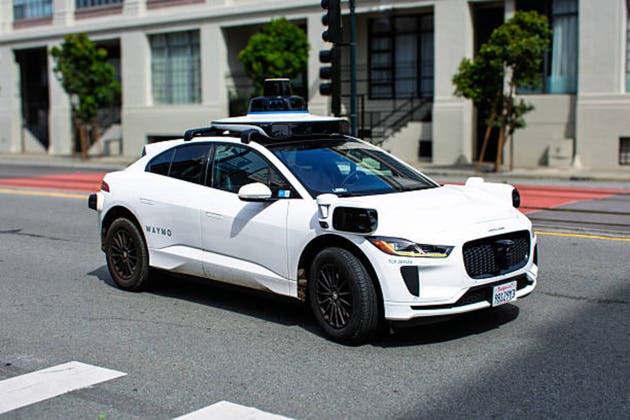
Group 1 - Waymo, the autonomous driving unit of Alphabet, is in discussions to raise over $15 billion [2] - The financing round is expected to value Waymo at nearly $100 billion [2] - The funding round is being led by Alphabet, Waymo's parent company [2]
谷歌自动驾驶子公司Waymo据悉以1000亿美元估值商谈下一轮融资
Xin Lang Cai Jing· 2025-12-16 23:09
Core Viewpoint - Alphabet's autonomous driving subsidiary Waymo is negotiating with potential investors to raise funds with a valuation of at least $100 billion [1] Group 1: Funding Details - The funding round is expected to be at least several billion dollars, potentially exceeding $10 billion [1] - The exact valuation is not yet determined, and the funding round is anticipated to be arranged in early next year [1]

X @Bloomberg
Bloomberg· 2025-12-16 22:44
Waymo, Alphabet’s autonomous driving unit, is in discussions to raise more than $15 billion at a valuation near $100 billion, in a round led by its parent company https://t.co/EefFwedDsf ...
WeRide Just Hit the Roads in Dubai. Should You Buy WRD Stock Now?
Yahoo Finance· 2025-12-16 16:46
Core Insights - WeRide is a global autonomous driving company focusing on Level 2 to Level 4 technologies across various vehicle types, aiming to enhance urban mobility through driverless solutions [1][2] Company Overview - Founded in 2017, WeRide is headquartered in Guangzhou, China [2] - The company operates in over 30 cities and has tested its autonomous vehicles in 11 countries, including China, Singapore, the United States, and Switzerland [1] Stock Performance - WeRide's stock is currently near its 52-week low of $6.03, having declined by 4% over the last five days but improved by 21% over the past month due to positive Q3 results [3] - Year-to-date, the stock has dropped nearly 40% and is 80% below its 52-week high set in February [4] Q3 Financial Results - For Q3 2025, WeRide reported revenue of approximately $56–57 million, representing a year-over-year increase of 140–145%, exceeding analyst estimates of around $50 million [5] - The adjusted EPS remained negative but showed improvement, with a narrower loss per share than expected due to increased operating leverage [5] Profitability Metrics - Gross margin expanded to 33%, up from 6.5% a year ago, driven by software and higher fleet utilization, resulting in a gross profit of $56 million, a 1,124% increase [6] - Service revenue surpassed product revenue, reaching RMB 92 million ($13 million) [6] - The company incurred an operating loss due to significant R&D spending of RMB 318 million ($45 million) but managed to narrow its net loss by 71% to RMB 307 million ($44 million) [6] Financial Position - WeRide maintains strong cash reserves of RMB 4.5 billion ($600 million) and RMB 926 million ($132 million) in wealth management products, supporting future expansions [6] - Free cash flow remains negative but has improved due to better unit economics [6]

WeRide and Uber Launch Autonomous Robotaxi Rides in Dubai, Expanding AV Footprint in the UAE
Businesswire· 2025-12-12 09:00
Core Insights - WeRide and Uber have officially launched Robotaxi passenger rides in Dubai, available through the Uber app, marking a significant step in autonomous mobility [1][2] - The service is currently operational in popular tourist areas, with plans for a fully driverless commercial service by early 2026 [2][3] - This initiative aligns with Dubai's goal of achieving 25% autonomous journeys by 2030, responding to the growing demand for shared mobility [4][5] Company Developments - WeRide aims to deploy tens of thousands of Robotaxis globally by 2030, leveraging its autonomous driving technology tested in over 30 cities across 11 countries [5][6] - Uber's partnership with WeRide and the Roads and Transport Authority (RTA) reflects its commitment to advancing autonomous transportation in the UAE and the Middle East [5][7] - The launch of Robotaxis in Dubai is part of a broader strategy to scale operations in the region, with WeRide currently operating close to 150 autonomous vehicles, over 100 of which are Robotaxis [5][6] Market Context - Dubai's public transport and shared mobility trips reached 153 million in 2024, with shared mobility users increasing by 28% compared to 2023, indicating a robust market for autonomous services [4] - The collaboration between WeRide and Uber positions both companies to capitalize on the growing demand for innovative transportation solutions in a rapidly urbanizing environment [4][5]


Uber Targeting Robotaxis in Over 10 Markets in 2026
Youtube· 2025-12-12 01:23
Core Insights - The APAC market, particularly North Asia, is identified as a significant growth area for the company, with a focus on rideshare and autonomous vehicle services [1][2]. Market Growth - Over 30% of global first trips in the rideshare category originate from the APAC region, indicating rapid growth in this area [2]. - The company aims to expand its presence in the Asia-Pacific region, with expectations to operate in over ten markets by next year [5][11]. Regulatory Framework - Establishing a regulatory framework is crucial for the rollout of autonomous rideshare services in Asia, with ongoing discussions with local regulators [3][12]. - Japan is highlighted as a potential market for autonomous services, despite its current regulatory challenges [6][7]. Technology and Partnerships - The company is collaborating with various partners, including Baidu, to enhance its autonomous technology offerings [9][10]. - The autonomous mobility market is projected to exceed $1 trillion, with the company planning to leverage its partnerships to access this market [20]. Financial Position - The company is generating close to $10 billion in free cash flow, which is expected to increase significantly, providing ample capital for investments in autonomous technology [26][27]. - There is an interest in recycling investments in strategic partners like Grab and Didi, although the company does not currently need to raise additional capital [28][29]. Geographic Strategy - The company is experiencing faster growth in suburban and rural markets compared to urban centers, with demand for mobility services in less populated areas [30][31]. - In Japan, there is a commitment to address rural transportation needs, reflecting the company's strategy to support local communities [32]. Competitive Landscape - In India, the company is facing competition from local players like Rapido, which operates on a different business model, but remains optimistic about growth prospects in the region [34][35].