Pharmaceuticals

Search documents
Is Bristol Myers' Deep Pipeline the Key to Future Growth?
ZACKS· 2026-03-12 17:16
Core Insights - Bristol Myers Squibb (BMY) has a robust pipeline with several candidates that have multi-billion-dollar potential, including milvexian, admilparant, pumitamig, iberdomide, and mezigdomide [1] Pipeline Developments - BMY anticipates reporting top-line registrational data for six candidates in 2026, including milvexian for atrial fibrillation and secondary stroke prevention, admilparant for idiopathic pulmonary fibrosis, and iberdomide for relapsed or refractory multiple myeloma [2] - Positive interim results from the SUCCESSOR-2 study were announced, showing the efficacy and safety of mezigdomide in combination with carfilzomib and dexamethasone for patients with relapsed or refractory multiple myeloma [3][4] - Milvexian is being developed in partnership with Johnson & Johnson for atrial fibrillation and secondary stroke prevention, potentially redefining anticoagulant therapy [5] - Admilparant is under evaluation for idiopathic pulmonary fibrosis, with data from the ALOFT-IPF study expected later this year [6] - Pumitamig, a bispecific antibody, is being developed with BioNTech for various solid tumor types, with initial data expected later this year [7] Label Expansion and New Indications - BMY is expanding the label of its approved drug Sotyktu (deucravacitinib) to include treatment for adults with active psoriatic arthritis, and it is also being evaluated for lupus and Sjogren's Disease [8] - The schizophrenia drug Cobenfy is being assessed for its efficacy in treating psychosis associated with Alzheimer's disease [9] Competitive Landscape - BMY's growth portfolio includes several key drugs such as Opdivo, Orencia, and Yervoy, but it faces competition from major pharmaceutical companies like Merck and Pfizer in the oncology space [10][12] - Merck's Keytruda dominates the immuno-oncology market, accounting for approximately 50% of its pharmaceutical sales [13] Financial Performance and Valuation - BMY's shares have decreased by 0.5% over the past year, contrasting with the industry's growth of 16.6% [19] - The company is trading at a price/earnings ratio of 9.64x forward earnings, which is lower than the large-cap pharma industry's average of 17.99x [20] - The Zacks Consensus Estimate for BMY's 2026 EPS has increased to $6.26 from $6.15 over the past 30 days, indicating positive revisions [21]



Merck & Co., Inc. (NYSE:MRK) Faces Challenges Despite Positive Stock Movement
Financial Modeling Prep· 2026-03-12 17:04
Core Viewpoint - Merck & Co., Inc. is navigating challenges in the pharmaceutical industry, particularly with its Gardasil vaccine, while maintaining a strong market position and receiving positive ratings from analysts [1][3][4]. Group 1: Stock Performance - Merck's stock closed at $117.11, reflecting a 1.14% increase from the previous close, outperforming major indexes like the S&P 500, Dow, and Nasdaq [2][4]. - The stock has shown resilience despite a prior decline of 5.04%, indicating investor confidence ahead of the upcoming earnings report [2]. Group 2: Financial Outlook - Analysts predict an earnings per share (EPS) of -$0.57 for the upcoming earnings report on April 30, 2026, representing a significant year-over-year decline of 125.68% [2]. - Revenue is expected to increase by 3.09% to $16.01 billion, indicating some growth potential despite challenges [2][4]. Group 3: Product Challenges - Merck's Gardasil vaccine sales dropped by 39% in 2025, primarily due to reduced demand in China, impacting its partnership with Zhifei and halting shipments [3]. - There is no expected rebound in Gardasil sales for 2026, which may continue to pressure Merck's revenue streams [3]. Group 4: Analyst Ratings - Wells Fargo has reaffirmed an "Overweight" rating on Merck, raising the price target to $150, reflecting optimism about the company's future performance [1][4].

X @Bloomberg
Bloomberg· 2026-03-12 16:00
Zealand plans to open a new research facility in Boston, part of the obesity drugmaker’s effort to expand its presence in the US https://t.co/LRUGlmcgxX ...
This Under-the-Radar Stock Has Surged 1,300% Over the Past Year
Yahoo Finance· 2026-03-12 15:55
Company Overview - Sol-Gel Technologies (SLGL) is a clinical-stage dermatology company with a market capitalization of $262 million, focusing on developing and commercializing topical drug products for skin diseases [1][5] - The company is based in Israel and its product candidates include VERED for papulopustular rosacea and TWIN and SIRS-T for acne vulgaris, which are currently in clinical stages [1][6] Stock Performance - SLGL has demonstrated exceptional technical momentum, with a remarkable increase of 1,310% over the past 52 weeks [6][7] - The stock reached a three-year high of $97.97 on March 3 and recently traded at $84.92, with a 50-day moving average of $69.77 [4][7] - Over the past month, SLGL has made 10 new highs and is up 11.89% [7] Technical Indicators - The stock has a Weighted Alpha of +613.54 and a 100% "Buy" opinion from Barchart, indicating strong bullish sentiment [7] - SLGL maintains its Trend Seeker "Buy" signal, and the Relative Strength Index (RSI) is at 54.02, suggesting a balanced momentum [7]

Tilray Expands German Healthcare Push With Strategic Pharma Deal - Tilray Brands (NASDAQ:TLRY)
Benzinga· 2026-03-12 15:37
Core Viewpoint - Tilray Brands is entering a strategic partnership with pharmaceutical entities in Germany to enhance its market presence and improve access to its products [1][7]. Group 1: Strategic Partnership - The partnership involves collaboration with Tilray Medical, CC Pharma, and 14U Pharma, aimed at expanding product offerings and pharmacy access [1][2]. - Effective April 1, 2026, the alliance will leverage CC Pharma's distribution network, which supports over 16,000 pharmacies in Germany [2]. Group 2: Market Position and Performance - The collaboration is expected to strengthen Tilray's position in the dynamic German healthcare market [3]. - Despite a slight downturn in the broader market, Tilray's stock is underperforming, indicating company-specific challenges [3][7]. Group 3: Recent Developments - Tilray recently launched a new American-style light beer, Pub Light, as part of its beverage portfolio expansion [4]. - The company has acquired BrewDog Brewing Australia Pty Ltd., including its Brisbane brewery and several BrewDog bar locations [4]. Group 4: Technical Analysis - The stock is trading 5.2% below its 20-day simple moving average (SMA) and 12.9% below its 50-day SMA, indicating a bearish trend [5]. - Over the past 12 months, shares have increased by 11.79%, with a neutral RSI of 40.00 and a MACD suggesting a potential bullish crossover [5][6]. Group 5: Earnings and Analyst Outlook - Tilray is expected to provide its next financial update on April 7, 2026 [8]. - The EPS estimate is a loss of 1 cent, with a revenue estimate of $203.15 million, up from $185.78 million [10]. - The stock carries a Hold Rating, with recent analyst moves including a neutral rating from Roth Capital and a lowered target to $10.00 [11]. Group 6: ETF Exposure - Tilray has significant weight in the Amplify Alternative Harvest ETF (NYSE:MJ) at 12.38%, indicating that ETF inflows or outflows could impact the stock [12].

MetaVia (NasdaqCM:MTVA) Conference Transcript
2026-03-12 15:32
Summary of MetaVia Conference Call - March 12, 2026 Company Overview - **Company**: MetaVia (NasdaqCM:MTVA) - **Industry**: Life Sciences, specifically focusing on obesity treatment Key Points and Arguments Obesity Market and Product Differentiation - MetaVia's lead asset, DA-1726, is positioned in the obesity market, differentiating itself from existing GLP-1 based drugs by combining GLP-1 and glucagon receptor agonism [2][4] - Current approved obesity drugs primarily target GLP-1 and GLP-1 plus GIP, while DA-1726 aims to balance GLP-1 and glucagon to enhance weight loss and metabolic outcomes [4][5] Scientific Rationale - The combination of GLP-1 and glucagon is believed to increase energy expenditure while maintaining glycemic control, potentially leading to better weight loss outcomes compared to standalone GLP-1 drugs [4][6] - MetaVia has established a 3-to-1 ratio of GLP-1 to glucagon, which has shown promising results in preclinical models, including a 25% increase in food intake while maintaining weight loss [5][7] Clinical Data and Efficacy - In an 8-week Phase I study, DA-1726 demonstrated a 9.1% decrease in body weight, a 3.8-inch reduction in waist circumference, a 0.22 decrease in HbA1c, and a 23.7% decrease in liver stiffness [11][14] - The drug is expected to achieve a weight loss target of 12%-15% in a 16-week study, which would position it favorably against competitors [22] Safety and Tolerability - MetaVia aims to differentiate DA-1726 by minimizing gastrointestinal side effects, which are common in other GLP-1 glucagon drugs [19][31] - The company plans to conduct a two-step titration in the upcoming Phase 3A study to control side effects while maximizing efficacy [20][21] Market Positioning - The focus is on patients with obesity and metabolic conditions, particularly those with non-alcoholic steatohepatitis (NASH) and type 2 diabetes, leveraging the drug's liver benefits [35] - MetaVia's valuation is currently low compared to other obesity drug companies, presenting a potential investment opportunity as new data is expected to be released [41][42] Future Milestones - Upcoming data releases from the Phase 3A study and combination therapy trials are anticipated to provide insights into the drug's efficacy and safety profile [39][40] - The company is also exploring other indications for its small molecule drug, Vanoglipol, which has shown a good safety profile and efficacy in hepatic effects [39] Conclusion - MetaVia is positioned to make significant strides in the obesity treatment market with its innovative approach and promising clinical data, making it a potential investment opportunity as it prepares for upcoming trials and data releases [41][42]
Merck Price Prediction: Sac-TMT Drug Potential Pushes MRK to $150
247Wallst· 2026-03-12 15:14
Core Viewpoint - Wells Fargo has raised its price target for Merck (MRK) to $150, driven by the potential of sacituzumab tirumotecan (sac-TMT) to replace chemotherapy in various cancer treatments, alongside the growth of KEYTRUDA and a robust pipeline of 80 Phase 3 studies [1] Group 1: Stock Performance and Predictions - Merck's stock has gained 23% over the past year and 8% year-to-date, currently trading below its 52-week high of $125.14 [1] - The Street consensus price target for Merck is $127.22, while Wells Fargo's target of $150 suggests significant upside potential [1] - Achieving a $150 price target would imply a market capitalization exceeding $283.4 billion, necessitating positive late-stage data for sac-TMT and sustained growth for KEYTRUDA [1] Group 2: Key Drivers of Stock Performance - Emerging growth portfolio: WINREVAIR, Merck's treatment for pulmonary arterial hypertension, generated $467 million in Q4 2025, reflecting a 133% year-over-year increase [1] - KEYTRUDA's revenue reached $8.337 billion in Q4 2025, up 6% year-over-year, with new FDA approvals expanding its indications [1] - The potential of sac-TMT to displace chemotherapy in multiple cancer types represents a significant commercial opportunity for Merck's oncology franchise [1] Group 3: Strategic Developments - The FDA awarded sac-TMT a Commissioner's National Priority Voucher, indicating strong regulatory support for its development [1] - A strategic financing agreement with Blackstone Life Sciences has been established to partially fund the development of sac-TMT [1]
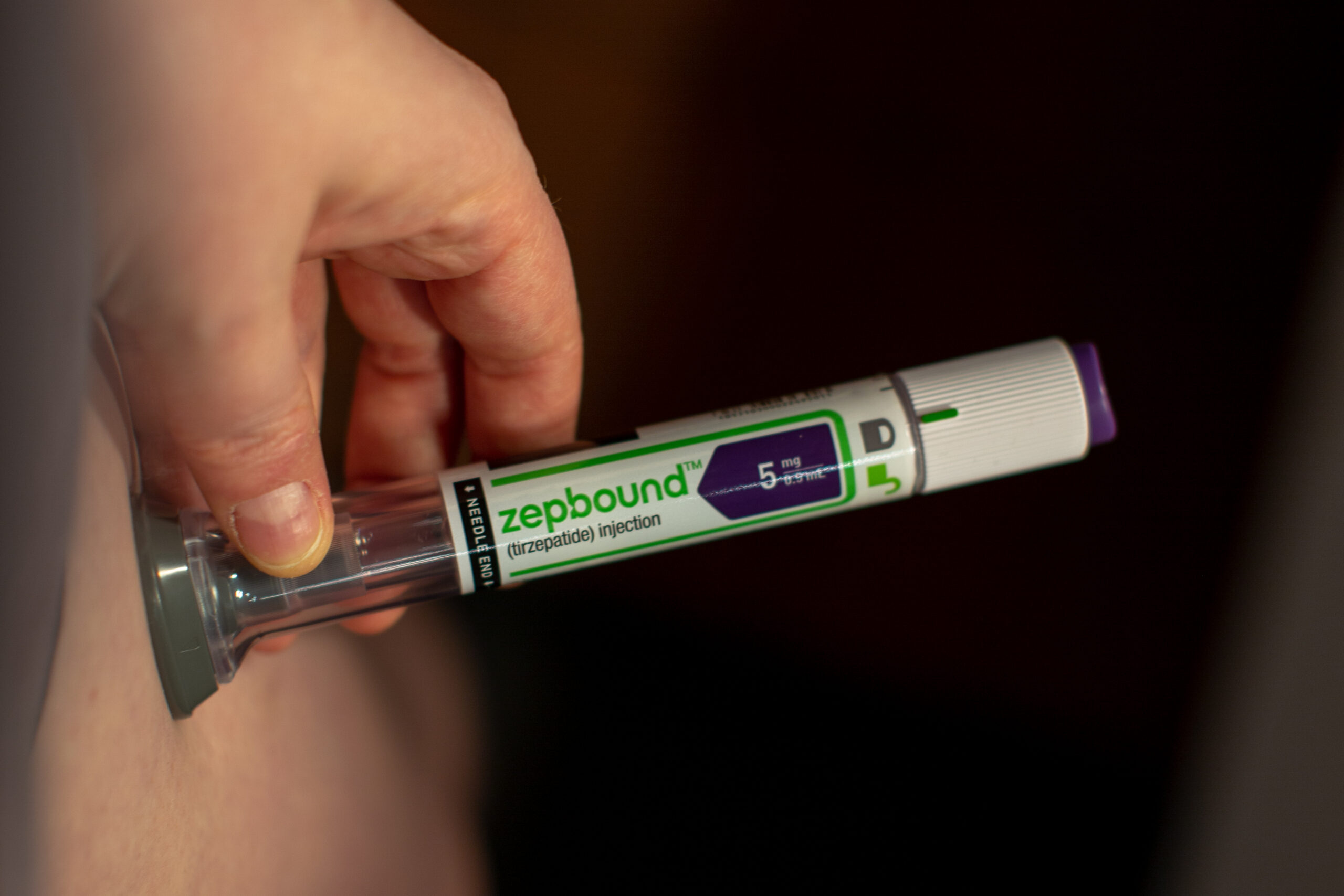
Lilly Flags Safety Risk in Compounded Zepbound Mixed With Vitamin B12
Insurance Journal· 2026-03-12 15:14
Core Viewpoint - Eli Lilly & Co. has raised concerns about the safety of its weight-loss drug Zepbound when combined with vitamin B12, highlighting potential risks from impurities found in compounded products [1][2] Group 1: Safety Concerns - The company discovered significant levels of an impurity resulting from a chemical reaction between tirzepatide and vitamin B12 in compounded products [1] - Lilly warned that patients using tirzepatide-B12 combinations from various sources may face unknown risks, including potential toxicity and immune reactions [2] - Testing revealed other critical safety issues, such as bacterial contamination and high levels of endotoxin, a toxic component [4] Group 2: Regulatory Context - Compounded medicines were initially allowed in the US due to a supply shortage during the early weight-loss injection boom, but the FDA has since declared the shortage over [3] - Despite the FDA's ruling, compounders continue to sell their products by exploiting regulatory loopholes, allowing them to customize drug formulations [3] - Lilly has urged the FDA to recall all compounded versions of its medicine that include untested additives [4] Group 3: Competitive Landscape - Eli Lilly faces competition from cheaper knock-off versions of its obesity and diabetes treatments, which bypass the rigorous regulatory approval process required for brand-name or generic drugs [2]

Viatris settles lawsuit over use of woman's 'immortal' cells to power drug research
Reuters· 2026-03-12 15:11
Core Viewpoint - Viatris has settled a lawsuit with the estate of Henrietta Lacks regarding the unauthorized use of her cells for drug research, with the case being dismissed with prejudice, meaning it cannot be refiled [1] Company Summary - Viatris, a generic drugmaker, faced allegations from Lacks' estate for misusing her cells to test its herpes drug Denavir and depression treatment Mylan-Mirtazapine [1] - The settlement details remain confidential, and Viatris did not respond to the allegations in court [1] Industry Context - The HeLa cell line, derived from Henrietta Lacks' tumor, has been pivotal in medical research, contributing to advancements in various fields including the polio vaccine and HIV treatments [1] - Lacks' family has previously settled lawsuits with other companies, including Novartis and Thermo Fisher, and continues to pursue legal action against Ultragenyx [1]

Wall Street Analysts See a 44.84% Upside in ANI (ANIP): Can the Stock Really Move This High?
ZACKS· 2026-03-12 14:55
Core Viewpoint - ANI Pharmaceuticals (ANIP) shares have shown a slight increase of 0.1% over the past four weeks, closing at $76.29, with analysts suggesting a potential upside of 44.8% based on a mean price target of $110.5 [1] Price Targets and Analyst Estimates - The mean estimate consists of eight short-term price targets with a standard deviation of $11.89, indicating variability among analysts; the lowest estimate is $90.00 (an 18% increase), while the highest is $124.00 (a 62.5% increase) [2] - Analysts' price targets can often mislead investors, as empirical research shows that they rarely indicate the actual price direction of a stock [7] - A low standard deviation in price targets suggests a high degree of agreement among analysts regarding the stock's price movement, which can serve as a starting point for further research [9] Earnings Estimates and Market Sentiment - There is growing optimism among analysts regarding ANIP's earnings prospects, as indicated by a strong consensus in revising EPS estimates higher, which correlates with potential stock price increases [11] - The Zacks Consensus Estimate for the current year has risen by 12.1% over the past month, with four estimates increasing and no negative revisions [12] - ANIP holds a Zacks Rank 2 (Buy), placing it in the top 20% of over 4,000 ranked stocks based on earnings estimates, indicating a strong potential upside [13] Conclusion on Price Movement - While consensus price targets may not reliably predict the extent of ANIP's gains, they do provide a useful guide for the direction of price movement [14]