
tirzepatide

Search documents
Lexaria's Oral GLP-1 Drug Strategy Validated by Industry
Thenewswire· 2026-03-24 13:15
Core Insights - Lexaria Bioscience Corp. is focusing on developing oral GLP-1 drug delivery systems in response to patient preferences for safer and better-tolerated options compared to injected alternatives [2][6][16] Industry Overview - The GLP-1 drug market is experiencing significant growth, with Eli Lilly's tirzepatide projected to be the top-selling drug in 2026, generating approximately $45 billion in revenue, while Novo Nordisk's semaglutide is expected to generate nearly $40 billion [3] - Analysts have raised revenue forecasts for the GLP-1 market, with projections of $139 billion by 2030 from TD Cowen and $180 billion by 2035 from Roots Analysis [3] Patient Experience and Market Needs - A large percentage of patients using GLP-1 drugs experience gastrointestinal side effects, with 74% of injected semaglutide users and 80% of oral semaglutide users reporting such issues [4] - A study indicated that 46.5% of patients with type 2 diabetes and 64.8% without it discontinued GLP-1 drug use within one year, highlighting the need for improved patient experiences [5] Strategic Developments - Lexaria is enhancing its DehydraTECH GLP-1 platform to improve oral delivery and reduce side effects, aiming to establish partnerships with leading pharmaceutical companies [2][17] - The company is in early-stage discussions with several multinational pharmaceutical firms to leverage its patented technology in the GLP-1 market [17] Market Potential - The oral GLP-1 market is anticipated to grow significantly, with forecasts suggesting it could represent a $40 billion to $45 billion annual market within four years [15] - Novo Nordisk's oral GLP-1 tablets are expected to capture over 33% of the GLP-1 market by 2030, up from less than 5% in 2025 [14] Competitive Landscape - Pfizer's orally-delivered GLP-1 candidate, danuglipron, was discontinued due to safety concerns, indicating the challenges in developing new oral alternatives [10] - Eli Lilly is developing orforglipron, which has shown promising results in weight loss studies but also higher rates of adverse side effects compared to semaglutide [13][14]


Should You Buy Eli Lilly Stock Before April 10?
The Motley Fool· 2026-03-22 09:10
Core Insights - Eli Lilly has experienced significant growth, particularly due to its weight loss drug portfolio, which includes tirzepatide marketed as Mounjaro and Zepbound [1][2] - The company has seen over 100% stock growth in the past three years, despite a dip in the current year [3] - A potential catalyst for further growth is the upcoming FDA decision on orforglipron, an oral weight loss candidate, expected on April 10 [6][9] Company Overview - Eli Lilly's tirzepatide has generated over $11 billion in revenue, with triple-digit growth reported for both Mounjaro and Zepbound in the latest quarter [5] - The drug is part of the GLP-1 class, aiding in appetite control and blood sugar management [4] - Orforglipron offers a more convenient oral option compared to injectable drugs, which may enhance its market appeal [7][8] Market Position - Eli Lilly holds a 60% share of the U.S. weight loss drug market, positioning it well for future growth as the market is projected to reach nearly $100 billion by the end of the decade [11] - The convenience of orforglipron could lead to higher margins for the company due to easier manufacturing and storage [8] Investment Considerations - Analysts suggest that the current valuation of Lilly stock is more attractive than in previous months, making it a potentially good investment opportunity [9] - Long-term investment in quality stocks like Lilly is emphasized, regardless of short-term fluctuations [12]

Why Did Eli Lilly Stock Slide 6% Despite Strong GLP-1 Momentum?
ZACKS· 2026-03-18 16:06
Core Insights - Eli Lilly (LLY) is a leading player in the global obesity market, with significant growth attributed to its GLP-1 injections, Mounjaro and Zepbound, which now represent over half of the company's total revenues [2] Company Performance - LLY shares experienced a decline of approximately 5.9% following a downgrade from HSBC, which cited potential pricing pressures and increased competition in the obesity drug market [3][10] - Despite the recent share price drop, LLY shares have gained 23.7% over the past six months, outperforming the industry growth of 17.4% [14] Competitive Landscape - Novo Nordisk (NVO) is a primary competitor, marketing semaglutide injections as Ozempic and Wegovy, which directly compete with LLY's offerings [4] - Both companies have implemented price cuts in response to U.S. government pressure to enhance patient access to GLP-1 medications, indicating that pricing dynamics may play a crucial role in market share [4] - Novo Nordisk launched an oral version of Wegovy, which could enhance patient adoption due to its needle-free format [5] Regulatory Developments - LLY is pursuing regulatory approval for its oral GLP-1 candidate, orforglipron, with a potential FDA decision expected in April [6] - The FDA previously delayed its decision on orforglipron, contributing to share price volatility [6] Safety Concerns - LLY raised safety concerns regarding compounded versions of tirzepatide, which may pose unknown risks due to impurities created when mixed with vitamin B12 [7][8] Market Dynamics - The obesity market is attracting attention due to its significant growth potential, with smaller biotech firms like Structure Therapeutics and Viking Therapeutics developing competing GLP-1 therapies [9][11][12] - Larger pharmaceutical companies, including Roche, Merck, and AbbVie, are also entering the obesity space, which could challenge the dominance of LLY and NVO [13] Valuation Metrics - LLY shares are currently trading at a price/earnings ratio of 25.99, higher than the industry average of 17.65, but below its five-year mean of 34.56 [17] - Earnings estimates for LLY have improved for 2026 and 2027, indicating positive market sentiment [19]

Better Weight Loss Drug Stock Buy: Eli Lilly vs Viking Therapeutics
The Motley Fool· 2026-03-18 00:30
Core Viewpoint - The weight loss drug market is emerging as a significant growth opportunity in the pharmaceutical industry, comparable to the technology sector, with Eli Lilly and Viking Therapeutics as key players [1][2]. Eli Lilly - Eli Lilly leads the weight loss drug market with a 60% share, driven by its products Mounjaro and Zepbound, which have shown triple-digit revenue growth [5][13]. - The company entered the GLP-1 drug market after Novo Nordisk and has focused on increasing manufacturing capacity to meet demand [4][5]. - Lilly's oral weight loss drug is currently under regulatory review, potentially expanding its market presence [6]. Viking Therapeutics - Viking Therapeutics is advancing its candidate VK2735 into phase 3 trials, with promising results suggesting it could compete effectively with Lilly and Novo's offerings [8][9]. - The company has another candidate targeting amylin and calcitonin receptors, which are important for metabolism [10]. - Demand for weight loss drugs is high, providing Viking with an opportunity to capture market share if its trials are successful [10]. Investment Considerations - Both Eli Lilly and Viking Therapeutics are viewed as strong investment opportunities in the weight loss drug market, with Lilly currently generating significant revenue and Viking showing potential for future growth [13][15]. - Lilly's stock has seen a decline of about 8% this year, trading at 28 times forward earnings estimates, while Viking's stock has increased by approximately 2% this year [13][14]. - The upcoming regulatory decision on Lilly's oral weight loss drug could serve as a catalyst for its stock price [15].

Novo Nordisk A/S Investigated by the Portnoy Law Firm
Globenewswire· 2026-03-17 13:00
Core Viewpoint - The Portnoy Law Firm has initiated an investigation into possible securities fraud involving Novo Nordisk A/S and may file a class action on behalf of investors [1]. Group 1: Company Performance - On February 23, 2026, Novo Nordisk announced the results from the REDEFINE 4 trial, revealing that its experimental drug CagriSema did not meet its primary endpoint of demonstrating non-inferiority in weight loss compared to Eli Lilly's drug tirzepatide after 84 weeks [3]. - Following the announcement, Novo Nordisk's American Depositary Receipt (ADR) price dropped by $7.79, or 16.43%, closing at $39.63 per ADR on the same day [4]. Group 2: Legal Actions - Investors are encouraged to contact the Portnoy Law Firm to discuss their legal rights and options for pursuing claims to recover losses related to the company's performance [2]. - The Portnoy Law Firm has a history of recovering over $5.5 billion for investors affected by corporate wrongdoing [4].


Is Eli Lilly and Company (LLY) A Good Stock To Buy Now?
Yahoo Finance· 2026-03-16 01:02
Core Thesis - Eli Lilly and Company is positioned as a high-growth pharmaceutical leader, driven by the success of its tirzepatide franchise, which includes Mounjaro for diabetes and Zepbound for obesity [2][6] Financial Performance - Q4 revenue reached $19.3 billion, marking a 43% year-over-year increase, with reported EPS of $7.39 and non-GAAP EPS of $7.54 [3] - For the full year, revenue totaled $65.2 billion, representing a 45% growth, while reported net income nearly doubled to $20.6 billion [3] Product Performance - The growth was primarily volume-driven due to surging demand for tirzepatide, despite some pricing pressures [4] - Mounjaro generated $7.4 billion in Q4 revenue and $23.0 billion for the full year, while Zepbound achieved $4.3 billion in Q4 sales and $13.5 billion in its first full year, making it one of the fastest-growing drug launches in pharmaceutical history [4] Profitability and Investments - Eli Lilly maintained gross margins above 82% despite significant investments in manufacturing expansion, R&D, and commercial infrastructure [5] - R&D spending increased as the company advanced next-generation assets like oral GLP-1 candidate orforglipron and triple agonist retatrutide [5] Future Outlook - The company is expanding manufacturing capabilities with multi-billion-dollar facilities in the U.S. and Europe to meet long-term demand [6] - Management projects 2026 revenue between $80 billion and $83 billion and non-GAAP EPS of up to $35.00, indicating strong future growth potential [6]
Using Obesity Drug? Eli Lilly Flags Unknown Impurity Found In Compounded Weight Loss Drugs With Vitamin B12
Benzinga· 2026-03-12 18:04
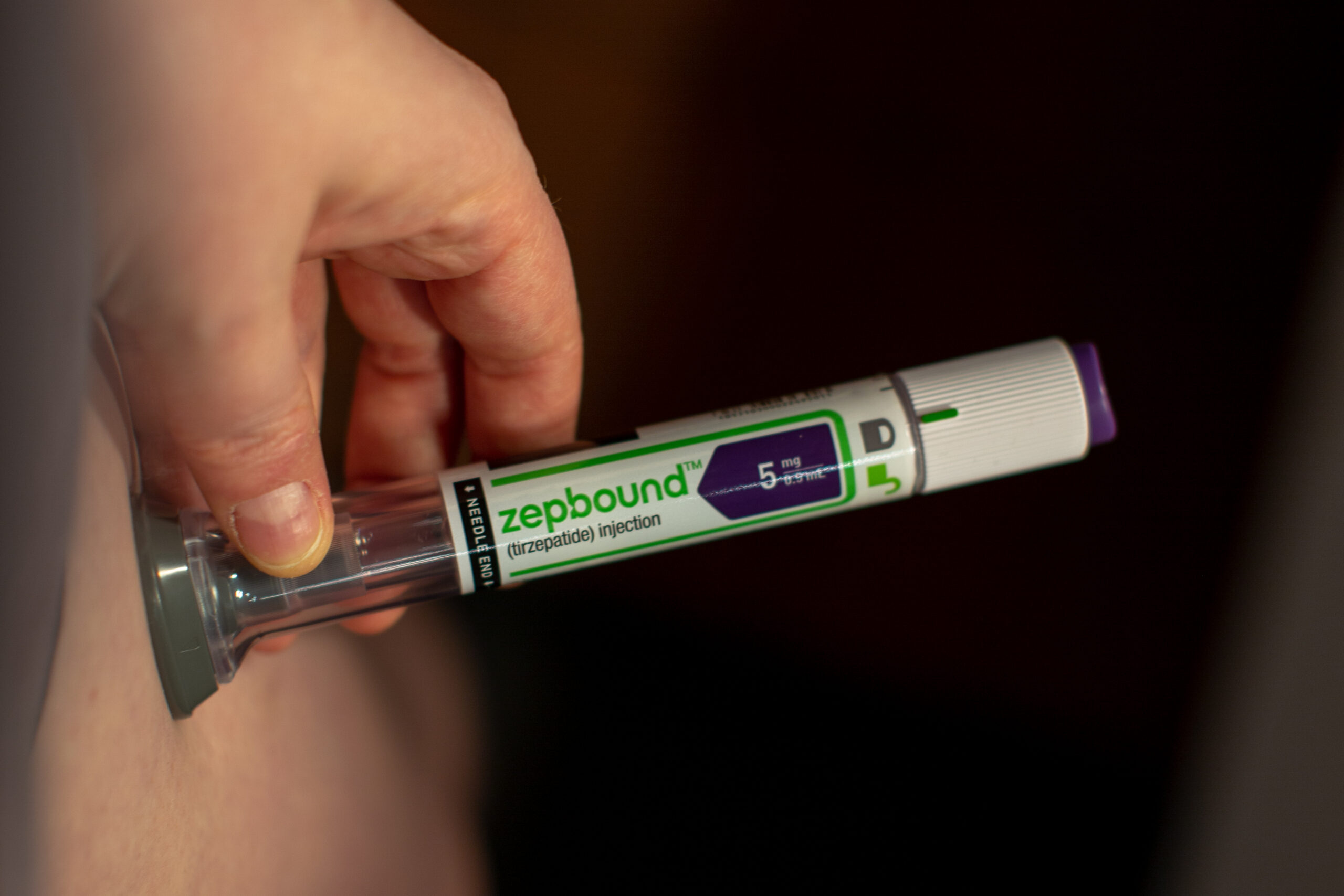
Core Viewpoint - Eli Lilly and Co has issued a warning regarding safety risks associated with compounded tirzepatide products mixed with vitamin B12, highlighting the discovery of an impurity formed from this combination [1][2][3]. Group 1: Safety Concerns - Internal testing revealed significant levels of an impurity created through a chemical reaction between tirzepatide and vitamin B12 [2]. - The newly identified impurity raises concerns due to unknown health effects in humans, with no data on its influence on tirzepatide's interaction with GLP-1 and GIP receptors, potential toxicity, immune response, and pharmacokinetics [3]. - Compounded versions of tirzepatide are not subject to the same adverse event tracking as FDA-approved medicines, increasing the risk for patients [4]. Group 2: Regulatory and Market Issues - The company expressed concerns about mass-compounded versions of its tirzepatide medicines, Mounjaro and Zepbound, and supports FDA actions to limit the distribution of compounded anti-obesity drugs that may violate regulatory standards [5]. - Lilly criticized the marketing of "personalized" versions of tirzepatide by compounding pharmacies, which often use identical additives in bulk-produced products rather than customizing for individual patients [6]. Group 3: Additional Risks - Beyond vitamin B12, compounded tirzepatide products have been mixed with other substances such as glycine, pyridoxine, niacinamide, and carnitine, which have not undergone clinical testing [7]. - The company has identified other potential safety issues in compounded tirzepatide products, including bacterial contamination, elevated endotoxin levels, and additional impurities not found in its FDA-approved medicines [7]. - Lilly has encouraged the FDA to consider recalls of compounded tirzepatide products containing untested additives like vitamin B12 [8].

MetaVia (NasdaqCM:MTVA) Conference Transcript
2026-03-12 15:32
Summary of MetaVia Conference Call - March 12, 2026 Company Overview - **Company**: MetaVia (NasdaqCM:MTVA) - **Industry**: Life Sciences, specifically focusing on obesity treatment Key Points and Arguments Obesity Market and Product Differentiation - MetaVia's lead asset, DA-1726, is positioned in the obesity market, differentiating itself from existing GLP-1 based drugs by combining GLP-1 and glucagon receptor agonism [2][4] - Current approved obesity drugs primarily target GLP-1 and GLP-1 plus GIP, while DA-1726 aims to balance GLP-1 and glucagon to enhance weight loss and metabolic outcomes [4][5] Scientific Rationale - The combination of GLP-1 and glucagon is believed to increase energy expenditure while maintaining glycemic control, potentially leading to better weight loss outcomes compared to standalone GLP-1 drugs [4][6] - MetaVia has established a 3-to-1 ratio of GLP-1 to glucagon, which has shown promising results in preclinical models, including a 25% increase in food intake while maintaining weight loss [5][7] Clinical Data and Efficacy - In an 8-week Phase I study, DA-1726 demonstrated a 9.1% decrease in body weight, a 3.8-inch reduction in waist circumference, a 0.22 decrease in HbA1c, and a 23.7% decrease in liver stiffness [11][14] - The drug is expected to achieve a weight loss target of 12%-15% in a 16-week study, which would position it favorably against competitors [22] Safety and Tolerability - MetaVia aims to differentiate DA-1726 by minimizing gastrointestinal side effects, which are common in other GLP-1 glucagon drugs [19][31] - The company plans to conduct a two-step titration in the upcoming Phase 3A study to control side effects while maximizing efficacy [20][21] Market Positioning - The focus is on patients with obesity and metabolic conditions, particularly those with non-alcoholic steatohepatitis (NASH) and type 2 diabetes, leveraging the drug's liver benefits [35] - MetaVia's valuation is currently low compared to other obesity drug companies, presenting a potential investment opportunity as new data is expected to be released [41][42] Future Milestones - Upcoming data releases from the Phase 3A study and combination therapy trials are anticipated to provide insights into the drug's efficacy and safety profile [39][40] - The company is also exploring other indications for its small molecule drug, Vanoglipol, which has shown a good safety profile and efficacy in hepatic effects [39] Conclusion - MetaVia is positioned to make significant strides in the obesity treatment market with its innovative approach and promising clinical data, making it a potential investment opportunity as it prepares for upcoming trials and data releases [41][42]
Lilly Flags Safety Risk in Compounded Zepbound Mixed With Vitamin B12
Insurance Journal· 2026-03-12 15:14
Core Viewpoint - Eli Lilly & Co. has raised concerns about the safety of its weight-loss drug Zepbound when combined with vitamin B12, highlighting potential risks from impurities found in compounded products [1][2] Group 1: Safety Concerns - The company discovered significant levels of an impurity resulting from a chemical reaction between tirzepatide and vitamin B12 in compounded products [1] - Lilly warned that patients using tirzepatide-B12 combinations from various sources may face unknown risks, including potential toxicity and immune reactions [2] - Testing revealed other critical safety issues, such as bacterial contamination and high levels of endotoxin, a toxic component [4] Group 2: Regulatory Context - Compounded medicines were initially allowed in the US due to a supply shortage during the early weight-loss injection boom, but the FDA has since declared the shortage over [3] - Despite the FDA's ruling, compounders continue to sell their products by exploiting regulatory loopholes, allowing them to customize drug formulations [3] - Lilly has urged the FDA to recall all compounded versions of its medicine that include untested additives [4] Group 3: Competitive Landscape - Eli Lilly faces competition from cheaper knock-off versions of its obesity and diabetes treatments, which bypass the rigorous regulatory approval process required for brand-name or generic drugs [2]
Novo Nordisk starts €432m Ireland facility upgrade for oral Wegovy production
Yahoo Finance· 2026-03-03 12:08
Core Insights - Novo Nordisk has invested €432 million ($501 million) to upgrade its facility in Ireland to meet the anticipated high demand for oral weight loss drugs [1] - The expansion of the Monksland, Athlone site is expected to be completed by 2028, with construction already underway [1][2] - The investment aims to enhance the production capacity for oral glucagon-like peptide-1 receptor agonists (GLP-1RAs), particularly following the recent FDA approval of oral Wegovy (semaglutide) [2][3] Investment and Production Capacity - The existing 260 employees at the Athlone site will focus on delivering oral GLP-1RAs, which are expected to be significant growth drivers for the company [2] - Novo Nordisk's investment will strengthen its ability to meet both current and future demand for oral products outside the US [4] - In addition to the Irish facility, Novo Nordisk has announced plans for a $4.1 billion facility in North Carolina to produce both the Wegovy pill and the original subcutaneous version for US patients [4] Market Context and Competition - GlobalData forecasts that the Wegovy pill will generate $4.5 billion in annual sales by 2031, with potential for this figure to rise due to strong early uptake in the US [3] - Eli Lilly, a main competitor in the obesity market, is also investing significantly, with plans for a $27 billion investment drive in the US, including a fourth mega-facility [5] - Eli Lilly's candidate, currently under regulatory review, is projected to generate $14.8 billion in sales by 2031 across several major markets [6]