
General Merchandise Stores

Search documents
Walmart's CEO Shake-Up Catches Analysts And Investors Off Guard
Benzinga· 2025-11-14 18:01
Core Viewpoint - Walmart Inc. announced that CEO C. Douglas McMillon will step down on January 31, 2026, transitioning to an executive advisory role, with John R. Furner set to succeed him as president and CEO effective February 1, 2026 [1][2] Leadership Transition - The board's decision to appoint Furner as CEO reflects Walmart's tradition of promoting experienced leaders, as Furner has successfully managed multiple divisions within the company [2] - The leadership change surprised analysts and investors, particularly in light of current consumer uncertainty and high expectations for profit growth in the second half of the year [3] Company Performance - Walmart emphasized that the transition is occurring on McMillon's terms and during a period of strong momentum, describing itself as "firing on all cylinders" with solid market-share gains and expanding profitability [3][4] - The company did not reiterate guidance in the announcement to focus on McMillon's achievements and Furner's potential, especially regarding AI initiatives [4] Market Reaction - Following the announcement, Walmart shares were down 0.90% at $101.62 [5]


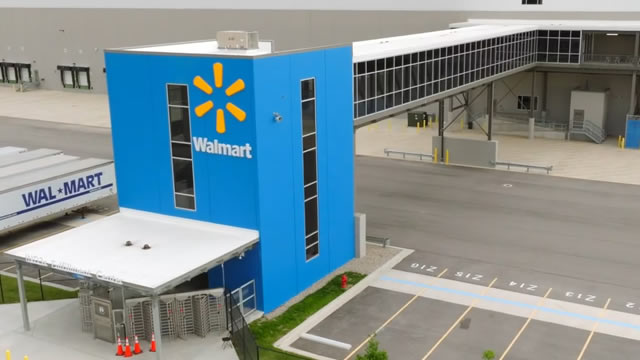
Walmart CEO Doug McMillon to retire, John Furner to succeed
Retail Dive· 2025-11-14 14:05
Core Points - Walmart Inc. CEO Doug McMillon will retire on January 31, 2024, after over a decade in the position, with John Furner, the current Walmart U.S. President and CEO, succeeding him effective February 1, 2024 [1][2] - McMillon will remain on the board until June 2024 to support the transition and will serve as an adviser to Furner through January 2027 [2] - Furner has been with Walmart since 1993 and has led Walmart U.S. since 2019, while McMillon has been with the company since 1984 and became CEO in 2014 [3] Compensation Details - Starting February 1, 2024, McMillon will receive an annual salary of $1.5 million through January 31, 2027, as per a U.S. Securities and Exchange Commission filing [4]

3 Beaten-Down Stocks That Haven't Been This Cheap in Over 5 Years
The Motley Fool· 2025-11-11 02:45
Core Insights - The article discusses three major stocks that have significantly declined this year, highlighting their current challenges and potential for recovery. Group 1: Lululemon Athletica - Lululemon's stock has dropped 58% this year, reaching levels not seen since March 2020, with a current P/E multiple of 11, indicating a potentially cheap valuation [4][6] - The company faces concerns over tariffs and a slowdown in discretionary spending, which could impact sales despite its strong brand appeal among younger consumers [3][4] - Comparable sales growth was only 1% in the most recent quarter, and recovery may depend on economic conditions, with expectations for a turnaround taking at least one to two years [6] Group 2: Target - Target's stock has decreased by 33% this year, with net sales of $25.2 billion down approximately 1% in its last earnings report [7][8] - The company is undergoing significant restructuring, including 1,800 corporate layoffs, under new CEO Michael Fiddelke, who aims to improve profitability [8][10] - Target's stock trades at 10 times earnings, suggesting a margin of safety, and there is potential for recovery within one to two years [10] Group 3: Kimberly-Clark - Kimberly-Clark's shares have fallen over 20% this year, reaching their lowest price since 2018, primarily due to its planned acquisition of Kenvue for $48.7 billion [11][12] - The acquisition poses challenges, including taking on liabilities related to talc-based products and other controversies surrounding Kenvue's brands [12] - Trading at 17 times trailing earnings, Kimberly-Clark is considered the most expensive among the three stocks discussed, with a challenging path to recovery [13]


Verizon reportedly planning major store closures and layoffs
Yahoo Finance· 2025-11-09 18:53
Core Insights - Verizon is reportedly planning to close several retail locations and lay off employees as part of a broader restructuring initiative, with an official announcement expected around November 20 [1][5][10] - The layoffs may affect employees at both closing and remaining locations, particularly underperforming stores [2][10] - There is significant internal concern among employees regarding job security, with reports of reduced income for sales representatives [3][12] Company Strategy - Verizon has been investing heavily in artificial intelligence (AI) to modernize operations and support future growth, with a focus on integrating AI into its services [5][6][12] - The company launched Verizon AI Connect to deploy large-scale AI workloads, leveraging its 5G, fiber, and edge-computing networks [6][8] - CEO Daniel Schulman emphasized a strategic shift towards efficiency and customer experience, with plans to reduce costs while enhancing service through AI [11][12][13] Industry Context - The retail landscape is experiencing significant pressures, with a trend of increasing store closures as companies adapt to digital services and AI automation [14][15][16] - Coresight Research forecasts that U.S. store closures could reach around 15,000 this year, reflecting broader challenges faced by traditional brick-and-mortar retailers [16][17] - Major U.S. retailers have reported a 29.6% decrease in openings and a 334.3% increase in closures in 2025 compared to 2024, indicating a shift in the retail environment [17]

Lilly and Walmart launch first retail pick-up option for weight-loss drug
Reuters· 2025-10-29 11:11
Core Insights - Eli Lilly and Walmart are collaborating to enhance access to Lilly's weight-loss drug Zepbound, which will be available for pick-up at Walmart pharmacies across the nation by mid-November [1] Company Summary - Eli Lilly is expanding the distribution of its weight-loss drug Zepbound through a partnership with Walmart [1] - Walmart will facilitate the pick-up of single-dose vials of Zepbound at its pharmacies, aiming to improve accessibility for consumers [1] Industry Summary - The partnership reflects a growing trend in the pharmaceutical industry to collaborate with retail chains to increase the availability of medications [1] - The initiative may influence the competitive landscape in the weight-loss drug market by making Zepbound more accessible to a broader audience [1]

‘Politically motivated' Fed more likely to cut rates, BNY chief economist predicts
Youtube· 2025-10-29 00:45
Earnings Expectations - The S&P 500 is projected to have a year-over-year growth of 10.5% for the third quarter, with the tech sector expected to grow by 23.5% [2][3] - Major companies such as Apple and Amazon are set to report earnings, which will significantly influence market sentiment as they collectively represent over 24% of the S&P 500's market cap [3] Federal Reserve Insights - The Federal Reserve is anticipated to cut rates, with a likely reduction of 25 basis points, although there is speculation about a potential 50 basis point cut [4][5] - The Fed is closely monitoring earnings reports for insights on pricing power, demand, and spending intentions from CEOs and CFOs [6] AI Sector Developments - Nvidia has announced multiple partnerships in the artificial intelligence space, reinforcing its position as a leader in AI chip technology [7] - The focus is on whether these AI initiatives will generate substantial returns, as the market is currently saturated with announcements but lacks clarity on profitability [8][9] Market Dynamics - The ongoing government shutdown is being monitored for its impact on consumer behavior and retail performance, with major retailers like Walmart and Dollar General expected to provide insights in upcoming reports [12][14] - The overall market is experiencing a rally, with optimism about AI's integration into various sectors potentially driving further growth [10][11] Future Outlook - The political landscape is expected to influence future Federal Reserve policies, particularly with upcoming changes in leadership and board composition [15]

3 No-Brainer Dow Jones Stocks to Buy Right Now
The Motley Fool· 2025-10-27 09:31
Core Insights - The article highlights three Dow Jones Industrial Average stocks that are considered strong investment opportunities in the current market environment, focusing on their growth potential and market positioning. Group 1: IBM - IBM is a leader in quantum computing and artificial intelligence (AI), with its stock gaining 29% year-to-date as of October 23, yet still appears undervalued at 4.0 times sales and 23.4 times forward earnings estimates [6][7]. - The company's AI-based contracts increased to $9.5 billion from $7.5 billion in the previous quarter, showcasing its growth in the AI sector [8]. - Compared to peers like Microsoft and Nvidia, which trade at significantly higher price-to-sales ratios, IBM offers a more attractive valuation for investors [9]. Group 2: American Express - American Express has consistently exceeded analyst expectations, demonstrating double-digit growth in revenue and even stronger earnings growth [12]. - The company is innovating with AI adoption among small businesses and enhancing its product offerings, including a new travel app built on the Ethereum blockchain [13]. - The stock is viewed as a solid investment, positioned in a favorable price range, with potential for premium pricing as the company continues to innovate [14]. Group 3: Walmart - Walmart is evolving its business model by integrating e-commerce strategies similar to Amazon and Costco, with online orders growing 25% year-over-year [18]. - The company is enhancing its customer loyalty program, Walmart+, which provides additional revenue streams through membership benefits [18]. - Despite a high valuation at 36 times forward earnings estimates, Walmart's innovative strategies and market position suggest strong long-term returns, making it a compelling buy [19].


Target to cut 1,800 jobs in major restructuring as new CEO Michael Fiddelke steps in
The Economic Times· 2025-10-24 18:52
Core Insights - Target Corporation announced a restructuring plan that includes cutting approximately 1,800 corporate jobs to enhance decision-making speed, improve profitability, and prepare for long-term growth as new CEO Michael Fiddelke prepares to take charge [1][2][7] - The job cuts are seen as a necessary step to simplify operations and address the complexity that has hindered the company's performance over time [2][8] - Jefferies analyst Corey Tarlowe described the layoffs as "painful but necessary," indicating that it signals Fiddelke's readiness to implement bold changes after years of underperformance [2][8] Company Changes - Michael Fiddelke, currently the Chief Operating Officer, will officially become CEO on February 1, 2026, succeeding Brian Cornell [2][8] - The layoffs mark Target's first significant job reduction in a decade, reflecting the company's commitment to making substantial changes after four years of stagnant sales [2][8] Financial Performance - Target is expected to report third-quarter earnings on November 19, with analysts forecasting revenue of $25.4 billion and earnings per share (EPS) of $1.76 [3][4] - Following the announcement of job cuts, Target's shares increased by 0.7% in premarket trading, indicating some investor support for the restructuring plan [6][8] - Target's stock has declined approximately 61% since its peak in 2021, although the recent layoffs have led to a slight uptick in share price [6][8] Market Context - Target's sales surged by over $15 billion in 2021 due to the COVID-19 pandemic, but the company has struggled with stagnant revenue growth over the past four years [6][8] - The company has faced challenges such as reduced customer traffic, inventory issues, and backlash from some customers, which have impacted its overall performance [6][8]


Target Corporation (TGT): A Bull Case Theory
Yahoo Finance· 2025-10-22 20:27
Core Thesis - Target Corporation is viewed positively despite recent challenges, with a share price of $89.27 as of October 7th and trailing and forward P/E ratios of 10.43 and 11.05 respectively [1] Group 1: Financial Performance - Target has faced headwinds such as consumer boycotts and tariffs, leading to a 2% decline in foot traffic and stagnation in earnings growth [2] - The company remains highly profitable, with a return on equity exceeding 20% and a return on invested capital above 10%, driven by a strong return on assets averaging over 7% [2] - A significant reduction in reinvestment over the past three years has boosted free cash flow and earnings per share by nearly 40% [3] Group 2: Capital Structure and Efficiency - Target's conservative debt-to-free-cash-flow ratio of around 5 indicates ample capacity for shareholder returns, including buybacks [3] - The company's consignment inventory model shifts inventory risk to suppliers, enhancing working capital efficiency and operational flexibility [3] Group 3: Market Perception and Valuation - Despite strong fundamentals, Target's stock has declined by nearly half, raising questions about market perception versus underlying value [4] - Approximately 78% of Target's buildings are owned, complicating the evaluation of asset quality, especially as reinvestment has been scaled back nearly 50% year-over-year [4] Group 4: Strategic Considerations - Understanding the proportion of maintenance capital expenditures relative to growth capex is crucial for assessing the sustainability of profitability [5] - Brand partnerships can enhance customer loyalty and margin stability, requiring careful qualitative assessment to avoid complicating financial analysis [5] - Overall, while near-term headwinds have impacted the stock, Target demonstrates strong profitability, operational efficiency, and balance sheet flexibility, suggesting that current valuation may understate intrinsic value and potential for shareholder returns [5] Group 5: Historical Context - Previous bullish theses highlighted Target's digital momentum, cost control, and omnichannel strategy despite near-term sales weakness and tariff pressures [6] - Since the last coverage, Target's stock price has depreciated approximately 5.32%, but the bullish thesis remains valid as the company maintains strong capital deployment [6]
These 2 Dividend Stocks Are Finally Rebounding, and There Might Be More Upside Ahead
Yahoo Finance· 2025-10-20 14:07
Group 1 - The S&P 500 index experienced a decline earlier this year but has since rebounded, with companies like Alphabet and Walmart showing similar recovery patterns [1][2] - Alphabet faced challenges earlier in the year but has seen a significant recovery, with shares increasing by 58% over the past six months [4] - The company has mitigated risks related to its antitrust lawsuit and continues to thrive in its core advertising business, which remains robust despite the rise of AI chatbots [5][6] Group 2 - Alphabet's cloud computing sales are growing rapidly, benefiting from the demand for AI services, and the company has potential revenue streams in autonomous vehicles [7] - The introduction of dividends by Alphabet last year marks a new phase for the company, indicating a commitment to returning value to shareholders [7][8] - Walmart's adaptability to new technologies has contributed to its recovery this year, and both companies are expected to maintain regular dividend payouts [8]
