Photovoltaic

Search documents
JinkoSolar Announces Fourth Quarter and Full Year 2024 Financial Results
Prnewswire· 2025-03-26 09:12
Core Viewpoint - JinkoSolar reported a challenging financial performance for 2024, with significant declines in revenue and profitability due to decreased module prices and operational challenges, despite maintaining a leading position in the solar industry and achieving record module shipments [4][34]. Group 1: Financial Performance - Total revenues for Q4 2024 were RMB20.65 billion (US$2.83 billion), down 15.7% sequentially and 37.1% year-over-year [10]. - Gross profit for Q4 2024 was RMB747.4 million (US$102.4 million), a decrease of 80.6% sequentially and 81.7% year-over-year [11]. - The net loss attributable to JinkoSolar's ordinary shareholders in Q4 2024 was RMB473.7 million (US$64.9 million), compared to net income of RMB22.5 million in Q3 2024 [29][31]. Group 2: Operational Highlights - Annual module shipments increased by 18.3% year-over-year to 92.9 GW, ranking first in the industry [4][49]. - Total shipments for the full year 2024 were 99,596 MW, including 92,873 MW for solar modules and 6,723 MW for cells and wafers [49]. - The average mass-produced N-type cell efficiency reached nearly 26.5% by the end of Q4 2024, with expectations to reach approximately 27% by the end of 2025 [6]. Group 3: Industry Context - The global PV industry saw a record high of 277 GW in newly added installations in China for 2024, marking a 28% year-over-year increase [5]. - The imbalance between supply and demand in the industry led to a downward trend in module prices, impacting profitability across the sector [5]. - National authorities in China have implemented measures to address supply-demand imbalances, including raising entry barriers for new manufacturing capacities and reducing export tax rebates [5]. Group 4: Future Outlook - For Q1 2025, JinkoSolar expects module shipments to be between 16.0 GW and 18.0 GW, and for the full year 2025, shipments are estimated to be between 85.0 GW and 100.0 GW [9][51]. - The company plans to maintain a cautious approach to capacity expansion in 2025, focusing on upgrades to TOPCon technology [10].



华为AI最新布局!
21世纪经济报道· 2025-03-23 14:57
Core Viewpoint - Huawei has officially entered the "AI Intelligent Era," leveraging its "Kunpeng + Ascend" computing strategy to build a robust AI ecosystem and empower its products with AI capabilities [1] Group 1: AI Ecosystem and Hardware - Huawei reported that there are 300 million users generating content with AI daily, equating to one in five internet users engaging in AI creation [1] - The Ascend AI chip's performance has significantly improved, with a single card throughput increasing from 60 TPS to 320 TPS, enhancing AI inference efficiency by five times at the same cost [1] - Over 6,000 enterprises have joined Huawei's AI partnership network, indicating strong industry interest and collaboration [1] Group 2: Investment Opportunities - Three core investment themes have been identified: hardware layer (Ascend chip foundry, AI servers, high-speed connectors), software layer (integrators of large model all-in-one machines, heterogeneous computing scheduling system developers), and application layer (smart city services, industrial quality inspection) [2][3] - Morgan Stanley predicts that companies within Huawei's AI ecosystem will see an average revenue growth rate of 35%-50% over the next three years [4] Group 3: Green Energy Initiatives - Germany has approved a significant environmental investment plan, allocating €500 billion (approximately 3.8 trillion RMB) for green transformation, with €100 billion directly targeting the solar and energy storage industries [4] - The new German policy is expected to create substantial market opportunities for Chinese companies, with projected exports of solar components and energy storage systems to Germany reaching 80 billion RMB by 2025, growing at a compound annual growth rate of 45% [5]

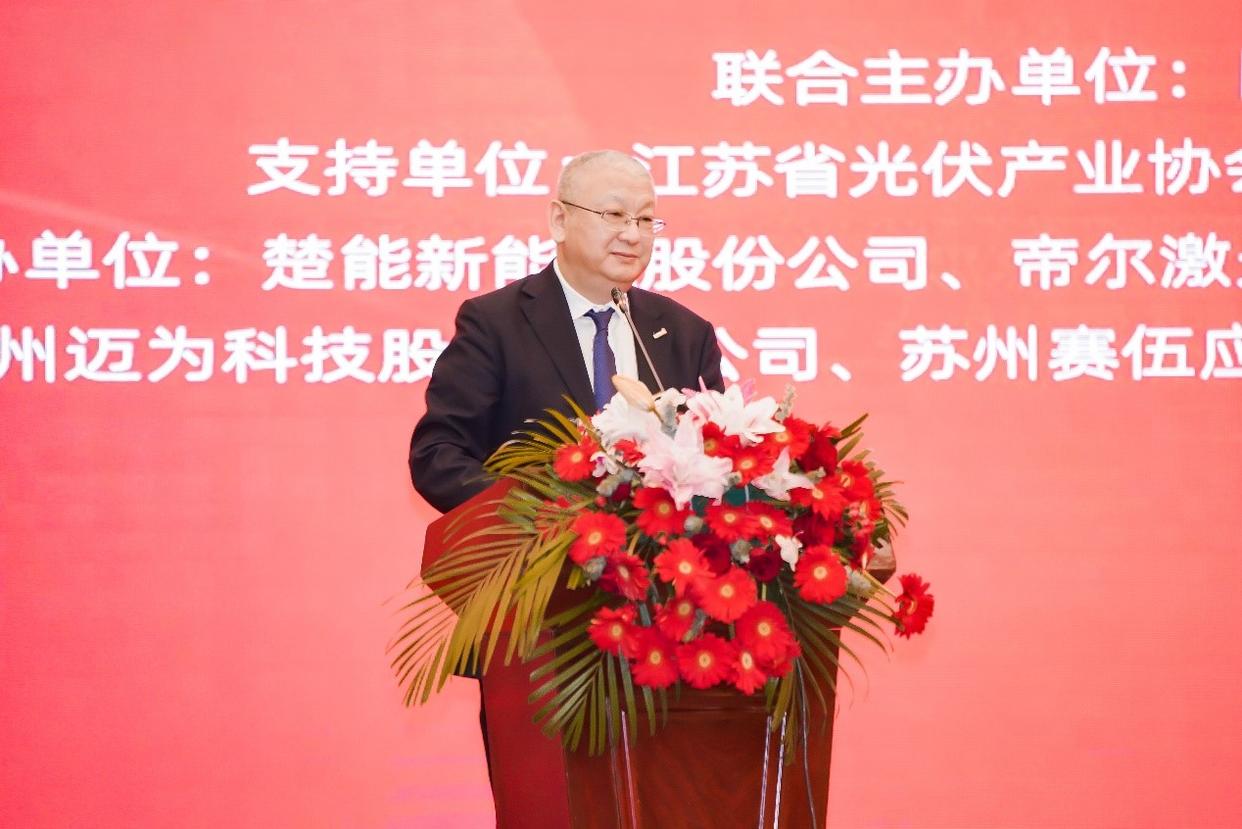
隆基绿能李振国:以自主创新和中国原创技术引领光伏产业发展
Zhong Guo Jing Ji Wang· 2025-02-28 05:46
Core Viewpoint - The future of the photovoltaic industry is centered on innovation, responsibility, and a global perspective, emphasizing the importance of independent innovation and original technology in sustaining China's leadership in the sector [1]. Group 1: Importance of Innovation - Chinese photovoltaic companies have achieved international leadership in multiple industry chain segments through independent innovation and original technology development [1]. - Chinese photovoltaic products are exported to over 200 countries and regions, playing a crucial role in global energy transition [1]. Group 2: Call to Action - The industry is urged to rely on Chinese original technology and independent innovation to break through technological barriers in key areas, transitioning from a "manufacturing hub" to an "innovation hub" [1]. - A joint initiative titled "Proposal for Actively Promoting Independent Innovation and Original Technology Development in the Photovoltaic Industry" was released, aiming to foster collaboration for the robust development of photovoltaic innovation and technology [1].