
Refining

Search documents
How Phillips 66's Integrated Model Enhances Profitability & Resilience
ZACKS· 2026-01-29 15:55
Core Insights - Phillips 66 (PSX) is positioned to benefit from declining crude prices, with the West Texas Intermediate spot crude price expected to drop from $65.40 per barrel in 2025 to $52.21 in 2026, enhancing PSX's refining margins and profitability [1][7] Group 1: Business Model and Diversification - PSX's diversification across midstream, chemicals, and renewables provides stability in earnings and cash flow, allowing the company to maintain profitability even in a weaker refining environment [2][7] - The company is actively divesting non-core assets to reallocate capital towards strategic priorities, including increasing shareholder returns and pursuing high-return growth opportunities [3][7] Group 2: Competitors - Valero Energy Corporation (VLO) operates 15 refineries with a combined throughput capacity of 3.2 million barrels per day, benefiting from a diversified refinery base [4] - Par Pacific Holdings (PARR) has a refining capacity of 219,000 barrels per day and operates in Hawaii and the Pacific Northwest, along with a logistics business segment [5] Group 3: Financial Performance and Valuation - PSX shares have increased by 14.3% over the past six months, outperforming the industry composite stocks, which rose by 13.1% [6] - The current trailing 12-month enterprise-value-to-EBITDA (EV/EBITDA) for PSX is 14.57X, significantly higher than the industry average of 4.72X [8] - The Zacks Consensus Estimate for PSX's 2025 earnings has been revised downward recently, indicating a potential shift in earnings expectations [9][10]


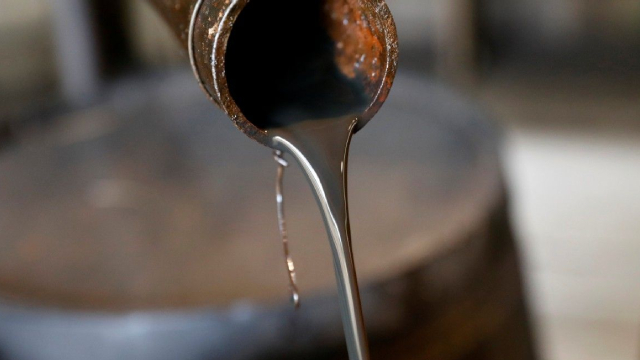
Indian Oil Corp to raise diesel exports with refining capacity boost, official says
Reuters· 2026-01-28 12:31
Core Viewpoint - Indian Oil Corp anticipates a significant increase in annual diesel exports, projecting a rise to up to 5 million metric tons by 2027 due to expanded refining capacity [1] Company Summary - The head of marketing at Indian Oil Corp announced the company's plans during the India Energy Week conference [1]

Is Pacific Holdings (PARR) Among the Energy Stocks that Fell This Week?
Yahoo Finance· 2026-01-28 11:45
Core Viewpoint - Par Pacific Holdings, Inc. (NYSE:PARR) has experienced a decline in share price and is facing adjustments in price targets from analysts, while still being recognized for its strong performance in the previous year [1][3][4]. Company Performance - The share price of Par Pacific Holdings fell by 4.5% from January 16 to January 23, 2026, making it one of the energy stocks that lost the most during that week [1]. - The company posted gains of over 114% in 2025, ranking it among the 11 best performing energy stocks of that year [4]. Analyst Insights - Piper Sandler lowered its price target for Par Pacific Holdings from $59 to $57, maintaining an 'Overweight' rating, indicating a positive outlook despite the price adjustment [3]. - The analyst anticipates that the American refining sector will be significantly impacted by U.S. actions in Venezuela, with potential increases in crude flow from 200,000 barrels per day to over 400,000 barrels per day due to U.S. involvement and sanctions relief [3]. Market Context - Par Pacific Holdings operates in logistically complex markets and is recognized as a growth-oriented company within the energy and infrastructure sectors [2].

Valero Energy vs. Phillips 66: Which Refining Stock Should You Bet On?
ZACKS· 2026-01-27 20:06
Core Insights - Valero Energy Corporation (VLO) has outperformed Phillips 66 (PSX) over the past year, with a stock price increase of 32.7% compared to PSX's 15.9% gain [1] - Both companies are positioned to benefit from the current softness in crude oil prices, which is expected to enhance refining margins [4][6] Group 1: Valero Energy Corporation (VLO) - VLO's operational flexibility allows its refineries to adjust product yields based on market conditions, providing a strategic advantage [4] - The current market environment is expected to support strong refining margins, aiding VLO's profitability despite the cyclical nature of the refining industry [5] - VLO is more sensitive to refining margins and can benefit when crude prices are weak, making it attractive to investors who are comfortable with higher volatility [13] Group 2: Phillips 66 (PSX) - PSX's diversified business model across midstream, chemicals, and renewables provides greater stability and lower volatility in cash flows [6][7] - The company is focusing on streamlining its asset base through targeted divestitures and strategic acquisitions, such as the EPIC NGL acquisition, to enhance long-term earnings visibility [8] - PSX trades at a higher EV/EBITDA of 14.44X compared to VLO's 8.83X, indicating investor preference for its diversified model [12]


Sky Quarry Unlocks Strategic Value at 5,000 Barrels-Per-Day Foreland Refinery with Completion of High-Impact System Upgrades
Accessnewswire· 2026-01-27 13:39
Core Viewpoint - Sky Quarry Inc. has completed significant operational upgrades at its Foreland Refinery, enhancing its position in a constrained regional market for energy solutions [1] Group 1: Company Developments - The Foreland Refinery is the only permitted refinery in the State of Nevada, making it a unique asset in the western United States [1] - The operational upgrades are aimed at improving asset readiness within a supply-constrained and logistically complex regional fuel market [1] Group 2: Industry Context - The energy solutions industry is facing challenges due to supply constraints and logistical complexities, highlighting the importance of operational efficiency and readiness [1]

Valero Energy's Q4 Earnings on the Deck: Time to Buy or Wait?
ZACKS· 2026-01-26 13:50
Core Viewpoint - Valero Energy Corporation (VLO) is expected to report a significant increase in fourth-quarter earnings, with a consensus estimate of $3.19 per share, reflecting a 398.4% year-over-year improvement, despite a projected revenue decline of 6% to $28.9 billion [2][5]. Earnings Performance - VLO has consistently exceeded earnings estimates in the past four quarters, with an average surprise of 138.8% [3]. - The company has experienced four upward and two downward revisions in earnings estimates over the last 30 days [2]. Earnings Estimates and Trends - The current earnings estimate of $3.19 per share shows a positive trend compared to previous estimates, with a 3.57% increase over the last 30 days [3]. - The Earnings ESP (Expected Surprise Prediction) stands at -2.90%, indicating a lower likelihood of an earnings beat this quarter [4]. Market and Operational Factors - Valero is anticipated to benefit from strong refining margins due to lower crude prices, which averaged $59.64 per barrel compared to $70.74 in the prior-year quarter, thus reducing feedstock costs [5][6]. - However, the company faces challenges in the Renewable Diesel segment and increased depreciation and amortization expenses related to the closure of the Benecia Refinery, which may negatively impact earnings [7]. Stock Performance and Valuation - VLO's stock has increased by 32.4% over the past year, outperforming the industry average of 16% [8]. - The company is currently considered overvalued, with a trailing 12-month EV/EBITDA ratio of 9.02X, significantly higher than the industry average of 4.66X [9]. Company Overview - Valero Energy operates 15 refineries with a combined throughput capacity of 3.2 million barrels per day, providing operational flexibility to process various feedstocks [11]. - The company maintains a strong financial position with a low debt-to-capitalization ratio of 18% as of September 30, 2025, and utilizes excess free cash flow for share buybacks [13]. Industry Context - The refining industry is cyclical and volatile, with margins dependent on crude oil prices and demand for refined products, which can fluctuate significantly [13]. - Other refining companies like Phillips 66 and Par Pacific Holdings are also expected to benefit from favorable refining margins due to tightened supply and resilient demand for refined fuels [16].

South Korea's S-Oil says Q1 refining margins to remain robust on steady demand
Reuters· 2026-01-26 00:32
Core Viewpoint - S-Oil, primarily owned by Saudi Aramco, anticipates strong refining margins in the first quarter due to consistent demand, supply disruptions, and planned closures [1] Company Summary - S-Oil expects refining margins to remain robust in the first quarter [1] - The company attributes this expectation to steady demand and supply disruptions [1] - Planned closures are also contributing factors to the anticipated strong performance [1] Industry Summary - The refining sector is likely to benefit from ongoing demand and supply chain challenges [1] - The overall market conditions suggest a favorable environment for refining margins in the near term [1]

Softness in Oil Price: What Lies Ahead for VLO's Refining Operations?
ZACKS· 2026-01-23 13:46
Core Insights - The energy industry is facing high uncertainty with West Texas Intermediate (WTI) oil prices trading below $60 per barrel, significantly lower than a year ago. However, Valero Energy Corporation (VLO) is positioned to benefit from the current crude pricing environment [1][2]. Company Overview - Valero Energy is a leading refining company with a processing capacity of 3.2 million barrels of oil daily, allowing it to purchase oil at lower costs and produce end products like gasoline and distillates [2]. - The U.S. Energy Information Administration (EIA) anticipates that crude prices will remain soft, with global oil inventories expected to continue increasing [2]. Price Projections - EIA projects the average spot price for WTI in 2026 to be $52.21 per barrel, down from $65.40 per barrel in 2025, which is favorable for Valero's refining margins [3]. Competitor Analysis - Other refiners like Phillips 66 (PSX) and Par Pacific Holdings Inc. (PARR) are also expected to benefit from low oil prices, with refining operations contributing significantly to PSX's earnings [4]. - Par Pacific, with a capacity of 219,000 barrels daily, has a cost advantage due to its exposure to cheaper Canadian heavy oil [5]. Valuation and Performance - Valero's shares have increased by 38.1% over the past year, outperforming the industry composite stocks, which rose by 20.1% [6][7]. - The current enterprise value to EBITDA (EV/EBITDA) ratio for VLO is 9.01X, higher than the industry average of 4.64X [9]. Earnings Estimates - The Zacks Consensus Estimate for VLO's 2026 earnings has seen upward revisions, indicating positive sentiment regarding future performance [11]. - Current earnings estimates for VLO are as follows: $3.05 for the current quarter, $1.97 for the next quarter, $9.93 for the current year, and $11.97 for the next year [12].
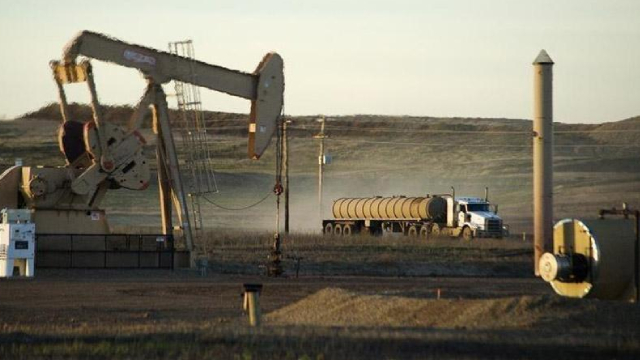
What Lies Ahead for Valero With Prevailing Softness in Crude Price
ZACKS· 2026-01-22 18:50
Core Insights - Valero Energy Corporation (VLO) is a significant player in the downstream energy sector, with a strong refining network capable of processing various feedstocks into higher-value refined products [1] Group 1: Market Environment - The benchmark West Texas Intermediate crude price is currently above $60 per barrel, down from $75.44 a year ago, indicating a favorable business environment for the downstream energy sector [2] - The U.S. Energy Information Administration (EIA) projects crude prices to decline to approximately $52.21 per barrel in 2026 and further to $50.36 per barrel in 2027 [2] Group 2: Company Performance - VLO benefits from lower crude prices, allowing the company to purchase inputs at a reduced cost, which is expected to enhance profit margins as crude prices continue to decline [3][8] - Valero's shares have increased by 39.3% over the past year, outperforming the industry composite stocks, which gained 15.3% [5] Group 3: Valuation Metrics - Valero trades at a trailing 12-month enterprise-value-to-EBITDA (EV/EBITDA) ratio of 9.08X, which is higher than the industry average of 4.56X [6] Group 4: Earnings Estimates - The Zacks Consensus Estimate for VLO's earnings for 2025 remains unchanged at $9.93, with current quarter and next quarter estimates at $3.05 and $1.97, respectively [10][11]

Chord Energy (CHRD) Price Target Reduced by $6
Yahoo Finance· 2026-01-22 03:49
Core Viewpoint - Chord Energy Corporation (NASDAQ:CHRD) is recognized as one of the best energy stocks to buy for dividends in 2026, highlighting its strong position in the market [1]. Price Target Adjustments - Scotiabank analyst Paul Cheng reduced the price target for Chord Energy from $120 to $114 while maintaining a 'Sector Perform' rating, reflecting a broader revision of price targets for American Integrated Oil and E&P stocks [3]. - Jefferies also lowered its price target for Chord Energy from $101 to $99, keeping a 'Hold' rating, with the new target indicating an upside of nearly 8% from current levels [4]. Operational Insights - Chord Energy has a premier acreage position in the Williston Basin and is involved in the exploration and production of crude oil, natural gas liquids, and natural gas [2]. - The upcoming quarter's earnings are expected to be straightforward due to the absence of major weather disruptions this winter, which may positively impact operational performance [3]. - The softening service environment is anticipated to enhance Chord's capital efficiency, potentially allowing the company to exceed capital expenditure consensus in 2026 [4].
