
Investment Banking

Search documents
Moelis & Co. Stock Up 33.5% in 3 Months: Is it a Lucrative Bet?
ZACKS· 2025-09-18 16:11
Core Insights - Moelis & Co. (MC) shares have increased by 33.5% over the past three months, outperforming the Finance sector and the S&P 500 index, while also surpassing Lazard Inc. (LAZ) but underperforming Evercore, Inc. (EVR) [1][10] Factors Supporting Moelis & Co. Stock - The Federal Reserve's recent interest rate cut of 25 basis points is expected to enhance M&A activity, which will benefit Moelis & Co.'s advisory revenues [4][5] - Moelis & Co. has shown solid organic performance with a 10% compound annual growth rate (CAGR) over the five years ending in 2024, despite revenue declines in certain years due to M&A softness [6][7] - The company has diversified its operations across various sectors and regions, with the top 10 transactions accounting for less than 25% of total revenues [7][8] Financial Performance and Estimates - The Zacks Consensus Estimate predicts a revenue increase of 24% in 2025 and 13.5% in 2026, with current year revenue estimated at $1.48 billion and next year at $1.68 billion [13][14] - Earnings estimates for 2025 and 2026 suggest increases of 37.9% and 28.7%, respectively, with upward revisions noted in the past 30 days [16][18] Valuation and Returns - Moelis & Co. stock is currently trading at a forward price-to-earnings (P/E) ratio of 24.92, which is above the industry average of 14.95, indicating a premium valuation [20][22] - The company boasts a return on equity (ROE) of 42.72%, significantly higher than the industry average of 12.06%, reflecting efficient capital allocation [23][27] Challenges and Outlook - Rising expenses, particularly in compensation, have been a concern, with a five-year CAGR of 10.1% noted [27] - Geopolitical risks and foreign currency fluctuations may impact overseas revenues, which accounted for 22.6% of total revenues in the first half of 2025 [28] - Despite valuation concerns, the potential for increased M&A activity and a solid balance sheet support the attractiveness of Moelis & Co. as an investment [29]

关键跨资产监测指标、数据、动向以及追踪情绪、资金流向和仓位的模型-Signals, Flows & Key Data_ A weekly summary of key cross-asset monitors, data, moves, and models tracking sentiment, fund flows, and positioning.
2025-09-18 13:09
Summary of Key Points from the Conference Call Industry Overview - The report focuses on global asset classes, including equities, fixed income, currencies, and commodities, with specific forecasts for Q2 2026. Core Insights and Arguments - **Equity Market Forecasts**: - S&P 500 is forecasted to return 6,500 in the base case, with a bear case of 4,900 and a bull case of 7,200, indicating a potential decline of -24.4% in the bear scenario [3] - MSCI Europe shows similar trends with a bear case of 1,610 and a bull case of 2,620, reflecting a -24.2% decline in the bear case [3] - Emerging Markets (MSCI EM) are projected to decline by -32.0% in the bear case, with a base case return of 1,200 [3] - **Fixed Income Insights**: - UST 10-year yields are expected to return 3.45% in the base case, with a bear case of 4.00% and a bull case of 2.85% [3] - The report indicates a significant spread in high yield (HY) bonds, with a bear case of 475 bps and a base case of 335 bps [3] - **Currency Forecasts**: - The JPY/USD is projected to strengthen to 130 in the bull case, while the EUR/USD is expected to reach 1.25 [3] - The INR/USD is forecasted to appreciate to 81.9 in the bull case, indicating a 12.7% increase [3] - **Commodity Market Trends**: - Brent crude oil is expected to return to 60 in the base case, with a significant potential upside to 120 in the bull case, reflecting a -23.9% decline in the bear case [3] - Gold is forecasted to return 3,500 in the base case, with a bear case of 2,975 [3] Important but Overlooked Content - **Market Sentiment**: - US initial jobless claims have reached a three-year high, indicating potential economic stress [7] - MSCI China has reached its highest level since 2021, suggesting a recovery in that market [7] - US ETFs focused on international equities saw inflows of approximately $10.4 billion, the largest since January 2021, indicating a shift in investor sentiment towards international markets [12] - **Cross-Asset Positioning**: - The report highlights net positioning across various asset classes, with US equities showing a 28% long position among asset managers, while emerging market equities have a 41% long position [64] - The positioning in commodities shows a 31% long position in gold, indicating a preference for safe-haven assets [64] - **Correlation Insights**: - The report provides insights into cross-asset correlations, with equity correlations at 70%, indicating a strong relationship among equity markets [73] - The correlation between equities and credit is notably high at 79%, suggesting that movements in equity markets are closely tied to credit market conditions [73] This summary encapsulates the key insights and forecasts from the conference call, providing a comprehensive overview of the current market landscape and future expectations across various asset classes.

中国_8 月数据支持我们关于下半年需求受挫且股市上涨提振有限的观点 - China_ August data support our view of a demand setback in H2 and limited boost from a stock rally
2025-09-18 13:09
Summary of Key Points from the Conference Call Industry Overview - The conference call primarily discusses the economic situation in China, focusing on various economic indicators for August 2025, including industrial production, retail sales, fixed asset investment (FAI), and property market conditions [1][2][3]. Core Insights and Arguments - **Economic Slowdown**: August data indicates a significant decline in economic activity, with industrial production growth slowing to 5.2% year-on-year from 5.7% in July, retail sales dropping to 3.4% from 3.7%, and FAI deteriorating to -6.3% from -5.2% [1][2][18]. - **Export Challenges**: Export-delivered value fell to -0.4% year-on-year in August from 0.8% in July, reflecting broader challenges in the export sector [10]. - **Sector Performance**: The financial sector showed some resilience with output growth increasing to 9.2% year-on-year in August, but overall services sector growth slowed to 5.6% [1][2]. - **Property Market Decline**: The property sector continues to struggle, with investment growth plunging to -19.4% year-on-year in August from -17.1% in July, indicating a worsening situation [23][24]. Additional Important Details - **Consumer Behavior**: Retail sales growth has missed expectations for three consecutive months, particularly impacted by a decline in durable goods sales, including home appliances and smartphones, due to the payback effect from a consumer trade-in subsidy program [11][15]. - **Inflation and Monetary Policy**: CPI inflation fell to -0.4% year-on-year in August, leading to speculation that the People's Bank of China (PBoC) may be reluctant to cut rates in the near term despite the economic slowdown [3][12]. - **Investment Trends**: FAI growth in manufacturing and infrastructure has declined, with manufacturing investment dropping to -1.3% year-on-year in August from -0.3% in July, influenced by the anti-involution campaign [19][21]. - **Property Sales**: New home sales remain depressed, with volume growth dropping to -10.3% year-on-year in August from -8.0% in July, reflecting a challenging environment for the property market [23][24]. Conclusion - The overall economic outlook for China appears cautious, with significant challenges in various sectors, particularly in property and retail. The government may need to balance between stimulating growth and avoiding inflationary pressures in the stock market [2][3].
Do investors care about quarterly vs half-year reporting? Here's what the numbers say.
MarketWatch· 2025-09-18 11:27
Core Insights - In Europe, there is a nearly 50-50 split in the frequency of company reporting, as indicated by Goldman Sachs data [1]


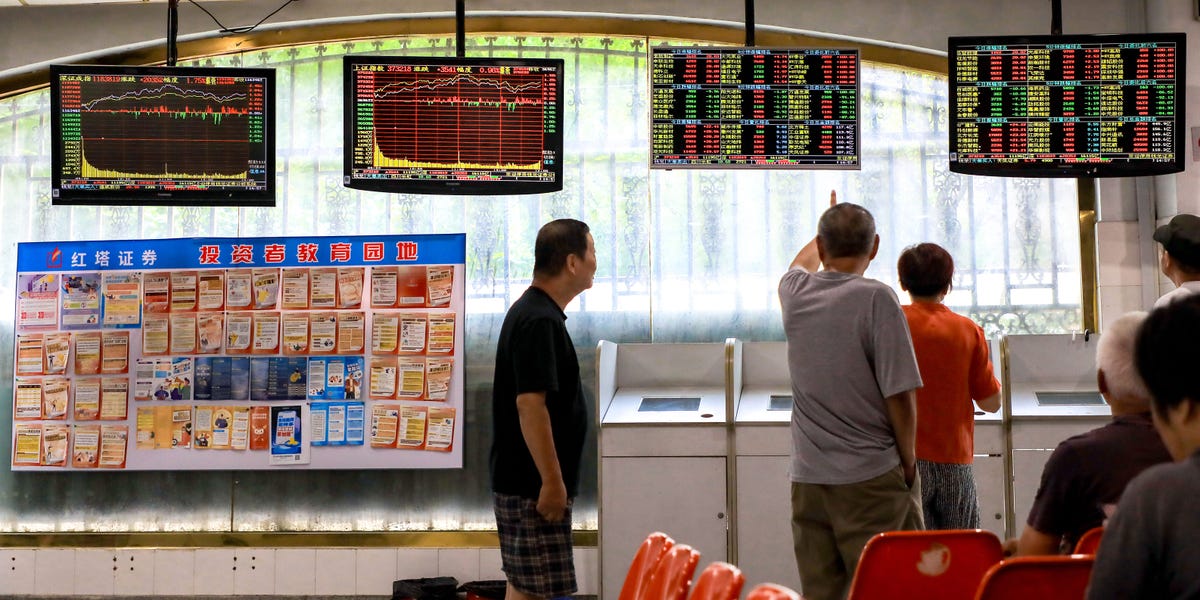
The real force powering China's market rally isn't mom-and-pop investors this time, says Goldman Sachs
Markets Insider· 2025-09-18 07:00
Core Viewpoint - China's stock markets are experiencing a significant rally, primarily driven by institutional investors rather than retail investors, with Goldman Sachs suggesting that the bull run may continue further [1][2]. Group 1: Market Performance - Chinese equities have gained approximately $3 trillion in market value this year across Hong Kong and mainland markets [2]. - The CSI 300 index has increased by 26% since April, while the MSCI China index has risen over 35% year-to-date [2]. - Domestic insurers have raised their equity holdings by 26%, and domestic hedge funds have increased assets under management from 5 trillion yuan to 5.9 trillion yuan (approximately $830 billion) [3]. Group 2: Investor Behavior - Institutional investors, including onshore mutual funds, have significantly reduced cash ratios to five-year lows as they invest heavily in stocks [2]. - Chinese households hold about $5 trillion in equities, representing roughly one-third of the total Chinese equities market, with most of the remainder held by global and domestic institutional investors [4]. - Only 11% of Chinese household financial assets are allocated to equities or mutual funds, compared to about 32% in the US, indicating potential for increased investment in stocks as property prices decline and bank deposit yields remain low [5]. Group 3: Market Sentiment and Valuation - Retail sentiment is not at euphoric levels seen in previous market peaks, suggesting room for growth; if enthusiasm returns to those highs, the CSI 300 could gain an additional 18% to 27% [6]. - Current valuations of Chinese shares do not appear stretched, and they trade at a discount compared to developed-market equities [7]. - Despite the stock market's outperformance relative to the slowing economy, this disconnect is noted as a global phenomenon [7]. Group 4: Policy Risks and Outlook - The primary risk to the market is policy-related, as previous rallies have ended due to regulatory tightening; however, the stock market's importance to Beijing suggests a low likelihood of deliberate downturns [8][9]. - Goldman Sachs maintains an overweight call on China's mainland-listed A shares and Hong Kong-listed H shares, forecasting 8% and 3% upside over the next 12 months, respectively [9].

HEDJ: Not The Right Way To Play A Weaker Dollar
Seeking Alpha· 2025-09-18 02:27
Group 1 - European equities have experienced significant growth in 2025, largely attributed to a weaker dollar [1] - The perception of the European market has shifted from being considered sleepy to vibrant and active this year [1] Group 2 - Binary Tree Analytics (BTA) focuses on providing transparency and analytics for capital markets instruments, specifically targeting CEFs, ETFs, and Special Situations [2] - BTA aims to deliver high annualized returns while maintaining a low volatility profile, leveraging over 20 years of investment experience [2]

中国:8 月政府财政收入和支出增速均放缓,同时财政赤字扩大-China_ Government revenue and spending growth both slowed in August, while AFD widened
2025-09-18 01:46
Summary of Key Points from the Conference Call Industry Overview - The report focuses on the fiscal performance of the Chinese government, highlighting the slowdown in both revenue and expenditure growth in August 2023 amid weaker economic activity and ongoing PPI deflation [1][2][3]. Core Insights 1. **Fiscal Revenue and Expenditure Growth**: - Fiscal revenue growth slowed to +2.0% year-on-year (yoy) in August from +2.6% in July, while fiscal expenditure growth decreased to +0.8% yoy from +3.0% in July [2][3]. - Tax revenue growth fell to +3.4% yoy in August from +5.0% in July, primarily due to a decline in consumption and individual income tax revenues [3]. 2. **Property-Related Revenue Decline**: - Property-related government revenue resumed its decline, with land sales revenue falling by 5.4% yoy in August compared to a 6.9% increase in July [2][7]. - The overall government revenue from the property sector contracted by 7.0% yoy in August, reflecting a significant downturn in housing demand and funding challenges for property developers [7][9]. 3. **Augmented Fiscal Deficit (AFD)**: - The AFD widened to -12.3% of GDP on a 3-month moving average (3mma) and -11.7% on a 12-month moving average (12mma) as of August, compared to -11.6% and -11.4% in July [3][8]. - The widening AFD is expected to continue in the coming months, influenced by government bond issuance and targeted easing measures [9]. 4. **Government Spending and Policy Outlook**: - The slowdown in government spending growth and the accumulation of fiscal deposits indicate that policymakers are not rushing to implement stimulus measures despite resilient export performance [9]. - Incremental and targeted easing is deemed necessary due to sluggish domestic demand and ongoing weaknesses in labor and property markets [9]. Additional Important Points - The effective fiscal deficit ratio, after seasonal adjustments, was reported at -4.5% of GDP (3mma) and -5.0% (12mma) as of August, reflecting a slight improvement from July figures [3]. - The report notes a significant increase in stamp tax revenue from stock trading, which surged to +226% yoy in August, although it constituted less than 1% of total fiscal revenue [6]. This summary encapsulates the critical financial metrics and trends affecting the Chinese government's fiscal landscape, providing insights into potential investment opportunities and risks within the broader economic context.
JPHY: High Yield With Active Brain
Seeking Alpha· 2025-09-18 01:30
Core Insights - The article focuses on analyzing the JPMorgan Active High Yield ETF, which is managed by JP Morgan and falls under the category of exchange-traded funds [1] Group 1: Investment Vehicle Overview - JPMorgan Active High Yield is an exchange-traded fund (ETF) [1] - The fund is operated by a manager owned by the investment bank JP Morgan [1] Group 2: Analyst Disclosure - The article does not disclose any stock, option, or similar derivative positions in the companies mentioned [1] - There are no plans to initiate any such positions within the next 72 hours [1] - The article expresses the author's own opinions and is not receiving compensation from any company mentioned [1]
India's M&A Boom Meets AI: Navatar Brings Salesforce-Powered Deal Origination CRM To Private Equity & Investment Banking Firms
Globenewswire· 2025-09-18 01:02
Industry Overview - India's mergers and acquisitions market has reached nearly $41 billion in 2025, driven by significant deals from major players like Reliance, JSW Group, and Tata Sons [1] - Private equity activity in India is at its highest level in over a decade, with global investors and sovereign funds actively seeking opportunities alongside influential Indian conglomerates [1] Company Expansion - Navatar, a leader in AI-powered CRM for private markets, is expanding its operations in India with a dedicated local office and founders of Indian origin, providing deep market insights and necessary technology for Indian dealmakers [2] Technology and Features - Navatar's CRM integrates seamlessly with Outlook and Salesforce, automating data capture and transforming daily activities into structured intelligence without manual entry [4] - The platform is built on Salesforce and integrated with Microsoft Copilot, offering enterprise-grade AI and privacy safeguards to ensure client confidentiality [4] - AI-driven features include automated intelligence capture, deal origination and sourcing, buyer-seller matching, document intelligence, fundraising LP intelligence, and real-time workflow insights [7] Market Impact - As global capital flows into sectors such as healthcare, consumer goods, renewables, and technology, Navatar provides the infrastructure for Indian dealmakers to scale their operations confidently [5] - Hundreds of leading firms worldwide already utilize Navatar to enhance their competitive edge in winning mandates, deepening relationships, and closing deals more efficiently [5]

'Fast Money' traders talk market response to Fed rate cut decision
Youtube· 2025-09-17 21:53
Core Viewpoint - The Federal Reserve's recent decision to implement a hawkish cut was largely anticipated by the market, indicating a balanced approach to its dual mandate despite concerns about the labor market [1][5][14] Market Reactions - The stock market closed flat following the Fed's announcement, with the 10-year yield also remaining stable, suggesting a lack of volatility in response to the news [6][8] - Over the past three months, the S&P has increased by approximately 10%, while gold prices have risen by 11%, indicating a unique market dynamic where both asset classes are performing well simultaneously [7] Interest Rate Expectations - Market expectations had priced in a 25 basis point cut, with speculation for additional cuts in the future, particularly three consecutive cuts [2][8] - There is a belief that the Fed may become more dovish as it approaches May 2026, when current Chair Powell's term ends, potentially leading to louder dissent among members [9] Economic Indicators - Upcoming inflation readings, particularly the PCE data, are anticipated to influence market sentiment and could be a source of concern for investors [6] - The Fed's message was interpreted as an "insurance cut," rather than the beginning of a new cutting cycle, reflecting ongoing worries about inflation [14]