
Pharmaceuticals

Search documents
Why BridgeBio Leapfrogged Its 50-Day Line On Pfizer's Patent Shake-Up
Investors· 2026-03-10 20:16
Core Viewpoint - BridgeBio's stock surged due to a favorable ruling in the patent dispute involving Pfizer's tafamidis, which is crucial for its competitive positioning in the market [1] Group 1: Patent Dispute and Market Impact - A judge ruled that Pfizer can present expert testimony in an upcoming patent trial, which is expected to influence the availability of generic versions of tafamidis [1] - The ruling is seen as strengthening Pfizer's position against generic-drug makers attempting to invalidate its patent, which is set to last until 2035 [1] - Analysts suggest that this development could lead to a potential settlement, positively impacting BridgeBio's stock [1] Group 2: BridgeBio's Product and Sales Performance - BridgeBio's drug, Attruby, is experiencing strong sales growth, with at least double-digit sequential increases each quarter since its market entry [1] - Despite recent stock pullbacks, analysts remain optimistic about BridgeBio's continued commercial momentum and regulatory progress [1] - The preference of doctors for protein stabilizers like Attruby over competing treatments is noted, indicating a favorable market position for BridgeBio [1] Group 3: Stock Performance and Analyst Ratings - BridgeBio's stock rose by 13.2% to $74.32, surpassing its 50-day moving average, and holds a strong Relative Strength Rating of 90 [1] - Analysts from Barclays and JPMorgan express positive outlooks on BridgeBio's stock, with recommendations for overweight positions based on its growth potential [1]


Brazil drugmaker EMS eyes overseas deals after buying Sanofi unit
Reuters· 2026-03-10 20:16
Core Viewpoint - Brazilian drugmaker EMS is pursuing international expansion through acquisitions after acquiring Sanofi's Brazilian generic drugmaker Medley for over $500 million, aiming to strengthen its position in the generics market in Latin America [1] Company Developments - EMS plans to integrate Medley while also seeking additional acquisitions in Brazil, Mexico, and Eastern Europe, with a focus on becoming a more global company [1] - The acquisition of Medley could increase EMS's share of Brazil's generics market to approximately 30%, pending approval from antitrust regulator CADE [1] - EMS is preparing to launch its own semaglutide-based injector pens in Brazil, anticipating regulatory approval from Anvisa, as the patent for semaglutide is about to expire [1] Market Context - The generics market in Brazil includes strong competitors such as Cimed and Eurofarma, which may influence the approval process for the Medley acquisition [1] - Rival company Hypera plans to launch its generic version of semaglutide this year, indicating competitive dynamics in the market [1]



SIGA Reports Financial Results for Three and Twelve Months Ended December 31, 2025 and Provides Business Update
Globenewswire· 2026-03-10 20:01
Core Viewpoint - SIGA Technologies reported a decline in financial performance for the year ended December 31, 2025, with a focus on securing government contracts and expanding product revenues in 2026 [2][3]. Financial Performance - For the three months ended December 31, 2025, product sales were $2.2 million, down from $79.8 million in the same period of 2024. Total revenues decreased to $3.8 million from $81.4 million year-over-year [3]. - For the year ended December 31, 2025, product sales totaled $88 million, a decline from $133.3 million in 2024. Total revenues were $94.6 million, down from $138.7 million [3]. - The company reported an operating income of $23.7 million for 2025, compared to $70 million in 2024, indicating a significant decrease in profitability [3][4]. - The net income for 2025 was $23.3 million, down from $59.2 million in 2024, with diluted earnings per share of $0.32 compared to $0.82 in the previous year [3][16]. Key Activities - In 2025, SIGA generated $53 million in oral TPOXX revenues and $26 million in IV TPOXX revenues, primarily from deliveries to the U.S. Strategic National Stockpile [7]. - The company received a $13 million procurement order for oral TPOXX in January 2026, part of a multi-year contract with options for additional purchases [6][7]. - SIGA expects the European Medicine Agency to confirm the positive benefit-risk balance of tecovirimat for smallpox and related indications, while anticipating a recommendation to withdraw the mpox indication [7]. Government Contracts and Funding - SIGA secured $27 million in additional U.S. Government funding in 2025 to support development activities, including a $13 million modification to the BARDA contract for pediatric development [2][12]. - The company aims to build on its partnership with the U.S. Government and international entities to secure new procurement contracts and orders for future revenue growth [2].


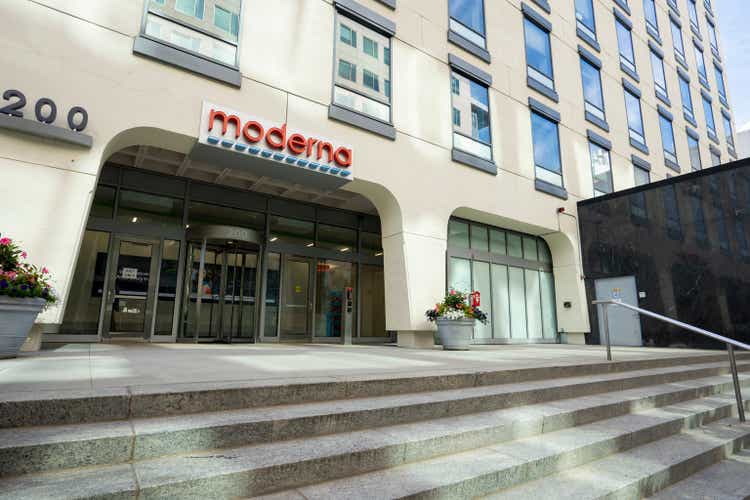
Moderna: Pipeline Hope Won't Pay The Bills (NASDAQ:MRNA)
Seeking Alpha· 2026-03-10 19:44
分组1 - Moderna, Inc. (MRNA) has experienced a decline in revenue since the end of the COVID-19 pandemic, indicating a lack of growth drivers for the company [1] - The company has been described as being in the doldrums, reflecting its struggles in the post-pandemic market environment [1] 分组2 - The analyst expresses a focus on undervalued and disliked companies with strong fundamentals and good cash flows, particularly in sectors like Oil & Gas and consumer goods [1] - Energy Transfer is highlighted as a company that was previously overlooked but has shown potential for substantial returns [1] - The analyst emphasizes a long-term value investing approach while also engaging in deal arbitrage opportunities [1]

INVESTOR ALERT: Pomerantz Law Firm Reminds Investors with Losses on their Investment in Ultragenyx Pharmaceutical Inc. of Class Action Lawsuit and Upcoming Deadlines – RARE
Globenewswire· 2026-03-10 19:33
Group 1 - A class action lawsuit has been filed against Ultragenyx Pharmaceutical Inc. for alleged securities fraud and unlawful business practices [2] - Investors who purchased Ultragenyx securities during the Class Period have until April 6, 2026, to request appointment as Lead Plaintiff [2] - The lawsuit is being handled by Pomerantz LLP, a firm recognized for its expertise in corporate and securities class litigation [6] Group 2 - On July 9, 2025, Ultragenyx announced progress in the Phase 3 Orbit study for UX143, leading to a stock price drop of $10.41 per share, or 25.11%, closing at $31.04 on July 10, 2025 [4] - On December 29, 2025, Ultragenyx reported that its Phase III Orbit and Cosmic Studies failed to meet primary endpoints, resulting in a stock price decline of $14.47 per share, or 42.32%, closing at $34.19 [5]


Tenax Therapeutics (NasdaqCM:TENX) 2026 Conference Transcript
2026-03-10 19:22
Tenax Therapeutics Conference Call Summary Company Overview - **Company**: Tenax Therapeutics (NasdaqCM:TENX) - **Event**: 2026 Conference on March 10, 2026 - **Speakers**: Christopher Giordano (CEO), Stuart Rich (Chief Medical Officer) Key Points Industry and Product Focus - **Industry**: Pharmaceutical, specifically focusing on treatments for pulmonary hypertension and heart failure - **Product**: Oral levosimendan, aimed at treating patients with pulmonary hypertension and heart failure with preserved ejection fraction (PH-HFpEF) [1][2] Enrollment and Study Updates - **LEVEL Study Enrollment**: Achieved target of 230 PH-HFpEF patients randomized, completed ahead of schedule in approximately 2 years [2] - **Study Timeline**: Randomization expected to conclude in March, with results anticipated in the third quarter of 2026 [2] - **Patient Retention**: High retention rate in the trial, with over 90% of patients entering the open-label extension (OLE) phase [16][17] Financial Health - **Liquidity**: Improved liquidity since PIPE financing, with sufficient cash to fund operations for approximately 18 months beyond data readout [3] Mechanism of Action - **Mechanism**: Oral levosimendan works by redistributing blood volume from splanchnic circulation to the lungs, addressing the issue of pulmonary hypertension in PH-HFpEF patients [11][12] - **Clinical Evidence**: Previous trials (HELP) demonstrated that levosimendan effectively reduces right atrial pressure and pulmonary artery pressure while maintaining cardiac output [13][14] Patient Experience and Anecdotal Evidence - **Patient Feedback**: Patients report significant improvements in quality of life, with anecdotes of increased activity levels and ability to perform daily tasks [53] - **Placebo Effect Considerations**: Patient responses can vary based on their initial health status; sicker patients are less likely to improve on placebo [19] Statistical Analysis and Trial Design - **Sample Size Reassessment**: Adjusted sample size based on interim analysis, increasing the power of the study to over 90% [30][35] - **Expected Outcomes**: Targeting a 25-meter improvement in the six-minute walk test, which is considered clinically meaningful for this patient population [37] Global Expansion Plans - **Future Trials**: Plans for LEVEL Two trial with a larger footprint, aiming to recruit in multiple countries including the U.S., Europe, Korea, and Taiwan [57][58] - **Recruitment Strategy**: Leveraging existing relationships with pulmonary hypertension experts to enhance recruitment efforts [59] Regulatory Considerations - **FDA Interactions**: Ongoing discussions with regulatory experts regarding potential pathways for drug approval, including the possibility of rolling submissions based on safety data [69][70] Company Growth and Structure - **Workforce Expansion**: Tripled employee count since raising funds, focusing on building relationships with investigators and opinion leaders globally [73][75] - **Commercialization Strategy**: Preparing for global commercialization with a focus on pre-commercial relationship management and medical teams [75] Additional Insights - **Market Potential**: Approximately 80% of HFpEF patients may have pulmonary hypertension, indicating a significant market opportunity for oral levosimendan if approved [23][24] - **Patient Demographics**: LEVEL trial participants are less symptomatic compared to those in the HELP trial, which may influence treatment outcomes [22] This summary encapsulates the critical insights from the Tenax Therapeutics conference call, highlighting the company's advancements, study progress, and strategic plans within the pharmaceutical industry.

Rapport Therapeutics (NasdaqGM:RAPP) 2026 Conference Transcript
2026-03-10 19:17
Rapport Therapeutics Conference Call Summary Company Overview - **Company**: Rapport Therapeutics (NasdaqGM:RAPP) - **Focus**: Development of a novel drug for epilepsy treatment, specifically RAP-219, which is advancing from phase 2 to phase 3 trials [1][2] Core Points and Arguments Drug Mechanism and Efficacy - **Target**: RAP-219 is a TARP gamma-8 AMPA modulator, focusing on four brain structures to treat focal onset seizures and bipolar mania [3] - **Efficacy**: Preclinical models showed unprecedented efficacy in controlling seizures without significant adverse effects, unlike existing pan-AMPA antagonists [5][11] - **Clinical Data**: Phase 2 trial demonstrated a 78% median reduction in clinical seizures and a 72% reduction in electrographic seizures, surpassing initial expectations of 50% and 30% respectively [19][31] Safety Profile - **Tolerability**: The drug exhibited a low discontinuation rate of 10%, with all adverse events being mild to moderate, and no serious adverse events reported [21] - **Therapeutic Index**: The drug maintains a wide therapeutic index, which is crucial for its safety and efficacy [13] Trial Design and Execution - **Phase 3 Trial**: The design will include two parallel studies with approximately 330 subjects each, focusing on low-medium and mid-high dose strategies [24][25] - **Global Collaboration**: A partnership with Tenacia in China aims to enhance global development and patient enrollment for the phase 3 trials [27] Market Opportunity - **Target Population**: 30%-40% of the 1.8 million patients with focal onset seizures are refractory to current treatments, representing a significant market opportunity [30] - **Market Size**: The potential market for branded drugs in this segment is estimated at $15 billion [31] Additional Indications - **Bipolar Mania**: The drug is also being studied for bipolar mania, leveraging its mechanism to reduce glutamate transmission, which is implicated in the disorder [36][37] - **Tonic-Clonic Seizures**: Plans to initiate a phase 2 study for tonic-clonic seizures based on positive results from focal onset studies [39] Long-Acting Injectable Development - **Differentiation**: RAP-219 is being developed as a long-acting injectable (LAI), which is uncommon for anti-seizure medications. Its potency, low solubility, and long half-life make it suitable for this formulation [42][44] - **Market Impact**: The LAI could extend exclusivity and revenue durability, appealing to both patients and physicians [47] Conclusion - Rapport Therapeutics is positioned to make significant advancements in the treatment of epilepsy and bipolar disorder with its innovative drug RAP-219, backed by strong clinical data and a clear market strategy. The ongoing development of a long-acting injectable formulation further enhances its potential impact in the market [50]
Daxor (NasdaqCM:DXR) 2026 Conference Transcript
2026-03-10 19:02
Daxor Corporation Conference Call Summary Company Overview - **Company Name**: Daxor Corporation - **Ticker**: DXR - **Headquarters**: Oak Ridge, Tennessee - **Industry**: Pharmaceutical Diagnostics, specifically Radiopharmaceuticals - **Core Product**: Volumex, a diagnostic drug for blood volume analysis - **Business Model**: Razor-and-blades model, generating recurring revenue through test kit sales [2][3][4] Core Points and Arguments - **Mission**: To enable optimal fluid management through blood volume analysis across the healthcare system [2] - **Market Size**: Approximately 134 million patients in the U.S. have conditions where blood volume management is critical, including 7 million heart failure patients [6][27] - **Clinical Importance**: Blood volume management is essential in various medical conditions such as heart failure, critical care, sepsis, and surgical blood loss [5][6] - **Uncertainty in Current Practices**: Current methods for assessing blood volume are indirect and often lead to suboptimal care due to reliance on proxy measures [10][11] - **Unique Offering**: Daxor is the only company with an FDA-approved direct measurement test for blood volume, providing accurate diagnostics that improve patient outcomes [12] Key Data and Results - **Test Utilization**: Over 75,000 tests shipped to more than 100 medical centers, with 170 peer-reviewed studies validating its accuracy [13] - **Impact on Patient Outcomes**: A study showed a 56% reduction in 30-day readmissions, 82% reduction in 30-day mortality, and 86% reduction in 1-year mortality for patients receiving blood volume analysis [21][22][23] - **Cost-Effectiveness**: The test is considered inexpensive relative to the complex problems it addresses, leading to better patient care and reduced healthcare costs [25][26] Recent Developments - **New Analyzer**: FDA clearance received for a new rapid portable analyzer, enhancing test processing speed and deployment [16][17] - **Sales Growth**: Operating revenue increased by 45% year-over-year for 2025, with a price increase for the diagnostic test implemented [29][30] - **Funding and Partnerships**: Secured over $5.6 million in Department of Defense contracts and $1.1 million in NIH grants [30] - **Production Strategy**: Plans to integrate key suppliers to bring 100% of production in-house by the end of the year [31] Market Expansion Strategy - **Target Markets**: Beyond heart failure, the test is applicable to critical care, nephrology, oncology, and outpatient settings [27] - **Projected Market Size**: Potential $70 billion market for heart failure alone, assuming a $1,000 test price and 30% market penetration [28] - **Sales Team Expansion**: Currently ramping up the sales team to accelerate market penetration [29] Financial Overview - **Market Capitalization**: Approximately $66 million with 5.83 million shares outstanding [34] - **Clean Capital Structure**: No debt or warrants, with a high insider ownership of 48.3% [34][35] - **Cash Flow**: Achieved cash flow breakeven on a cash-on-cash basis, with a cash burn of only $289,000 for the year [37] Leadership Team - **Key Personnel**: Led by experienced professionals including Chief Medical Officer Dr. John L. Jefferies and Chief Scientific Officer Jonathan Feldschuh [37][38] Conclusion Daxor Corporation is positioned to significantly impact the healthcare industry through its innovative blood volume analysis technology, with strong clinical evidence supporting its efficacy and a clear strategy for market expansion and revenue growth.
Cumberland Q4 Loss Narrows Y/Y as Talicia Launch Boosts Sales
ZACKS· 2026-03-10 18:51
Core Viewpoint - Cumberland Pharmaceuticals Inc. experienced a significant decline in stock price despite reporting strong revenue growth for the fourth quarter of 2025, indicating potential market concerns despite operational improvements [1][2]. Financial Performance - For Q4 2025, Cumberland reported net revenues of $13.7 million, a 31% increase year-over-year, equating to a $3.2 million improvement [2]. - Operating expenses rose to $15 million from $12 million in the previous year, leading to a net loss of $1.41 million, an improvement from a net loss of $1.90 million in the prior year [3]. - Total net revenues for 2025 reached $44.5 million, an 18% increase year-over-year, meeting management's goal for double-digit growth [4]. - Adjusted earnings for the year were $1.7 million, a $2.7 million improvement from 2024, with cash flow from operations totaling $4.9 million, up $5.5 million from the previous year [5]. Balance Sheet and Financial Position - At the end of 2025, Cumberland had total assets of $76.8 million, including $11.4 million in cash, total liabilities of $52.3 million, and shareholders' equity of $24.9 million [6]. - The company reduced its credit facility balance by over $10 million during the year, enhancing its financial stability [6]. Management Insights - CEO A.J. Kazimi described 2025 as a strong year, emphasizing revenue growth and portfolio expansion driven by increased demand for marketed brands like Vibativ and Sancuso [7]. - Management highlighted progress in the company's pipeline and global expansion strategy, including strengthening the commercial organization and expanding international partnerships [8]. Product Performance and Market Dynamics - Key products contributing to revenue growth included Kristalose, Sancuso, Vibativ, Caldolor, and Talicia, with Talicia beginning to generate sales in Q4 [2][4][9]. - The revenue increase was accompanied by higher operating expenses due to increased royalties and costs associated with higher sales volumes [10]. - Kristalose faced challenges from growing generic competition, which management acknowledged as a continuing issue [11]. Strategic Initiatives - Cumberland entered a co-commercialization agreement with RedHill Biopharma for Talicia, sharing net revenues while handling distribution and sales [12]. - The company made strides in international expansion, securing regulatory approvals for Vibativ in China and injectable ibuprofen in Mexico, and launching Vibativ in Saudi Arabia [13]. - A permanent reimbursement J-code for Caldolor was established by the Centers for Medicare & Medicaid Services, potentially supporting broader adoption in hospitals [14]. Clinical Development - Cumberland reported positive clinical progress for its pipeline candidate ifetroban, with the Phase II FIGHT DMD study showing encouraging results and receiving FDA Fast Track designation [15].

Novo Nordisk A/S (NVO) Expands Manufacturing to Support Rising Global Demand for GLP-1 Drugs
Yahoo Finance· 2026-03-10 18:38
Core Viewpoint - Novo Nordisk A/S is making a significant investment of approximately $506 million to expand its manufacturing facility in Ireland, aimed at increasing production capacity for oral GLP-1 drugs to meet growing demand outside the US [1][2]. Group 1: Investment and Expansion Plans - The company plans to invest about $506 million to expand its manufacturing facility in Athlone, Ireland, which will enhance production capacity for oral products, including various formulations of GLP-1 drugs [1][2]. - Construction of the facility has already commenced, with completion expected to occur gradually between 2027 and 2028 [2]. Group 2: Market Position and Demand - Novo Nordisk has established a first-mover advantage in the obesity market with its GLP-1 drugs, Ozempic and Wegovy, but has faced challenges due to misjudging demand, leading to shortages of Semaglutide and the emergence of cheaper copycat versions [3]. - The company has indicated that it currently has a sufficient supply of Wegovy pills to meet US demand, and the manufacturing expansion is part of plans to introduce the pill in additional markets [4]. Group 3: Company Overview - Novo Nordisk A/S is a global healthcare company that develops, manufactures, and markets medicines for serious chronic diseases, leading in diabetes care, obesity management, haemophilia care, and rare endocrine disorders [4].
