Private Equity

Search documents
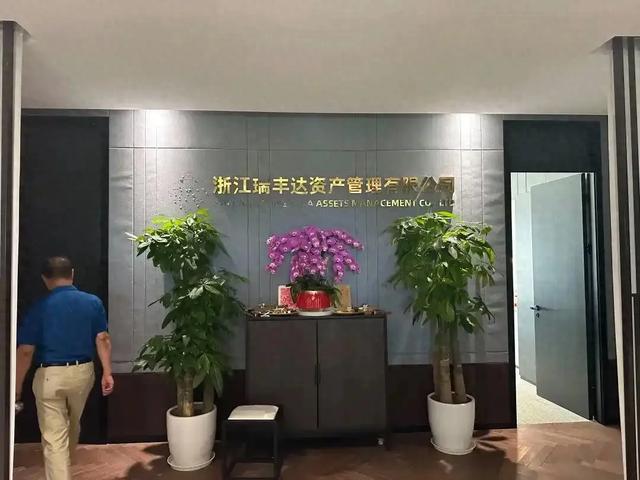
证监会对私募瑞丰达开出4100余万元罚单
Zheng Quan Ri Bao· 2026-01-23 16:09
Group 1 - The core viewpoint of the news is the severe administrative penalties imposed on Zhejiang Ruifengda Asset Management Co., Ltd. and its related private equity institutions for serious violations of private fund laws and regulations, indicating a zero-tolerance attitude from regulatory authorities towards such misconduct [1] - The total fines imposed on Ruifengda and its related institutions amount to over 41 million yuan, making it the heaviest penalty in history, surpassing the previous record of 35 million yuan against Zhejiang Youce Investment Management Co., Ltd. [1] - The actual controller of Ruifengda, Sun Wei, has been banned from the securities market for life, and the China Securities Investment Fund Industry Association has canceled the registration of the related private equity institution [1] Group 2 - Regulatory authorities are promoting a multi-dimensional accountability system involving self-discipline, administrative actions, and criminal accountability to address serious violations in the private equity sector [2] - In 2025, the securities regulatory authorities took administrative measures against over 600 private equity institutions and individuals, with approximately 30 cases under investigation and around 40 criminal leads sent to public security [2] - The China Securities Regulatory Commission (CSRC) will continue to strictly enforce regulations against illegal fundraising, misappropriation, self-financing, and other serious violations in the private equity sector, aiming to enhance accountability and protect investors' rights [2] Group 3 - The Asset Management Association of China released the second batch of typical disciplinary cases for private equity funds, covering serious violations in fundraising, investment operations, internal controls, and professional qualification management [3] - The association aims to enhance compliance awareness in the private equity industry by using these cases to help institutions and practitioners understand regulatory requirements and improve self-discipline [3] - The association emphasizes the importance of establishing a self-regulatory rule system to combat illegal activities and enhance the quality of self-management within the private equity sector [3] Group 4 - Private equity fund managers are encouraged to learn from these cases and establish robust internal control mechanisms to enhance operational standards and prioritize investor interests [4] - Practitioners in the industry are urged to continuously improve their professional skills and ethics to maintain a positive image and uphold the reputation and order of the private equity sector [4] - The focus is on fostering high-quality development within the private equity industry through compliance and value creation [4]
X @Bloomberg
Bloomberg· 2026-01-23 15:39
Blackstone and Carlyle Group are jostling with billionaires in India to buy stakes in teams in the country’s most successful professional cricket league, betting on the surging popularity of the sport in one of the fastest-growing economies https://t.co/T4rS7Fmn2i ...
“跑路”的孙伟,被严肃查处
Bei Jing Ri Bao Ke Hu Duan· 2026-01-23 10:28
Group 1 - The China Securities Regulatory Commission (CSRC) has imposed administrative penalties on Zhejiang Ruifengda Asset Management Co., Ltd. and its related private equity institutions due to illegal activities [1][3] - In May 2024, media reports indicated that the actual controller of Ruifengda had "fled," prompting significant attention and a swift response from the CSRC [1] - The CSRC conducted an investigation and found multiple violations, leading to a formal inquiry and strict handling of the case, including notifying law enforcement agencies [1][3] Group 2 - The Shanghai Securities Regulatory Bureau fined Ruifengda and its related private equity institutions over 28 million yuan, while imposing fines exceeding 13 million yuan on five responsible individuals [3] - The actual controller of Ruifengda has been banned from the securities market for life, and the China Securities Investment Fund Industry Association has revoked the registration of the related private equity institution [3] - The CSRC emphasized its commitment to strictly enforce regulations against illegal fundraising, misappropriation, self-financing, and other severe violations in the private equity sector, aiming to enhance accountability and protect investors' rights [3]

OHA is Joint Lead Arranger for Private Unitranche Financing Supporting Berkshire’s Acquisition of United Flow Technologies
Globenewswire· 2026-01-22 18:21
Core Insights - Oak Hill Advisors (OHA) acted as Joint Lead Arranger for Berkshire Partners' acquisition of United Flow Technologies (UFT), a key player in the municipal and industrial water and wastewater treatment sectors [1][3] Group 1: Oak Hill Advisors (OHA) - OHA has a long-standing relationship with Berkshire and possesses extensive expertise in the flow control distribution ecosystem, enabling quick underwriting and a tailored financing solution for UFT's growth [2] - OHA manages approximately $108 billion in capital across various credit strategies, emphasizing long-term partnerships to provide customized credit solutions [4] Group 2: United Flow Technologies (UFT) - UFT is recognized as a market leader in process and equipment solutions for municipal and industrial water and wastewater markets, focusing on innovation and customer service [6] Group 3: Berkshire Partners - Berkshire Partners is a 100% employee-owned investment firm focusing on U.S.-based middle-market companies, currently investing from its Fund XI, which closed in 2024 with approximately $7.8 billion in commitments [7] - The firm has a strong history of collaborating with management teams to grow its portfolio companies, having made over 150 private equity investments since inception [7]


Will private equity’s pivot to continuation vehicles continue in 2026?
Yahoo Finance· 2026-01-22 10:41
Core Insights - The total dollar value of continuation funds is projected to reach $100 billion by the end of 2025, a significant increase from $35 billion in 2019, indicating a growing trend in private equity practices [1][2] - Continuation funds allow private equity firms to sell portfolio companies from one fund to another managed by the same firm, often at the end of the original fund's lifecycle, providing limited partners (LPs) the option to reinvest or cash out [2][6] - The median holding period for portfolio companies has extended to almost six years in 2025, the longest in 25 years, reflecting a slowdown in selling activity despite ongoing acquisitions [3] Continuation Funds Dynamics - Continuation funds have gained popularity as private equity firms seek to return promised returns to LPs, with many LPs opting to cash out rather than reinvest [2][6] - The motivations for establishing continuation funds have evolved, with firms now using them for well-performing assets rather than just hard-to-divest ones, aiming for better selling prices [7][8] - Critics highlight governance concerns, as continuation funds can create conflicts of interest between exiting and incoming investors, particularly when a significant majority of existing investors prefer cashing out [10][11] Legal and Regulatory Context - A legal case in the Delaware Court of Chancery involving a private equity firm and a foreign investor may impact the future of continuation funds, with potential outcomes that could either encourage or hinder their use [6][12] - The lack of stringent regulation around continuation funds raises concerns, although recent SEC rules aimed at addressing conflicts of interest have been stalled due to political changes [14][15] Implications for Portfolio Companies - Being included in a continuation fund may signal ongoing investment interest from private equity sponsors, potentially leading to additional capital infusion and increased scrutiny of portfolio companies [16][17] - Management teams may view this as a positive sign, indicating confidence in the business's prospects, but it may also result in heightened involvement from private equity owners [17]
EQT to Acquire Private Equity Firm Coller Capital For Up to $3.7 Billion
WSJ· 2026-01-22 07:10
Group 1 - The Swedish buyout group anticipates that the size of Coller's business will double within four years [1]


Deals: CPPIB to invest initial US$162M in SC Capital Partners – Investment Executive
Investmentexecutive· 2026-01-21 17:06
Investment Activities - CPPIB is investing up to US$162 million in SC Capital, which has been a global institutional investor since 2022 [1] - CPPIB will also invest up to US$1.05 billion in a US$10.1 billion transaction for an indirect non-controlling interest in Castrol, expected to close by the end of 2026 [3] - Kelso & Co. has acquired a 25% stake in Wellington-Altus Financial Inc. for nearly US$400 million, with over 99% shareholder support [4] - Portage has closed a deal with Point72 Ventures to manage select fintech assets, moving them into a US$280 million continuation vehicle [8] Market Insights - Japan is highlighted as a key hospitality market due to strong inbound tourism and domestic demand, with SC Capital managing approximately US$9 billion in assets, 75% of which are in Japan [2] - The Canadian accredited investor market is projected to double between 2024 and 2029, prompting Maples Group to launch a fund administrative service for alternative investment funds [7] Real Estate Developments - BGO has entered the North American student housing market by acquiring a two-tower residential complex in Edmonton, which includes 272 residential units and 493 student beds [6]

Private Equity Has Fallen Out of Favor with Some Institutional Investors
Yahoo Finance· 2026-01-21 15:30
Core Insights - The private equity market is facing significant challenges, including overvaluation of companies and a decline in fundraising, which has dropped sharply in 2023 compared to previous years [1][2][3][10] - Institutional investors are becoming more cautious, pulling back on investments due to the lack of cash returns from private equity funds [4][10][19] - The high interest rate environment, which has seen rates rise by over 5% from March 2022 to July 2023, is exacerbating the difficulties in selling overvalued companies [6][12] Fundraising and Investment Trends - Fundraising for private equity has been declining annually, with 2023 showing a particularly steep drop, leading to a concentration of capital among the largest firms [2][7][10] - The inability to sell portfolio companies is resulting in limited cash returns to investors, which in turn affects their willingness to reinvest in new funds [4][7][19] - The trend of "zombie funds," where companies remain unsold for over a decade, is prevalent, indicating a long-term issue within the industry [4][5] Economic Environment and Future Outlook - While interest rates have decreased from their peak, they remain high compared to the zero-interest rate environment that private equity typically thrives in [11][12] - There is cautious optimism for 2026, with expectations of a relatively strong economy, but the backlog of unsold companies is likely to persist for several years [12][19] - The potential inflow of cash from alternative investments may help the industry, but concerns remain about the quality of funds available to workers [14][15][18] Risks and Financial Engineering - Private equity firms are engaging in financial engineering to return cash to investors, which may increase risks for those investors while benefiting the general partners [19][20] - The reliance on continuation vehicles, which prioritize returns for general partners, raises concerns about the long-term sustainability of these strategies for limited partners [20]
Behind the 777 Scandal: Lawsuit Says Leadenhall Was Already Imploding
Yahoo Finance· 2026-01-21 11:00
Core Viewpoint - Haymarket Insurance Co. has filed a fraud complaint against Leadenhall Capital Partners, highlighting significant financial troubles and losses faced by Leadenhall in its dealings with 777 Partners [1][2]. Group 1: Company Background - Leadenhall Capital Partners is a London-based private equity firm specializing in insurance-linked investments, including catastrophe bonds and private credit [3]. - Founded in 2008, Leadenhall operates as a joint venture with Japan's MS&AD insurance group and holds regulatory registrations in the UK, the U.S., and Bermuda [4]. Group 2: Financial Issues - By late 2022, Leadenhall was experiencing mounting losses beyond its relationship with 777 Partners, leading to increased investor concern and destabilization of its capital base [2]. - The complaint indicates that Leadenhall had approximately $650 million in exposure across four non-777 platforms, which were misrepresented as stable but subsequently faced bankruptcy or regulatory issues [5]. Group 3: Major Problem Assets - Significant problem assets included RMIT and Reverse Mortgage Funding, with Leadenhall claiming over $230 million in secured positions before federal seizure; Friday Health Plans, with about $200 million exposure, was liquidated; and Hi.Q, with roughly $75 million exposure, entered Chapter 7 [6]. - RMIT filed for Chapter 11 in late 2022, facing liquidity pressures and disputes over financing, leading to a prolonged and costly wind-down process [7].
准百亿私募年度业绩榜揭晓!盛麒、云起、喜世润领衔!量魁、会世、念空等上榜!
私募排排网· 2026-01-21 10:00
Core Insights - The article discusses the emergence of "quasi-billion" private equity firms in China, defined as those managing between 5 billion to 10 billion yuan, highlighting their potential to transition into top-tier institutions in the future [3] Group 1: Overview of Quasi-Billion Private Equity Firms - As of December 2025, there are 122 quasi-billion private equity firms in China, up from 110 in Q3 2025 [3] - Among these firms, 66 are subjective, 35 are quantitative, and 18 employ a combination of both investment strategies [3] - The distribution of core strategies shows that 69 firms focus on stock strategies, 10 on bond strategies, 19 on multi-asset strategies, and 10 on futures and derivatives strategies [3] - The majority of these firms are located in Shanghai (54), followed by Beijing (29) and Shenzhen (16) [3] Group 2: Performance of Quasi-Billion Private Equity Firms - In 2025, the average return for 376 products under quasi-billion private equity firms was 29.44%, with 92.02% of products yielding positive returns [5] - The top ten performing quasi-billion private equity firms in 2025 include 盛麒资产, 云起量化, 喜世润投资, and others [5] Group 3: Top Performing Products - The average return for subjective long-only products was 36.28%, with 喜世润投资's product leading the performance [8] - For quantitative long-only products, the average return was 48.95%, significantly outperforming subjective strategies [11] - The top three products in the quantitative long-only category were from 量魁私募, 上海合骥私募, and 安子基金 [11] Group 4: CTA Strategies - The average return for CTA strategy products was 16.65%, with 会世私募, 宏锡基金, and 洛书投资 leading the performance [14] - The only subjective CTA product listed was 嘉鸿基金's product, which also performed well [16] Group 5: Market Neutral Strategies - The average return for market-neutral products was 8.23%, with 量魁私募 and 念空私募 among the top performers [17] Group 6: Multi-Asset Strategies - The average return for multi-asset strategy products was 17.58%, with 喜世润投资 and 洛书投资 leading the performance [21]