
网络安全

Search documents
拒绝数据泄露!揭秘贝锐蒲公英异地组网独家安全优势
Jin Tou Wang· 2025-06-06 08:41
Core Viewpoint - Beirui's Dandelion remote networking establishes a private network that ensures user local area network services and devices are not directly exposed to the public internet, requiring identity verification for remote access [1] Group 1: Access Control and Security Features - Beirui Dandelion offers fine-grained access control based on user identity, device information, and access time, allowing specific access configurations for remote work scenarios [3] - The system employs end-to-end encryption for data transmission, automatic isolation of risky terminals, and comprehensive logging of access behavior, ensuring robust data security [3] - Beirui Dandelion has passed the national information system security level protection certification and supports national encryption algorithms, safeguarding enterprise data assets [3] Group 2: Data Transmission Security - The technology utilizes multiple encryption mechanisms to ensure the confidentiality and integrity of data during transmission, employing asymmetric AES encryption and TLS protocols [4] - During P2P direct connections, identity verification is conducted through a session server to ensure trusted communication between parties [7] - A shared AES communication key is generated for encrypted data transmission, with TLS encryption activated during data forwarding through Beirui's relay servers [9] Group 3: Identity Verification and Hardware Security - Beirui Dandelion ensures trusted communication through strict terminal identity verification using encrypted HTTPS protocols [10] - The hardware is protected against malicious command injection risks through self-developed anti-injection technology [10][12] - The company adheres to security design principles, including the principle of least privilege and defense in depth, to enhance overall security [12] Group 4: Security Testing and Response - Beirui conducts regular security testing, including fuzz testing and penetration testing, to ensure compliance with the latest OWASP testing standards [12] - The company has established a Security Response Center (SRC) to create a standardized long-term security system, integrating public network security capabilities for early problem detection [12] - Collaborations with renowned security institutions for penetration testing and vulnerability scanning are conducted to assess product security and identify potential threats [14]

专家热议AI时代网络安全:重塑内生安全体系是“突围之钥”
Huan Qiu Wang· 2025-06-06 08:22
Core Insights - The 2025 Global Digital Economy Conference highlighted the theme "Breaking Through Security: Reshaping the Endogenous Security System," focusing on the challenges in cybersecurity during the AI era [1][3] Group 1: AI and Cybersecurity Challenges - AI presents both opportunities and systemic challenges for the cybersecurity industry, necessitating a breakthrough in current security frameworks [3] - The complexity of the international situation and the rapid proliferation of AI applications have rendered traditional security measures ineffective [3] - The Chinese government has initiated regulatory measures, including the "Interim Measures for the Management of Generative AI Services," with over 400 large models registered as of now [3][4] Group 2: Systemic Solutions and Recommendations - Experts emphasize the need for a systematic approach to address the multifaceted risks posed by AI in cybersecurity [4] - Recommendations include accelerating the construction of AI-enabled security systems, promoting innovation in AI security products, and enhancing protective measures through practical applications [4][5] - Key obstacles to building an endogenous security system include data silos, insufficient resource investment, and compatibility issues between old and new systems [5] Group 3: International Expansion and Collaboration - Companies like Qi Anxin are focusing on international business growth, aiming for a significant proportion of their operations to be overseas in the next decade [5][6] - The Chinese cybersecurity industry is positioned to compete globally, with innovations and product quality comparable to developed countries [6] - The collaborative ecosystem is deemed essential for overcoming challenges in core technology development and industry cooperation [6]


上海谋乐网络科技有限公司研发部荣获“上海市模范集体”称号
Zhong Guo Chan Ye Jing Ji Xin Xi Wang· 2025-06-06 07:01
上海谋乐网络科技有限公司(BUGBANK)将牢记"创造未知,惠及世界"的初心,以"上海市模范集体"荣 誉为奋进动力,怀爱国之心、立报国之志、增强国之能,保持锐意进取、敢为人先的拼搏本色,以科技 创新与自主研发为核心动能,以匠心淬炼能力,以高质量的劳动创造推动高质量发展,护航传统产业 向"新质化"焕新蝶变,为构建更加安全、可信、智能的网络空间注入"工匠力量"。 公司简介 上海谋乐网络科技有限公司(BUGBANK)是上海市信息安全行业协会副会长单位、上海网络与信息安全 监测预警共建单位、网络安全等级保护专业委员会成员单位、SHCERT网络安全应急服务支撑单位、 CNNVD技术支撑单位,并荣获全国智慧警务十大解决方案提供商。先后为上合组织峰会、国际进口博 览会等国家重大活动进行网络安全保障工作。此外,公司与上海市网络与信息安全应急管理事务中心及 上海市政府达成战略合作,成为首家为国家提供城域漏洞安全的网络科技企业。 上海谋乐网络科技有限公司(BUGBANK)近年获评亚洲红鲱鱼(Red Herring)Top100、科技小巨人企业、 中国安全百强榜企业、德勤50强成长企业、福布斯上市潜力榜企业、快公司中国创新50强、 ...
如何应对AI时代网络安全挑战,业内专家给出建议
Di Yi Cai Jing· 2025-06-06 02:13
赵志国表示,人工智能为网络安全产业带来了前所未有的机遇与挑战,并呈现出三大特征:智能化安全威胁不断涌现,智能化安全产品快速发 展,智能化安全技术仍存差距。 网络安全是一项系统工程,系统的运营者、服务商和相关部门都是环环相扣的,要坚持体系作战的思维方式,打造一个国家网络安全的联合防 御体系。 随着人工智能赋能千行百业,网络安全成为日益关注的话题。 2025全球数字经济大会数字安全主论坛暨第七届北京网络安全大会(BCS)开幕峰会6月5日在北京举行。 中国互联网协会专家咨询委员会常务副主任、工业和信息化部原总工程师赵志国表示,随着智能化浪潮深入推进,网络空间成为全球竞争与协 作的重要舞台,网络安全成为护航数字中国建设的战略基石。必须以系统性思维应对复合型风险,构建更加灵活、智能、协同的安全体系,推 动网络安全向智能化变革,才能在新时代的网络安全征程中行稳致远。 在赵志国看来,攻击者利用人工智能放大攻击效果,使网络威胁更具规模性、针对性、杀伤性,进一步加剧网络攻防不对称性。生成式人工智 能不断在理解、认知、推理等方面实现进化,人工智能安全产品在提升安全运营效率方面初具成效。我国人工智能安全算法原创性、模型开放 性、数 ...

AI时代如何应对网络安全问题?“体系”成关键词
Zhong Guo Xin Wen Wang· 2025-06-06 01:48
Core Insights - The conference emphasized the need for a collaborative defense system in the face of new types of cyber threats in the AI era [1][2] - Experts highlighted that a single-point defense is no longer sufficient, and a unified security framework is essential for effective protection against national-level cyber attacks [1][2] Group 1: Industry Perspectives - The Vice Chairman of the All-China Federation of Industry and Commerce, An Lijia, stated that cybersecurity threats are a global challenge, necessitating deep integration of industry chains, innovation chains, and value chains [1] - An Lijia also called for increased R&D investment in key areas such as core algorithms, underlying architecture, and computing resources to expand application scenarios [1] - Sun Weimin, Chief Engineer of the National Internet Information Office, emphasized the need for a systematic approach to cybersecurity, advocating for a national joint defense system [1] Group 2: Technological Developments - Qi Xiangdong, Chairman of Qi Anxin Group, noted that over 90% of large government and enterprise institutions procure security devices from more than 10 vendors, leading to a fragmented security system [1] - Qi Xiangdong argued for the necessity of building a cohesive and effective unified security system to replace the current disjointed approach [1] - Zhao Zhiguo, Executive Deputy Director of the Expert Advisory Committee of the China Internet Association, highlighted that AI is a key technology in global cybersecurity competition and must be addressed with a systematic approach [2]
公安机关依法严厉追查打击非法网络攻击活动
Ren Min Ri Bao· 2025-06-05 22:02
针对其不能攻破的目标系统或未窃取到有价值数据的网络平台,台湾"资通电军"网攻人员便恶意破坏目 标系统,删除系统数据、恶意篡改数据或格式化系统存储设备等。技术专家称,台湾"资通电军"的网络 攻击手法明显"学艺不精",暴露了大量攻击源信息,追踪溯源难度并不大,为技术团队快速锁定攻击人 员提供了有利条件。 公安机关表示,请广大群众积极提供线索,凡向公安机关提供有效线索的举报人,以及配合公安机关抓 获台湾"资通电军"有关犯罪嫌疑人的有功人员,将按每名犯罪嫌疑人1万元人民币的金额予以奖励。 《 人民日报 》( 2025年06月06日 14 版) 与此同时,国家计算机病毒应急处理中心、计算机病毒防治技术国家工程实验室和360数字安全集团联 合发布了《"蚍蜉撼树"——台民进党当局"资通电军"黑客组织网络攻击活动调查报告》,深度曝光"资 通电军"的历史背景、组织架构、人员构成、工作地点、工作任务及网络攻击案例等信息。 据了解,台湾"资通电军"全称为"国防部资通电军指挥部",系蔡英文上台后在美国军方支持下着力打造 的"第四军种",其前身隶属于台湾当局"国防部老虎小组"网络部队,负责统筹台军方、"政府"与民间网 络技术力量,专门 ...
“小数据”决定企业生死?齐向东:AI时代必须重构防护体系,防“一锅端”风险
2 1 Shi Ji Jing Ji Bao Dao· 2025-06-05 14:19
Core Viewpoint - The cybersecurity industry is facing significant challenges due to a fragmented system, where the procurement of security devices from multiple vendors leads to dispersed responsibilities and ineffective security capabilities [1][2] Group 1: Systemic Challenges - Over 90% of large government and enterprise organizations procure security devices from more than 10 vendors, resulting in a "big platter" of fragmented security systems [2] - There is a disconnect between the macro-level "big system" and the micro-level "small systems," leading to difficulties in integrating security capabilities and implementing unified strategies [2][3] - The operational bottleneck arises from the lack of data sharing and communication between different "small systems," which exacerbates the security risks [2] Group 2: Impact of AI - The traditional strategy of protecting core "small data" through compartmentalization has become ineffective in the age of AI [3][4] - Small data, which includes trade secrets and proprietary information, is now at risk of being easily accessed and replicated by competitors using AI technologies [4] Group 3: Proposed Solutions - To address these challenges, the industry must focus on three key paths: reshaping data aggregation models, constructing feedback loops for security operations, and redefining ecological cooperation models [5] - A comprehensive security data set that covers a wide range of dimensions and has high contextual relevance is essential for effective threat detection [5] - Establishing a "security system chief designer" to unify disparate security efforts and create a cohesive defense strategy is crucial for effective implementation [6]
齐向东:数据孤岛严重阻碍网络安全体系落地
Bei Jing Ri Bao Ke Hu Duan· 2025-06-05 14:00
Core Insights - The 2025 Global Digital Economy Conference highlighted the challenges faced by enterprises in implementing cybersecurity systems, particularly the issue of data silos [1][2] - Qi Anxin's chairman emphasized the exponential growth of data importance in security over the past decade, which has led to fragmented systems and isolated data [1] - The lack of a unified system has resulted in difficulties in data management and response capabilities within security operations centers [1] Group 1: Data Silos - The phenomenon of data silos is primarily caused by the "thousand manufacturers" situation of security devices, leading to inconsistent data formats and incompatible interfaces [1] - A case study of a leading financial institution revealed that the deployment of multiple firewall models from various brands resulted in chaotic data collection and analysis [1] - The fragmented nature of security data hampers comprehensive situational awareness and rapid response to incidents [1] Group 2: Business and Security Disconnection - The "two skins" phenomenon, where business operations and security measures are not aligned, was illustrated by an incident involving a financial data breach due to delayed communication between departments [2] - Insufficient investment in security and compatibility issues between new and old products are significant barriers to effective cybersecurity system construction [2] - Addressing these challenges requires a holistic approach to internal security systems, emphasizing the need for strategic thinking in overcoming obstacles [2]
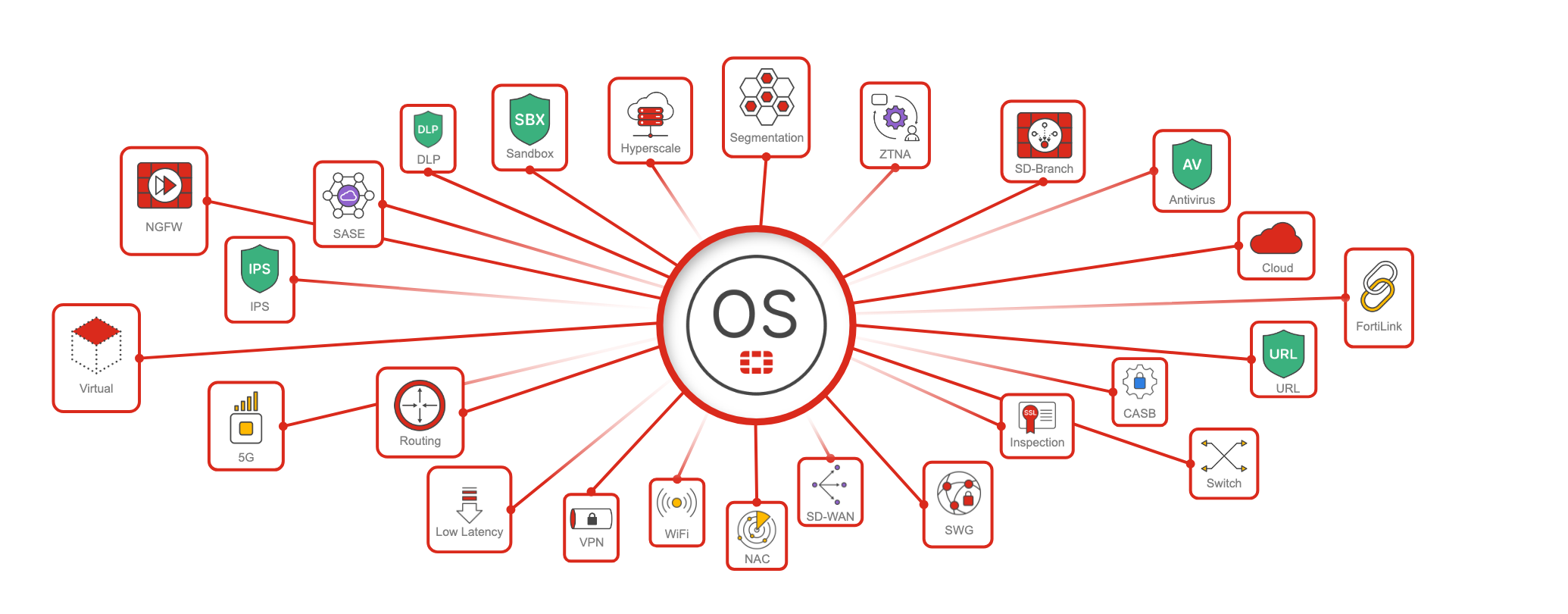
通过OS构建网络安全一体化,Fortinet看重中国市场AI需求
Di Yi Cai Jing· 2025-06-05 10:45
Core Insights - The importance of AI security in the era of large models is emphasized by multiple cybersecurity firms, with Fortinet launching related security agent products [2] - Fortinet's unified operating system, FortiOS, integrates self-developed ASIC chips to create a comprehensive security platform covering network boundaries, cloud, and operational technology [2][3] - FortiOS has been the core of Fortinet's products since its establishment in 2000, supporting various security functions and recently updated to version 7.6, which includes solutions like Zero Trust Network Access (ZTNA) and Security Access Service Edge (SASE) [3] Company Performance - Fortinet's financial reports indicate a consistent year-over-year revenue increase across major regions, with the Americas and Europe being the primary revenue drivers [3] - In China, there is a noticeable demand growth driven by rapid AI technology development, although many domestic clients remain cautious [3][4] Market Challenges - The Chinese cybersecurity market is competitive, with government-backed companies holding significant market share, prompting Fortinet to seek collaboration with other security systems [4] - Fortinet's primary customer segments in China include internet/high-tech, manufacturing, wholesale/retail, finance, and automotive industries [4] - The company maintains a cautious outlook on the early state of industry development, viewing AI capabilities as an enhancement rather than a transformative leap [4]
奇安信董事长,最新发声
Zhong Guo Ji Jin Bao· 2025-06-05 10:01
Group 1 - The chairman of Qi Anxin, Qi Xiangdong, stated that the company's international business proportion will steadily increase over the next decade to match world-class cybersecurity companies [1] - Qi Anxin has been expanding its overseas market since before the COVID-19 pandemic, with benchmark projects in regions such as the Middle East, ASEAN, Latin America, North Africa, and Central Asia, receiving high recognition from clients [1] - As of 2024, Qi Anxin's overseas business revenue accounts for 2.08% of its total revenue [1] Group 2 - Qi Xiangdong believes that Chinese cybersecurity companies are facing a rare opportunity to expand internationally due to global technology, tariff, and trade wars, which have heightened concerns about data security in many countries [2] - Countries that previously relied on Western products are now seeking to diversify their cybersecurity solutions, allowing Chinese companies to compete alongside Western firms [2] - Qi Anxin has a success rate of over 50% when competing with developed countries' security companies, boosting confidence in its international expansion efforts [2]