Residential Real Estate

Search documents
Investors now make the largest share of homebuyers in 5 years. Is it time for you to invest in real estate?
Yahoo Finance· 2025-12-12 20:30
Core Insights - The article discusses the current state of investor-owned homes in the U.S., highlighting that Texas, California, and Florida have the highest number of such homes due to their large populations [1] - Institutional investors are shifting their focus from existing single-family homes to new-build, purpose-built rental properties, indicating a retreat from the traditional market [1][7] Investor Composition - Small investors, defined as individuals owning fewer than 11 properties, dominate the market, accounting for 91% of investor-owned homes [3] - Large institutional investors, owning 1,000 or more properties, represent less than 2.5% of purchases and own only 2% of the total market [2] Market Dynamics - Approximately 20% of the 86 million single-family homes in the U.S. are owned by investors, but the impact on home prices and owner-occupant buyers is not straightforward [4] - In the second quarter of 2025, real estate investors made up one-third of buyers for single-family residential properties, the highest percentage in five years [6] Recent Trends - Investors purchased 16,000 fewer homes compared to the second quarter of 2024, reflecting a general weakness in home sales this year [5] - The share of homes bought by investors has increased due to high mortgage rates, which have made it difficult for traditional homebuyers to enter the market [7][12] Regional Insights - States with heavy tourism, such as Hawaii, Alaska, Montana, and Maine, have the highest per capita share of investor-owned homes [6] - Inventory increases are uneven across the U.S., with the South and West above pre-pandemic levels, while prices per square foot are rising in the Northeast and Midwest [12] Economic Considerations - High mortgage rates have persisted since 2022, with the average 30-year fixed-rate mortgage rising from 3.56% in January to 6.31% in December [12][13] - Investors are more likely to make cash purchases, with 62.3% of investors doing so in 2024, which may help stabilize the housing market [7]
80米“限高令”倒逼行业转型 让城市建设回归以人为本初心
Mei Ri Jing Ji Xin Wen· 2025-12-11 12:53
Core Viewpoint - The recent "height limit order" has become a significant regulatory measure across various regions in China, marking a shift from large-scale residential development to a focus on quality and safety in housing [1][2] Group 1: Policy Implementation - The new housing project standards effective from May 1, 2023, set a maximum height limit of 80 meters for high-rise residential buildings, leading to the decline of previously common super high-rise projects [1] - Cities like Shenzhen and Beijing have quickly implemented these regulations, with Shenzhen requiring fire department approval for projects exceeding 80 meters and Beijing enforcing the new rules for projects lacking planning permission by May 2027 [1][2] Group 2: Safety Concerns - The primary aim of the height limit is to address safety risks associated with high-rise buildings, as the increase in building heights has outpaced improvements in firefighting capabilities [2] - As of November last year, China had over 1 million high-rise buildings, with more than 5,000 classified as super high-rise, highlighting the urgent need for enhanced safety measures [2] Group 3: Quality and Density - The height limit is expected to reduce building density, increase green space, and improve the quality of living environments, with a minimum floor height of 3 meters to enhance natural light and ventilation [3] - Issues such as elevator congestion and inadequate water pressure that plagued super high-rise buildings are anticipated to be alleviated through the development of lower-density housing options [3] Group 4: Industry Transformation - The "height limit order" serves as a catalyst for the real estate industry to transition from a profit-maximizing model based on high density to one focused on optimizing living conditions and community amenities [4] - The shift in consumer demand from mere availability of housing to quality aspects such as sound insulation and natural light indicates a broader transformation in the housing market [4] - The policy encourages a return to human-centered urban development, promoting sustainable architecture that prioritizes the quality of life over mere height [4]
Is Invitation Homes Stock Underperforming the Dow?
Yahoo Finance· 2025-12-10 13:07
Core Insights - Invitation Homes Inc. (INVH) is the leading provider of single-family home leasing and management in the U.S., with a market cap of approximately $16 billion [1] - The company focuses on delivering flexible living solutions and high-quality homes in desirable locations, catering to the evolving lifestyle needs of renters [2] Stock Performance - INVH shares have decreased by 27.1% from their 52-week high of $35.80, and have declined 13.9% over the past three months, underperforming the Dow Jones Industrials Average, which rose over 4% in the same period [3] - Year-to-date, INVH stock is down 18.4%, lagging behind the Dow's 11.8% gain, and has dipped 22.5% over the past 52 weeks compared to the Dow's 7.1% increase [4] Financial Results - Following the Q3 2025 results released on October 29, INVH shares rose by 3.4% due to revenue of $688.17 million, which exceeded analysts' estimates, driven by strong demand for single-family rental homes [5] - The company reported a same-store renewal rent growth of 4.5%, indicating healthy rental increases for renewing tenants, and its core FFO of $0.47 per share met expectations [5] Analyst Outlook - Despite the stock's underperformance, analysts maintain a moderately optimistic outlook, with a consensus rating of "Moderate Buy" from 24 analysts and a mean price target of $34.50, representing a 32.2% premium to current levels [6]

Hong Kong home prices to rise in 2026 on the back of mainland Chinese buyers, rate cut
Yahoo Finance· 2025-12-10 09:30
Core Viewpoint - Hong Kong home prices are projected to increase by up to 5% in 2026, driven by mainland Chinese buyers, interest rate cuts, and a reduction in unsold new flats [1][3]. Group 1: Market Conditions - The residential property market in Hong Kong is expected to stabilize due to factors such as stamp duty adjustments and a recovering stock market [1]. - Housing prices have bottomed out, with a cautiously optimistic outlook for 2026, where capital values are expected to rise by about 5% [3]. - Lived-in home prices fell by as much as 28.4% in March 2023 from their peak in September 2021, indicating a significant downturn [4]. Group 2: Inventory and Supply - Analysts project that Hong Kong developers' inventory will return to normal levels by the end of next year, with unsold inventory expected to equal 51.3 months' worth of supply by the end of 2023 [2][5]. - Private housing supply is anticipated to normalize by the end of 2026, requiring just 44.7 months to clear the current inventory [6]. Group 3: Buyer Demographics - Approximately 30% of buyers for new home launches are from mainland China, with this figure exceeding 60% for specific projects in Kai Tak and Kowloon Station [6]. - In the luxury residential segment, over 90% of buyers for units costing at least HK$100 million (US$12.85 million) are from mainland China [7].

The median home in the US costs $415,000. Here’s what that will buy around the country.
Yahoo Finance· 2025-12-09 11:00
Core Insights - The national housing market is not uniform, with significant price variations across states and neighborhoods, yet home prices have increased dramatically over the past five years [1][2]. Price Trends - The median existing home price reached $415,200 in October, a substantial increase from $271,100 five years ago, indicating a rise of approximately 53% [2]. - This price surge has led to a decrease in home sales, which are expected to remain around 30-year lows due to affordability issues for first-time buyers and families looking to move [3]. Regional Market Examples - In New York City, a studio apartment in Lincoln Square is priced at $415,000, with estimated monthly payments of $3,216 based on a 20% down payment and a 6.2% mortgage rate [4][5]. - The median home price in New York City is around $800,000, with Manhattan's median reaching approximately $1.2 million [6]. - In Los Angeles, a one-bedroom condo in downtown is listed for $420,000, with estimated monthly payments of $3,789 under similar financing conditions [7][9]. - The median home price in the Los Angeles metro area is about $1.1 million [9]. - In Chicago, a two-bedroom condo in the River North neighborhood is available for $415,000, showcasing the diverse pricing landscape across major cities [11][12].
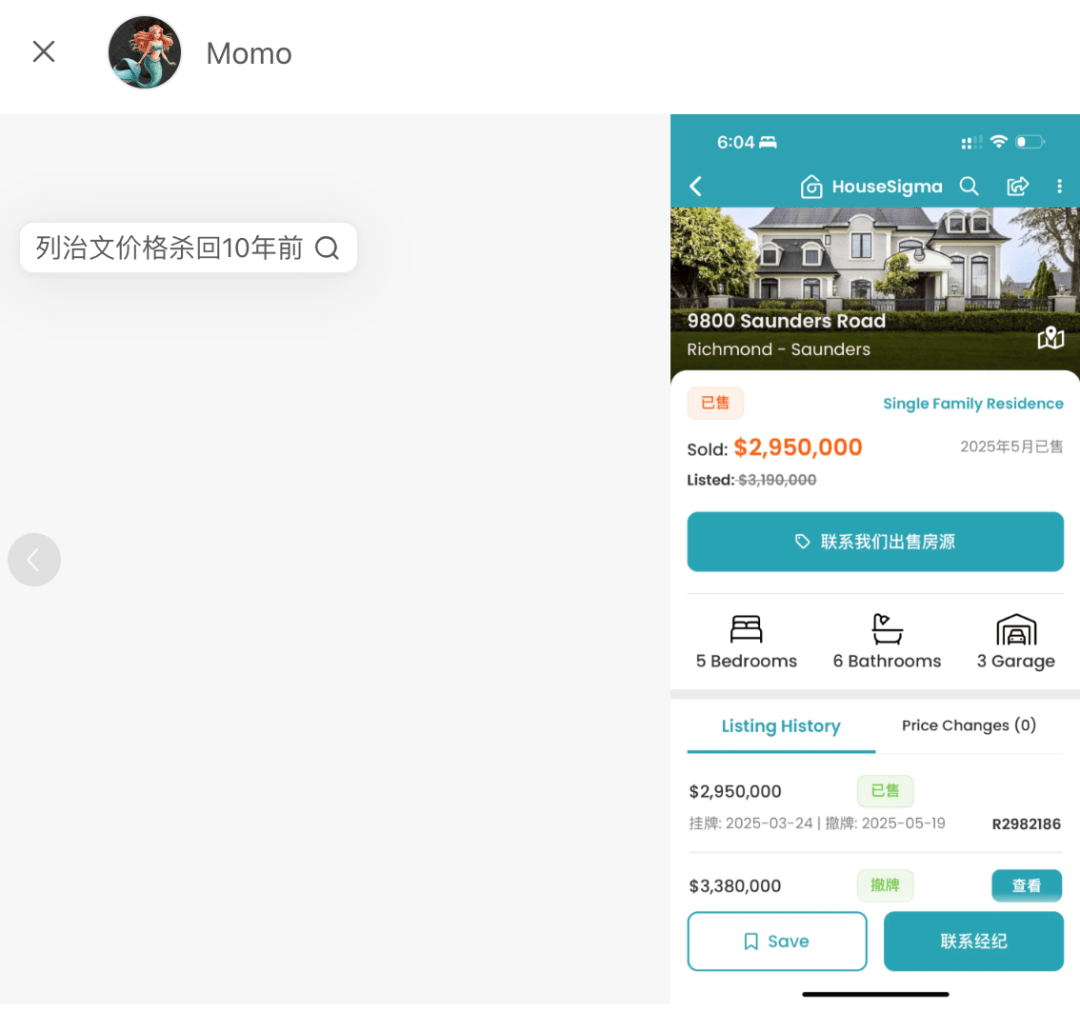
血亏离场!列治文3房不到60万?!
Sou Hu Cai Jing· 2025-12-09 03:44
Core Insights - The real estate market in Richmond is experiencing significant price declines, with properties that were once highly valued now selling for much less than their purchase prices [4][7] - A recent listing in Richmond offers a three-bedroom property for under CAD 600,000, which is considered an attractive deal given its location and amenities [2] - The trend of decreasing property values is evident across various types of housing, including newly built homes and independent houses, indicating a broader market correction [4][7] Summary by Category Property Listings - A three-bedroom, two-bathroom property in Brighouse South, Richmond, is listed for under CAD 600,000, with a government valuation of CAD 635,000, reflecting a significant discount [2] - A newly built property purchased for CAD 868,000 in 2022 is now pending sale at CAD 700,000, indicating a loss of CAD 168,000, which could exceed CAD 200,000 when accounting for taxes and interest [4] Market Trends - Independent houses in Richmond are also seeing price drops, with one property purchased for nearly CAD 2 million in 2022 now being offered for around CAD 1.6 million, reverting to prices seen a decade ago [7] - The overall sentiment among potential buyers is negative, with many expressing doubts about the investment value of condominiums in Canada, citing rising management fees and overall costs [9]

Renting vs. Buying a Home in 2026: Which Is More Affordable?
Yahoo Finance· 2025-12-05 18:25
Core Insights - The ongoing debate about whether owning or renting a home is cheaper is influenced by various financial factors, including the hierarchy of needs and the costs associated with both options [1][2] Group 1: Renting Trends - National rent prices have decreased by 1.1% year-over-year, attributed to easing supply and demand dynamics and rising vacancy rates, which favor renters [4] - Despite the current decrease, national average rent is projected to increase in 2026, with current averages at approximately $1,631 for a one-bedroom apartment and $1,887 for a two-bedroom apartment [5] Group 2: Home Buying Trends - Existing home sales are expected to see a significant increase, with forecasts suggesting a double-digit percentage rise, indicating a potential strain on savings for buyers [6] - Home prices are anticipated to continue rising, albeit at a more moderate pace, with the National Association of Realtors predicting a national price increase of about 4% [6] - Mortgage interest rates in the U.S. are projected to decline to around 6% in 2026, down from an average of 6.7% in 2025, which may alleviate some financial burdens for homebuyers [7]
REMAX Survey Reveals Strong Demand: 88% of Prospective Buyers Plan to Purchase a Home in 2026
Prnewswire· 2025-12-04 21:30
Core Insights - Homeownership remains a strong priority for many Americans despite current housing market challenges, with 71% of respondents indicating that market conditions have delayed their plans but not deterred them from pursuing homeownership [1][3][4] Group 1: Market Conditions and Buyer Sentiment - 88% of buyers plan to purchase a home in 2026, yet 71% report that current market conditions have caused delays in their homebuying timeline [3][5] - Economic uncertainty and rising costs are significant factors influencing prospective buyers, with affordability being a critical concern [4][5] - More than three-quarters (78%) of buyers would be prompted to buy within the next six months if home prices were more affordable [5] Group 2: Buyer Preferences and Community Focus - Buyers are increasingly prioritizing neighborhood safety, social connection, and access to lifestyle-enhancing amenities, indicating a shift towards homes that support both lifestyle and financial goals [2][4] - 60% of respondents are willing to pay a premium for shared community amenities, with 76% of these buyers willing to pay 5% or more of the home's price for such features [5][9] - A strong sense of community is becoming a key factor in purchasing decisions, especially among younger generations like Gen Z and Millennials [6][9] Group 3: Geographic and Lifestyle Considerations - Over half (51%) of respondents are looking to buy a home in suburban areas, while 32% prefer urban locations [9] - Safety is a top concern for nearly 80% of prospective homebuyers, followed by the availability of affordable homes (69%) and the type of homes available (47%) [9] - Proximity to work, shopping, and schools are also important geographic considerations for buyers, with 58% indicating that proximity to work is crucial [9]


The 5 years before retirement are critical for Americans. Here's why, plus what you can do to prepare
Yahoo Finance· 2025-12-04 10:19
Group 1: Gold IRA and Investment Opportunities - Priority Gold offers a 100% free rollover for converting existing IRAs into gold IRAs, along with free shipping and storage for up to five years, and qualifying purchases can receive up to $10,000 in free silver [1] - A gold IRA is highlighted as a viable option for building retirement funds with an asset that hedges against inflation [2] - First National Realty Partners (FNRP) allows accredited investors to diversify their portfolios through grocery-anchored commercial properties with a minimum investment of $50,000, providing essential goods to communities [12][13] Group 2: Financial Planning and Budgeting - The five years leading up to retirement are considered critical for financial planning, emphasizing the importance of understanding current financial standings [6] - Developing a budget is essential for tracking retirement savings and ensuring financial readiness for retirement [8] - Apps like Rocket Money can assist in managing budgets by tracking expenses and negotiating lower rates on monthly bills, potentially saving hundreds annually [9] Group 3: Healthcare and Long-term Care Planning - Healthcare expenses are projected to be significant in retirement, with a 65-year-old estimated to spend around $172,500 on healthcare and medical expenses throughout retirement [17] - Long-term care insurance options are available to cover costs associated with in-home assistance, nursing homes, or assisted living facilities, which can deplete retirement funds if not planned for [19]
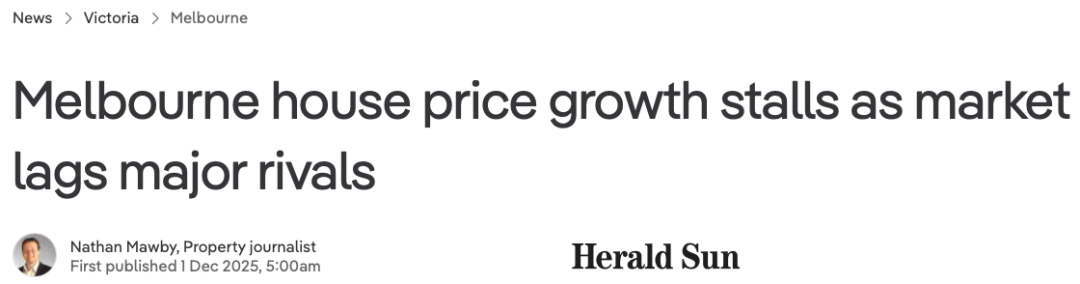
墨尔本,输给了悉尼、布里斯班、阿德莱德、珀斯...
Sou Hu Cai Jing· 2025-12-04 06:41
Core Insights - Melbourne's property prices have shown significant overall growth in the past year, but the growth rate is slowing and is lagging behind other major Australian cities [1][2] Price Trends - As of November, the median price for independent houses in Melbourne reached AUD 1.015 million, an increase of AUD 59,000 compared to the same period last year [2] - In the past month, Melbourne's property prices rose by only 0.3%, ranking just above Darwin and Hobart among major cities [2] - Other major cities like Sydney, Brisbane, Adelaide, and Perth experienced annual price increases ranging from AUD 103,000 to AUD 142,000, significantly outpacing Melbourne [2][4] Market Dynamics - The increase in new housing supply during Melbourne's spring market has provided buyers with more options, which has suppressed further price increases [2] - High inflation data has diminished the likelihood of interest rate cuts within the year, suggesting that Melbourne's property price growth will remain moderate until year-end [2] - Continuous pauses in interest rates may slow down the momentum of price increases, although a price correction is not anticipated for Melbourne [2] Affordability and Investment - Melbourne remains one of the most affordable cities for first-time homebuyers in Australia, but it is attracting relatively fewer investors [4] - Brisbane's property price growth is three times that of Melbourne, while Adelaide's growth is nearly five times greater [4] - The high land tax in Victoria is seen as a significant factor contributing to reduced investor activity, influenced by the Allan government's policies [4] Long-term Outlook - Despite current challenges, Melbourne's relatively low property prices and strong population growth prospects (expected to be the highest in Australia by 2030) may mitigate some negative impacts of land tax in the long run [4] - PropTrack's report indicates that property prices in several remote areas of Victoria have even surpassed those in Melbourne, with Mildura experiencing a 9.67% annual price increase, bringing its median price to AUD 400,000 [6]