医疗保险

Search documents
我省打出促进大学生参保“组合拳”
Liao Ning Ri Bao· 2025-09-23 01:09
Core Points - The article discusses a series of new policies and measures introduced by multiple departments in Liaoning Province to ensure the basic medical rights of university students and alleviate their medical expenses [1] Group 1: Policy Innovations - Liaoning Province has implemented a "lump-sum payment" system for university students participating in the basic medical insurance, allowing students to pay the insurance fee for their entire study period at once, thus avoiding annual payment hassles [1] - The new policy aims to eliminate issues related to interrupted benefits due to missed annual payments, ensuring continuous medical coverage for students [1] Group 2: Enrollment Process Improvements - The "enrollment immediately insured" service model has been introduced, integrating medical insurance enrollment into the university admission process, which allows students to have medical coverage effective from the moment they enter the university [1] - This approach reduces the "coverage gap" that previously existed between enrollment and insurance registration, streamlining the process and minimizing the need for students to undertake additional steps [1]
大学生参保有严格时间窗口
Su Zhou Ri Bao· 2025-09-18 00:31
Group 1 - The event "Healthcare Together with Youth, Building a Healthy Future" was launched on September 17, 2023, in Suzhou University, focusing on the insurance coverage for college students in Jiangsu Province [1] - The event was co-hosted by multiple governmental bodies including Jiangsu Provincial Medical Security Bureau and Jiangsu Provincial Education Department, and featured both offline and online participation [1] - During the event, participants shared personal stories about the importance of health insurance, emphasizing that student health insurance is a necessity rather than an option [1] Group 2 - The Jiangsu Medical Insurance Cloud App provides college students with convenient services such as insurance inquiries and cross-regional registration, with payment collection managed by schools [2] - The insurance enrollment period for college students is strictly from October to December each year, and missing this window may result in a lack of timely access to insurance benefits [2] - Efforts are being made to shift the perception of insurance from "I have to enroll" to "I want to enroll," encouraging students to take proactive steps for their health [2]
暗杀美医保巨头CEO枪手再出庭,法官驳回两项涉恐重罪指控
Yang Zi Wan Bao Wang· 2025-09-17 07:43
Group 1 - The case against Luigi Mangione, accused of murdering UnitedHealth Group CEO Brian Thompson, has seen significant developments, with two terrorism-related charges dismissed by a judge due to insufficient evidence [1] - The murder occurred on December 4, 2024, outside a hotel in New York City, and Mangione, a 27-year-old from Maryland, was arrested shortly after [1] - The judge ruled that while there was evidence of premeditated murder, it did not meet the criteria for terrorism under New York law, which requires intent to intimidate or coerce civilians [1] Group 2 - Mangione still faces nine other state charges, including second-degree murder, which could result in a sentence of 25 years to life if convicted [2] - Federal charges against Mangione include murder with the use of a silencer, indicating the case has both state and federal implications [2] - A pretrial hearing is scheduled for December 1, 2025, but no formal trial date has been set yet [3]
美法官驳回对联合健康集团高管枪杀案嫌疑人两项重罪指控
Zhong Guo Xin Wen Wang· 2025-09-17 00:04
Core Points - A New York judge dismissed two felony charges against Luigi Mangione, the suspect in the shooting of UnitedHealth Group's CEO, citing insufficient evidence to prove intent to intimidate civilians [1][2] - The dismissal of the two most serious charges allows Mangione the possibility of parole even if convicted, as he still faces nine other charges, including second-degree murder [1] - The case has garnered significant attention due to its shocking details, particularly the murder of UnitedHealth's CEO, Brian Thompson, in December [2] Summary by Sections Legal Proceedings - The judge's ruling means that while Mangione expressed hostility towards UnitedHealth and the healthcare insurance industry, it does not equate to a legal basis for the terrorism charges [1] - The remaining charges against Mangione include second-degree murder, which under New York law can lead to a maximum sentence of life imprisonment, with eligibility for parole after 25 years [1] Incident Details - The shooting incident occurred on December 4, when a masked gunman shot UnitedHealth's CEO at close range during a conference in Manhattan [2] - Following the incident, the suspect fled but was apprehended five days later in Pennsylvania and extradited back to New York [2]

医保新规来袭!2025年开始,这5项费用将不能再报销
Sou Hu Cai Jing· 2025-09-16 11:47
Core Viewpoint - The new healthcare insurance regulations in 2025 will exclude five categories of expenses from reimbursement, impacting medical costs and patient experiences significantly [1]. Summary by Category Changes in Reimbursement - Five categories of expenses will no longer be reimbursed by health insurance, including high-value medical consumables, non-disease-related cosmetic services, nutritional supplements, unnecessary medical examinations, and off-label drug use [1][3][4][6]. Financial Impact - As of mid-2025, the total expenditure of the health insurance fund reached 897.5 billion yuan, with a year-on-year increase of 12.3%, indicating ongoing pressure on the fund [1]. - The exclusion of high-value medical consumables, which accounted for 186.5 billion yuan (12.7% of total expenditure) in 2024, will increase out-of-pocket expenses for patients [3]. - The anticipated increase in annual medical expenses for an average family of three due to these changes is estimated to be between 1,000 to 3,000 yuan [6][7]. Regulatory Adjustments - The new regulations aim to promote the sustainable development of the healthcare insurance system by reducing unnecessary expenditures and reallocating resources to essential medical needs [7]. - Specific examples of excluded items include high-end imported prosthetics, cosmetic procedures for aesthetic purposes, various nutritional supplements, redundant medical tests, and drugs used outside their approved indications [3][4][6]. Recommendations for Patients - Patients are advised to stay informed about local healthcare policies, prioritize necessary treatments, manage health proactively, and consider purchasing supplementary commercial health insurance to cover non-reimbursed expenses [9].


医保个账“沉睡”资金正在盘活 ,跨省“流转”爆发式增长
第一财经· 2025-09-12 03:40
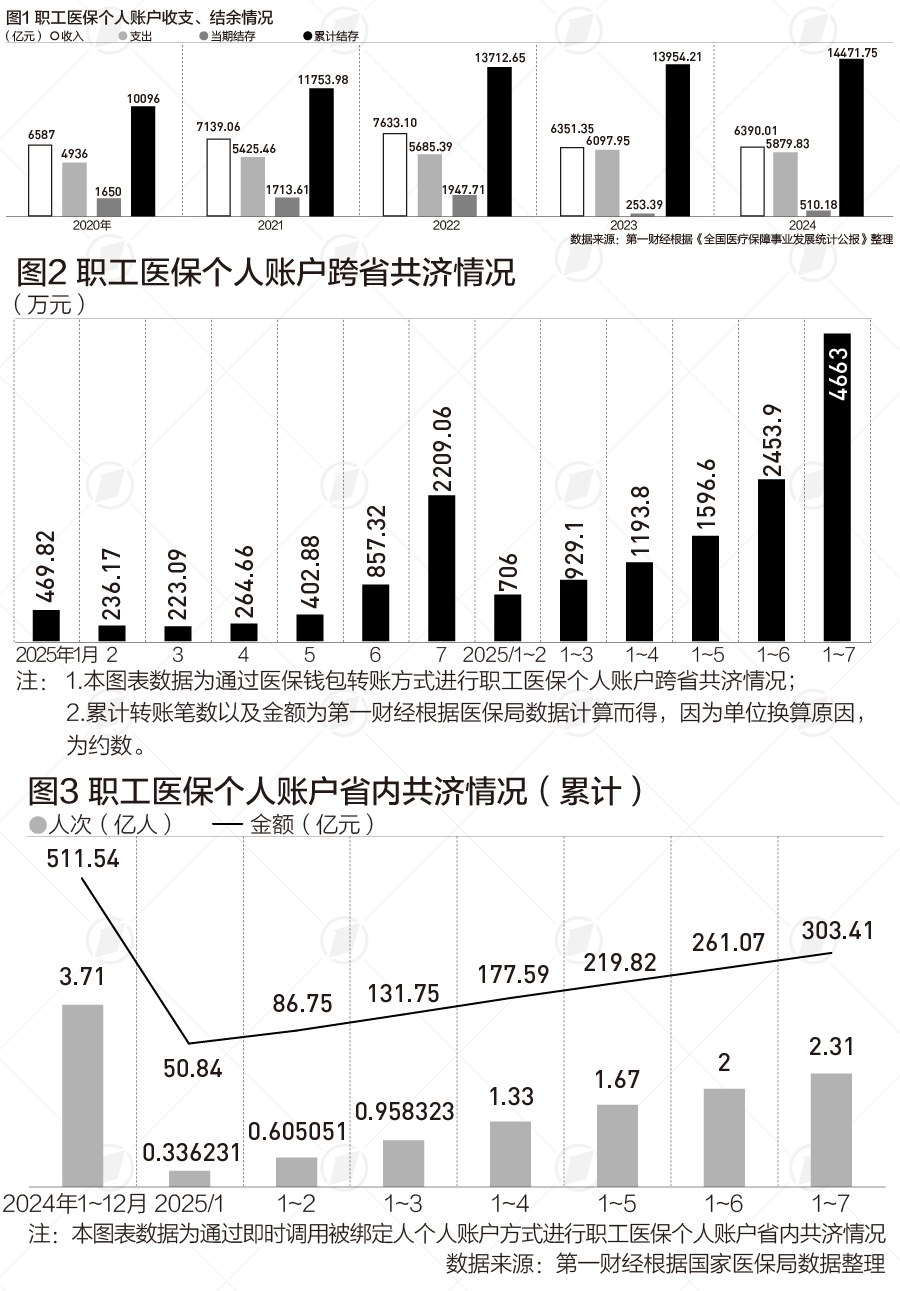
Core Viewpoint - The introduction of the medical insurance wallet is breaking the barriers of fund flow in personal medical accounts, allowing for better utilization of funds and reducing the financial burden on families seeking medical care [4][13]. Summary by Sections Medical Insurance Wallet Implementation - As of July, all 31 provinces and Xinjiang Production and Construction Corps have launched the medical insurance wallet, facilitating cross-province pooling of personal medical account funds, which increased from over 4 million at the beginning of the year to over 40 million in the first seven months [4]. - The medical insurance wallet allows for real-time fund transfers without fees, enhancing the ability to manage medical expenses across regions [13][18]. Personal Account Fund Utilization - The cumulative balance of personal medical accounts reached 1.45 trillion, with the spending-to-income ratio improving from 81% in 2019 to 96% in 2023, slightly decreasing to 92% in 2024 [6][7]. - The expansion of the usage scope of personal accounts has effectively activated previously dormant funds, with 512 billion utilized for family pooling in 2024 [11][8]. Cross-Province Pooling Growth - The amount for cross-province pooling saw explosive growth, with the total transfer amount reaching 4.663 million in the first seven months of 2025, reflecting a significant increase in fund movement [14][12]. - The cross-province pooling allows families to manage medical expenses more flexibly, alleviating financial pressure during high medical costs [15]. Impact on Medical Insurance and Healthcare - The cross-province pooling of personal accounts is expected to enhance the funding and payment for resident medical insurance, potentially increasing the participation rate in basic medical insurance [17]. - The implementation of cross-province pooling is anticipated to promote the rational allocation of medical resources and improve the quality of medical services across different regions [17].
杭州长护险实现省内异地服务新突破
Hang Zhou Ri Bao· 2025-09-12 02:37
Core Insights - The article highlights the successful implementation of a provincial cross-region long-term care insurance (LTCI) service in Hangzhou, allowing elderly residents to receive care services even when they move away from their registered hometowns [1][2][4]. Group 1: Policy Implementation - Hangzhou has become the first city to benefit from the "direct settlement of provincial cross-region long-term care insurance services," allowing elderly individuals to continue receiving care services when relocating within the province [1][2]. - As of the end of August, the total number of participants in Hangzhou's long-term care insurance program reached over 11.9 million, reflecting the city's commitment to expanding and improving LTCI services [1][3]. Group 2: Service Features - The LTCI program in Hangzhou offers a range of professional care services, including joint activity training and self-care training, with caregivers visiting elderly clients three times a week [2]. - The new policy allows elderly individuals to apply for assessments and services in their new location without needing to return to their original place of registration, thus addressing the challenges faced by elderly individuals who move to live with their children [4]. Group 3: Future Developments - The city plans to continue expanding the scope of provincial cross-region LTCI services, aiming to provide more elderly individuals with access to care services regardless of their location [5]. - The long-term care insurance program has established collaborative mechanisms with multiple cities in the province, ensuring mutual recognition of disability assessments across the region [5].
医保个账“沉睡”资金正在盘活 跨省“流转”爆发式增长 | 晋观医养
Di Yi Cai Jing· 2025-09-11 14:33
Core Insights - The introduction of the medical insurance wallet is breaking the regional barriers of personal medical accounts, allowing for better fund circulation and meeting healthcare needs more effectively [1][7][10] - The cumulative amount for cross-province mutual aid through personal medical accounts has significantly increased, from over 4 million at the beginning of the year to 40 million by July [1][8] - The total balance of personal medical accounts has reached 1.45 trillion, reflecting a continuous growth trend since the establishment of the employee medical insurance system in 1998 [3][4] Group 1: Medical Insurance Wallet - The medical insurance wallet has been launched across all 31 provinces and Xinjiang Production and Construction Corps, facilitating cross-province mutual aid [1][7] - The wallet allows for real-time fund transfers without fees, enhancing the ability of families to manage healthcare costs across different regions [7][11] - As of July 2025, the cumulative transfer amount through the medical insurance wallet reached 4,663 million, indicating rapid growth in cross-province mutual aid [8][10] Group 2: Personal Medical Account Reform - The personal medical account balance has grown from 1.0096 trillion in 2020 to 1.45 trillion in 2024, showing a significant increase in available funds [3][4] - The proportion of expenditures from personal medical accounts to income has improved from 81% in 2019 to 96% in 2023, indicating better fund utilization [3] - The mutual aid scope has expanded to include near relatives, allowing for more flexible use of funds [6][11] Group 3: Impact on Healthcare Access - The cross-province mutual aid system is expected to alleviate the financial burden of high medical costs for families, enhancing their healthcare security [8][10] - The increase in mutual aid transactions is likely to improve the allocation of medical resources and services across different regions [11] - The ability to use personal medical account funds for resident basic medical insurance payments is anticipated to increase participation rates in health insurance [11]
医保个账“沉睡”资金正在盘活 ,跨省“流转”爆发式增长
Di Yi Cai Jing· 2025-09-11 12:38
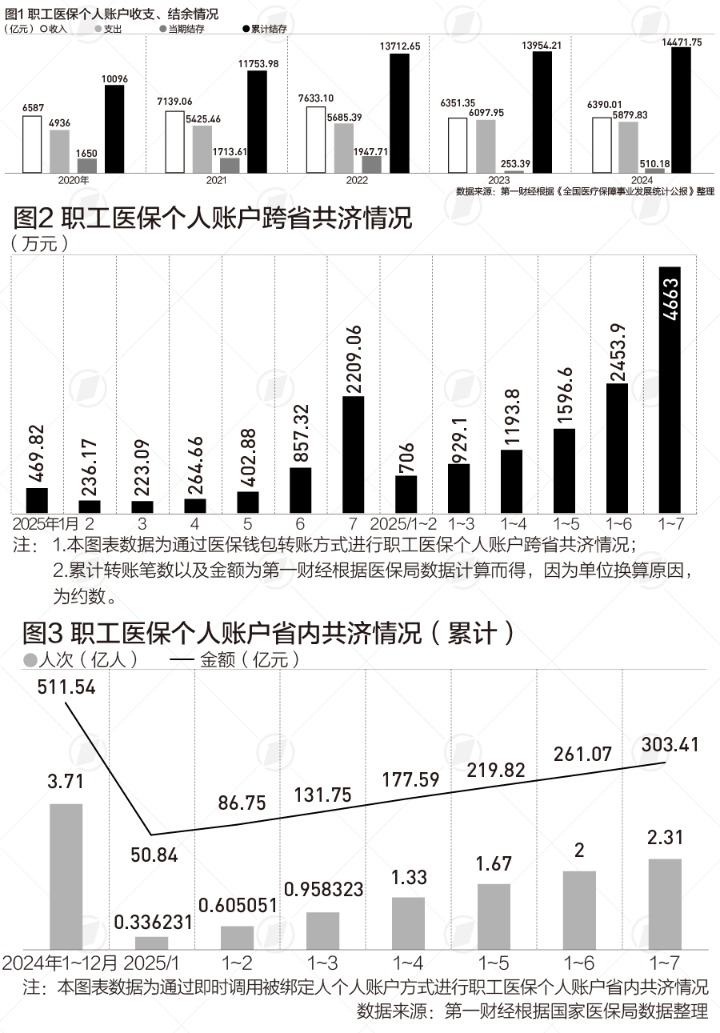
Core Insights - The introduction of the medical insurance wallet has significantly improved the flow of personal medical insurance accounts, addressing the issue of "idle funds" in accounts of individuals working away from home while their families face medical expenses [1][6][10] Summary by Sections Medical Insurance Wallet Implementation - All 31 provinces and Xinjiang Production and Construction Corps have launched the medical insurance wallet, with varying coverage across regions [1][6] - The cumulative amount for cross-provincial mutual assistance through the medical insurance wallet increased from over 4 million at the beginning of the year to over 40 million in the first seven months [1][7] Personal Account Fund Growth - The cumulative balance of personal medical insurance accounts reached 1.45 trillion [2][5] - The spending-to-income ratio for personal accounts improved from 81% in 2019 to 96% in 2023, slightly decreasing to 92% in 2024 [2] Cross-Provincial Mutual Assistance - The number of participants in cross-provincial mutual assistance reached 2.31 billion, with a total amount of 304.57 billion from January to July 2025 [1][5] - The rapid growth in cross-provincial mutual assistance is attributed to the medical insurance wallet, which allows for real-time transfers without fees [6][10] Impact on Medical Expenses - The expansion of personal account usage has positively impacted the liquidity of idle funds, effectively reducing the financial burden of medical expenses for families [3][6] - The mutual assistance funds have been utilized primarily for personal medical expenses, with 274.87 billion allocated for medical institution costs and 17.34 billion for retail pharmacy expenses [5] Future Prospects - The cross-provincial mutual assistance is expected to enhance the funding and payment for resident medical insurance, particularly benefiting families with members working in different provinces [10] - The implementation of the medical insurance wallet is anticipated to facilitate better allocation of medical resources and improve healthcare services across regions [10]
医保个账“沉睡”资金正在盘活 ,跨省“流转”爆发式增长|晋观医养
Di Yi Cai Jing· 2025-09-11 12:32
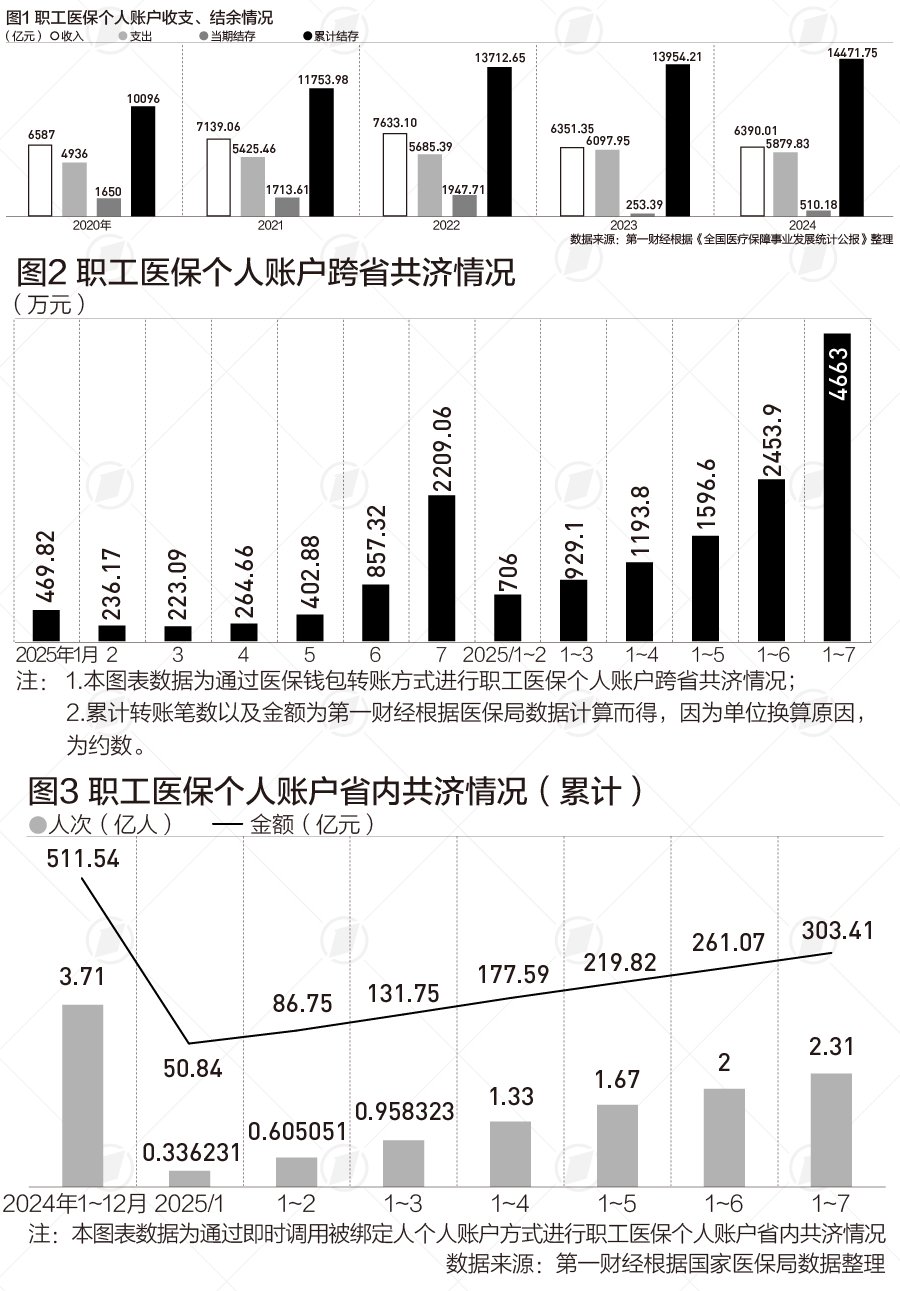
Core Insights - The introduction of the medical insurance wallet has significantly improved the flow of funds in personal medical accounts, addressing the issue of "idle funds" in accounts of individuals working away from home [1][6][9] - As of July 2025, all 31 provinces and the Xinjiang Production and Construction Corps have launched the medical insurance wallet, facilitating cross-province mutual aid with a rapid increase in transaction amounts [1][7][10] Medical Insurance Wallet Implementation - The medical insurance wallet allows for cross-province mutual aid, with the cumulative amount for such transactions rising from over 4 million at the beginning of the year to over 40 million by July [1] - The wallet has enabled the use of personal account funds for family members across provinces, effectively reducing the financial burden of medical expenses [6][9] Personal Account Fund Accumulation - The cumulative balance of personal medical accounts has reached 1.45 trillion yuan, showing a steady increase from previous years [2] - The proportion of expenditures from personal accounts relative to income has increased from 81% in 2019 to 96% in 2023, indicating improved fund utilization [2] Cross-Province Mutual Aid Growth - The amount of cross-province mutual aid has seen explosive growth, with the total amount transferred via the medical insurance wallet reaching 4,663 million yuan from January to July 2025 [7] - The number of individuals utilizing cross-province mutual aid reached 231 million, with significant amounts being used for medical expenses and insurance premiums [5][9] Policy Changes and Impacts - Recent policy changes have expanded the scope of mutual aid to include "close relatives," enhancing the flexibility of fund usage [5] - The ability to transfer funds across provinces is expected to improve the overall efficiency of medical resource allocation and enhance healthcare service delivery [9][10]