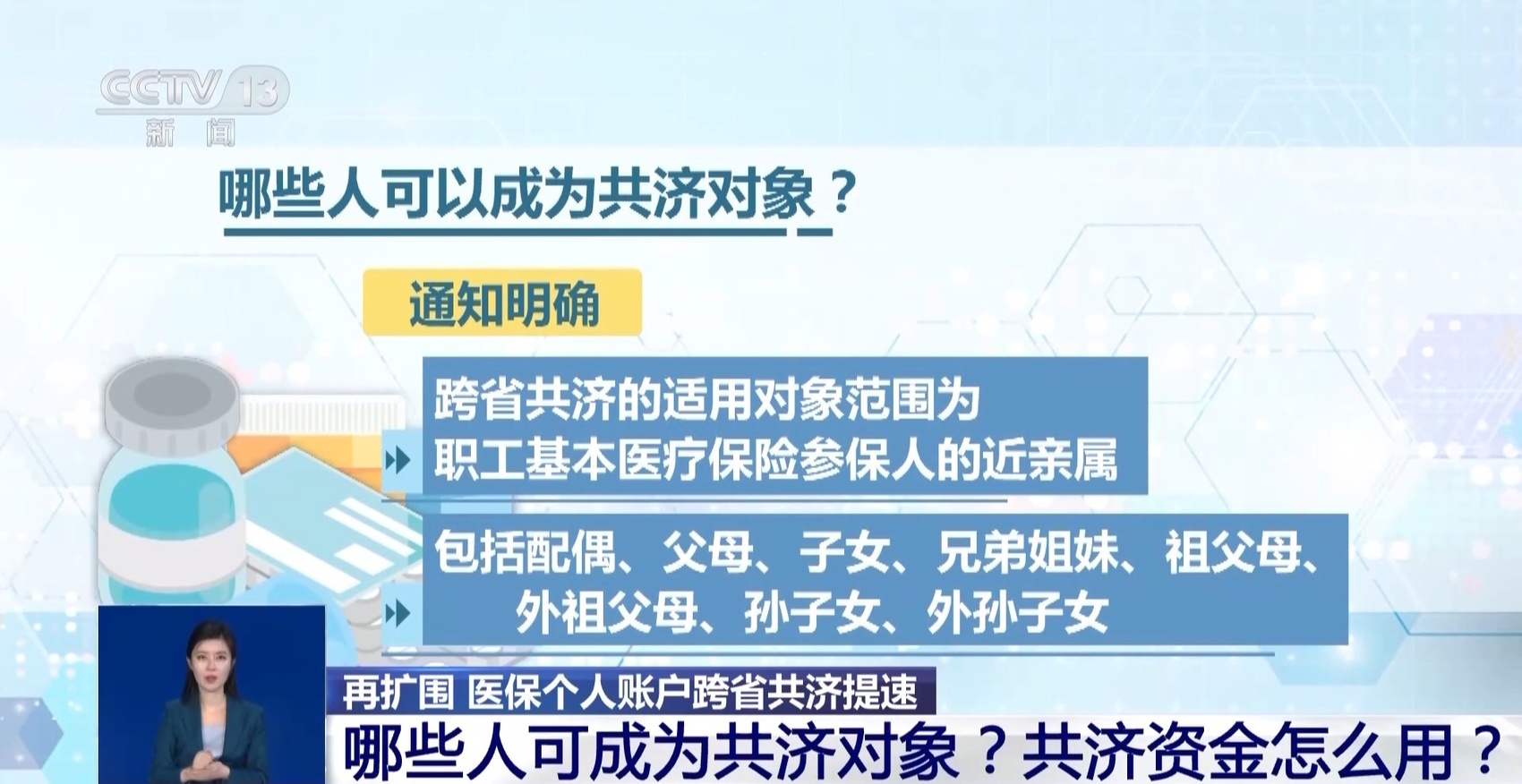
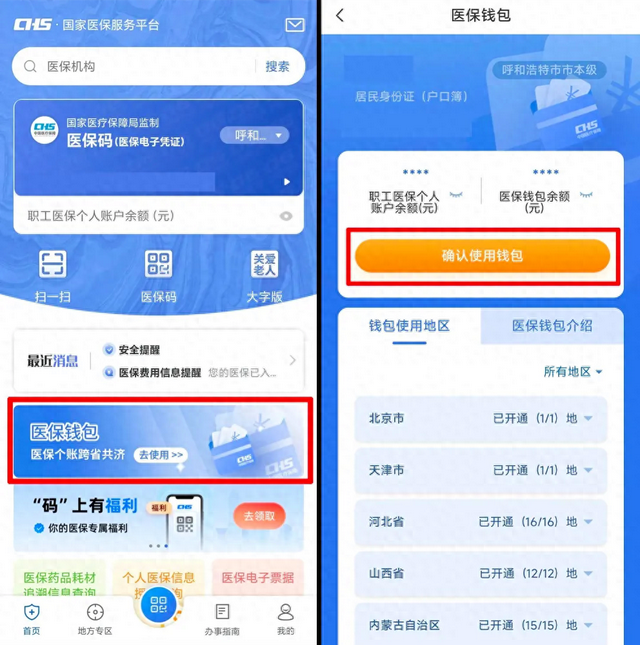
医保钱包

Search documents
徽商银行:以金融之力,赋能健康安徽建设迈上新台阶
Xin Lang Cai Jing· 2026-02-05 07:53
Core Viewpoint - Huishang Bank has signed a strategic cooperation agreement with the Anhui Provincial Health Commission to enhance the healthcare system, health elderly services, and digital medical innovation, marking a new phase in government-bank collaboration in the healthcare sector [1] Group 1: Financial Support for Healthcare - Huishang Bank is committed to supporting the development of the healthcare sector as part of its mission to serve local economies and small to medium-sized enterprises, providing strong financial support for healthcare reforms and public health capacity enhancement [1] - The bank has tailored comprehensive financial service plans for various healthcare institutions, offering services such as account and fund management, working capital loans, supply chain financing, and special bond issuance, with a projected financing balance of nearly 9 billion yuan by the end of 2025 [2] - The bank has provided over 3.3 billion yuan in funding through its "Ronglian Tong" non-recourse factoring business, effectively reducing financial costs for a leading local hospital and establishing a model for collaboration between banks and healthcare institutions [2] Group 2: Community and Elderly Services - Huishang Bank has launched innovative financial services aimed at improving access to healthcare, including the "credit medical treatment" service, allowing patients to receive treatment before payment, significantly reducing waiting times [3] - The bank has established 114 "Changchun Flower" elderly-friendly service outlets and has disbursed over 10 billion yuan in pensions to more than 500,000 elderly clients, ensuring their basic living needs are met [3] - The bank is developing a product line for the elderly care industry, including loans for elderly care institutions and specialized financial services, with a loan balance of nearly 1.3 billion yuan in the elderly care sector by the end of 2025 [3] Group 3: Digital Transformation in Healthcare - Huishang Bank is embracing digital transformation by integrating financial technology with healthcare services, creating a one-stop service platform through its mobile banking app that facilitates appointment scheduling, online consultations, payments, and medication delivery [4] - The collaboration between the healthcare system and the financial service network aims to build a comprehensive health service system that covers the entire life cycle, enhancing the convenience and efficiency of healthcare services for residents [4] Group 4: Future Directions - Huishang Bank plans to leverage this strategic partnership to further enhance its comprehensive financial services, optimize service processes, and increase resource investment to support infrastructure development, smart hospitals, credit medical services, and elderly financial services across the province [5]
股市必读:中科江南(301153)1月28日董秘有最新回复
Sou Hu Cai Jing· 2026-01-28 18:02
Group 1 - The stock price of Zhongke Jiangnan (301153) closed at 23.52 yuan on January 28, 2026, down by 1.8%, with a turnover rate of 1.82%, a trading volume of 60,000 shares, and a transaction amount of 143 million yuan [1] - The company is involved in the construction of the "medical insurance wallet" project, which has been officially launched in cities including Hubei, Tianjin, Guizhou, Inner Mongolia, Guangxi, and Chongqing, enabling cross-province sharing of personal medical insurance accounts [2] - The company primarily serves government departments and focuses on private deployment for AI computing power procurement or leasing, without establishing strategic partnerships with leading domestic computing power manufacturers [2] Group 2 - On January 28, the net outflow of main funds was 11.784 million yuan, while retail investors saw a net inflow of 13.7061 million yuan [3][4] - The trading information indicates that speculative funds experienced a net outflow of 1.9221 million yuan on the same day [4]
医保个人账户,如何跨省给家人使用?一文读懂
Yang Shi Xin Wen· 2026-01-12 02:05
Core Viewpoint - The National Healthcare Security Administration and the Ministry of Finance have issued a notice to enhance the cross-provincial mutual aid of personal accounts in employee basic medical insurance, allowing insured individuals to use their personal account funds for family members across provinces [1]. Group 1: Cross-Provincial Mutual Aid - Cross-provincial mutual aid allows insured individuals to use their personal account funds for family members in different provinces, benefiting those who work away from home [1]. - Eligible mutual aid recipients include not only direct relatives such as spouses, parents, and children but also siblings, grandparents, grandchildren, and other close relatives, with one person able to establish mutual aid relationships with multiple individuals [1]. Group 2: Eligible Expenditures - Funds from the employee medical insurance personal account can be used to cover personal medical expenses incurred by close relatives at designated medical institutions, as well as for purchasing approved medications, medical devices, and supplies at designated retail pharmacies [1]. - Additionally, these funds can be used for personal contributions to urban and rural resident basic medical insurance and long-term care insurance [1]. Group 3: Usage of Mutual Aid Funds - The mutual aid funds are managed through a "medical insurance wallet," which is linked to the individual's medical insurance code, requiring both the donor and recipient to activate their medical insurance wallets [2]. - The process to activate and use the medical insurance wallet involves logging into the National Medical Insurance Service Platform App, confirming usage, and submitting transfer requests, with a limit of three transfers per day and a maximum of 2000 yuan per transfer [2]. Group 4: Reimbursement and Policy Implications - The mutual aid does not affect the reimbursement qualifications, benefits, or policies of the recipient's medical insurance; the reimbursement will follow the local resident insurance rules regardless of the source of funds [3]. - Medical actions and diagnoses of family members using the mutual aid funds will not be recorded under the insured individual's name, ensuring no negative impact on future insurance participation [3].
医保个人账户,如何跨省给家人使用?(含详细使用步骤)
证券时报· 2026-01-11 04:07
Core Viewpoint - The article discusses the recent notification from the National Medical Insurance Administration and the Ministry of Finance regarding the cross-province mutual aid of personal accounts in employee basic medical insurance, allowing insured individuals to use their personal account funds for family members in different provinces. Group 1: Cross-Province Mutual Aid - Cross-province mutual aid allows insured individuals to use their personal account funds for family members in different provinces, which is particularly beneficial for those working away from home [1]. - The notification expands the scope of mutual aid to include not only direct relatives like spouses, parents, and children but also siblings, grandparents, grandchildren, and other close relatives [2]. Group 2: Eligible Expenses - Funds from the employee medical insurance personal account can be used to cover personal medical expenses incurred by close relatives at designated medical institutions, as well as for purchasing approved medications and medical supplies at designated retail pharmacies [3]. Group 3: Using the Medical Insurance Wallet - The mutual aid process is facilitated through the Medical Insurance Wallet, which is linked to the individual's medical insurance code. Both the donor and recipient must activate their Medical Insurance Wallets to enable fund transfers [4]. - The activation process involves logging into the National Medical Insurance Service Platform App, confirming usage, and completing the necessary steps to open the wallet [5]. Group 4: Transfer Process and Limitations - To transfer funds, the donor must provide the recipient's basic information and submit a transfer request. Each Medical Insurance Wallet can process a maximum of three transfers per day, with a limit of 2000 yuan per transfer [8]. - After a successful transfer, the recipient can check their wallet balance and transaction history [8]. Group 5: Reimbursement and Policy Implications - The mutual aid does not affect the reimbursement qualifications, benefits, or policies of the recipient's medical insurance. For instance, if an employee's account funds are used by a parent under the resident insurance scheme, the parent's reimbursement terms remain unchanged [9]. - It is emphasized that the personal account funds can be shared, but the medical insurance cards cannot be shared, meaning both parties must use their respective cards to access benefits [10].

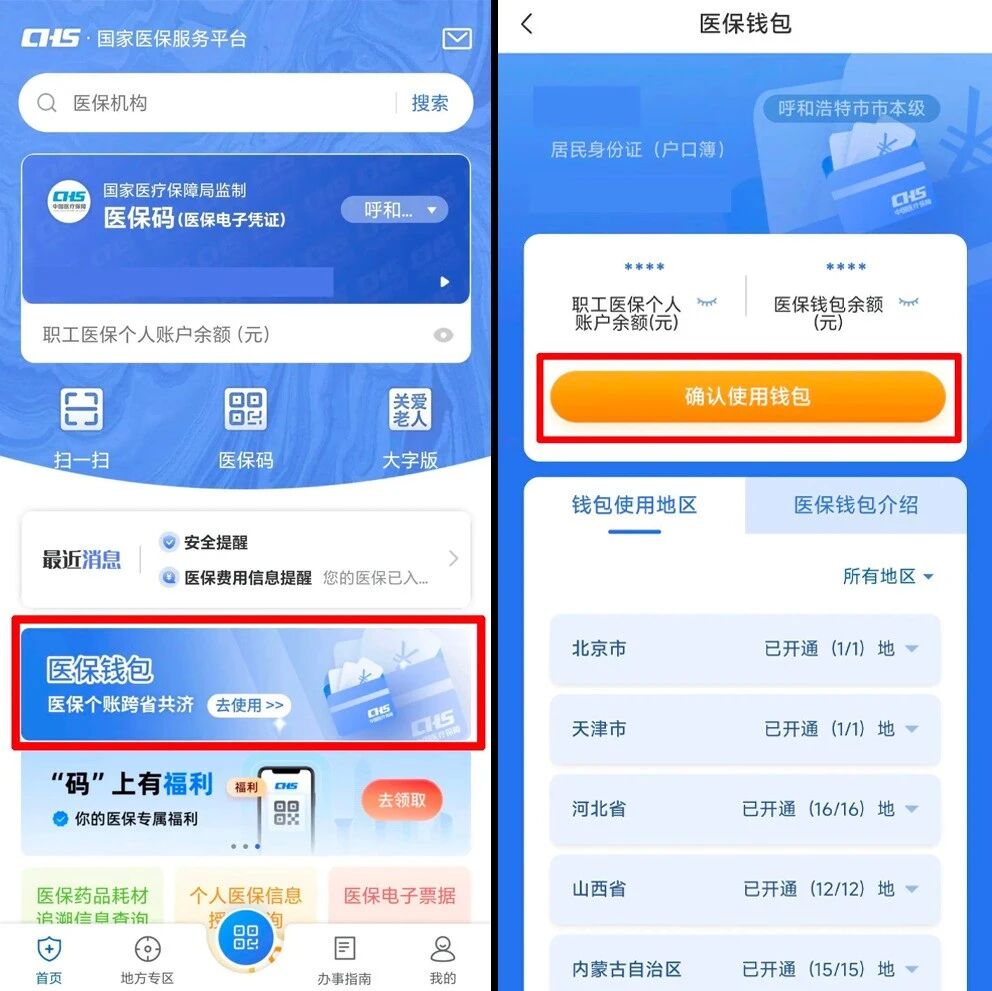
医保个人账户,如何跨省给家人使用?详细步骤来了
Xin Lang Cai Jing· 2026-01-11 01:44
Core Viewpoint - The National Healthcare Security Administration and the Ministry of Finance have issued a notice to enhance the cross-provincial mutual aid for employee basic medical insurance personal accounts, allowing insured individuals to use their personal account funds for family members in different provinces [1] Group 1: Cross-Provincial Mutual Aid - Cross-provincial mutual aid allows insured individuals to use their personal account funds for family members, such as those working away from home, enabling them to cover medical expenses for relatives in their hometown [1] Group 2: Eligible Recipients - The notice specifies that eligible recipients for mutual aid include not only direct relatives like spouses, parents, and children but also siblings, grandparents, grandchildren, and other close relatives, allowing one person to establish mutual aid relationships with multiple individuals [2] Group 3: Eligible Expenses - Funds from the employee medical insurance personal account can be used to pay for personal medical expenses incurred by close relatives at designated medical institutions, purchase approved medications and medical supplies at designated retail pharmacies, and cover personal contributions to urban and rural resident basic medical insurance and long-term care insurance [3] Group 4: Fund Transfer Process - The transfer of personal account funds to eligible recipients is facilitated through the Medical Insurance Wallet, which is linked to the individual's medical insurance code. Both the donor and recipient must activate their Medical Insurance Wallets to enable fund transfers [4] Group 5: Transfer Limitations - Each Medical Insurance Wallet account is limited to three transfers per day, with a maximum transfer amount of 2000 yuan per transaction. If the transfer exceeds these limits, additional documentation may be required [9] Group 6: Reimbursement Implications - Mutual aid from personal accounts does not affect the reimbursement qualifications, benefits, or policies of the recipient. For instance, if an employee uses their personal account funds to assist a parent enrolled in resident insurance, the parent's reimbursement terms remain unchanged and are based on their own insurance coverage [9]
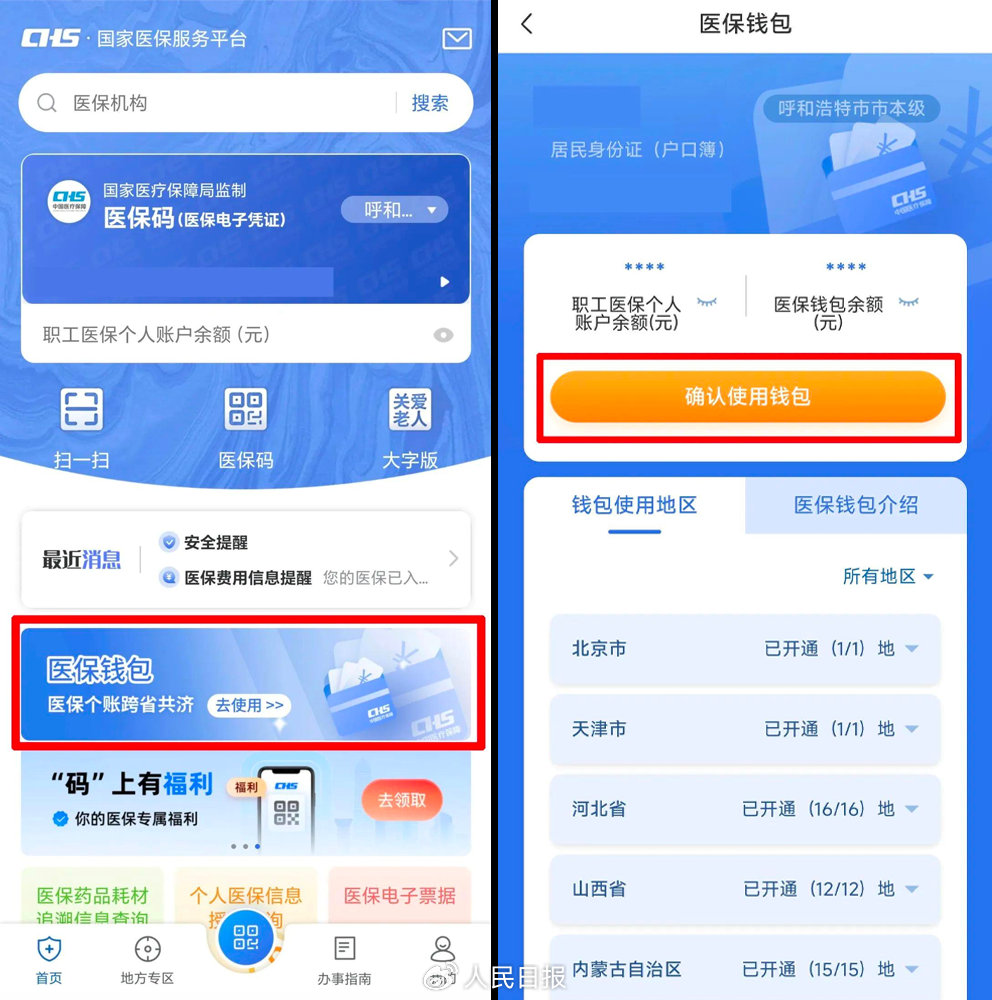
医保个人账户,如何跨省给家人使用?(含详细使用步骤)
Yang Shi Xin Wen Ke Hu Duan· 2026-01-11 01:13
Core Viewpoint - The National Healthcare Security Administration and the Ministry of Finance have issued a notice to enhance the cross-provincial mutual aid for employee basic medical insurance personal accounts, allowing insured individuals to use their personal account funds for family members in different provinces [1] Group 1: Cross-Provincial Mutual Aid - Cross-provincial mutual aid allows insured individuals to use their personal account funds for family members in different provinces, which is particularly beneficial for those working away from home [1] - The notice specifies that mutual aid can extend to not only direct relatives like spouses, parents, and children but also to siblings, grandparents, grandchildren, and other close relatives, allowing one person to establish mutual aid relationships with multiple individuals [2] Group 2: Eligible Expenditures - Funds from the employee medical insurance personal account can be used to cover personal medical expenses incurred by close relatives at designated medical institutions, as well as for purchasing approved medications, medical devices, and supplies at designated retail pharmacies [3] - Additionally, these funds can be utilized for personal contributions to urban and rural resident basic medical insurance and long-term care insurance [3] Group 3: Fund Transfer Process - The transfer of personal account funds to family members is facilitated through the Medical Insurance Wallet, which is linked to the individual's medical insurance code. Both the donor and recipient must activate their Medical Insurance Wallets to enable this feature [4] - The process involves logging into the National Medical Insurance Service Platform App, confirming the use of the wallet, and submitting the necessary information for the transfer [6][10] Group 4: Transfer Limitations and Conditions - Each Medical Insurance Wallet account is limited to three transfers per day, with a maximum transfer amount of 2000 yuan per transaction. Exceeding these limits requires additional documentation [8][10] - It is important to note that mutual aid only involves sharing funds and does not affect the eligibility, benefits, or policies related to medical insurance reimbursement for the recipient [10]
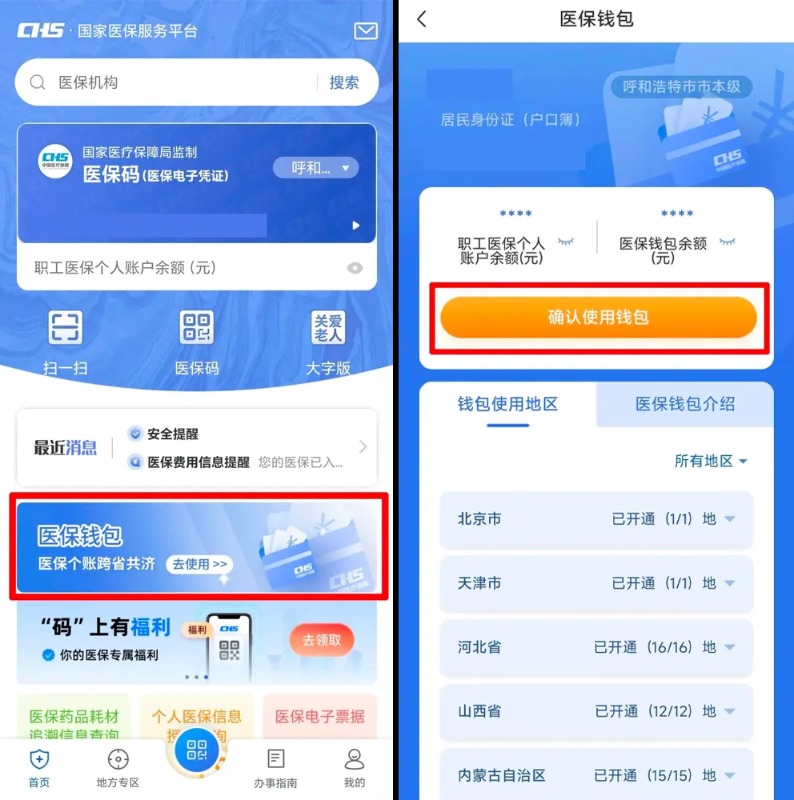
医保个人账户,如何跨省给家人使用?一文读懂
Xin Lang Cai Jing· 2026-01-10 09:09
Core Viewpoint - The National Healthcare Security Administration and the Ministry of Finance have issued a notice to enhance the cross-provincial mutual aid for personal accounts in employee basic medical insurance, allowing insured individuals to use their personal account funds for family members across provinces [1] Group 1: Cross-Provincial Mutual Aid - Cross-provincial mutual aid allows insured individuals to use their personal account funds for family members in different provinces, which is particularly beneficial for those working away from home [1] - Eligible mutual aid recipients include not only direct relatives such as spouses, parents, and children but also siblings, grandparents, grandchildren, and other close relatives, with one person able to establish mutual aid relationships with multiple individuals [1] Group 2: Eligible Expenditures - Funds from the employee medical insurance personal account can be used to cover personal medical expenses incurred by close relatives at designated medical institutions, as well as for purchasing approved medications, medical devices, and personal contributions to urban and rural resident basic medical insurance and long-term care insurance [1] Group 3: Usage of Medical Insurance Wallet - The mutual aid process is facilitated through the Medical Insurance Wallet, which is linked to the personal medical insurance code, requiring both the mutual aid provider and recipient to activate their Medical Insurance Wallets [2] - To activate the Medical Insurance Wallet, users must log into the National Medical Insurance Service Platform App and follow the prompts to confirm usage [2][4] Group 4: Transfer Process - To transfer funds, the mutual aid provider must fill in the recipient's basic information and submit the request, with the recipient also needing to have an activated Medical Insurance Wallet [7] - Each Medical Insurance Wallet account is limited to three transfers per day, with each transfer capped at 2,000 yuan [8] Group 5: Reimbursement Implications - The mutual aid from personal accounts does not affect the eligibility, benefits, or policies related to medical insurance reimbursement; the reimbursement terms for the recipient will remain based on their local resident medical insurance [9] - The mutual aid does not allow for the sharing of medical insurance cards or benefits, meaning that while funds can be shared, the insurance cards must be used independently [9]
跨越山海的保障!职工医保个账跨省共济 8类近亲属可共享
Yang Shi Wang· 2026-01-10 02:42
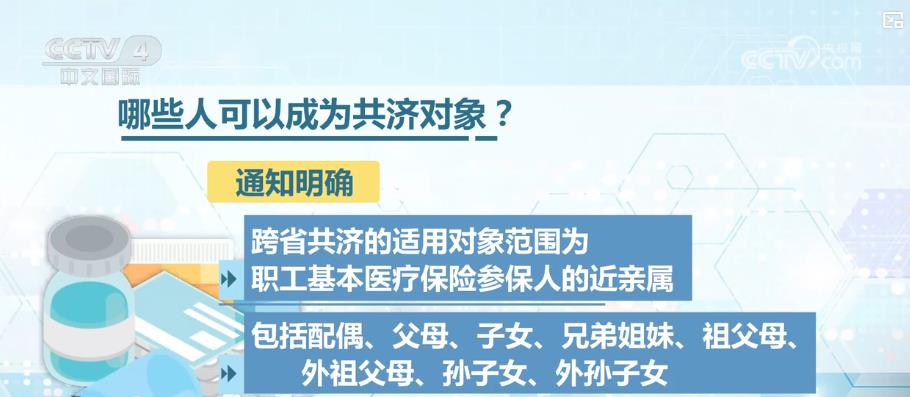
Core Viewpoint - The National Healthcare Security Administration and the Ministry of Finance have issued a notice to enhance the cross-provincial mutual aid for personal accounts in basic medical insurance, expanding the scope from provincial to national level [1] Group 1: Policy Changes - The new policy allows insured individuals to use their personal account funds for their close relatives across provinces, facilitating support for family members who may be working away from home [3] - The eligible beneficiaries include close relatives such as spouses, parents, children, siblings, grandparents, and grandchildren, who must also be insured under basic medical insurance [3] Group 2: Implementation Mechanism - To utilize the mutual aid, both the contributor and the beneficiary must open a medical insurance wallet, which is linked to their personal medical insurance code [4] - The funds from the personal account can cover out-of-pocket medical expenses incurred by the beneficiaries at designated medical institutions and pharmacies, as well as personal contributions to other insurance plans [3][4] Group 3: Financial Impact - Over the past five years, the mutual aid from personal accounts has exceeded 100 billion yuan, benefiting over 78 million individuals [6][8] - The policy has progressively expanded the mutual aid scope from city-level to provincial and now to national levels, with 337 healthcare coordination areas implementing cross-provincial mutual aid [8]
医保个人账户跨省共济来了,医保钱包谁能用、怎么用?
Xin Lang Cai Jing· 2026-01-09 13:36
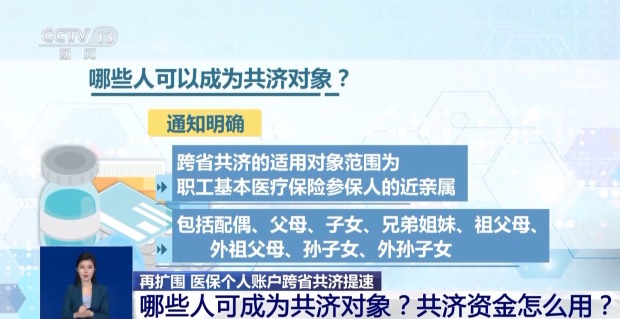
Core Viewpoint - The National Healthcare Security Administration and the Ministry of Finance have issued a notice to enhance the cross-provincial mutual aid system for employee basic medical insurance personal accounts, expanding the scope from within provinces to nationwide, thereby strengthening family mutual assistance functions [1]. Group 1: Cross-Provincial Mutual Aid - Cross-provincial mutual aid allows insured individuals to use their personal account funds for family members in different provinces, facilitating support for those working away from home [1]. - Eligible mutual aid recipients include close relatives of the insured, such as spouses, parents, children, siblings, grandparents, and grandchildren [1][3]. Group 2: Usage of Mutual Aid Funds - Funds from the personal accounts can be used to cover personal medical expenses incurred by close relatives at designated medical institutions, as well as for purchasing approved medications and medical supplies at designated retail pharmacies [5]. - The funds can also be used for personal contributions to urban and rural resident basic medical insurance and long-term care insurance [5]. Group 3: Implementation of Mutual Aid - To facilitate the transfer of funds, both the donor and recipient must open a medical insurance wallet, which is linked to their personal medical insurance code [5]. - The process to open the medical insurance wallet involves using the National Medical Insurance Service Platform App, where users can confirm their usage and access their wallet [5][7]. Group 4: Transfer Limitations - Each medical insurance wallet account is limited to three transfers per day, with each transfer not exceeding 2,000 yuan [11]. - There is no shared reimbursement level or ratio for mutual aid; reimbursement policies depend on the type of insurance the individual is enrolled in, whether it is employee or resident basic medical insurance [11].
医保个人账户跨省共济来了 医保钱包谁能用、怎么用?详解→
Xin Lang Cai Jing· 2026-01-09 13:36
Core Viewpoint - The National Healthcare Security Administration and the Ministry of Finance have issued a notice to enhance the cross-provincial mutual aid for personal accounts in basic medical insurance, expanding the scope from within provinces to nationwide, thereby strengthening family mutual support functions [1]. Group 1: Cross-Provincial Mutual Aid - Cross-provincial mutual aid allows insured individuals to use their personal account funds for family members in different provinces, facilitating support for those working away from home [1]. - The applicable beneficiaries of the mutual aid include close relatives of the insured, such as spouses, parents, children, siblings, grandparents, and grandchildren [3]. - Close relatives must be participants in basic medical insurance, which can be either employee basic medical insurance or urban-rural resident basic medical insurance [5]. Group 2: Usage of Mutual Aid Funds - The funds from personal accounts can be used to cover personal medical expenses incurred by close relatives at designated medical institutions, as well as for purchasing approved medications and medical supplies at designated retail pharmacies [7]. - To facilitate the transfer of funds, both the donor and recipient must activate their medical insurance wallets, which are linked to their personal medical insurance codes [7][11]. - Each medical insurance wallet account is limited to three transfers per day, with a maximum transfer amount of 2,000 yuan per transaction [13]. Group 3: Reimbursement Policies - There is no shared reimbursement level or ratio for mutual aid; personal account funds are primarily used for out-of-pocket medical expenses, while reimbursement policies depend on the type of insurance the individual is enrolled in [13].