公路交通

Search documents
北京2024年交通固定资产投资超800亿 城轨投资占比近四成
Zhong Guo Jing Ying Bao· 2025-08-14 16:09
Core Insights - The 2025 Beijing Transportation Development Annual Report indicates a continued growth in fixed asset investment in the transportation sector, reaching 83.37 billion yuan in 2024, a 6.2% increase from the previous year [1] - Investment in rail transit and related facilities decreased to 33.24 billion yuan, down 4.0%, accounting for 39.9% of total investment, while investment in roads and urban infrastructure rose to 42.25 billion yuan, up 16.7%, making up 50.7% of total investment [1] Investment Trends - The proportion of rail transit investment has declined for the second consecutive year, dropping from 44.1% to 39.9%, while the share of road and urban infrastructure investment increased from 46.1% to 50.7% [1] - The total operational mileage of Beijing's urban rail transit is expected to reach 879 kilometers by the end of 2024, maintaining the top position in the country [1] Passenger Transport Volume - In 2024, the total urban passenger transport volume in Beijing slightly increased to 7.347 billion trips, a 4.2% growth, with urban rail transit accounting for 3.622 billion trips, or 49.3% of the total [2] - The ridership of suburban railways grew by 13.3%, while public buses saw a modest increase of 1.3% [2] Traffic Management - The report highlights improvements in traffic management, with the average traffic index during peak hours in central urban areas decreasing to 6.08, a 3.8% reduction from the previous year [3] - The number of days with moderate or severe congestion decreased by 12 days to 241 days [3]
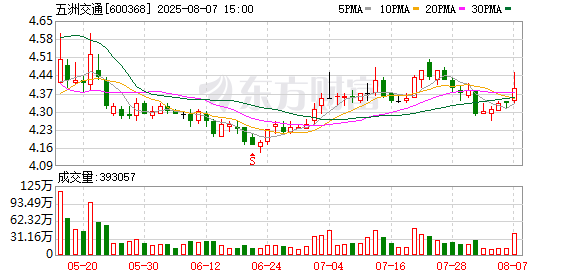
五洲交通:8月7日召开董事会会议
Mei Ri Jing Ji Xin Wen· 2025-08-07 11:16
Group 1 - The company Wuzhou Transportation (SH 600368) announced the convening of its 30th meeting of the 10th Board of Directors on August 7, 2025, to review the 2025 semi-annual report and other documents [2] - For the year 2024, the revenue composition of Wuzhou Transportation is as follows: 63.23% from the highway transportation industry, 31.19% from trade logistics, 4.78% from other businesses, 0.65% from asset management, and 0.15% from the financial sector [2]