大米行业

Search documents
“吃不起的黄金”,日本人抢疯了
凤凰网财经· 2025-06-13 14:27
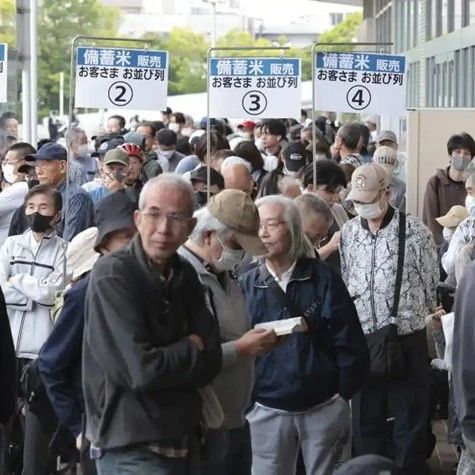
Core Viewpoint - The article discusses the severe rice price surge in Japan, which has led to a situation where rice is becoming unaffordable for many citizens, highlighting the underlying issues of agricultural policy imbalance, extreme weather impacts, and increased demand due to tourism recovery [2][4][20]. Group 1: Price Surge and Public Reaction - As of April, rice prices in Japan have increased by 98.4% year-on-year, with the average price for 5 kilograms of rice reaching 4,223 yen (approximately 210 RMB) [4][19]. - Citizens are experiencing extreme measures to cope with high prices, including precise portioning of rice and even incidents of rice theft [15][16]. - The phenomenon of long queues for government-released rice indicates the desperation among consumers [11][18]. Group 2: Causes of the Rice Crisis - The rice crisis is attributed to a "rice shortage," driven by long-term agricultural policies that have restricted production and high import tariffs [7][17]. - Japan's rice planting area has decreased from over 2 million hectares at its peak to 1.344 million hectares in 2023, with total rice production dropping from approximately 12 million tons to about 7.165 million tons [17]. - The revival of Japan's tourism industry has further exacerbated the demand for rice, particularly in the restaurant sector, leading to a supply-demand imbalance [18][20]. Group 3: Government Response and Challenges - The Japanese government has released a total of 410,000 tons of emergency rice reserves since March to stabilize prices, marking the first time since 1995 that such measures have been taken [18][19]. - However, only 7% of the released rice has reached the retail market, indicating significant inefficiencies in the distribution system, primarily due to the monopolistic practices of agricultural cooperatives [19][20]. - New measures introduced by political figure Shinjiro Koizumi aim to reform the rice distribution system and stabilize prices, including a target price of 2,000 yen for 5 kilograms of rice [21][23].

日本对大米价格束手无策 终于向泰国、越南“求助”
Jin Tou Wang· 2025-06-06 06:15
Group 1 - Japan initially restricted rice imports to protect domestic farmers, but rice prices have reached record highs in the past year, prompting Japan to seek more affordable rice from Southeast Asia [1] - The New Dragon Group in Vietnam plans to export over 20,000 tons of rice to Japan this year, which is more than four times last year's total, equivalent to the annual consumption of approximately 400,000 people [1] - Vietnamese rice is being sold at a lower price compared to Japanese rice, with a 5-kilogram bag priced at about 3,200 yen (approximately $22.4), which is 20% lower than the average retail price of Japanese rice [1] Group 2 - Southeast Asian countries benefit from lower production costs and multiple harvest seasons, making their rice cheaper than Japanese rice, with labor costs accounting for only a quarter of production costs [2] - In the 2024-2025 market year, Vietnam and Thailand are projected to be the second and third largest rice exporters globally, following India, with a growing interest in exporting to Japan due to rising prices [2] - Japan is also importing rice from the United States, with major retailer Aeon starting to sell a mix of Japanese and American rice at a price of approximately 2,894 yen (about $20) for 4 kilograms [2] Group 3 - Japan imposes a tariff of 341 yen per kilogram on imported rice, but even with this additional cost, Southeast Asian rice remains more affordable than domestic Japanese rice, which exceeds 4,000 yen for a 5-kilogram package [3]
意向签约10亿元!江汉大米香飘大湾区
Nan Fang Nong Cun Bao· 2025-05-15 14:05
Core Viewpoint - The event in Guangzhou marks a significant step for Jianghan rice to expand its market in the Greater Bay Area, with a focus on integrating high-quality rice into Cantonese cuisine and achieving a 1 billion yuan procurement agreement [1][40]. Market Foundation - Guangdong consumes approximately 10 billion jin (5 million tons) of rice annually from Hubei [6][7]. - In 2024, China's total grain production is expected to exceed 1.4 trillion jin (700 million tons), with rice accounting for over 30% of this production [8][9]. - The annual rice consumption in China surpasses 190 million tons, with the southern market representing over 60% of this demand, and the demand for mid-to-high-end long-grain rice growing at an annual rate of 9.4% [10]. Brand Strategy - Hubei has historically supplied up to 70% of Guangdong's rice market, with Jianghan Plain being a key rice-producing area [12][13]. - Hubei's rice production ranks fifth nationally, with an annual output of 100 billion jin (50 million tons) [14]. - The Hubei government aims to consolidate resources to create the "Jianghan Rice" public brand, targeting leadership in the mid-to-high-end ecological rice market [19][20]. Cooperation and Agreements - The event featured a signing ceremony where Jianghan rice core enterprises reached a 1 billion yuan procurement agreement with star-rated hotels in the Greater Bay Area, covering high-end dining and customized group meals [40][41]. - The collaboration signifies a shift from mere food supply to deeper industrial cooperation between Hubei and Guangdong [42]. Market Recognition - Jianghan rice has gained popularity among Guangdong consumers, becoming a bridge for cultural exchange between the two regions [46]. - Hubei plans to continue tracking market feedback and utilize digital resources to enhance brand recognition and develop consumption scenarios for Jianghan rice [48].

金龙鱼(300999)2024年度管理层讨论与分析
Zheng Quan Zhi Xing· 2025-03-28 04:40
Industry Overview - The company operates in the kitchen food and feed raw materials and oil technology sectors, focusing on the agricultural and food processing industry chain to provide nutritious, healthy, safe, and high-quality grain and oil products [1][4] - The edible oil industry in China has shown stable development with significant market opportunities due to rising consumer income levels and demand for high-quality products [1][2] - The rice industry remains robust, with a projected production of 208 million tons in 2024, although overall consumption growth has not met expectations [1][2] - The flour industry is experiencing stable consumption, with a shift towards specialized and high-quality products, despite a decline in overall demand for staple foods [1][2] Company Position - The company is a key player in the domestic agricultural and food processing sector, owning several well-known brands such as "Golden Dragon Fish" and "Hu Jihua" [3][4] - The company has been recognized for its quality, receiving a nomination for the China Quality Award and ranking in the BrandFinance 2024 global food brands list [3] Business Operations - The company's main business includes the research, production, and sales of kitchen foods, feed raw materials, and oil technology products, with no significant changes reported during the period [4][5] - The product range encompasses edible oils, rice, flour, seasonings, and various feed raw materials [5] Future Outlook - The company anticipates that China will become the largest and most diverse high-quality food market, driven by continuous consumer demand for health and quality [6] - The company plans to leverage its strengths in branding, channels, scale, and R&D to expand its market presence and product offerings [6] - The company aims to enhance its operational efficiency through digital transformation and lean management practices [6] - The company is committed to sustainable development and aims to build a green and low-carbon ecosystem while ensuring product quality and safety [6]