科研仪器

Search documents
突破技术“卡脖子”,北大系公司实现原子力显微镜探针量产,拿下千万元融资|硬氪首发
3 6 Ke· 2026-01-09 03:55
Financing Information - The company, Zhenzhen Nano Technology (Quzhou) Co., Ltd., has completed a new round of equity financing, raising over 10 million yuan from Quzhou Greenstone New Materials Equity Investment Partnership and Hangzhou Defu Equity Investment Co., Ltd. [1] - The financing round is categorized as Pre-A/A round, and the funds will be used to optimize the mass production process of probes, enhance product stability and yield, and support the development of a full range of atomic force microscope (AFM) probes and new production lines [1] Company Overview - Founded in 2016 and based in Quzhou, Zhejiang Province, the company specializes in the research and development of AFM probes [2] - The company has achieved partial international leadership in key metrics such as probe curvature radius, aspect ratio, and lifespan through innovative dry etching micro-nano processing technology [2] - The company's self-developed AFM probe products were launched for sale earlier this year [2] Market Potential - AFM is an essential high-precision detection instrument in various fields, including nanotechnology, materials science, semiconductor industry, and life sciences, playing a critical role in quality assurance during semiconductor manufacturing [4] - AFM probes, as core consumable components of AFMs, have high usage frequency and strong repurchase attributes, but have long relied on imports, leading to high costs and supply chain risks [4] Domestic Market Opportunity - In the context of semiconductor localization and the push for self-sufficiency in scientific instruments, there is a clear domestic replacement opportunity in the AFM probe market, which is characterized by small volume, high added value, and high repurchase rates [6] Team Background - The founder, Professor Cui Bo, has extensive experience in micro-nano processing and has focused on AFM probe research and commercialization for nearly a decade [7] - The company collaborates closely with Professor Cui's research group at Ningbo Oriental University of Technology, working on various types of AFM probes [7] Customer Base and Feedback - The current customer base primarily consists of research institutions and some semiconductor manufacturers, with large semiconductor firms still in the testing and validation phase [11] - The company's probes are priced 30%-40% lower than international brands while maintaining comparable or superior performance in key metrics [13] Challenges in Brand Building - The main challenge for achieving significant domestic replacement of AFM probes lies in brand building, as users tend to prefer established international brands despite recognizing the performance of domestic products during testing [14]


一省企业使用科研仪器设备的补助比例将提升至50%
Xin Lang Cai Jing· 2026-01-04 11:30
Core Viewpoint - The revised "Management Measures for the Open Sharing of Major Scientific Research Infrastructure and Large Scientific Research Instruments in Hunan Province" increases the subsidy ratio for enterprises using scientific research instruments from 30% to 50% [2][6]. Group 1: Subsidy and Incentives - The new measures enhance incentives for open sharing, raising the subsidy ratio for management units' open sharing service income from a maximum of 10% to 20% [2][6]. - The subsidy ratio for university student startups and entrepreneurial teams is significantly increased from 30% to 85% [2][6]. - The net income from open sharing services can be included in the dynamic adjustment of performance wages for units, encouraging the use of subsidy funds for personnel incentives [2][7]. Group 2: Research Infrastructure and Service Platform - Hunan has established a provincial research facilities and instruments sharing service platform, which currently includes 708 management units and 1,096 various scientific innovation platforms [3][7]. - The platform has integrated 9,158 sets of research facilities and instruments, with a total value exceeding 10 billion, including 6,703 sets funded by government and 2,455 sets purchased with social funds [3][7]. - Nearly 100 management units, including Central South University, have developed online service platforms for real-time access to research facilities and instruments [3][7]. Group 3: University Responsibilities and Oversight - The open sharing of research facilities and instruments is now included in the assessment system for universities, enhancing their initiative and accountability [3][8]. - The platform has registered 7,299 sets of instruments valued at 300,000 and above, with universities accounting for 3,770 sets, representing 51.7% of the total [3][8]. - The revised measures aim to strengthen university responsibilities through assessments, evaluations of newly purchased large instruments, and enhanced daily supervision [8]. Group 4: Addressing Concerns - The revised measures address concerns of management units regarding sharing by establishing a sharing guarantee system, clarifying service fee standards, and promoting the establishment of specialized sharing service teams [4][8].

一省企业使用科研仪器设备的补助比例将提升至50%
仪器信息网· 2026-01-04 09:27
Core Viewpoint - The revised "Management Measures for the Open Sharing of Major Scientific Research Infrastructure and Large Scientific Research Instruments in Hunan Province" increases the subsidy ratio for enterprises using scientific research instruments from 30% to 50% [2] Group 1: Policy Changes - The new measures enhance incentives for open sharing, raising the subsidy ratio for management units' service income from a maximum of 10% to 20% [2] - The subsidy ratio for university student startups and entrepreneurial teams is significantly increased from 30% to 85% [2] - The revised measures include provisions for incorporating net income from open sharing services into the performance salary dynamic adjustment range for management units [2] Group 2: Infrastructure and Services - Hunan has established a provincial shared service platform for scientific research facilities and instruments, with 708 management units and 10,096 various technology innovation platforms [3] - The platform includes 9,158 sets of research facilities and instruments, valued at over 10 billion, with 6,703 sets funded by government and 2,455 sets purchased with social funds [3] Group 3: University Involvement - The open sharing of research facilities and instruments is now included in the assessment system for universities, enhancing their responsibility and initiative [4] - The platform has registered 7,299 sets of instruments valued at 300,000 or more, with 3,770 sets from universities, accounting for 51.7% of the total [4] - The revised measures aim to strengthen university accountability through assessments, evaluations of new large instruments, and enhanced supervision [4] Group 4: Addressing Concerns - The revised measures address concerns about sharing by establishing a sharing guarantee system, clarifying service fee standards, and promoting specialized sharing service teams [5]

最长闲置超4年!审计局揭“仪器低效现象”
仪器信息网· 2025-12-29 09:03
Core Viewpoint - The audit report from Shenzhen highlights the issue of idle and wasted large scientific research instruments, recommending enhanced sharing mechanisms to improve utilization and efficiency [2][5]. Group 1: Audit Findings - The Shenzhen Municipal Audit Bureau conducted a performance audit on two Sino-foreign cooperative universities and six basic research institutions, focusing on the open sharing and usage of large scientific instruments [2]. - As of the end of 2024, the two universities possessed 212 large scientific instruments valued at 280 million yuan, while the six research institutions had 391 instruments valued at 842 million yuan [2][3]. - The audit revealed deficiencies in the open sharing system, with low sharing rates and inefficient use of instruments leading to waste [3][4]. Group 2: Specific Issues Identified - The open sharing system is not well-established, with one university lacking regulations and another institution failing to implement internal management systems for sharing [3]. - A significant number of instruments were not registered on the municipal sharing platform in a timely manner, with 99.4% of 165 devices at one university exceeding registration deadlines by an average of 307.96 days [3]. - In 2024, one university had 61.83% of its instruments used below the required hours, with some instruments remaining unused for over a year, leading to substantial idle time and asset value loss [4]. Group 3: Recommendations - The audit suggests that relevant authorities should urge institutions and universities to enhance the management of large scientific instruments, establish regulations, and improve information dissemination to increase sharing and usage efficiency [5].
1.96亿元!中国科学院工程热物理研究所近期大批仪器采购意向
仪器信息网· 2025-12-26 03:55
Core Insights - The Chinese Academy of Sciences' Institute of Engineering Thermophysics has announced procurement intentions for 24 items of equipment, with a total budget of 196 million yuan [1][2]. Procurement Overview - The procurement includes systems for online measurement of gas components and combustion efficiency, high temporal and spatial resolution velocity measurement and flow field perception systems, optical measurement systems for turbine blade surface temperature, and high-frequency laser dynamic gap measurement systems, with expected procurement time set for September to December 2025 [2][3]. Detailed Procurement List - The procurement list includes various components related to advanced compressed air energy storage systems, such as: - Large centrifugal impeller test pieces with a budget of 9 million yuan [4] - Small closed impeller test pieces with a budget of 9.5 million yuan [4] - Centrifugal compressor main shafts with a budget of 3.5 million yuan [4] - Centrifugal compressor S2 cylinder bodies with a budget of 8.5 million yuan [4] - Centrifugal compressor S3 cylinder bodies with a budget of 9.5 million yuan [4] - Centrifugal compressor S4 cylinder bodies with a budget of 4.8 million yuan [4] - Axial compressor main shafts with a budget of 4.5 million yuan [5] - Axial compressor static blades with a budget of 2.5 million yuan [5] - Axial compressor dynamic blades with a budget of 3.6 million yuan [5] - Axial compressor casings with a budget of 8 million yuan [5] - Upgrades for dual-shaft dual-channel pressure gas compressor testing devices with a budget of 1.9 million yuan [5] - Procurement of a complete air system testing segment with a budget of 40 million yuan [5] - Materials for fan test pieces with a budget of 1.4 million yuan [5] - Dynamic testing systems for high-frequency signal data collection with a budget of 9.5 million yuan [5]

1.08亿元!中国科学院深圳先进技术研究院近期大批仪器采购意向
仪器信息网· 2025-12-25 09:03
Core Viewpoint - The Chinese Academy of Sciences Shenzhen Advanced Technology Research Institute has announced procurement intentions for 23 types of laboratory instruments, with a total budget of 108 million yuan, expected to be procured between September and December 2025 [1][2]. Summary by Sections Procurement Overview - The procurement includes advanced instruments such as single-cell micro-manipulation systems, automated pre-processing equipment, ultra-high field whole-body imaging power amplifiers, and high-density single-cell precision microelectrode array recording systems [2][3]. Instrument Descriptions - **Cell Killing Instrument**: A high-throughput detection device that uses impedance detection and fluorescence analysis to monitor immune cell interactions with target cells, widely used in cancer immunotherapy and drug development [3]. - **Molecular Interaction Detection System**: A precision instrument that monitors the binding and dissociation of biomolecules, applicable in drug discovery, disease diagnostics, and basic research [4]. Detailed Procurement List - The procurement list includes: - Cell Killing Instrument: 1 unit, budget 1.2 million yuan [7] - Molecular Interaction Detection System: 1 unit, budget 1.1 million yuan [7] - Gas Chromatography-Mass Spectrometry: 1 unit, budget 2.2 million yuan [7] - Liquid Chromatography-Mass Spectrometry: 1 unit, budget 2.3 million yuan [7] - Ultra-high Field Whole-body Imaging Power Amplifier: 4 units, total budget 1.28 million yuan [7] - High-density Single-cell Precision Microelectrode Array Recording System: 1 unit, budget 1.14 million yuan [8]. Additional Instrument Procurement - Other notable instruments include: - Focused Ion Beam Electron Beam Dual Beam Microscope: 1 unit, budget 5 million yuan [8] - High-throughput Slide Scanner: 1 unit, budget 1.91 million yuan [8] - Ultra-high Throughput Mass Spectrometer: 1 unit, budget 10.5 million yuan [9].

6400万元,华中科技大学近期大批仪器采购意向
仪器信息网· 2025-12-01 03:55
Core Insights - Huazhong University of Science and Technology has announced procurement intentions for 65 items of scientific instruments, with a total budget of 64 million yuan, expected to be purchased between November and December 2025 [2][6]. Instrument Procurement Overview - The procurement includes advanced equipment such as atomic layer deposition devices, high-precision laser vibrometers, polarization analyzers, high-resolution spectrometers, optical wave testing platforms, and spectrum analyzers [2][3]. - The total budget for these instruments is approximately 64 million yuan, indicating significant investment in research and development capabilities [2][6]. Instrument Descriptions - **Polarization Analyzer**: A precision instrument for measuring the polarization characteristics of light waves, widely used in industrial inspection, biomedical applications, and optical communication [3]. - **High-Resolution Spectrometer**: Utilizes high line density gratings and narrow slit designs to achieve nanometer-level spectral resolution, suitable for weak light or complex component analysis [4]. - **Optical Wave Testing Platform**: An integrated system for precise measurement of optical wave parameters, capable of high-precision wavelength measurement and spectral analysis [5]. Detailed Procurement List - The procurement list includes various instruments with specific requirements, such as: - Multi-modal human-machine interaction systems for humanoid robots, requiring physiological signal monitoring modules and real-time analysis capabilities [7][8]. - Atomic layer deposition equipment for semiconductor materials, with strict specifications for film uniformity and temperature control [8]. - High-precision laser measurement devices and high-speed signal acquisition platforms, with detailed performance metrics outlined [10][15]. Additional Procurement Information - The procurement also includes components for proton therapy devices, emphasizing the university's focus on advanced medical technology [11][12]. - The instruments are expected to enhance the university's research capabilities across various fields, including robotics, biomedical engineering, and optical communications [2][3][4].
2.47亿元!中国科学院合肥研究院发布大批仪器采购意向
仪器信息网· 2025-11-29 03:58
Core Viewpoint - The Chinese Academy of Sciences' Hefei Institute of Physical Science has announced procurement intentions for 40 items of scientific instruments and equipment, with a total budget of 247 million yuan, expected to be purchased between September and December 2025 [2][3]. Procurement Overview - The procurement includes various advanced instruments such as TF energy resistors, linear devices, plasma source-assisted magnet systems, particle image velocimetry systems, and electron probe microanalysis instruments [3][4]. - The total budget for the procurement is 247 million yuan, which translates to approximately 35.5 million USD [2]. Detailed Procurement List - Key items include: - TF energy resistors with specifications such as a theoretical resistance value of 1/30 mΩ and a rated energy consumption of 33 MJ [4]. - Linear devices with a central magnetic field strength adjustable from 0 to 3.9 T and a maximum excitation current of 150 A [4]. - Particle image velocimetry systems with a measurement range of 0 to 1300 m/s and a sampling speed of at least 17 frames per second [4]. - High-temperature tensile testing machines with a maximum test force of 50 kN and a temperature range from room temperature to 900°C [5]. - Electron probe microanalysis instruments with a secondary electron image resolution of 2.5 nm [5]. - X-ray fluorescence spectrometers with high sensitivity and resolution capabilities [5]. - High-purity germanium spectrometers for precise energy spectrum analysis [6]. Additional Instrument Specifications - The procurement also includes advanced systems for monitoring and analysis, such as: - High-throughput nanopore gene sequencers capable of independent parallel operation with a theoretical throughput exceeding 360 Gb [7]. - Integrated systems for various detection modes, including fluorescence and chemiluminescence [7]. - Equipment designed for radiation safety and environmental monitoring, ensuring compliance with national standards [6][7]. Expected Timeline - The expected procurement timeline is set for September to December 2025, indicating a strategic planning phase for the acquisition of these advanced scientific instruments [3][4].

1.09亿元!同济大学近期大批仪器采购意向
仪器信息网· 2025-11-28 09:07
Core Viewpoint - Tongji University has announced procurement intentions for 29 items of laboratory equipment, with a total budget of 109 million yuan, scheduled for purchase between September 2025 and January 2026 [3][4]. Procurement Overview - The procurement includes advanced instruments such as: - Fully automatic amino acid analyzers - Continuous online monitoring systems for carbon emissions - Organic composition and elemental analysis systems - Laser spectral elemental analysis systems - Automated sample preparation subsystems - Non-targeted chemical sensing subsystems - Comprehensive environmental simulation testing equipment - Real-time evaluation systems for energy flow and thermal comfort [4][5][6][7]. Specific Equipment Details - **Fully Automatic Amino Acid Analyzer**: Utilizes ion exchange chromatography for efficient analysis of amino acid composition and content, with a short analysis time of approximately 30 minutes and high sensitivity [5]. - **Organic Composition and Elemental Analysis System**: A comprehensive platform for precise measurement of organic elements and molecular structures, employing multiple technologies for thorough characterization [6]. - **Laser Spectral Elemental Analysis System**: Based on laser-induced breakdown spectroscopy (LIBS), this system allows for rapid, real-time detection of multiple elements without complex sample preparation [7]. Procurement Schedule - The procurement is planned for the period from September 2025 to January 2026, indicating a strategic investment in advanced research capabilities [4][8]. Additional Equipment Insights - The procurement also includes systems for simulating vehicle dynamics, testing energy consumption, and monitoring environmental impacts, reflecting a focus on both automotive and environmental research [9][10]. - Notable items include: - High-power fuel cell testing systems - Microplastic imaging analyzers - Modular platforms for low-carbon wastewater treatment [10][11]. Conclusion - The procurement intentions from Tongji University highlight a significant investment in advanced research instruments, aimed at enhancing capabilities in various scientific fields, particularly in environmental and automotive research [3][4][5].
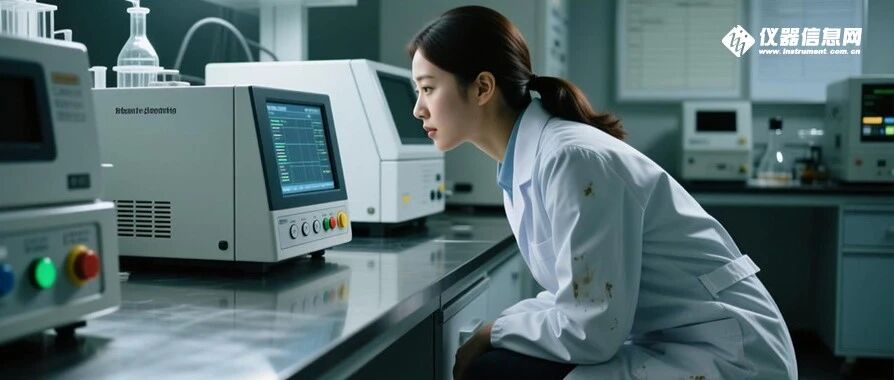
海尔生物:已布局光谱类科研仪器产业
Zheng Quan Ri Bao· 2025-11-24 13:39
Core Viewpoint - Haier Biomedical is actively seizing industry cycles and accelerating its layout in high-potential sectors to provide users with comprehensive digital scenario solutions across multiple categories, which is key to the company's long-term sustainable development [2] Group 1 - The company has already entered the spectral scientific instrument industry and plans to carefully select companies with high technical barriers and significant growth potential to enhance overall competitiveness [2] - Future plans will be disclosed in accordance with relevant regulations and requirements [2]