
Livestock Farming

Search documents
*ST天山:2025年12月销售活畜收入2459.97万元,同比变动573.12%
Guo Ji Jin Rong Bao· 2026-01-04 08:26
Core Viewpoint - The company *ST Tianshan reported significant year-on-year growth in live livestock sales and revenue for December 2025, indicating successful strategic implementation and market demand anticipation [1] Group 1: Sales Performance - In December 2025, the company sold 1,894 heads of live livestock, generating sales revenue of 24.5997 million yuan, representing year-on-year changes of 346.70% and 573.12% respectively [1] - The month-on-month changes in sales quantity and revenue were -34.51% and -30.38%, indicating a seasonal adjustment in sales activity [1] Group 2: Strategic Adjustments - The company adjusted its cattle breeding cycle and sales rhythm based on strategic layout, overall business plans, and market demand considerations [1] - The significant year-on-year growth in sales and revenue was attributed to the release of production capacity following the implementation of the company's strategic layout [1]

精彩活动搭台,科研创新助力,内江好物“抢戏” 让甜城味 吸睛更吸金
Si Chuan Ri Bao· 2026-01-04 06:34
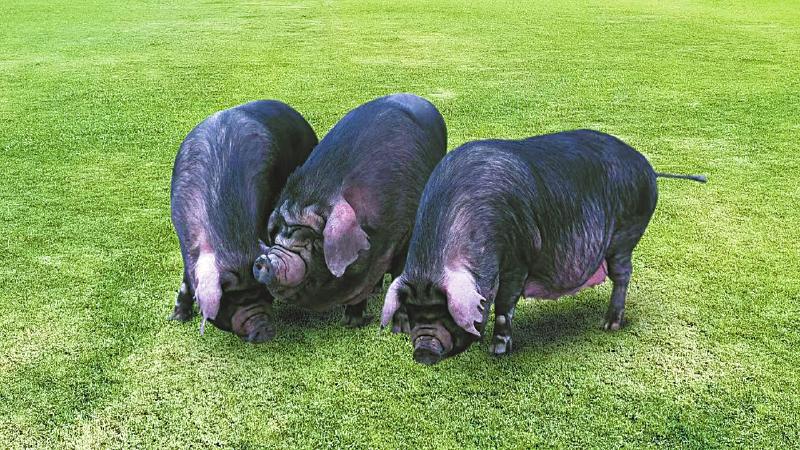
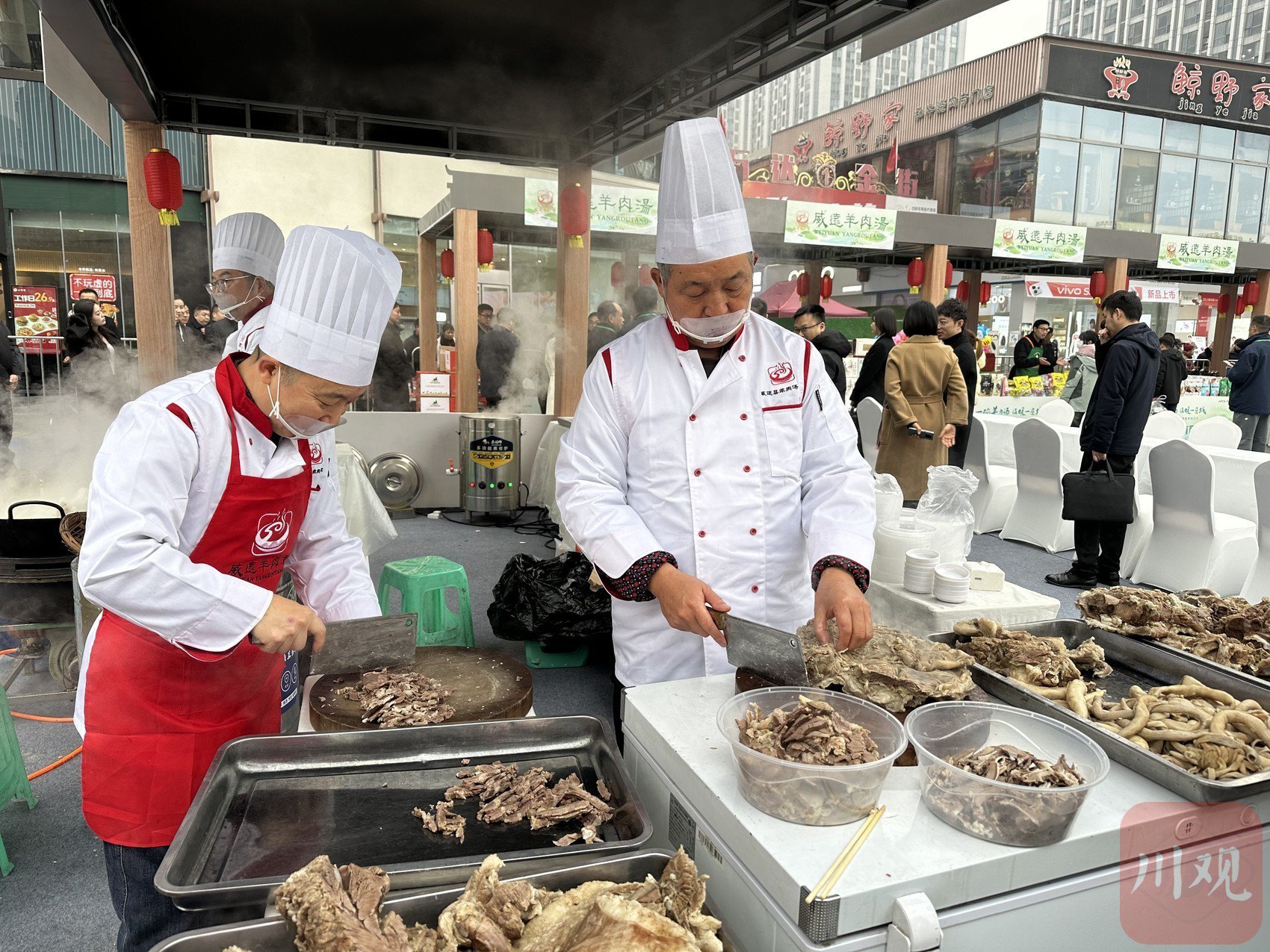
Core Viewpoint - The article highlights the development of unique agricultural products in Neijiang, focusing on events that promote local specialties such as white fish, blood oranges, black goats, and black pigs, showcasing a strategy for industrial cluster development through marketing and collaboration [7][8][12]. Group 1: Events and Marketing - Various promotional events are scheduled in December 2025, including the Neijiang White Fish Industry Development Conference and the Zizhong Blood Orange Marketing Conference, aimed at enhancing the visibility and sales of local products [7]. - The Zizhong Blood Orange Marketing Conference achieved significant success, with a total of 56,000 tons of orders signed, including 24,000 tons for export to 14 countries and regions [8]. - The Neijiang White Fish Industry Development Conference emphasized the importance of partnerships between government, academia, and enterprises, focusing on the development of new fish varieties and market expansion [9]. Group 2: Industry Development - Neijiang is the largest supplier of white fish fry in China, accounting for 90% of the national supply, with an annual production value exceeding 200 million yuan [10]. - The development of the black goat industry in Weiyuan has led to an annual output value of 1.6 billion yuan, supported by a series of promotional events and a plan to expand the brand beyond local markets [11][12]. - The Neijiang Black Pig industry has seen significant growth, with a total stock of 163,000 pigs and an output value of 3.8 billion yuan, positioning it as a benchmark for local pig farming in Sichuan [12].

让甜城味 吸睛更吸金
Xin Lang Cai Jing· 2026-01-03 22:19
Core Insights - The article highlights the ongoing development of unique industries in Neijiang, focusing on events that promote local products and enhance marketing strategies [3][4][5][7][8] Group 1: Industry Events - Various industry events are taking place in Neijiang, including the 2025 China (Neijiang) White Catfish Industry Development Conference and the 2025 Zizhong Blood Orange Marketing Conference, showcasing local specialties [3][4] - The 2025 Blood Orange Marketing Conference saw an increase in participation and order volume, with a total of 56,000 tons of orders signed, including 24,000 tons for export to 14 countries and regions [4] - The White Catfish Industry Development Conference emphasized collaboration between government and research institutions, with partnerships established for the development of new catfish varieties [5][6] Group 2: Economic Impact - Neijiang's white catfish industry has a cultivation area of 10,000 acres, producing over 900 tons annually, with a total industry output value exceeding 200 million yuan [5] - The Weiyuan Lamb Soup industry has been recognized as a key agricultural industry chain, generating an annual output value of 1.6 billion yuan [7] - The Neijiang Black Pig industry has a total stock of 163,000 pigs and an output value of 3.8 billion yuan, positioning it as a benchmark for local pig farming in Sichuan [8] Group 3: Marketing and Promotion Strategies - Events like the Weiyuan Lamb Soup Food Festival and the Neijiang Black Pig Brand Promotion are designed to enhance local product visibility and stimulate consumer interest [7][8] - The integration of food experiences with marketing efforts aims to promote local specialties while fostering connections between breeding, processing, tourism, and sales [8] - Neijiang aims to strengthen its regional public brand "Sweet City Flavor" to support rural revitalization through its unique culinary culture [8]
精彩活动搭台,科研创新助力,内江好物“抢戏”……让“甜城味”吸睛更吸金丨市州观察
Xin Lang Cai Jing· 2026-01-03 10:00
Core Viewpoint - The series of events in December 2025 in Neijiang highlights the city's strategy to promote its unique agricultural products and enhance industry development through marketing and collaboration [1][3]. Group 1: Events and Marketing Initiatives - The "Neijiang Whitefish Industry Development Conference" and the "Zizhong Blood Orange Marketing Conference" are key events showcasing local products [1][3]. - The Zizhong Blood Orange Marketing Conference achieved a total of 56,000 tons in signed orders, with 24,000 tons designated for export to 14 countries and regions [5]. - The fourth "Weiyuan Lamb Soup Food Festival" and the second "Sweet City Flavor: Neijiang Black Pig Brand Promotion and Food Culture Season" are part of a broader strategy to integrate local food culture with agricultural product promotion [11][13]. Group 2: Industry Development and Collaborations - Neijiang's whitefish industry has a cultivation area of 10,000 acres, with an annual output exceeding 900 tons and a total industry value surpassing 200 million yuan [9][10]. - The city has signed cooperation agreements with 11 research institutions and enterprises to focus on the development of the "Yulong No. 2" whitefish variety, aiming to enhance its economic and ornamental value [9][10]. - The Weiyuan lamb soup industry has been recognized as a key agricultural industry chain with an annual output value of 1.6 billion yuan, supported by a series of promotional events and a plan to expand its brand presence [12]. Group 3: Product Highlights and Consumer Engagement - The Zizhong Blood Orange has gained international attention, with positive feedback from foreign buyers, indicating strong market potential [4][5]. - The Neijiang Black Pig industry has achieved a total output value of 3.8 billion yuan, with a focus on brand development and consumer experience through food festivals [14]. - The integration of food culture and agricultural products is designed to enhance consumer engagement and promote local specialties, contributing to rural revitalization efforts [14].
肉牛周期专家电话会
2025-12-29 15:51
Summary of the Beef Cattle Industry Conference Call Industry Overview - The domestic beef cattle industry in China is experiencing an approximately 8-year adjustment cycle, with price increases expected to begin in early 2025, primarily driven by supply factors [1][3] - Current shortages in calf supply are noted, while supplies of fattened cattle and beef are adequate. A shortage of large cattle is anticipated in the second half of 2026 [1][3] Key Data Points - The number of breeding cows in China is projected to be around 29.5 million by 2025, a decrease from the peak of approximately 30 million in 2023. This number is expected to continue declining by about 1 million in 2026 [1][4] - Low breeding cow inventory levels will lead to a reduction in the number of fattened cattle available for market, with expected decreases of approximately 20% and 7.8% in 2026 and 2027, respectively [1][5] - The current calf production rate is below 65%, down from around 70%, contributing to the supply shortage [5] Production Efficiency - The proportion of replacement heifers is currently below 15%, compared to a normal level of around 20%, which may impact future production capacity [6] - Medium-sized farms (500-999 head) exhibit the highest production efficiency, with a feed-to-meat ratio between 11.5 and 11.9 [8] - The latest comprehensive fattening cost is approximately 20-22 RMB per kilogram, with calf costs accounting for about 55% and feed costs for about 35% of total expenses [9] Profitability - Profit margins for specialized fattening operations are around 2,900 RMB per head, while self-breeding operations yield about 2,500 RMB [10] Market Dynamics - U.S. beef prices are expected to remain high due to declining production capacity, with the U.S. cattle inventory at its lowest in over 50 years [11] - Brazil has not reduced production and has seen record export levels, while Argentina has faced reductions due to drought and inflation [12] - The U.S.-China trade relationship significantly impacts U.S. beef exports to China, with a notable increase in imports from Australia [13][15] Price Expectations - Current prices for fattened bulls are approximately 27 RMB per kilogram, with expectations for prices to reach 31-32 RMB per kilogram by 2026, though this forecast carries uncertainty [22][23] - The price gap between Brazilian frozen beef and domestic fresh beef has widened, with Brazilian beef averaging 40.48 RMB per kilogram in Q3 [16] Policy Implications - The implementation of protective measures for imported beef, including quotas and tariffs, is expected to slightly reduce import volumes [2][18][19] - The impact of feed prices on profitability is minimal, with the breakeven point for fattening expected to be around 29-30 RMB per kilogram in 2026 [24] Industry Structure - As of the end of 2023, the scale of farming in China is approximately 37.2%, with expectations for increased concentration in the coming years as smallholders exit the market [20][25]
Muyuan Foods Co., Ltd.(H0164) - OC Announcement - Appointment
2025-11-27 16:00
The Stock Exchange of Hong Kong Limited and the Securities and Futures Commission take no responsibility for the contents of this announcement, make no representation as to its accuracy or completeness and expressly disclaim any liability whatsoever for any loss howsoever arising from or in reliance upon the whole or any part of the contents of this announcement. Muyuan Foods Co., Ltd. 牧原食品股份有限公司 (A joint stock company incorporated in the People's Republic of China with limited liability) WARNING The public ...
FirstFarms A/S’ interim financial report 1 January – 30 September 2025
Globenewswire· 2025-11-26 07:14
Core Insights - FirstFarms reported an unsatisfactory interim result for the first nine months of 2025, with a loss of -6 million DKK, primarily due to low prices and the impact of foot and mouth disease (FMD) on milk production [1][5][10] Financial Performance - The turnover for the period decreased by 13%, attributed to a lack of milk sales and lower pig prices [3][10] - The result before tax was -5 million DKK, down from a profit of 13 million DKK in the previous year, largely due to FMD and negative value adjustments on the pig herd [3][10] - EBITDA for the period was 72 million DKK, down from 86 million DKK in 2024, while EBIT fell to 21 million DKK from 41 million DKK [10] Impact of Foot and Mouth Disease (FMD) - The FMD outbreak confirmed on March 30, 2025, led to significant operational disruptions, including the culling of animals and a halt in milk production [6][8] - The farm was declared free of FMD on September 24, 2025, allowing for the introduction of new animals expected in December 2025 [6][8] - The company has received insurance payouts totaling 31 million DKK, with 60% already disbursed by the end of Q3 [9][11] Future Expectations - FirstFarms has adjusted its expectations for 2025 downwards by 45 million DKK due to the FMD outbreak [9] - The company anticipates slightly increasing prices for pigs and crops for the remainder of 2025, despite a decrease in pig prices at the beginning of Q4 [11]

FirstFarms adjusts the expectation for the year based on decreasing pig prices
Globenewswire· 2025-11-20 18:55
Core Viewpoint - FirstFarms has adjusted its 2025 financial expectations downwards due to a recent decrease in pig prices, projecting an EBITDA of 60 - 90 million DKK and an EBIT of minus 10 - 20 million DKK [1][4]. Financial Expectations Summary - The updated expectations for 2025 are as follows: - EBITDA: 60 - 90 million DKK - EBIT: -10 - 20 million DKK - Previous expectations were: - 11 July 2025: EBITDA of 85 - 125 million DKK, EBIT of 15 - 55 million DKK - 31 March 2025: EBITDA of 70 - 110 million DKK, EBIT of 0 - 40 million DKK - 13 March 2025: EBITDA of 115 - 155 million DKK, EBIT of 45 - 85 million DKK [2]. Company Overview - FirstFarms is a Danish stock exchange listed company focused on operating responsibly within surrounding communities and delivering high-quality products primarily sold locally. The company aims to create value for investors while pursuing sustainability initiatives [3].
如何让畜禽养殖粪污还田符合土壤承载力?
Zhong Guo Huan Jing Bao· 2025-11-19 08:05
Core Viewpoint - The article emphasizes the importance of scientifically compliant utilization of livestock manure to prevent environmental pollution, particularly in regions facing soil capacity overload issues [1][2] Group 1: Current Issues - Some livestock farms are facing problems with excessive manure application, leading to overflow and water pollution, especially during the northern autumn and winter seasons [1] - The article highlights that exceeding ecological capacity transforms resources into pollutants, necessitating strict adherence to soil carrying capacity [1] Group 2: Proposed Solutions - Strengthening joint guidance is essential to address cognitive challenges, including the development of technical standards and training for producers on safe manure application [1][2] - Establishing a comprehensive electronic ledger system for tracking manure generation, treatment, transportation, and application is crucial for effective management [2] - Utilizing advanced monitoring technologies such as satellite remote sensing and drones can enhance regulatory efficiency by quickly identifying anomalies in large application areas [2] Group 3: Enforcement and Accountability - Joint enforcement is necessary to deter pollution-causing violations, with clear responsibility definitions and immediate investigations upon issue detection [2] - Linking penalties to environmental credit ratings and project subsidies can increase the cost of violations and promote compliance [2] Group 4: Long-term Vision - The article advocates for a systematic approach to promote the resource utilization of livestock manure as a pathway to develop ecological circular agriculture, emphasizing the need for a full-chain governance structure [2]
“生态包袱”变绿色资源
Liao Ning Ri Bao· 2025-11-01 01:05
Core Insights - The province has achieved a comprehensive utilization rate of livestock manure of 83.9%, addressing pollution risks from livestock farming [1][2] - The province ranks high nationally in livestock production, with significant numbers in pig, cattle, sheep, and poultry outputs [1] - There are approximately 12,000 large-scale livestock farms and over 1,160 third-party manure service organizations in the province [1] Group 1 - The province is implementing a resource utilization project for livestock manure across 36 counties, establishing 191 collection points and processing centers [2] - By the end of 2024, the equipment matching rate for manure facilities in livestock farms is expected to reach 99.3% [2] - The resource utilization of livestock manure provides a stable source of organic fertilizer for agricultural production and positively impacts ecological environment [2] Group 2 - The average concentration of total nitrogen in nine major rivers entering the Liaodong Bay has decreased by 6.4% year-on-year [2] - Advanced practices in manure resource utilization have emerged, such as the "five-level hundred stations" model in Changtu and the "four-in-one" model in Chaoyang [2] - Future efforts will focus on improving manure storage facilities for smaller farms and enhancing management of facility construction and record-keeping [2]