
Rare Earths

Search documents
X @Bloomberg
Bloomberg· 2025-10-20 02:12
Prime Minister Albanese is set to pitch Australia's vast resource holdings as a solution to China’s rare earth curbs at a meeting with President Trump, as the US and other countries scramble to diversify supply of critical minerals https://t.co/MbxA0pR89L ...
Antimony forerunner Larvotto fields $1.40/sh takeover bid from US peer; HotCopper users balk
The Market Online· 2025-10-20 02:07
Core Viewpoint - Larvotto Resources (ASX:LRV) has received a takeover offer from United States Antimony Corporation at $1.40 per share, which is perceived as low by investors on HotCopper [1] Group 1: Company Developments - Larvotto Resources is recognized for having Australia's largest undeveloped antimony project, along with evidence of gold and tungsten at its Hillgrove site [2] - The latest reports indicate that no minerals have been extracted yet, suggesting that both American and Australian companies are closely monitoring developments in the sector [3] - The takeover offer from USAC coincides with a diplomatic meeting between U.S. President Donald Trump and Australian Prime Minister Anthony Albanese, focusing on access to critical mineral deposits [3][4] Group 2: Market Context - The Australian rare earths sector has seen positive momentum, particularly following China's restrictions on rare earth exports [5] - There is potential for Australia to introduce price floors for critical minerals, similar to actions taken by the Pentagon for MP Materials earlier this year [5] - Larvotto Resources last traded at $1.31 per share, indicating a slight difference from the takeover offer [5]



全球宏观下一步 - 美国与中国:关系复杂-What's Next in Global Macro-The US and China It's Complicated
2025-10-20 01:19
Summary of Key Points from the Conference Call Industry and Company Involvement - The discussion primarily revolves around the **US-China relationship** and its implications for **global macroeconomic conditions** and **investment strategies**. Core Insights and Arguments - **Dynamic Trade Relationship**: The US and China are engaged in a tactical contest for economic advantage, characterized by rolling negotiations and truces rather than a definitive trade peace or economic decoupling [2][3][10]. - **Strategic Interdependencies**: Key sectors such as **rare earths** and **semiconductors** remain critical, with both nations calibrating their policies to maintain economic ties while exerting leverage [2][3]. - **US Industrial Policy**: The US is ramping up its industrial policy, particularly in sectors like **AI** and **semiconductors**, with significant capital expenditure (capex) incentives from recent tax legislation. This includes a projected **$2.9 trillion** in data center financing needs over the next three years [4][9]. - **Tariff Levels**: Effective US tariff levels are currently **4-5 times higher** than at the beginning of the year, indicating ongoing trade-related pressures on corporate decision-making [9]. - **Economic Growth Risks**: The US government shutdown adds uncertainty to economic forecasts, with predictions suggesting it may extend into November, complicating growth prospects [9]. Additional Important Insights - **Mixed Economic Signals**: Economic data presents a mixed picture, with the potential for a near-term correction in equities due to growth concerns, while large-cap US companies may benefit from favorable policy choices [9][10]. - **China's Economic Indicators**: Expectations for China's 3Q real GDP growth are projected to slow to **4.6%**, down from **5.2%** in 2Q, with industrial production growth remaining flat at **5.2%** [14]. - **Investment Opportunities**: The evolving US-China relationship and the focus on domestic investment in critical sectors present opportunities for credit investors, particularly in AI and technology-related fields [8][9]. This summary encapsulates the key themes and insights from the conference call, highlighting the complexities of the US-China relationship and its broader implications for investment strategies and economic forecasts.

稀土王牌显威!中国反制美国,霸权梦碎竟在朝夕间
Sou Hu Cai Jing· 2025-10-19 16:21
Core Viewpoint - The article discusses the shift in power dynamics regarding rare earth elements, highlighting China's dominance in the industry and the challenges faced by the U.S. in attempting to regain control over its supply chain [1][3][4]. Group 1: U.S.-China Trade Relations - The U.S. attempted to impose a 100% tariff on Chinese goods, but this move was quickly retracted, showcasing the fragility of U.S. trade power [1]. - The article reflects on the historical context of the U.S.-China trade war, emphasizing the initial confidence of the U.S. in 2018 and the subsequent realization of its vulnerabilities in 2025 [3]. Group 2: Rare Earth Elements Industry - China currently holds a significant advantage in the rare earth elements market, controlling 90% of the refining process despite the U.S. having the seventh-largest reserves globally [3]. - The U.S. is heavily reliant on China for the processing of rare earth elements, with American processing costs being four times higher than those in China [3]. - The article highlights the complexity of the industrial ecosystem in rare earth production, where the U.S. struggles to replicate China's extensive supply chain and expertise [3][4]. Group 3: Future Projections - RAND Corporation estimates that rebuilding the U.S. rare earth supply chain could take at least 8 years and cost $150 billion, raising concerns about the competitive landscape by 2033 [4]. - Projections indicate that by 2033, China's industrial output may account for a significant portion of the global economy, further solidifying its position in the technology and defense sectors [4].
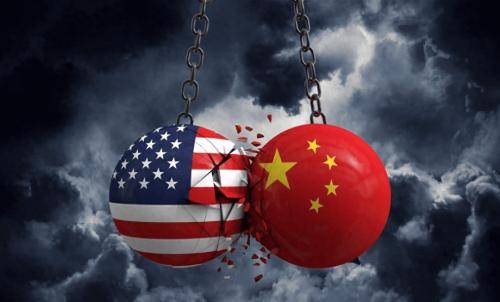
稀土:针锋相对持续,但中国仍占上风;尽管估值偏高,对该板块仍持积极态度-Rare Earths_ Tit for tat continues but China retains the upper hand; positive for the sector, despite stretched valuations
2025-10-19 15:58
Summary of J.P. Morgan's Research on Rare Earths Industry Overview - The report focuses on the **Rare Earths** sector, particularly in the context of ongoing trade tensions between the **U.S.** and **China**. - The dynamics of the rare earth supply chain are heavily influenced by China's dominant position, which poses challenges for Western producers and developers [1][4]. Key Points and Arguments 1. **Trade Tensions and Tariffs**: - The U.S. has increased tariffs on China, with a notable 100% tariff increase announced by Trump in response to China's export controls on rare earth materials [1][4]. - China has implemented export controls on several rare earth elements, which has led to heightened trade tensions and calls for resolution from major automakers [4]. 2. **China's Dominance**: - China retains a significant advantage in negotiations regarding rare earths due to its established dominance in the magnet supply chain [1][4]. - The U.S. Department of Defense (DoD) has begun supporting domestic producers like **MP Materials**, indicating a strategic move to reduce reliance on China [1][4]. 3. **Long-Term Price Projections**: - J.P. Morgan's long-term price projections for **NdPr oxide** are set at **$110/kg**, with expectations that market valuations are currently stretched, implying that stocks are trading at multiples that reflect prices between **$140-$190/kg** [1][4]. - The average price of NdPr oxide has been around **$65/kg**, with fluctuations noted, including a peak of **$88/kg** in mid-August [4]. 4. **Market Sentiment**: - Market sentiment and headlines are expected to be significant drivers for rare earth-exposed stocks, such as **ILU (Overweight)**, **ARU (Neutral)**, and **LYC (Underweight)** [1][4]. 5. **Valuation Metrics**: - The report indicates that the current valuations across the coverage universe are substantially stretched, with metrics such as **P/NV** and **FCF Yield** reflecting high multiples compared to broader mining coverage [4]. Additional Important Insights - The report highlights the potential for further government support for critical minerals projects, including lithium and copper, as part of a broader strategy to decouple from China's supply chain dominance [4]. - The upcoming face-to-face meeting between U.S. President Trump and Chinese President Xi Jinping is anticipated to influence market dynamics, although the long-term push for Western independence from Chinese supply chains is expected to persist [4]. Companies Discussed - **Arafura Rare Earths (ARU.AX)** - **Iluka Resources (ILU.AX)** - **Lynas Rare Earths Ltd. (LYC.AX)** [1][23]. This summary encapsulates the critical aspects of the J.P. Morgan report on the rare earths sector, emphasizing the interplay between geopolitical factors and market dynamics.
MP Materials Shares Dip Again. How It's Ending a Wild Week for Rare Earth Stocks.
Barrons· 2025-10-17 13:25
Core Insights - Tensions between the U.S. and China have escalated due to Beijing's decision to tighten export controls on certain rare earth materials, leading to a surge in MP's stock earlier this week [1] Industry Impact - The tightening of export controls by China on rare earth materials could significantly affect global supply chains, particularly for industries reliant on these materials [1] - The move may lead to increased prices and potential shortages in the market for rare earth elements, which are critical for various high-tech applications [1]


APOZ Team is Excited to Receive a Rare Earth Delegation from Asia
Accessnewswire· 2025-10-17 13:00
Core Insights - A rare earth trade delegation from Asia is scheduled to visit APOZ next week, indicating potential business opportunities in the rare earth sector [1] Company Summary - ASC Global Inc., a wholly-owned subsidiary of Token Communities, is facilitating the visit of the rare earth delegation, highlighting its role in the industry [1]


Global Markets Jitter as European Futures Slide, Treasury Yields Hit One-Year Low
Stock Market News· 2025-10-17 05:08
Market Overview - European equity futures are experiencing significant declines, with the EuroStoxx 50 down 0.9%, DAX falling 1.2%, and FTSE declining 1.0%, indicating a risk-off sentiment among investors [2][10] - In the United States, five-year Treasury yields have dropped to a one-year low, reflecting a flight to safety due to concerns over the stability of US regional banks and ongoing geopolitical uncertainties related to trade tensions [3][10] Company Developments - Google (Alphabet Inc.) is under scrutiny for its rapid data center expansion in India, which is reportedly exposing critical gaps in AI safeguards and raising regulatory concerns in emerging markets [4][10] - Iberdrola, the owner of Scottish Power, is exploring a deal for its UK retail energy unit, indicating strategic moves within the energy sector [5] - Venture Global, a key player in the LNG market, is addressing client suspicions regarding its LNG contracts, highlighting challenges in maintaining client trust [5] Financial Risks - The collapse of First Brands has led to significant warnings from investors about the risks associated with leveraged loans, indicating potential vulnerabilities in the private credit market [6][10] - Europe is facing adverse effects from the ongoing US-China rare earth wars, which are negatively impacting European industries and supply chains [7][10]


投资者演示-中国今秋的刺激政策与改革-Investor Presentation-This Fall Stimulus and Reform
2025-10-17 01:46
Summary of Key Points from the Conference Call Industry Overview - **Industry**: Asia Pacific Economic Outlook - **Company**: Morgan Stanley Asia Limited Core Insights and Arguments 1. **Economic Growth Projections**: Real GDP growth is expected to reach 4.8% in 2025, with a slowdown anticipated in the second half of the year [3][4][5] 2. **Deflationary Trends**: Deflation is expected to persist into 2026, despite some marginal improvements in the economy [7][11] 3. **Fiscal Stimulus Impact**: A fading fiscal stimulus is identified as a primary drag on growth, leading to a rapid slowdown in infrastructure capital expenditure [8][10] 4. **Social Dynamics**: There is a noted decline in the Social Dynamics Indicator, with elevated youth unemployment amid macroeconomic challenges [19][20] 5. **Export Resilience**: China’s exports have shown resilience, particularly to regions outside the US, despite significant contraction in exports to the US [22][24] 6. **US-China Trade Tensions**: Renewed tensions have emerged, particularly regarding rare earth materials and technology, with potential implications for trade policies [27][28][29] 7. **Rare Earth Supply Chain**: China maintains a dominant position in the global rare earth supply chain, but diversification efforts by the US and allies are increasing [41][43] 8. **Monetary Policy Adjustments**: The People's Bank of China (PBoC) is expected to implement further monetary easing measures, including interest rate cuts [50][52] 9. **Social Welfare Reforms**: Incremental progress is anticipated in social welfare reforms aimed at boosting consumption and addressing high household savings [69][70][78] 10. **Housing Market Outlook**: The housing market is undergoing deleveraging, with a focus on social spending rather than bailouts to address inventory issues [83][88] Additional Important Content 1. **Household Savings**: Chinese households have accumulated approximately RMB 30 trillion in excess savings since 2018, indicating a structural issue with high savings rates [91][94] 2. **Investment in Technology**: There is a notable increase in investment in emerging sectors, particularly in technology, supported by government initiatives [130][132] 3. **Future Economic Forecasts**: The economic outlook for 2026 suggests a potential GDP growth of around 5%, contingent on external demand and domestic reforms [55][56] 4. **Policy Implementation Challenges**: The effectiveness of proposed reforms and policies may be hindered by existing economic conditions and structural challenges [111][112] This summary encapsulates the key points discussed in the conference call, highlighting the economic outlook, challenges, and potential policy responses in the Asia Pacific region.
MP Materials (MP) Ends 4-Day Run, Loses 8.9% on Profit-Taking
Yahoo Finance· 2025-10-16 19:31
Group 1 - MP Materials Corp. experienced a significant decline of 8.92% on Wednesday, closing at $89.85, following a four-day winning streak where shares surged by 42% [1][4] - The recent rally in MP Materials' stock was driven by trade tensions between the US and China, particularly due to China's new export restrictions on rare earth materials, which raised concerns about global supply [2] - MP Materials secured a partnership with the US government, with the Department of Defense acquiring a 15% stake in the company for $400 million, which includes preferred shares and warrants [3][4] Group 2 - Month-to-date, MP Materials' stock has increased by 34%, reflecting strong investor interest amid the geopolitical climate [1] - The partnership with the US government is expected to bolster MP Materials' position in the rare earth market, as it aligns with national security interests [3]
