General Merchandise Retailers

Search documents
Target's Market Share Is Slipping -- Time to Buy the Dip or Stay Away?
The Motley Fool· 2025-05-25 10:05
Core Insights - Target's fiscal first-quarter earnings report showed disappointing results, with the company losing market share to competitors like Walmart, Costco, and Amazon [1] - The decline in same-store sales was partly attributed to customer backlash against the rollback of diversity, equity, and inclusion programs [2] - The company warned of the impact of tariffs and economic uncertainty on consumer spending [3] Financial Performance - Target's revenue decreased nearly 3% year over year to $23.8 billion, with same-store sales falling by 3.8% [5] - In-store comparable-store sales dropped by 5.7%, while e-commerce sales rose by 4.7% year over year [6] - Adjusted earnings per share (EPS) fell 36% to $1.30, reflecting lower sales and reduced operating leverage [6] Category Performance - The only category to see growth was food and beverage, which increased by 0.8%, while beauty remained flat [7] - Target managed to hold or gain market share in 15 of 35 sub-merchandise categories, particularly in women's swimwear and toddler apparel [7] Digital Business - Roundel digital advertising revenue grew by 25% year over year to $163 million, with same-day delivery surging by 36% [8] - Despite growth in digital sales, these segments are still too small to significantly offset the challenges in the core in-store business [8] Margin and Guidance - Gross margin decreased by 60 basis points to 28.2%, attributed to markdowns and higher fulfillment costs [9] - Target revised its full-year earnings guidance down to a range of $7 to $9 per share, from a previous outlook of $8.80 to $9.80 [10] Market Position - Target's stock is down about 30% year to date, contrasting with the performance of Walmart and Costco, which are near all-time highs [11] - The company is more exposed to tariffs and weaker consumer spending due to a higher percentage of discretionary merchandise compared to peers [12] Valuation - Target's stock trades at a significant discount to other leading retailers, with a forward price-to-earnings ratio of less than 12 times this year's analyst estimates [12] - Despite the valuation gap, the company's ongoing underperformance raises concerns about its ability to recover [14]


Walmart Expands Network of Automated, Centralized Prescription Fulfillment Facilities
PYMNTS.com· 2025-05-23 17:22
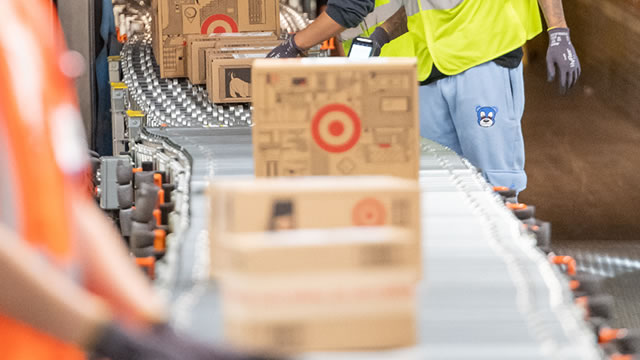
Core Insights - Walmart has opened its largest centralized prescription fulfillment facility in Frederick, Maryland, with plans to add two more facilities in Phoenix, Arizona, and Republic, Missouri, by 2026 [1][4] - The Maryland facility spans 102,000 square feet and is designed to support over 700 Walmart pharmacies across 16 states and Washington, D.C., fulfilling up to 100,000 prescriptions daily [2] - The automation in Central Fill pharmacy locations enhances efficiency, allowing pharmacists to spend more time on clinical services, potentially increasing patient interaction time by 30% [3] Facility Details - The new Central Fill pharmacy utilizes advanced automation technologies, including dynamic weighting systems, robotic carriers, and a conveyance system for tasks such as pill counting, labeling, capping, and sorting [2] - Walmart aims for its Central Fill network to cover nearly 90% of its pharmacies by the end of 2026 [4] Health and Wellness Initiatives - Since 2014, Walmart has focused on expanding health and wellness offerings, providing over 5 million free screenings through its Wellness Days, particularly in rural and underserved communities [5] - The company has introduced a "Store of the Future" concept that includes enhanced pharmacy features and plans to roll out same-day delivery of prescription medications to 49 states by the end of 2025 [6]


Why Is Target Stock Falling, and Is It a Buying Opportunity?
The Motley Fool· 2025-05-23 12:16
Group 1 - Target reported quarterly sales declines compared to the previous year [1] - The company downgraded its outlook for the rest of 2025 [1] - Stock prices referenced were the afternoon prices of May 20, 2025 [1]

Walmart Eliminating Roles on Technology and eCommerce Fulfillment Teams
PYMNTS.com· 2025-05-22 02:02
Core Viewpoint - Walmart plans to cut 1,500 corporate jobs in its technology, eCommerce fulfillment, and advertising operations to streamline its organizational structure and enhance focus on business priorities [1][2]. Group 1: Job Cuts and Restructuring - The company is reshaping teams in Global Tech, Walmart U.S., and Walmart Connect to remove layers and complexity, aiming to speed up decision-making and foster innovation [2]. - While eliminating roles, Walmart will also create new positions aligned with its growth strategy [2]. - There may be other opportunities within Walmart for affected workers as the company modernizes its business [3]. Group 2: Financial Performance - Walmart reported a 2.5% increase in first-quarter revenues, which was below the projected growth rate of 3% to 4% [3]. - The company anticipates sales growth of 3.5% to 4.5% in the current quarter and maintains its full fiscal year sales guidance at 4% [4]. Group 3: Future Outlook - The immediate challenge for Walmart includes navigating the impact of tariffs in the U.S. [4]. - The company is preparing for a shift in consumer behavior as artificial intelligence plays a more significant role in shopping [4].
Target slashes outlook after tariffs, DEI boycotts slam sales: ‘We're not satisfied with these results'
New York Post· 2025-05-21 15:00
Core Viewpoint - Target has lowered its full-year sales forecast due to weak discretionary spending, tariff pressures, and consumer boycotts related to its DEI policies [1][5][15] Sales Performance - Comparable sales dropped 3.8% in the quarter ended May 3, exceeding Wall Street's expectations for a decline [2] - The company now expects net sales to fall by a low single-digit percentage, abandoning earlier hopes for a modest increase [1][8] Challenges Faced - CEO Brian Cornell cited several headwinds, including five consecutive months of declining consumer confidence, uncertainty regarding potential tariffs, and backlash from DEI policy updates [3][4] - Target's vulnerability is highlighted compared to competitors like Walmart, which have larger grocery operations that provide a buffer against declines in discretionary spending [6] Internal Strain and Leadership Changes - Signs of internal strain are evident, with a leadership shakeup announced, including the departure of longtime executive Christina Hennington [10] - Chief Operating Officer Michael Fiddelke will lead a new "multiyear acceleration office" aimed at reigniting growth [10] Consumer Backlash and Boycotts - Target has faced boycotts from both conservative and liberal groups due to its handling of diversity initiatives and LGBTQ-themed products [11][12] - The backlash resulted in a 40-day consumer boycott beginning in March and a class-action lawsuit alleging misleading information about financial risks associated with DEI policies [15] Tariff Impact - Tariffs are compounding Target's challenges, influencing pricing strategies, although executives avoided directly blaming tariffs [15][16] - The company is negotiating with suppliers and adjusting sourcing strategies to mitigate tariff impacts [16] Future Strategies - Despite setbacks, Target is focusing on value-driven seasonal events and partnerships to rekindle consumer interest [18] - The company plans to introduce over 10,000 new items this summer, with prices starting as low as $1, aiming to win everyday consumer moments [19]
Target(TGT) - 2026 Q1 - Earnings Call Presentation
2025-05-21 14:21
Target Q1 2025 Results Comparable Sales -3.8% Digital Comparable Sales +4.7% Stores Comparable Sales -5.7% GAAP EPS $2.27 In Q1, our team navigated a challenging environment that impacted performance, and we remained focused on delivering what we know resonates with consumers: an outstanding assortment, experience and value. Adjusted EPS* $1.30 We're focused on maintaining the health of our core business as we navigate the balance of 2025 and accelerating our was driven by 5% growth in same-day services. Sa ...
Target Warns Of Lower Sales In 2025—Blaming Tariffs And DEI Rollback Backlash
Forbes· 2025-05-21 14:10
Core Insights - Target reported first-quarter sales of $23.85 billion, a decline of over 2.8% year-over-year, falling short of analyst expectations of $24.23 billion [2] - The company anticipates a low-single-digit decline in full-year sales and adjusted earnings per share between $7 and $9, revising previous expectations of a 1% increase and a range of $8.80 to $9.80 [3] - Executives attributed the sales decline to backlash against the company's diversity, equity, and inclusion initiatives and reduced consumer spending due to tariff uncertainties [4] Sales Performance - First-quarter sales decreased to $23.85 billion, down from the previous year, indicating a significant drop in consumer spending [2] - The company's stock fell nearly 7% to just over $91, marking a 33% decline year-to-date [4] Future Projections - Target's revised outlook includes expectations of declining sales and earnings, contrasting with earlier projections of growth [3] - The company plans to raise prices only as a last resort in response to tariffs, indicating a strategy to mitigate impacts through other means [5] Background Context - Target's diversity initiatives faced backlash after the company scaled back its long-term goals, which were initially ramped up following the 2020 police killing of George Floyd [7] - The decision to roll back these initiatives was influenced by external pressures and a desire to align with the evolving landscape [7]
Target(TGT) - 2026 Q1 - Earnings Call Transcript
2025-05-21 13:02
Financial Data and Key Metrics Changes - Q1 net sales decreased by 2.8%, with a comparable sales decline of 3.8% partially offset by new store sales and double-digit growth in non-merchandise sales [45] - First quarter GAAP EPS was $2.27, including a $0.97 benefit from litigation settlements, while adjusted EPS was $1.30 compared to $2.03 last year [45][46] - Gross margin rate for Q1 was 28.2%, about 60 basis points lower than last year, impacted by higher markdowns and digital fulfillment costs [46] Business Line Data and Key Metrics Changes - The company saw mid-single-digit growth in its first-party digital business, with a 36% increase in same-day delivery [13] - Drive Up service accounted for nearly half of total digital sales, indicating strong performance in digital channels [13] - The Kate Spade partnership was highlighted as the most successful designer collaboration in over a decade, showcasing the strength of Target's brand and product offerings [15][24] Market Data and Key Metrics Changes - Target held or gained market share in 15 out of 35 divisions tracked, with notable gains in apparel categories and seasonal merchandise [21] - The company experienced a decline in traffic of 2.4% and a decrease in average ticket size of 1.4% during Q1 [45] Company Strategy and Development Direction - The formation of an enterprise acceleration office aims to enhance adaptability, innovation, and growth within the company [10][42] - Target is focusing on maintaining price competitiveness while navigating tariff impacts, leveraging its scale and supplier relationships [11][72] - The company plans to introduce over 10,000 new items for the summer season, emphasizing affordability and value [9][28] Management's Comments on Operating Environment and Future Outlook - Management acknowledged the challenging environment, including declining consumer confidence and inflationary pressures affecting discretionary spending [8][20] - The company expects current top-line pressures to persist in the near term but remains confident in its long-term growth strategy [12][56] - Management emphasized the importance of retail fundamentals and enhancing the in-store experience to drive traffic and sales [78] Other Important Information - Target's commitment to community engagement includes donating 5% of profits and encouraging team volunteerism [17] - The company is focused on improving inventory reliability and reducing shrink, with inventory levels up 11% year-over-year [33][34] Q&A Session Summary Question: Expectations for comps and gross margin in the back half of the year - Management expects low single-digit declines for the balance of the year, with inventory adjustment costs primarily in the first half [63] Question: Clarification on shrink recovery - Management indicated that they expect to recover the majority of shrink headwinds experienced in previous years [66] Question: Strategies to offset tariff impacts - Management discussed diversifying production countries and evolving product assortments to mitigate tariff effects [72][75] Question: In-store comp trends and traffic driving tactics - Management highlighted the focus on retail fundamentals, including inventory management and enhancing the in-store experience to drive traffic [78][79]
Target(TGT) - 2026 Q1 - Earnings Call Transcript
2025-05-21 13:00
Financial Data and Key Metrics Changes - Q1 net sales decreased by 2.8%, with a comparable sales decline of 3.8% partially offset by new store sales and double-digit growth in non-merchandise sales [43] - First quarter GAAP EPS was $2.27, including a $0.97 benefit from litigation settlements, while adjusted EPS was $1.30 compared to $2.03 last year [43][44] - Gross margin rate for Q1 was 28.2%, about 60 basis points lower than last year, primarily due to higher markdowns and digital fulfillment costs [44] - Operating margin rate was 6.2%, benefiting from legal settlements [44] Business Line Data and Key Metrics Changes - The first-party digital business saw mid-single-digit growth, with same-day delivery growing by 36% [12] - Drive Up service accounted for nearly half of total digital sales, indicating strong performance in digital channels [12] - The Kate Spade partnership was highlighted as the most successful designer collaboration in over a decade, showcasing Target's strength in fashion and partnerships [22][14] Market Data and Key Metrics Changes - Target held or gained market share in 15 out of 35 divisions tracked, with notable gains in apparel categories and seasonal merchandise [20] - Consumer confidence has been declining for five consecutive months, impacting discretionary spending [6] Company Strategy and Development Direction - The company is focusing on retail fundamentals, enhancing guest experience, and offering new products at competitive prices [7][10] - An enterprise acceleration office has been formed to improve efficiency and adaptability in operations [9][40] - Target aims to navigate tariff challenges by diversifying production sources and maintaining price competitiveness [70][72] Management's Comments on Operating Environment and Future Outlook - Management expressed dissatisfaction with Q1 performance but remains confident in the long-term growth strategy [6][54] - The company anticipates continued top-line pressures in the near term but expects to navigate through challenges with a strong balance sheet and disciplined financial management [11][52] - Future focus includes enhancing digital fulfillment and maintaining inventory reliability [30][32] Other Important Information - The company plans to introduce over 10,000 new items for the summer season, with a focus on affordability [8][27] - Target Circle membership is being enhanced with no price markups on same-day delivery from multiple retailers [29][35] Q&A Session Summary Question: Expectations for comps in the back half of the year - Management expects low single-digit declines for the balance of the year, including Q4, with inventory adjustment costs primarily in the first half [60] Question: Quantification of shrink recovery - Management indicated that they expect to recover the vast majority of shrink headwinds seen in previous years [62] Question: Strategies to offset tariff impacts - Management discussed diversifying production countries and evolving product assortments to mitigate tariff impacts [70][72]
Target And Lowe's Earnings Are Out: What Shoppers Need To Know In A Changing Retail World
Forbes· 2025-05-21 12:55
Core Insights - The retail sector is facing challenges with both Target and Lowe's reporting mixed quarterly results, indicating a cautious consumer environment and potential recessionary conditions [1][2][16]. Target - Target reported earnings of $1.30 per share on revenue of $23.85 billion, missing consensus estimates of $1.62 per share and $24.54 billion in revenue, marking a 19.75% shortfall in earnings and a 2.79% decline in revenue year-over-year [2][3]. - The company revised its fiscal 2026 earnings guidance to a range of $7.00 to $9.00 per share on revenue of approximately $103.9 billion, down from previous estimates of $8.80 to $8.90 per share and $107.63 billion in revenue [4][3]. - Target's digital sales grew by 4.7%, indicating a shift towards online shopping, with plans to enhance its website and app for better customer experience [6][7]. - The company is expected to increase promotions and discounts to attract shoppers back to stores, especially online [7][8]. Lowe's - Lowe's reported earnings of $2.92 per share on revenue of $20.93 billion, slightly above consensus estimates of $2.88 per share but with a 2.03% decline in revenue year-over-year [10][12]. - The company maintains its fiscal year earnings guidance of $12.15 to $12.40 per share on revenue between $83.50 billion and $84.50 billion, aligning closely with current consensus estimates [11][10]. - Lowe's is experiencing a shift in customer focus towards smaller repairs rather than large renovation projects due to higher borrowing costs and a slowing housing market [12][16]. - The company is enhancing its service quality and training for employees, aiming to improve the shopping experience for both retail and professional customers [14][15]. Industry Trends - Retailers are grappling with tariffs, cautious consumer spending due to high prices and interest rates, and a significant shift towards online shopping [16][17]. - Economic uncertainty is leading to a more cautious approach from both companies and consumers regarding spending and hiring [18]. - Retailers are expected to invest in technology and improve online shopping experiences, which may include better apps and faster delivery options [20][23]. - Promotions and loyalty programs are likely to increase as companies seek to stimulate consumer spending during potential recessionary periods [21][24].