海军

Search documents
中国双航母编队首提“互为对手实战对抗”,解读来了!
Huan Qiu Wang· 2025-06-30 15:40
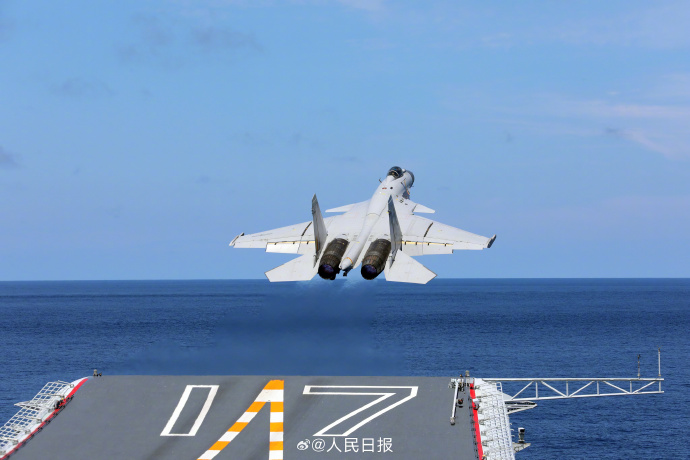
Core Viewpoint - The recent training exercise involving the Liaoning and Shandong aircraft carrier groups demonstrates China's enhanced capabilities in maritime defense and operational readiness, showcasing their ability to conduct realistic combat training in distant waters [1][3][6]. Group 1: Training Details - The Liaoning and Shandong carrier groups completed a comprehensive training mission in the Yellow Sea, East China Sea, South China Sea, and the Western Pacific, marking a significant expansion of their operational range [1][6]. - The training included various military exercises such as reconnaissance, anti-strike, maritime assault, air defense, and tactical flight operations of carrier-based aircraft, indicating a focus on joint operational capabilities [3][4]. Group 2: Strategic Implications - The exercise involved the two carrier groups potentially acting as opposing forces, which reflects a shift towards more sophisticated joint combat training and operational integration with other military branches [3][4]. - The movement of the carrier groups into the Western Pacific signifies a strategic advancement, extending China's defense perimeter and enhancing its ability to project power beyond its immediate coastal waters [6]. Group 3: Operational Readiness - The carrier groups maintained a high state of alert during the training, responding to foreign reconnaissance and monitoring activities, which underscores their readiness to engage in potential conflicts [4][5]. - The training serves to validate the operational independence of the carrier groups as a combat unit capable of addressing various threats, including those posed by foreign naval forces [4].

“中国双航母首出太平洋”,外媒解读
Huan Qiu Shi Bao· 2025-06-12 11:11
Core Viewpoint - The simultaneous deployment of China's aircraft carriers Liaoning and Shandong in the Western Pacific is seen as a significant challenge to U.S. naval dominance in the region, prompting calls for the U.S. Navy to enhance its response capabilities [6][8][10]. Summary by Sections Chinese Naval Activities - China's aircraft carrier fleet, including Liaoning and Shandong, recently conducted training exercises in the Western Pacific, marking the first time both carriers have been reported operating simultaneously in this area [6][9]. - The Liaoning was reported to be operating near Japan's Nanyo Island on June 7, with a large escort fleet including various destroyers and supply ships [6][7]. - The Shandong was tracked approximately 550 kilometers southeast of Miyako Island, also conducting flight operations [7]. International Reactions - Japan's Self-Defense Forces have been closely monitoring the movements of the Chinese carriers, with reports highlighting the need for Japan to enhance its defense capabilities in response to China's growing naval presence [7][10]. - U.S. media outlets have speculated that China's naval exercises could be aimed at demonstrating its ability to counter U.S. forces in the event of a crisis, particularly concerning Taiwan [9][10]. Strategic Implications - The presence of both Chinese carriers in the Pacific is interpreted as a demonstration of China's expanding operational reach, potentially threatening U.S. interests from the Ogasawara Islands to Guam [9][10]. - Analysts suggest that the dual carrier operations signify an enhancement of China's maritime combat capabilities, indicating a shift in the balance of naval power in the region [12]. U.S. Naval Readiness - Reports indicate that the U.S. Navy's current carrier presence in the region is limited, with only the aging USS Nimitz and USS Washington available, raising concerns about the U.S. ability to respond effectively to Chinese naval maneuvers [10][11][12]. - The USS Washington has been largely inactive since its arrival in Japan, highlighting potential gaps in U.S. naval readiness in the face of increasing Chinese maritime activities [11].

炒作渲染现场画面!日方监视追踪中方舰机,反抱怨山东舰舰载机“异常接近”
Huan Qiu Wang· 2025-06-12 00:32
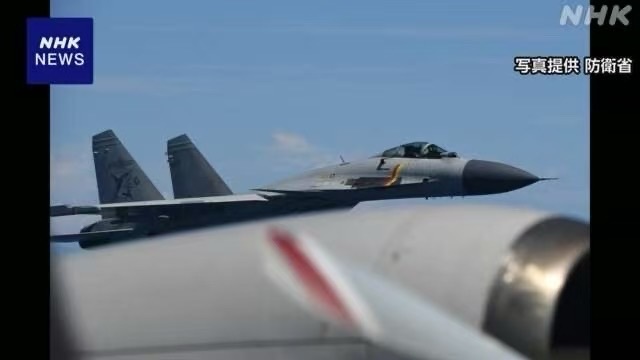
Group 1 - The Japanese Ministry of Defense expressed serious concerns over the close encounters between Chinese aircraft and Japanese surveillance planes, indicating potential risks of misjudgment and conflict [1][3] - Japanese Self-Defense Forces reported that on July 7 and 8, their P-3C patrol aircraft were closely tracked by Chinese J-15 fighter jets, with distances as close as approximately 45 meters for durations of 40 and 80 minutes respectively [3] - The Chinese Ministry of Defense criticized Japan's close monitoring as dangerous and urged Japan to cease what it termed as unnecessary interference that could harm bilateral relations and regional stability [3][4] Group 2 - Chinese naval operations involving the Liaoning and Shandong aircraft carriers in the Western Pacific are routine training exercises aimed at enhancing defense capabilities, conducted in accordance with international law [3][4] - The Chinese government maintains a defensive military policy and encourages Japan to adopt a more objective and rational perspective regarding China's naval activities [4]
曝光:美驻日航母行动了icon_voice_onicon_voice
Huan Qiu Shi Bao· 2025-06-10 15:26
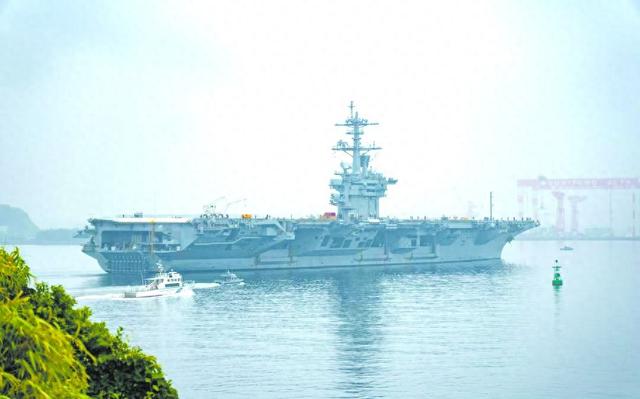
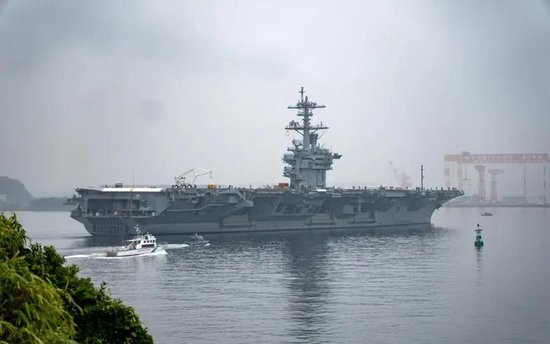
Core Viewpoint - The USS Washington aircraft carrier has quietly departed from Tokyo Bay for its first mission since returning to Japan last year, coinciding with increased activities of the Chinese navy in the region [1][3][4]. Group 1: USS Washington Departure - The USS Washington left Tokyo Bay on June 10, marking its first operational deployment since returning to the Yokosuka base on November 22 of the previous year [1][3]. - The departure was low-key, with only about 20 people present to see the ship off [1]. - Prior to this deployment, the USS Washington conducted brief sea trials from May 25 to June 4 [1]. Group 2: Context of Chinese Naval Activities - The departure of the USS Washington coincided with increased activities of the Chinese navy, with reports indicating that both the Liaoning and Shandong aircraft carriers were simultaneously active in the Pacific [4]. - The Japanese Ministry of Defense has been monitoring the movements of Chinese vessels in the area [4]. - A Chinese naval spokesperson stated that the recent exercises involving the Liaoning and Shandong were routine training aimed at enhancing operational capabilities, conducted in accordance with international law [4].
中美局势可能发生大反转,最先超过美国的不是经济,而是这个方面
Sou Hu Cai Jing· 2025-05-28 12:36
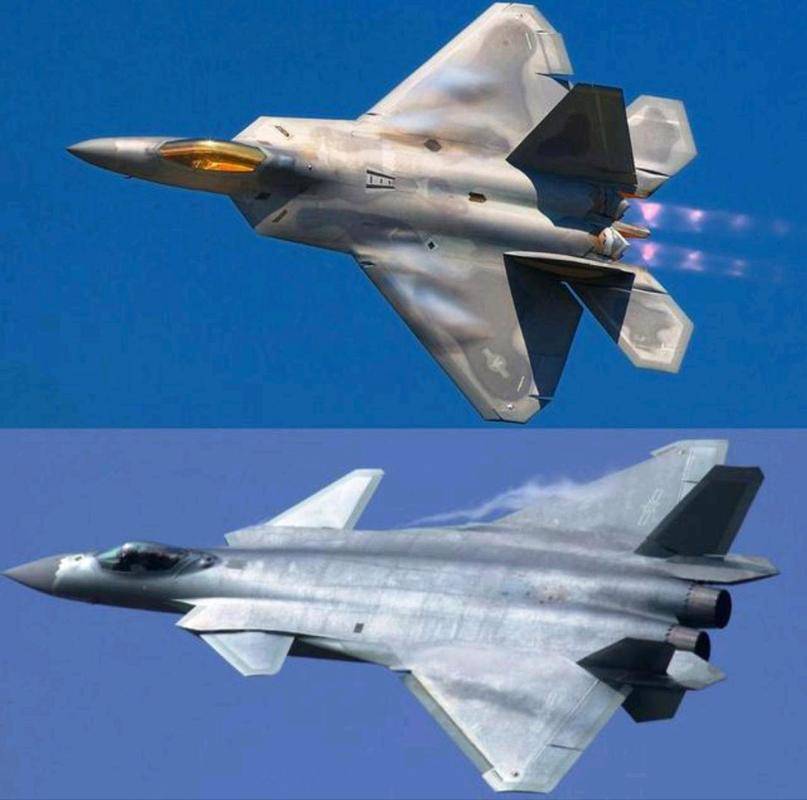
Economic Overview - China's economic share of US GDP has decreased from nearly 80% to over 60%, indicating challenges in surpassing the US in total economic size [1] - The US has maintained an average economic growth rate of over 2% in recent years, with GDP increasing from $20 trillion in 2018 to $27.72 trillion in 2023 [3] - Factors such as the US-China trade war and Federal Reserve interest rate hikes have negatively impacted China's economy, leading to a depreciation of the RMB and widening the nominal GDP gap with the US [5] Military Comparison - The Chinese military has completed reforms and now possesses several advanced heavy and medium combined brigades, while the US Army has fewer combined units due to a focus on counterinsurgency warfare [7] - In naval capabilities, while the US Navy has an advantage in nuclear-powered aircraft carriers, China's naval advancements, such as the Fujian aircraft carrier with electromagnetic catapults, show significant progress [9][10] - China's naval fleet is expanding rapidly, with the potential to surpass the US in numbers, as the US's Nimitz-class carriers approach retirement [12] - In the air force sector, China's J-20 is in large-scale production, while the US's F-22 production has ceased, indicating a potential shift in air superiority [12]