Sportswear

Search documents
Puma shares surge 20% after Anta Sports buys stake for $1.8 billion
CNBC· 2026-01-27 08:07
Core Viewpoint - Anta Sports is acquiring a 29% stake in Puma for 1.5 billion euros ($1.78 billion), positioning itself as the largest shareholder in the German sportswear company, amidst Puma's struggles to revive sales and implement a business overhaul [1][2]. Group 1: Acquisition Details - Anta will pay 35 euros per share to acquire a 29.06% stake in Puma [1]. - The valuation of 1.5 billion euros is considered "reasonable" compared to peer multiples in the sportswear sector, especially given Puma's current loss-making status [2]. Group 2: Strategic Implications - The acquisition allows Anta to buy a brand with a strong heritage and historically successful products at a distressed valuation, enhancing its global footprint [3]. - By leveraging Puma's brand, Anta aims to diversify into new product categories and markets where it lacks a strong presence [3]. Group 3: Market Positioning - Anta has a history of expanding globally through acquisitions, such as the 2019 purchase of Amer Sports, which includes brands like Wilson and Arc'teryx [4]. - Puma's strengths in Europe and Latin America, combined with its weaknesses in China and North America, present minimal overlap and maximum synergy potential for Anta [5]. - The acquisition is expected to enhance Anta's presence and brand recognition in the global sporting goods market [5].


安踏体育:对收购彪马的看法-利空或已充分反映在股价中
2026-01-27 03:13
Flash | 26 Jan 2026 21:22:59 ET │ 11 pages Anta Sports Products (2020.HK) Our thoughts on Puma acquisition; All negatives likely priced in CITI'S TAKE This morning (Jan 27), Anta announced its acquisition of a 29% stake in Puma from the Pinault family's Artemis Holdings with a total consideration of EUR1.5bn, or EUR35/share (rep. ~0.7x 25E P/S, based on VA consensus). Post deal close, Anta will become the largest shareholder of Puma. Per mgt on the conf call, Anta has no plan of privatizing Puma at this sta ...

Nike Lays Off 775 Workers As It Boosts Use Of Automation
Www.Ndtvprofit.Com· 2026-01-27 01:11
Group 1 - Nike Inc. is laying off approximately 775 workers at distribution centers as part of its integration of automation into operations [1] - The layoffs will primarily affect workers in Tennessee and Mississippi due to the consolidation of operations at US distribution centers [1] - The company is accelerating the use of advanced technology and automation while investing in team skills for future needs [2] Group 2 - Nike aims to reduce complexity, improve flexibility, and build a more responsive, resilient, responsible, and efficient operation [2] - The company is focused on returning to long-term, profitable growth following operational missteps and increased competition, particularly in the running shoes segment [3] - Management has indicated that turnaround efforts are still in the early stages despite some progress under CEO Elliott Hill [3]


X @Bloomberg
Bloomberg· 2026-01-27 00:03
Nike is laying off about 775 workers at distribution centers as the sportswear company integrates automation into its operations, according to a source https://t.co/m8wO1uMLqU ...
中国消费行业:2026 年 GCC 会议要点 -估值仍具吸引力,消费复苏迹象显现-China Consumer Sector_ 2026 GCC takeaways_ Sector valuation remains attractive with signs of consumption recovery
2026-01-26 02:50
Summary of Key Points from the Conference Call Industry Overview - **Sector**: China Consumer Sector - **Key Insights**: The sector shows signs of consumption recovery despite a near-term property market downturn. Valuation remains attractive, approximately 1 standard deviation below 10-year averages, indicating that a consumption recovery is not yet priced in [2][21]. Consumer Staples - **Baijiu**: Anticipated demand support for mid-end baijiu due to easing alcohol bans and private consumption growth. Companies are expected to accelerate channel transformations for sustainable EPS growth [3][8]. - **Beer**: Premiumization continues through product diversification and in-home channel expansion, despite on-trade softness. CR Beer expects low-single-digit volume growth in 2025, with Heineken volumes projected to grow by 20% YoY [3][8]. - **Dairy**: Liquid milk sales are expected to recover modestly in 2026, driven by marketing and innovation, despite a weak 2025. Fresh milk shows resilience with double-digit growth [3][8]. - **Freshly-Made Beverages (FMB)**: Guming is expected to maintain steady SSSG in 2026 through category expansion and dine-in growth, despite the phase-out of delivery subsidies [3][8][19]. - **Condiments**: Sequentially improving demand is expected, with Haitian focusing on multi-product categories and Jonjee anticipating a cleaner 2026 after a weak 4Q25 [3][8]. Consumer Discretionary - **Home Appliances**: Companies like Midea and Haier expect higher overseas growth compared to domestic markets in 2026. Strategies include price hikes and operational efficiencies [4][10]. - **Jewelry**: Brands with unique designs may consolidate post-VAT reform. Laopu is expected to achieve strong sales growth due to increased focus on value-added services [4][10]. - **Restaurants**: Intense competition leads to divergent strategies, with some companies lowering prices while others upgrade offerings. DPC Dash is on track for expansion despite market uncertainties [4][10]. Stock Implications - **Most Preferred Stocks**: CR Beer, Guming, MIXUE, China Foods, YUM China, among others, are highlighted as preferred investments due to their growth potential [5]. - **Least Preferred Stocks**: Companies like Swellfun, Nongfu, and Gree are noted as less favorable due to various challenges [5]. Key Risks - Risks include demand recovery uncertainties, cost inflation or deflation, and changes in the competitive landscape. These factors could significantly impact the consumer sector's performance [21]. Additional Insights - **Pet Food**: The industry is shifting towards online sales, with over 85% of sales occurring digitally. Competition is intensifying, pushing brands towards innovation and product differentiation [13]. - **Snack Sector**: Rapid category diversification and channel restructuring are creating growth opportunities, particularly through snack discounters [9][12]. This summary encapsulates the essential insights and projections from the conference call, providing a comprehensive overview of the current state and future outlook of the China consumer sector.





Best Stock to Buy Right Now: Sirius XM vs. Nike
The Motley Fool· 2026-01-24 17:15
Sirius XM - Sirius XM is currently facing challenges with a declining paid subscriber base and a year-over-year revenue decrease in Q3 2025, attributed to competition from popular streaming services [4] - The stock is trading at a low forward price-to-earnings ratio of 6.7, reflecting a significant 66% decline in stock price over the past five years [3] - Despite these challenges, Sirius XM has a strong business model focused on recurring subscription sales, with projected free cash flow growth of 22% from 2025 to 2027 and a dividend yield of 5.36% [5] Nike - Nike, a leader in the sportswear market, is undergoing a difficult turnaround, struggling with product innovation and recalibrating its distribution strategy [6][7] - The company reported a modest 1% sales increase in Q2 of fiscal 2026, alongside a concerning 32% decline in net income [8] - Despite current challenges, Nike's strong brand presence and strategic plans position it favorably for long-term success, making it a more attractive investment compared to Sirius XM [9]

中国运动服饰2026年展望:户外市场成熟但专业品牌势头不减
伯恩斯坦· 2026-01-20 01:25
Investment Rating - The report assigns an "Outperform" rating to Amer Sports with a target price of $46, indicating a 22% upside potential. Anta Sports is rated "Market-Perform" with a target price of HKD 89, suggesting an 8% upside. Li Ning is rated "Underperform" with a target price of HKD 17, indicating a 16% downside potential [6][7]. Core Insights - China's sportswear market is transitioning from high-growth expansion to mature growth, with total market growth moderating to approximately 6% CAGR through 2030E. The outdoor segment is expected to maintain a structural outperformance at around 12% CAGR [1][10]. - The market is shifting from "land-grab" growth to share reallocation and premiumization, with success increasingly reliant on brand differentiation, technical innovation, and channel efficiency [1][19]. - Technical specialists are gaining market share within the outdoor category, with brands like Arc'teryx projected to increase their share from approximately 7% in 2019 to around 20% by 2025E [3][23]. Market Dynamics - The outdoor segment is now the largest category, with growth moderating to +12% YoY from a previous CAGR of 29% (2021–2025E). Apparel is leading category performance at +18% YoY, while sneakers grew +14% YoY [2][13]. - The sportswear market is expected to normalize to mid-single-digit growth through 2030E, structurally outperforming broader retail by approximately 2 percentage points annually [11][21]. - The exercising population in China is projected to reach 630 million by 2035E, supporting long-term structural demand for sportswear [11][37]. Competitive Landscape - Market share is fragmenting away from generalists toward specialized brands, with Anta maintaining approximately 21% share and Li Ning around 9% by 2030E. The "Others" category is expected to decline significantly [15][51]. - Premium brands are forecasted to hold a stable share of around 54% through 2030E, while mass brands will remain at approximately 46% [12][48]. - Brand performance is highly polarized, with technical specialists like Arc'teryx and Salomon capturing significant growth, while many established brands stagnate or decline [4][16]. Brand Performance - Top performers in 2025 include Arc'teryx (+167%), Salomon (+150%), and Descente (+84%), while established brands like Li Ning and Nike are underperforming with growth rates below the market average [4][17]. - The report highlights that premium positioning alone is insufficient for success; continuous innovation and strong local relevance are critical [18][30]. Outlook and Implications - The sector is expected to shift from category expansion to share reallocation, with winners being those who can defend premium positioning and expand into adjacent categories [19][25]. - The outdoor segment is projected to continue outpacing overall sportswear growth, with a forecasted CAGR of approximately 13% from 2025 to 2030E [22][26].

On Holding AG (NYSE:ONON) Sees Optimistic Price Target from Goldman Sachs
Financial Modeling Prep· 2026-01-20 01:00
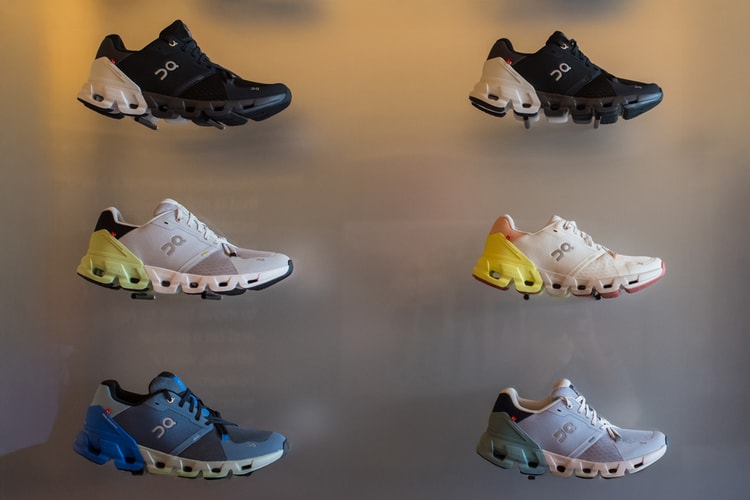
Company Overview - On Holding AG (NYSE:ONON) is a Swiss company recognized for its innovative sportswear, particularly its running shoes featuring CloudTec technology, which offers a cushioned yet responsive running experience [1] Market Performance - Goldman Sachs has set a price target of $59 for ONON, indicating a potential increase of about 31% from its current price of $45.05 [2][6] - The stock has recently declined by 2.07%, underperforming broader market indices such as the S&P 500, Dow, and Nasdaq [2][6] - Over the past month, ONON's stock has decreased by 5.08%, while the Retail-Wholesale sector gained 5.39% and the S&P 500 increased by 1.99% [3] Earnings Expectations - The investment community is anticipating On Holding's earnings per share (EPS) to be $0.26, which would represent a 31.58% decrease from the same quarter last year [3] - Despite the expected drop in EPS, revenue is projected to rise by 29.41% to $894.52 million compared to the same quarter last year, indicating strong demand for the company's products [4] Trading Activity - Today's trading volume for ONON is 3,898,642 shares, with the stock trading between a low of $44.99 and a high of $46.21 [5] - Over the past year, ONON has experienced significant volatility, reaching a high of $64.05 and a low of $34.38 [5]


Trump’s latest E.U. tariff threats may spur more investors away from the ‘buy America’ trade, analysts say
Yahoo Finance· 2026-01-19 17:23
Market Overview - U.S. stock futures indicate a potential selloff as the Stoxx Europe 600 index fell by 1.2%, particularly affecting export-sensitive stocks [1] - Investors are increasingly turning to gold and silver amid market uncertainties [1] Automotive Sector - Shares of German automakers Mercedes-Benz and Volkswagen declined by over 2%, while Daimler Truck Holding's stock fell approximately 3% [2] - French luxury brand LVMH and German sportswear company Adidas both saw declines of around 4% [2] Defense Sector - Defense stocks have shown resilience, with Saab shares rising over 4%, and Rheinmetall and BAE Systems increasing by 3% and over 1% respectively [3] - The European defense sector has attracted significant investment due to ongoing geopolitical tensions, with Saab shares up 36% in January and a remarkable 248% increase over the past year [4] Analyst Insights - Morgan Stanley analysts maintain an overweight position on the European defense sector, citing the need for enhanced security and strategic autonomy in light of recent tariff threats [5] - Analysts predict limited tactical downside for EU equities and expect continued diversification flows into the region [6] Currency and Tariff Developments - The euro has appreciated by 0.4% against the dollar, which has struggled since early 2025 [7] - President Trump's announcement of a 10% import tariff on several European countries starting February 1, escalating to 25% by June 1, has raised concerns [7] - The E.U. is contemplating a $93 billion tariff package on U.S. goods, with France advocating for the activation of the Anti Coercion Instrument to counter U.S. economic pressure [8]
Can Nike Stock Reach $100 in 2026?
The Motley Fool· 2026-01-19 05:00
Core Viewpoint - Nike is facing significant challenges but investors are hopeful for a turnaround, aiming for the stock to reach $100 by 2026, a level not seen since March 2024 [1][2] Financial Performance - Nike reported $46.3 billion in revenue for fiscal 2025, a decline of 10% from the previous year, with net income dropping 44% [4] - Earnings per share are projected to fall 28% in fiscal 2026, which is expected to hinder stock price recovery [7] Market Expectations - Current stock price is $64.43, which is 64% below its all-time high of November 2021, indicating low investor enthusiasm [2][7] - The price-to-sales ratio is currently at 2, significantly lower than the 10-year average of 3.5, reflecting subdued market expectations [3] Strategic Initiatives - Nike is focusing on right-sizing its Classics business, enhancing the digital experience, diversifying its product portfolio, and strengthening consumer and partner relationships [6]