Autonomous Driving

Search documents
Pony Ai(PONY) - 2025 Q2 - Earnings Call Transcript
2025-08-12 13:02
Financial Data and Key Metrics Changes - Total revenues for Q2 reached $21.5 million, a 76% increase year over year, driven by strong growth in robotaxi services and licensing applications [39][41] - Robotaxi service revenues grew to $1.5 million, reflecting a 158% year over year increase, with fare charging revenues expanding by over 300% [39][40] - Gross margin improved to 16.1%, with gross profit of $3.5 million in Q2 [42] - Net loss for Q2 was $53.3 million, up from $30.9 million in the same period last year [44] Business Line Data and Key Metrics Changes - Robotaxi service revenues surged by 150% year over year, with fare charging revenues growing more than 300% [15][39] - Licensing and application revenues reached $10.4 million, a 902% increase year over year [41] - Global truck services revenue decreased by 10% year over year [41] Market Data and Key Metrics Changes - Registered users surged by 136% year over year in Q2, with a user satisfaction rate above 4.8 out of 5 [8][17] - The company operates across 2,000 square kilometers in Tier one cities in China, significantly expanding its market reach [56] Company Strategy and Development Direction - The company aims for mass production of Gen seven robotaxis, targeting over 1,000 vehicles by year-end 2025 [7][23] - A strategic partnership with Hehu Group aims to deploy over 1,000 robotaxis in Shenzhen [16] - The focus is on scaling up operations and enhancing user experience to drive higher demand [23][56] Management's Comments on Operating Environment and Future Outlook - Management expressed confidence in achieving positive unit economics for Gen seven vehicles, citing significant cost reductions and operational efficiencies [51] - The company is well-positioned for large-scale commercialization, with a solid plan and execution strategy in place [45][36] Other Important Information - The company has secured Shanghai's first fully driverless commercial license, enabling operations in all four Tier one cities [18][32] - The bond cost of Gen seven robotaxis has been reduced by 70% compared to previous generations [51] Q&A Session Summary Question: Production plan throughout 2025 - Management confirmed they are on track to exceed 1,000 robotaxi vehicles by year-end, with over 200 already produced [47][49] Question: Key drivers behind robotaxi revenue growth - Management highlighted user adoption, demand in Tier one cities, and an increased fleet as key drivers of revenue growth [55][56] Question: Impact of government comments on L4 robotaxi industry - Management noted that recent comments clarify the distinction between L2 and L4 systems, which is beneficial for public understanding and safety standards [60][62] Question: Key technical requirements for new market expansion - Management emphasized the ability to handle corner cases and the robustness of their software system as critical for entering new geographies [66][68] Question: Timetable for potential Hong Kong IPO - Management refrained from commenting on market speculation but stated they are monitoring market conditions closely [73][74] Question: Future plans for overseas market expansion - Management outlined a focus on markets with strong mobility demand and supportive regulatory environments, with ongoing operations in Dubai, South Korea, and Luxembourg [78][80]
Pony Ai(PONY) - 2025 Q2 - Earnings Call Presentation
2025-08-12 12:00
Key Highlights & Growth - Pony AI produced over 200 Gen-7 vehicles as of August 11, 2025 [7] - The company aims to produce over 1,000 vehicles by the end of 2025 [7, 22] - Registered user growth increased by 136% year-over-year from 2Q24 to 2Q25 [7, 32] - Total revenue grew by 76% in 2Q25 [7] - Fare-charging revenue experienced a growth of over 300% in 2Q25 [7, 35, 70] Commercialization & Operations - Pony AI is the only company with fully driverless commercial licenses in all four Tier-1 cities in China (Beijing, Shanghai, Guangzhou, Shenzhen) [20, 31] - Robotaxis receive approximately 15 average daily orders [20] - Accumulated autonomous driving kilometers reached 488 million+ as of June 30, 2025 [36] - Accumulated autonomous driverless kilometers reached 87 million+ as of June 30, 2025 [36] Financial Performance - Robotaxi services revenue increased by 1578% from $06 million in 2Q24 to $15 million in 2Q25 [65] - Total revenue increased by 9018% from $122 million in 2Q24 to $104 million in 2Q25 [69]
端到端盛行的当下,轨迹预测这个方向还有研究价值吗?
自动驾驶之心· 2025-08-12 08:05
Core Viewpoint - The article discusses the ongoing relevance of trajectory prediction in the context of end-to-end models, highlighting that many companies still utilize layered approaches where trajectory prediction remains a key algorithmic focus. The article emphasizes the significance of multi-agent trajectory prediction methods based on diffusion models, which are gaining traction in various applications such as autonomous driving and intelligent monitoring [1][2]. Group 1: Trajectory Prediction Research - Despite the rise of end-to-end models, trajectory prediction continues to be a hot research area, with significant output in conferences and journals [1]. - Multi-agent trajectory prediction aims to forecast future movements based on historical trajectories of multiple interacting agents, which is crucial in fields like autonomous driving and robotics [1]. - Traditional methods often struggle with the uncertainty and multimodality of human behavior, while generative models like GANs and CVAEs, although capable of simulating multimodal distributions, lack efficiency [1]. Group 2: Diffusion Models - Diffusion models have emerged as a new class of models that achieve complex distribution generation through gradual denoising, showing significant breakthroughs in image generation and other fields [2]. - The Leapfrog Diffusion Model (LED) enhances real-time prediction by reducing denoising steps, achieving a 19-30 times speedup while improving accuracy on various datasets [2]. - Mixed Gaussian Flow (MGF) and Pattern Memory-based Diffusion Model (MPMNet) are also highlighted for their advanced performance in trajectory prediction by better matching multimodal distributions and utilizing human motion patterns, respectively [2]. Group 3: Course Objectives and Structure - The course aims to provide a systematic understanding of trajectory prediction and diffusion models, helping students integrate theoretical knowledge with practical coding skills [6]. - It addresses common challenges faced by students, such as lack of direction and difficulties in reproducing research papers, by offering a structured approach to model development and academic writing [6]. - The course includes a comprehensive curriculum that covers classic and cutting-edge papers, coding implementations, and writing methodologies, ultimately guiding students to produce a draft of a research paper [6][9]. Group 4: Target Audience and Requirements - The course is designed for graduate students and professionals in trajectory prediction and autonomous driving, aiming to enhance their research capabilities and resume value [8]. - Participants are expected to have a foundational understanding of deep learning and familiarity with Python and PyTorch [10]. - The course emphasizes the importance of academic integrity and active participation, with specific requirements for attendance and assignment completion [15]. Group 5: Course Highlights and Outcomes - The program features a "2+1" teaching model with experienced instructors providing comprehensive support throughout the learning process [16][17]. - Students will gain access to datasets, baseline codes, and essential papers, facilitating a deeper understanding of the subject matter [20][21]. - Upon completion, students will have produced a research paper draft, a project completion certificate, and potentially a recommendation letter based on their performance [19].

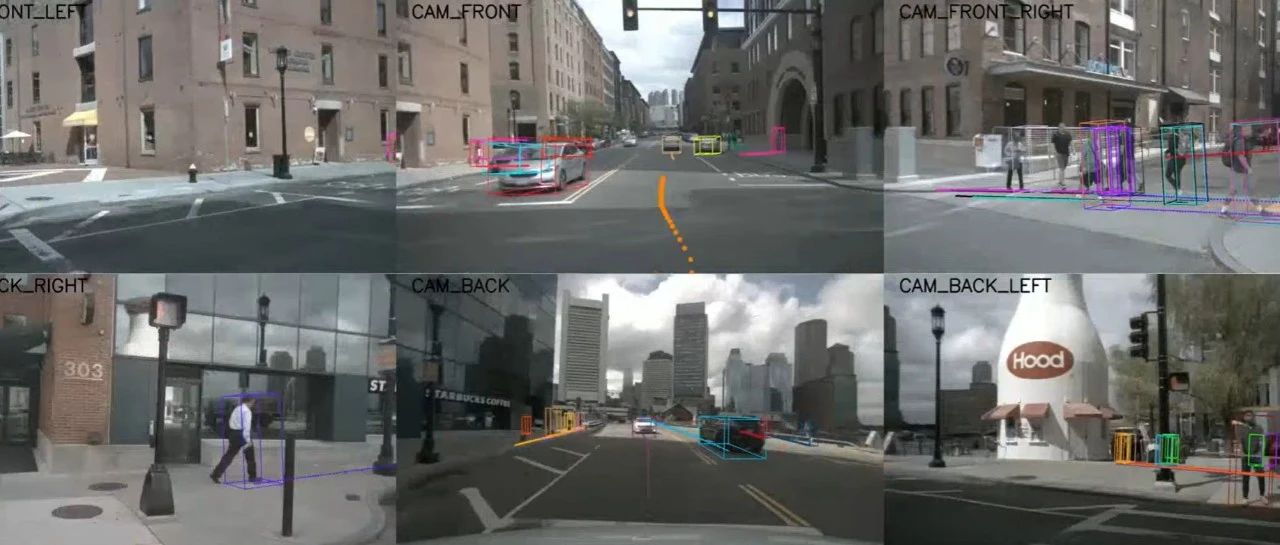
自动驾驶论文速递 | 端到端、分割、轨迹规划、仿真等~
自动驾驶之心· 2025-08-09 13:26
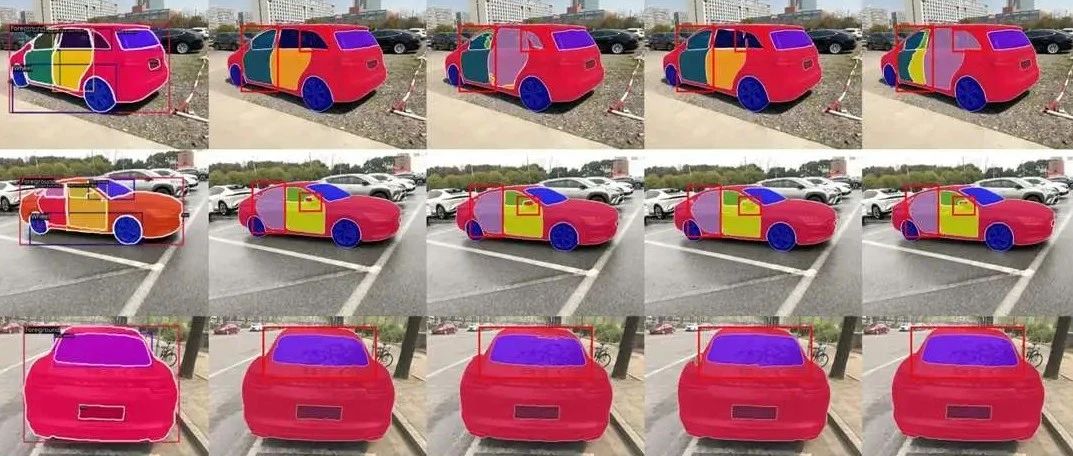
Core Insights - The article discusses advancements in autonomous driving technologies, highlighting various frameworks and their contributions to improving safety, efficiency, and robustness in real-world scenarios. Group 1: DRIVE Framework - The DRIVE framework proposed by Stanford University and Microsoft integrates dynamic rule inference and verified evaluation for constraint-aware autonomous driving, achieving a 0.0% soft constraint violation rate and enhancing trajectory smoothness and generalization capabilities [2][6]. Group 2: Hybrid Learning-Optimization Framework - A hybrid learning-optimization trajectory planning framework developed by Beijing Jiaotong University and Hainan University achieves a 97% success rate and real-time planning performance of 54 milliseconds in highway scenarios [11][12]. Group 3: RoboTron-Sim - The RoboTron-Sim framework, developed by Meituan and Sun Yat-sen University, enhances the robustness of autonomous driving in extreme scenarios, achieving a 51.3% reduction in collision rates and a 51.5% improvement in trajectory accuracy on the nuScenes test [18][20]. Group 4: SAV Framework - The SAV framework proposed by Anhui University achieves high-precision vehicle part segmentation with an 81.23% mean Intersection over Union (mIoU) on the VehicleSeg10K dataset, surpassing previous best methods by 4.33% [34][40].
基于开源Qwen2.5-VL实现自动驾驶VLM微调
自动驾驶之心· 2025-08-08 16:04
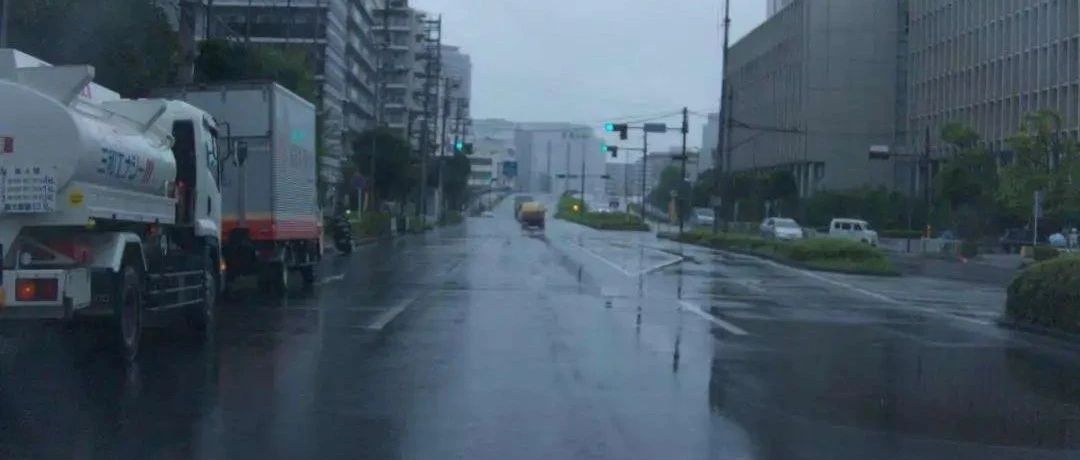
Core Viewpoint - The article discusses the advancements in autonomous driving technology, particularly focusing on the LLaMA Factory framework and the Qwen2.5-VL model, which enhance the capabilities of vision-language-action models for autonomous driving applications [4][5]. Group 1: LLaMA Factory Overview - LLaMA Factory is an open-source low-code framework for fine-tuning large models, gaining popularity in the open-source community with over 40,000 stars on GitHub [3]. - The framework integrates widely used fine-tuning techniques, making it suitable for developing autonomous driving assistants that can interpret traffic conditions through natural language [3]. Group 2: Qwen2.5-VL Model - The Qwen2.5-VL model serves as the foundational model for the project, achieving significant breakthroughs in visual recognition, object localization, document parsing, and long video understanding [4]. - It offers three model sizes, with the flagship Qwen2.5-VL-72B performing comparably to advanced models like GPT-4o and Claude 3.5 Sonnet, while smaller versions excel in resource-constrained environments [4]. Group 3: CoVLA Dataset - The CoVLA dataset, comprising 10,000 real driving scenes and over 80 hours of video, is utilized for training and evaluating vision-language-action models [5]. - This dataset surpasses existing datasets in scale and annotation richness, providing a comprehensive platform for developing safer and more reliable autonomous driving systems [5]. Group 4: Model Training and Testing - Instructions for downloading and installing LLaMA Factory and the Qwen2.5-VL model are provided, including commands for setting up the environment and testing the model [6][7]. - The article details the process of fine-tuning the model using the SwanLab tool for visual tracking of the training process, emphasizing the importance of adjusting parameters to avoid memory issues [11][17]. - After training, the fine-tuned model demonstrates improved response quality in dialogue scenarios related to autonomous driving risks compared to the original model [19].
重庆一“萝卜快跑”无人驾驶网约车载客坠入施工沟槽
Feng Huang Wang· 2025-08-07 09:30
据了解,萝卜快跑是百度Apollo自动驾驶出行服务平台。2022年6月10日,萝卜快跑正式在重庆永川区 投入运营。截至2025年3月,百度"萝卜快跑"自动驾驶出行服务平台,已在永川建立近4000多个站点, 运营面积超130平方公里。 凤凰网科技讯 8月7日,多名网友发布视频称,重庆永川区试运营的"萝卜快跑"无人驾驶网约车在行驶 中坠入市政施工沟槽。视频显示,车辆部分陷入坑内,车内女乘客在工作人员和群众帮助下脱困。截至 目前,萝卜快跑方面尚未就此事作出回应。 ...

Learning for a World That Doesn't Exist Yet | Sumit Dey | TEDxAssam University
TEDx Talks· 2025-08-06 15:46
[Music] Good evening everyone. So today I'll be talking about learning for a world that does not exist. Of course I'm coming it from the technical point of view.Today we are living in a world which is technically very dynamic. We are producing a lot of techni technological advancement and for young engineers and aspirants of engineering. Uh this can be a very challenging moment because um by the time we finish our education new industries emerge, lots of industries saturate and we need to be prepared by the ...

新势力提前批,跪了。。。
自动驾驶之心· 2025-08-06 11:25
Core Viewpoint - The article emphasizes the importance of preparing for non-technical interview questions in the autonomous driving industry, highlighting the need for candidates to articulate their interests, communication skills, and learning abilities effectively [6][10][11]. Group 1: Interview Preparation - Candidates should reflect on their interests and experiences to answer open-ended questions, as interviewers are often looking for personal insights and opinions [6][10]. - Communication skills are crucial; candidates should demonstrate their ability to engage with mentors and express their thought processes when seeking guidance [6][10]. - Learning ability is assessed through candidates' approaches to acquiring new technical knowledge, emphasizing the importance of establishing a comprehensive understanding before diving into specifics [7][10]. Group 2: Community and Resources - The "Autonomous Driving Heart Knowledge Planet" community provides a platform for technical exchange, featuring members from renowned universities and leading companies in the autonomous driving sector [23][11]. - The community offers a wealth of resources, including over 40 technical routes and numerous open-source projects, aimed at facilitating learning and career development in the autonomous driving field [11][19]. - Members can access job opportunities and industry insights, fostering a complete ecosystem for autonomous driving professionals [21][22]. Group 3: Learning and Development - The community has curated a comprehensive learning path for beginners and advanced researchers, covering various aspects of autonomous driving technology [17][19]. - Regular discussions and Q&A sessions are held to address common industry challenges and share knowledge on emerging technologies [24][87]. - The platform also features live sessions with industry experts, providing members with direct access to cutting-edge research and practical applications [86][11].

WeRide Launches 24/7 Robotaxi Testing in Beijing, Advances Towards Full-Day Service
Globenewswire· 2025-08-06 10:15
Core Viewpoint - WeRide has received approval for late-night testing of its Robotaxi in Beijing, marking a significant step towards establishing a 24/7 autonomous ride-hailing network in the city [1][6] Group 1: Testing and Technology - The approval allows testing from 10pm to 7am in the Beijing High-Level Autonomous Driving Demonstration Zone, which is crucial for developing all-weather, all-day autonomous mobility services [1][6] - WeRide's Robotaxi is equipped with over 20 sensors, including high-precision cameras and LiDARs, achieving 360-degree coverage with a detection range of up to 200 meters, ensuring stable perception and rapid decision-making in low-light conditions [3][4] - The company has conducted Robotaxi testing or operations in 10 cities across four countries, accumulating over 2,200 days of safe open-road experience [5] Group 2: Challenges and Solutions - Night-time road conditions in Beijing present challenges such as low lighting and environmental interference, which require advanced perception and decision-making capabilities [2] - WeRide addresses visibility issues with a proprietary multi-sensor fusion algorithm and a high-performance computing platform, ensuring effective sensor fusion under adverse conditions [3] - The company employs automotive-grade sensors and a smart sensor cleaning system to maintain reliable perception in extreme weather conditions [4] Group 3: Future Outlook - The launch of 24/7 Robotaxi testing in Beijing validates WeRide's technology and safety systems, enhancing public transportation availability during off-peak hours [6] - WeRide aims to leverage its full-stack autonomous driving technology to expand its ride-hailing services and contribute to smarter, more sustainable urban transportation [7] - The company is recognized as a leader in the autonomous driving industry, being the first publicly traded Robotaxi company and having received permits in six markets [9]

自动驾驶论文速递 | 扩散模型、轨迹预测、TopoLiDM、VLA等~
自动驾驶之心· 2025-08-05 03:09
Core Insights - The article discusses advancements in trajectory prediction using a generative active learning framework called GALTraj, which applies controllable diffusion models to address long-tail issues in data [1][2]. Group 1: GALTraj Framework - GALTraj is the first framework to apply generative active learning to trajectory prediction tasks, enhancing long-tail learning without modifying the model structure [2]. - The framework employs a tail-aware generation method that differentiates the diffusion guidance for tail, head, and related agents, producing realistic and diverse scenarios while preserving tail characteristics [2][3]. Group 2: Experimental Results - In experiments on WOMD and Argoverse2 datasets, GALTraj significantly improved long-tail sample prediction performance, reducing the long-tail metric FPR₅ by 47.6% (from 0.42 to 0.22) and overall prediction error minFDE₆ by 14.7% (from 0.654 to 0.558) [1][6]. - The results indicate that GALTraj outperforms traditional methods across various metrics, showcasing its effectiveness in enhancing prediction accuracy for rare scenarios [7][8]. Group 3: TopoLiDM Framework - The article also highlights the TopoLiDM framework developed by Shanghai Jiao Tong University and Twente University, which integrates topology-aware diffusion models for high-fidelity LiDAR point cloud generation [13][15]. - TopoLiDM achieved a 22.6% reduction in the Fréchet Range Image Distance (FRID) and a 9.2% reduction in Minimum Matching Distance (MMD) on the KITTI-360 dataset while maintaining a real-time generation speed of 1.68 samples per second [13][15]. Group 4: FastDriveVLA Framework - FastDriveVLA, developed by Peking University and Xiaopeng Motors, introduces a reconstruction-based visual token pruning framework that maintains 99.1% trajectory accuracy with a 50% pruning rate and reduces collision rates by 2.7% [21][22]. - The framework employs a novel adversarial foreground-background reconstruction strategy to enhance the identification of valuable tokens, achieving state-of-the-art performance on the nuScenes open-loop planning benchmark [27][28]. Group 5: PLA Framework - The article presents a unified Perception-Language-Action (PLA) framework proposed by TUM, which integrates multi-sensor fusion and GPT-4.1 enhanced visual-language-action reasoning for adaptive autonomous driving [34][35]. - The framework demonstrated a mean absolute error (MAE) of 0.39 m/s in speed prediction and an average displacement error (ADE) of 1.013 meters in trajectory tracking within urban intersection scenarios [42].