
航天运输

Search documents
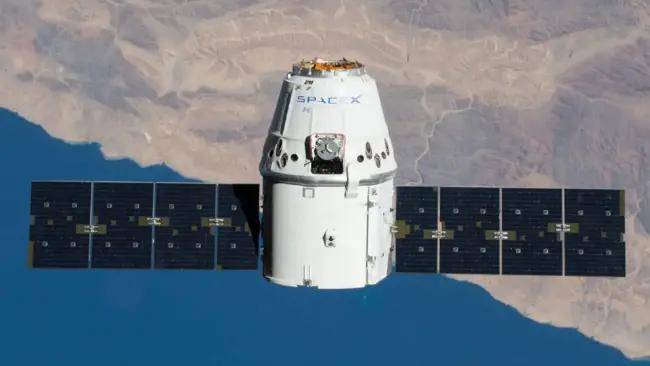
威胁“退役”“龙”飞船后,马斯克改口撤回
Sou Hu Cai Jing· 2025-06-06 04:02
Group 1 - SpaceX CEO Elon Musk threatened to retire the "Dragon" spacecraft amid escalating disputes with President Trump, but later retracted the statement [1] - The "Dragon" spacecraft is a key vehicle for transporting personnel and supplies to the International Space Station (ISS) under a multi-billion dollar contract with NASA [1] - SpaceX has conducted six private space missions using the "Dragon" spacecraft and plans to launch it again on June 10 to send four civilians to the ISS [1] Group 2 - NASA spokesperson Bethany Stevens stated that NASA will continue to execute the President's vision and maintain collaboration with industry partners [2] - The sudden retirement of the "Dragon" spacecraft would severely disrupt NASA's ISS operations, as it is currently the only viable option for sending astronauts to the ISS [2] - NASA is also dependent on the Russian Soyuz spacecraft for astronaut transportation, while Boeing's Starliner has not yet received crew certification due to a failed test flight in 2024 [2]

轻舟货运飞船总设计师接受《环球时报》采访:新型“太空快递员”亮相,计划今年首飞
Huan Qiu Wang Zi Xun· 2025-04-27 23:05
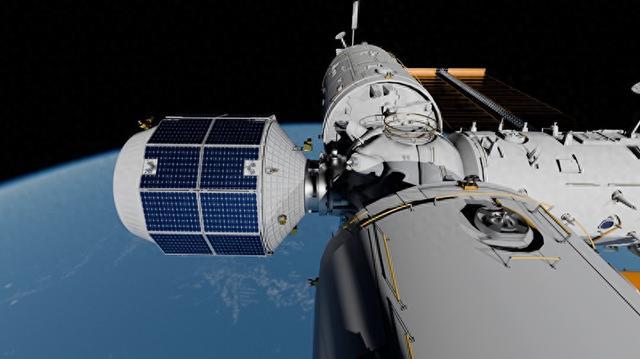
Core Viewpoint - The article highlights the debut of China's new generation "space courier" cargo spacecraft, the Light Boat, which is designed for efficient cargo transport in space and is set for its first flight this year [1][3]. Group 1: Design and Features - The Light Boat cargo spacecraft features an integrated single-cabin design, which enhances space utilization and economic efficiency by reducing the number of propulsion cabins and expanding the cargo hold [3][4]. - The spacecraft has a loading capacity of over 1.8 tons for upward transport and 2 tons for downward transport, accommodating the needs of astronauts and waste disposal [5][8]. - It incorporates multiple high-definition cameras and an intelligent voice system for real-time tracking and management of cargo, improving operational efficiency for astronauts [7][8]. Group 2: Technical Innovations - The Light Boat employs a four-layer cargo rack system with 40 compartments, designed to meet various cargo needs, including life supplies and scientific equipment [4][5]. - A unique cold chain box system allows for precise temperature control, ensuring the preservation of sensitive cargo during transport [7][8]. - The development team has achieved breakthroughs in digitalization, productization, and integration, significantly reducing production costs and improving launch efficiency [8][9]. Group 3: Commercialization and Future Plans - The Light Boat will utilize the commercial launch vehicle "Lijian-2," which has a capacity of 8-12 tons, aligning with the low-cost cargo transport system's objectives [9][10]. - The project aims to explore various commercial models, including brand partnerships and educational collaborations, to enhance economic and social benefits [10]. - The development team is leveraging its extensive experience from previous satellite missions to ensure the successful execution of the Light Boat's cargo transport tasks [10].
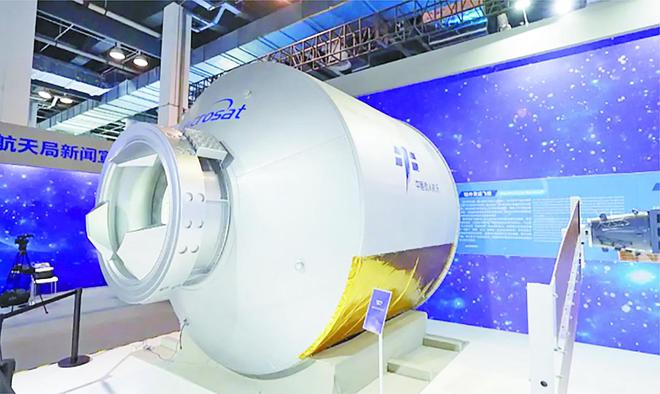
轻舟货运飞船计划今年试飞
Jie Fang Ri Bao· 2025-04-27 02:06
Core Viewpoint - The debut of the "Qingzhou" cargo spacecraft at the Shanghai Expo marks a significant advancement in China's commercial spaceflight capabilities, with plans for its first flight this year and operational readiness for cargo transport to the Chinese space station by next year [1]. Group 1: Key Features of Qingzhou - Qingzhou weighs approximately 5 tons, with an upward capacity of over 1.8 tons and a downward capacity of 2 tons [1]. - The spacecraft features an integrated single-module design that enhances space utilization, with a cargo compartment volume of 27 cubic meters and a loading capacity of about 9 cubic meters, including 40 cargo slots across four shelves [1]. - The design allows for compatibility with various rocket types, facilitating rapid launch capabilities [1]. Group 2: Cost and Efficiency - The "ship-rocket integration" design, developed in collaboration with the rocket manufacturer, reduces the launch site process to 28 days, which is 22 days faster than conventional methods, significantly lowering time costs [1]. - Qingzhou is expected to conduct 2 to 3 launches per year, primarily transporting fresh supplies and daily necessities, as well as emergency materials and waste [1]. Group 3: Cold Chain and Smart Features - A notable feature of Qingzhou is its cold chain transportation capability, which can accommodate up to 300 liters, enhancing the freshness of supplies for astronauts by increasing capacity ninefold compared to conventional cargo spacecraft [2]. - The spacecraft is equipped with intelligent systems for cargo identification, positioning, and management, allowing astronauts to quickly locate needed items through voice interaction, thereby improving efficiency and reducing operational risks [2].
轻舟总师:载人航天首次商业化任务今年试飞,希望不只是“快递小哥”
Di Yi Cai Jing· 2025-04-26 10:49
Core Viewpoint - The "Qingzhou" cargo spacecraft represents a milestone in the commercialization of manned spaceflight in China, aiming to go beyond just being a "delivery service" for space logistics [2][6]. Group 1: Introduction of Qingzhou - The Qingzhou cargo spacecraft made its debut at the 2025 "China Space Day" science exhibition, introducing commercial space concepts and technologies to enhance rapid iteration and application in the aerospace field [2]. - The initial test flight of the prototype is scheduled for this year, with the formal prototype expected to be ready for launch next year to carry out cargo transport missions for the space station [2]. Group 2: Functions and Capabilities - Qingzhou is a crucial component of China's space station logistics system, characterized by moderate capacity, rapid flexibility, and outstanding efficiency, enhancing the reliability and safety of material supply to the space station [3]. - The spacecraft can transport not only daily supplies and scientific equipment but also various experimental payloads, supporting both manned and unmanned space science experiments [5]. - Qingzhou features a compact design, weighing approximately 5 tons, with an upward capacity of over 1.8 tons and a downward capacity of 2 tons, along with a loading volume of about 9 cubic meters [4]. Group 3: Technological Innovations - The introduction of commercial space concepts in Qingzhou includes a cargo transport system that optimizes the integration of launch vehicles and spacecraft, enhancing overall system design [6]. - The design of Qingzhou allows for a high space utilization rate, which improves the economic efficiency of missions while providing a convenient operational space for astronauts [5]. Group 4: Development Background - The China Academy of Micro-Nano Satellites Innovation has previously developed complex satellites, which provides a technological foundation for the electronic systems and structural design of Qingzhou [8]. - Transitioning from satellite development to cargo spacecraft presents challenges, particularly in docking with the space station, which requires careful consideration of structural integrity and communication systems [8].
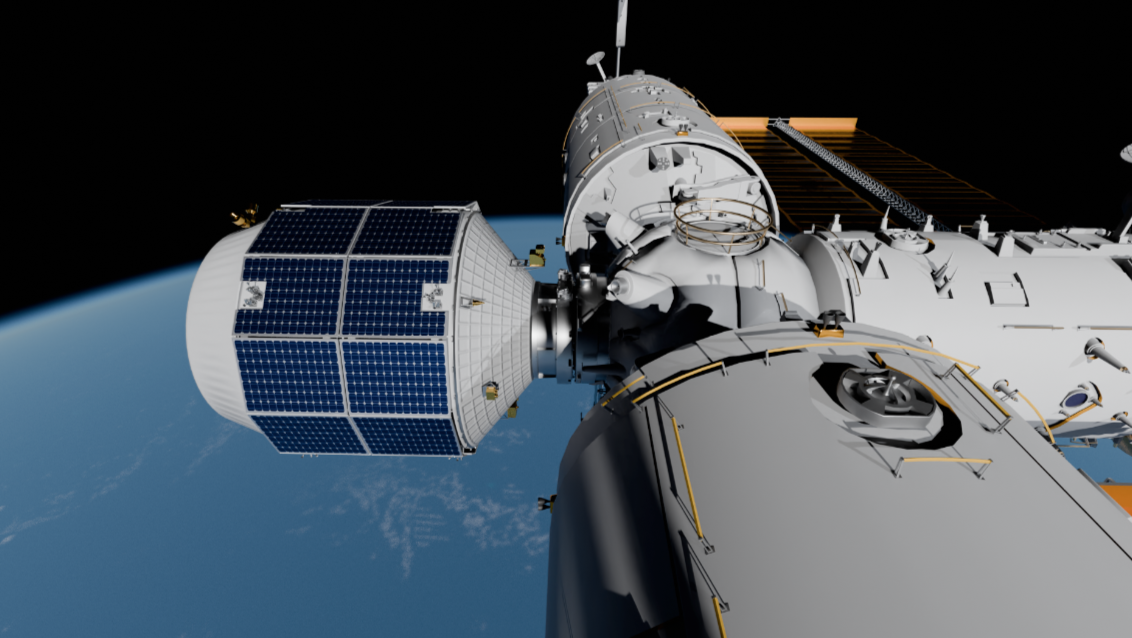
我国新一代“太空快递员”计划今年首飞
news flash· 2025-04-26 10:07
Core Viewpoint - The 2025 "China Space Day" science exhibition is being held in Shanghai, showcasing the new generation "space courier" - the Light Boat cargo spacecraft, which has garnered public interest and engagement [1] Group 1: Product Features - The Light Boat cargo spacecraft is small and lightweight, weighing approximately 5 tons [1] - It has an upward capacity of over 1.8 tons and a downward capacity of 2 tons [1] - The loading volume is about 9 cubic meters, with a cargo hold volume of 27 cubic meters, capable of carrying supplies for astronauts, scientific equipment, and payloads [1] Group 2: Design and Functionality - The spacecraft employs a four-layer shelf system with a total of 40 cargo slots [1] - Special interfaces are reserved on the shelves to accommodate specific cargo needs, ensuring it can meet upward transport requirements [1]
太空“快递小哥”轻舟亮相,将于今年首飞
Huan Qiu Wang Zi Xun· 2025-04-25 04:17
Core Viewpoint - The 2025 China Space Day Science Popularization Exhibition has officially opened in Shanghai, showcasing the debut of the "Light Boat" cargo spacecraft, which is set for its first flight this year [1][3]. Group 1: Light Boat Cargo Spacecraft Overview - The Light Boat cargo spacecraft is a crucial component of China's space station logistics system, characterized by moderate capacity, rapid flexibility, and outstanding efficiency [3]. - The spacecraft weighs approximately 5 tons, with an upward capacity exceeding 1.8 tons and a downward capacity of 2 tons. Its loading volume is about 9 cubic meters, and the cargo bay has a volume of 27 cubic meters, capable of carrying supplies for astronauts, scientific equipment, and payloads [3]. - The spacecraft features a four-layer cargo rack system with 40 cargo slots, including reserved interfaces for special cargo needs, meeting upward transport requirements [3]. Group 2: Technological Innovations and Collaborations - The Chinese Academy of Sciences' Micro-Satellite Innovation Research Institute, responsible for the development of the Light Boat, aims to drive innovation in modular spacecraft and rapid response technologies [6]. - The institute has previously developed complex projects such as the Beidou navigation satellite and dark matter particle detection satellite, providing a solid technical foundation for the Light Boat's electronics, attitude control, structural thermal design, and mission planning [6]. - In collaboration with the rocket development entity, China Aerospace Science and Technology Corporation, the institute has conducted integrated verification for the spacecraft and rocket, optimizing launch processes and simplifying testing to reduce logistics costs and enhance efficiency for the space station [8]. Group 3: Future Prospects - The first flight of the Light Boat cargo spacecraft is planned for next year, which will enhance the safety and reliability of material supply for the space station, particularly in heterogeneous backup capabilities, ensuring stable and reliable operation in orbit [8].
“水果姐”携贝索斯未婚妻完成太空旅游
Guan Cha Zhe Wang· 2025-04-15 04:37
据蓝色起源官网介绍,美国中部时间14日8时30分(北京时间14日21时30分),"新谢泼德"飞行器从得 克萨斯州西部一处发射场升空,飞至距地面约100千米处的地球亚轨道。随后飞行器的乘员舱与火箭分 离,乘员舱自主飞行数分钟,在到达最高点后开始降落,在降落伞等装置的缓冲作用下顺利返回地面。 该飞行器搭载美国流行歌手"水果姐"凯蒂·佩里、杰夫·贝索斯的未婚妻劳伦·桑切斯等6名女性,进行了 长约11分钟的地球亚轨道"太空游"。这是自1963年苏联女宇航员瓦莲京娜・捷列什科娃完成单人太空飞 行以来,首次全女性宇航员团队执行太空任务。 蓝色起源公司由贝索斯创办。这是该公司"新谢泼德"飞行器第31次太空飞行,也是第11次载人飞行,除 佩里和桑切斯外,其余4人来自电视主持、电影制片、火箭工程等领域。 据蓝色起源公司相关负责人表示,"新谢泼德"是可重复使用运载火箭和乘员舱的组合体,其设计目标是 将宇航员和科研载荷送入太空,还可用于太空旅游。它的飞行高度可达约107千米,超过距地表100千米 的"卡门线",这是国际航天界定义的地球大气层与太空的边界。截至目前,该飞行器已运载58人至超 过"卡门线"的高度。 不过,考虑到参与此次 ...
