
Aquaculture

Search documents
建成高标准农田6.1万亩!德城区农业农村现代化进程成效显著
Qi Lu Wan Bao· 2025-12-25 12:33
Core Insights - The article highlights the achievements of the agricultural and rural development in Decheng District during the 14th Five-Year Plan period, focusing on food security, agricultural modernization, and rural revitalization efforts. Group 1: Food Security and Agricultural Production - The district prioritizes food security, achieving a stable grain production capacity with a total of 61,000 mu of high-standard farmland built and an investment of 119 million yuan [2] - The mechanization rate for major crops reached 98.8%, supported by subsidies totaling 6.7047 million yuan for 504 agricultural machines, enhancing production capabilities [2] - A robust agricultural technology support system was established, training 541 individuals, including 48 provincial-level key personnel, to foster a skilled workforce for high-quality agricultural development [2] Group 2: Livestock and Aquaculture Development - The district reported the output of over 80,000 pigs and 130 million poultry, ensuring an annual supply of over 29,000 tons of meat, eggs, and milk to meet local market demands [3] - A comprehensive disease prevention strategy was implemented, achieving 100% vaccination coverage and maintaining a "zero major epidemic" status [3] - The aquaculture sector saw significant growth, particularly in tilapia farming, with a production area of 58,500 square meters and an annual output of over 1,740 tons, representing 35.95% of the district's total aquatic product output [3] Group 3: Rural Revitalization and Urban-Rural Integration - The district invested nearly 30 million yuan in rural infrastructure, enhancing village aesthetics and improving residents' quality of life through various construction projects [4] - The integration of agricultural industries is being promoted, with 20 agricultural industrialization leading enterprises established, including 4 at the provincial level, contributing to increased income for farmers [4] - A digital management platform for rural enterprises was developed to enhance financial oversight, while reforms in agricultural law enforcement were implemented to strengthen regulatory frameworks [4] - Continuous efforts are made to consolidate poverty alleviation achievements, with targeted support for 10 households and 28 individuals, ensuring comprehensive assistance for those in need [4] Group 4: Future Goals - The agricultural and rural development bureau aims to continue advancing agricultural modernization, deepen supply-side structural reforms, and promote urban-rural integration to enhance the overall quality of life in rural areas [5]
Mowi enters into strategic feed partnership with Skretting/Nutreco
Globenewswire· 2025-12-22 06:00
Core Insights - Mowi ASA has entered into a strategic partnership with Skretting/Nutreco to enhance its feed production capabilities, utilizing Skretting's feed formulation to improve salmon farming operations [1][2][3] Partnership Details - The partnership is a result of a strategic review of Mowi's Feed Division, concluding that collaboration with Skretting is the preferred outcome [2][3] - Mowi will continue to produce feed while benefiting from Skretting's expertise in feed formulation, which is expected to drive significant cost improvements and ensure high-quality feed performance [3][4] Financial Implications - The partnership is projected to deliver over NOK 650 million (EUR 55 million) in annualized net cost savings through enhancements in feed formulation, procurement, and logistics [7] - Mowi Feed is expected to contribute an EBITDA of NOK 825 million (EUR 70 million) in 2026, with total EBITDA from the partnership and retained feed business unit exceeding NOK 1,475 million (EUR 125 million) [7] - This translates to an EBIT per kg (GWT) of NOK 2.1 (EUR 0.18) for Mowi Group and NOK 2.6/kg (EUR 0.22) for Mowi Norway, equating to earnings per share of NOK 1.7 (EUR 0.14) [7] Strategic Importance - The collaboration with Skretting is seen as a low-risk solution that formalizes a long-standing relationship, allowing Mowi to drive innovations and cost improvements effectively [5][6] - Retaining Mowi Feed with its advanced factories in Norway and Scotland allows the company to maintain profit within the feed value chain, which is expected to become more profitable as the feed market tightens [6][7] Company Overview - Mowi is a leading global seafood company and the largest producer of farm-raised Atlantic salmon, with an estimated harvest of 605,000 tonnes in 2026 from multiple countries [8][9] - The company employs 12,300 people across 26 countries and reported a turnover of EUR 5.6 billion in 2024 [9]


SalMar - 2025 share-based incentive scheme for senior executives and key personnel
Globenewswire· 2025-12-17 14:05
Core Viewpoint - SalMar ASA has established a share-based incentive scheme (Restricted Share Unit Plan) for senior executives and key personnel to align their interests with shareholders and enhance employee engagement [1][2]. Group 1: Incentive Scheme Details - The share-based incentive scheme encompasses up to 300,000 shares and will last for three years, with the company's liability covered by existing treasury shares [1]. - Participants will receive Restricted Share Units (RSUs) free of charge, which will convert to shares if specific performance criteria are met during three accrual periods [3]. - The scheme's accrual periods are structured as one, two, and three calendar years, with 2025 being the first year [3]. Group 2: Performance Criteria - The award of RSUs is determined by three criteria: - 1/3 of RSUs are awarded without performance criteria [4]. - 1/3 depends on SalMar achieving a certain EBIT/kg compared to other aquaculture companies on the Oslo Stock Exchange [4]. - 1/3 is based on SalMar's total shareholder return (TSR) exceeding that of a defined group of comparable companies [4]. Group 3: Participant Information - The scheme applies to senior executives and key personnel, with specific RSUs granted to individuals such as Frode Arntsen (4,144 RSUs) and Roger Bekken (2,310 RSUs) among others [6][7][8][9]. - After the RSU grants, Frode Arntsen holds a total of 8,574 RSUs, while Roger Bekken holds 5,462 RSUs, indicating significant shareholding among primary insiders [6][7].


Japan’s Nissui snaps up Chilean salmon business Pesquera Yadran
Yahoo Finance· 2025-12-16 13:28
Core Viewpoint - Nissui Corp. has acquired Chilean salmon farming business Pesquera Yadran for $133 million, aiming to strengthen its aquaculture business and achieve a balanced portfolio by 2030 [1][3]. Group 1: Acquisition Details - The acquisition is made through Nissui's subsidiary Salmones Antartica, based in Chonchi, Chile, and is expected to close in January [1]. - Pesquera Yadran was purchased from investment firms Inversiones Yadran, Chile Market Limitada Servicios y Asesorias Financieras, and Inversiones Crucol [1]. Group 2: Financial Performance of Pesquera Yadran - Pesquera Yadran reported a loss of $45.5 million in 2024, a significant decline from a profit of $430,000 in the previous year [2]. - Revenue for Pesquera Yadran dropped nearly 19% to $222 million, with an operating loss of $21.5 million [2]. - In 2023, Pesquera Yadran had a profit of $16.3 million [2]. Group 3: Strategic Objectives - Nissui aims to establish a stable business portfolio by 2030, balancing food products and marine products, with aquaculture and fine chemicals as growth drivers [3]. - Strengthening the aquaculture business is seen as crucial for enhancing the profitability of the entire Nissui Group [4]. Group 4: Operational Capacity - Pesquera Yadran operates a salmon processing plant in Quellón, Los Lagos, with an annual production capacity of 40 tonnes and manages four fish farms raising approximately 6.5 million smolts annually [5]. Group 5: Nissui's Financial Performance - Nissui reported a 6.6% increase in total sales for the year ending in March, reaching ¥886.13 billion ($5.7 billion), with food products contributing ¥471.1 billion and marine products ¥364.1 billion [6]. - Group operating profit rose 7.1% to ¥31.8 billion, while profit attributable to Nissui's owners increased by 6.4% to ¥25.3 billion [6]. - A second-quarter trading update indicated a 2.8% revenue increase to ¥452.9 billion, with food sales up 5% to ¥251.7 billion and marine product sales rising 1.8% to ¥178.8 billion [6]. - Nissui's total operating profit climbed 14.6% to ¥19.7 billion, and profit attributable to the owners rose 13.7% to ¥14.2 billion [7].
品质渔仓,链通四海!顺德活鱼从“塘头鲜”游向全国餐桌
Nan Fang Nong Cun Bao· 2025-12-15 09:33
Core Viewpoint - The event in Shunde aims to promote high-quality aquatic products and establish a collaborative platform for the entire industry chain, enhancing the development of the local fishery sector [2][4][14]. Group 1: Event Overview - The "Quality Fish Warehouse, Connecting the World" conference was successfully held in Shunde, focusing on the promotion of high-quality aquatic products [2][3]. - The event gathered representatives from industry associations, aquatic enterprises, buyers, and restaurants to discuss the upgrading paths of the Shunde aquatic industry [4][3]. - The conference established an integrated platform connecting breeding, processing, distribution, and dining, involving over 200 businesses from various regions [10][13]. Group 2: Industry Development - Shunde's Deputy District Mayor emphasized that the conference is a key initiative for the branding and high-quality development of the local fishery [14]. - The conference featured three rounds of key cooperation project signings, covering critical points in the industry chain, illustrating the theme of "Connecting the World" [21][22]. - A collaborative initiative was launched, committing to industry responsibilities such as "no purchase of unqualified products" and "no unsafe products on the market," ensuring safety and traceability from breeding to dining [24][26]. Group 3: Strategic Insights - A researcher from the Chinese Academy of Fishery Sciences outlined the transformation path for Shunde from a traditional "land of fish and rice" to a "hub for live fish," proposing a four-pronged strategy: facility-based, industrialized, ecological, and branded development [29][30]. - Companies shared innovative practices in integrating the industry chain and enhancing value, showcasing Shunde's proactive exploration in these areas [32]. Group 4: Economic Impact - In 2024, the total output value of agriculture, forestry, animal husbandry, and fishery in Shunde is projected to be 14.7 billion yuan, with fishery output valued at approximately 8.5 billion yuan and freshwater aquaculture covering nearly 150,000 acres [34]. - The conference is expected to further consolidate the industry advantages and inject new momentum into the transformation and upgrading of Shunde's fishery [36]. - The event included a tasting banquet, allowing guests to experience the quality of Shunde fish, redefining the value chain from breeding to dining [38].


Nocera (NCRA) - Prospectus(update)
2025-12-12 22:01
Table of Contents Registration No. 333-290581 UNITED STATES SECURITIES AND EXCHANGE COMMISSION Washington, D.C. 20549 FORM S-1/A REGISTRATION STATEMENT UNDER THE SECURITIES ACT OF 1933 NOCERA, INC. (Exact name of registrant as specified in its charter) | Nevada | 5900 | 16-1626611 | | --- | --- | --- | | (State or Other Jurisdiction | (Primary Standard Industrial | (I.R.S. Employer | | of Incorporation or Organization) | Classification Code Number) | Identification No.) | 3F (Building B), No. 185, Sec. 1, D ...

Hainan Winter Trade Fair Links Global Markets, Unlocks FTP Agricultural Opportunities
Globenewswire· 2025-12-12 15:31
Core Insights - The 28th China (Hainan) International Winter Trade Fair for Tropical Agricultural Products was held from December 4 to 7, 2025, attracting over 2,000 enterprises and more than 10,000 professional buyers, with nearly 200,000 visits recorded [1][2]. Group 1: Event Overview - The fair showcased exhibitors from 16 countries and regions, highlighting a variety of agricultural products and innovations [2][7]. - A significant attraction was a live tuna-cutting demonstration featuring yellowfin tuna, emphasizing advancements in breeding techniques and cooperative models in Hainan [4][5]. Group 2: Industry Developments - Hainan is focusing on agricultural modernization and branding, leveraging its tropical resources and free trade port policies to promote the provincial public brand "Hainan Fresh Products" [6]. - The fair recorded on-site sales exceeding 595.98 million yuan, secured orders worth over 1.546 billion yuan, and signed 36 cooperation projects valued at over 5.167 billion yuan [10]. Group 3: International Participation - Major international buyers included wholesalers, retailers, and e-commerce giants from various countries, aiming to utilize Hainan's policy advantages for global trade [9]. - Thailand and Pakistan were featured as dual guest countries of honor, with exhibitors expressing strong interest in forming partnerships for full-chain collaboration [7][8].
惠州供销社高效整合资源,让优质农副产品 “入湾出海”!
Nan Fang Du Shi Bao· 2025-12-12 15:01
Core Viewpoint - The rural revitalization practice led by the supply and marketing system in Huizhou is actively integrating resources across various levels to create a comprehensive service platform that enhances production, sales, and credit services for farmers [1] Group 1: Supply and Marketing System Initiatives - Huizhou Supply and Marketing Cooperative has effectively integrated resources from national to village levels, extending its service network to village-level cooperatives [1] - The cooperative is promoting "social-village" collaboration to support new rural collective economic trials, leveraging its organizational advantages to mobilize farmers [1] - The "Supply and Marketing Farm" model has been innovatively developed, focusing on collective economic growth and smallholder farmers' agricultural production needs [1] Group 2: Economic Impact and Revenue Generation - The service station in Huzhou has transformed from a weak cooperative to a model for quality improvement, generating over 30 million yuan in annual revenue through innovative water product circulation and sales mechanisms [2] - The "Supply and Marketing Farm" has led to an average income increase of 9,000 yuan per mu for farmers, with collective income rising by 500,000 yuan [2] - The cooperative has facilitated the sale of 1,436.9 tons of aquatic products, generating a transaction value of 18.87 million yuan, with a revenue increase of over 10% [3] Group 3: Agricultural Development and Innovation - The "Five-Union Model" in Honghu Village has revitalized idle assets, increasing collective income from 29,000 yuan to 297,000 yuan, benefiting over 200 households [7][8] - The agricultural service station in the central village of Mazha Town has implemented an "order agriculture + guaranteed purchase" model, expected to increase collective income by nearly 80,000 yuan annually [14] - The modern seedling breeding base has produced over 35 million seedlings annually, addressing market demands and enhancing agricultural productivity [5][6] Group 4: Infrastructure and Investment - The Guangdong Supply and Marketing Green Agricultural Production Supply Base has achieved a cumulative output value exceeding 12 billion yuan, benefiting over 44,000 households [9] - The base has completed investments exceeding 4.5 billion yuan, with significant infrastructure developments across three phases [9][10] - The establishment of various agricultural teams and the promotion of order agriculture are expected to facilitate the purchase of 6,000 tons of grain and 5,000 tons of vegetables [11]
聚焦高质量发展|科技创新成果涌现 福建加速拓宽转化路径
Xin Hua Wang· 2025-12-05 02:14
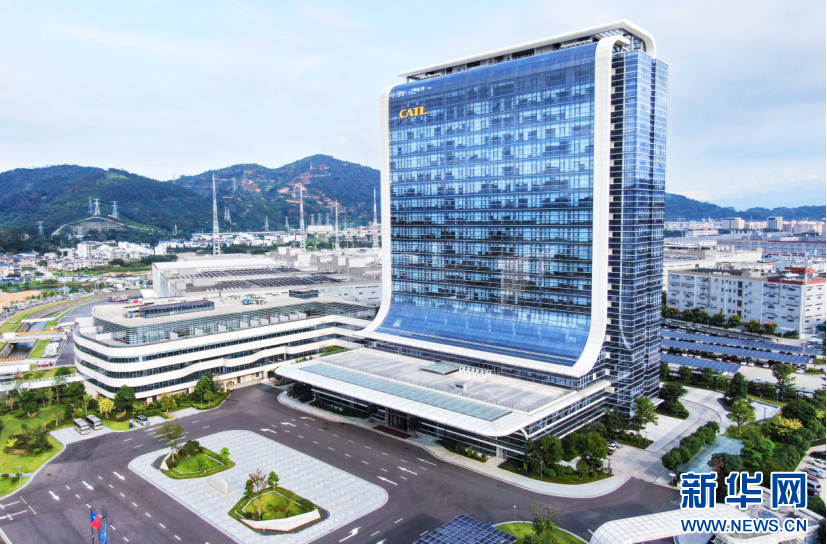
Core Insights - Fujian is focusing on building a national technology innovation province during the 14th Five-Year Plan, implementing an innovation-driven development strategy to enhance high-quality technology supply and accelerate the integration of technological and industrial innovation [1][5] Group 1: Role of Private Enterprises - Private enterprises are the most active pioneers in Fujian's technology innovation landscape, exemplified by CATL's mass production of its fifth-generation lithium iron phosphate battery, which has led to significant technological advancements and economic contributions [2][4] - Since 2020, CATL has overcome 54 core technologies and applied for 2,178 patents, generating a production value of 22 billion yuan [2] - Over 60% of R&D funding from large-scale private enterprises in Fujian is directed towards research and experimental development, with private enterprises leading or participating in over 70% of provincial technology projects [4] Group 2: Innovation Platforms - Fujian has established a robust technology innovation platform system, investing over 12 billion yuan to build eight provincial innovation laboratories since 2019, which have become core strategic technology forces [5][6] - The national-level innovation platforms have significantly enhanced the province's technological capabilities, with 13 national key laboratories and 31 national enterprise technology innovation centers established during the 14th Five-Year Plan [7] Group 3: Technology Transfer and Application - The province is actively addressing challenges in technology transfer, with successful collaborations between universities and construction firms leading to the development of new materials that enhance construction durability [8] - Collaborative innovation mechanisms have proven effective, with significant investments and new production values generated from partnerships between research institutes and local enterprises [9] - The total transaction volume of technology contracts in Fujian reached 38.784 billion yuan in 2024, marking a 111% increase since 2020, indicating a rapid acceleration in technology transfer [9]
Kaldvík AS: CFO resigns
Globenewswire· 2025-12-01 06:00
Company Overview - Kaldvik AS is a leading salmon farmer in Iceland, with a fully integrated value chain from hatchery to harvest [2] - The company operates from its headquarters in Iceland, benefiting from pristine aquatic environments and a commitment to sustainable salmon farming [2] Management Changes - Róbert Róbertsson, the CFO of Kaldvik AS, has announced his resignation to pursue other opportunities, effective until 28 February 2026 [1] - The board of directors will initiate the recruitment process for a new CFO and has expressed gratitude for Róbert's dedication and hard work [1]