Shipping

Search documents
Star Bulk Highlights Operating Leverage As Dry Bulk Fundamentals Strengthen - Star Bulk Carriers (NASDAQ:
Benzinga· 2026-03-30 18:35
Company Positioning and Scale - Fleet growth is projected to increase modestly by approximately 3.5% over the next two years, but this will be partially offset by structural inefficiencies, including increased drydock activity due to aging vessels over 15 years, reducing effective fleet growth by at least 0.5% annually [1] - The order book is relatively low at about 12.5% of the fleet, with shipyard capacity constrained until at least the second half of 2029, as shipyards prioritize more complex vessel types like LNG carriers and container ships [2] Market Dynamics: Supply Side - Environmental regulations and efficiency requirements are expected to incentivize slower steaming and fleet renewal, which will support tighter effective supply [2] Geopolitics and Rate Support Dynamics - Geopolitical developments have led to significant increases in bunker fuel prices, which can support freight markets and incentivize slower vessel speeds, thereby reducing available capacity and acting as a natural support mechanism for charter rates [3] Demand Outlook and Trade Flows - The demand environment is generally supportive, with dry bulk trade volumes increasing by approximately 5% year-over-year in 2025, driven by strong export growth, particularly in bauxite shipments from West Africa and stable iron ore demand [4] - China's import profile remained stable, with a first-half decline offset by a second-half recovery due to easing geopolitical tensions and stockpiling, although elevated inventory levels may pose downside risks [5] - Outside of China, imports grew by approximately 3.2% in 2025, supported by lower commodity prices, a weaker U.S. dollar, and resilient demand across Southeast Asia, India, the Middle East, and Africa [5] Strategic Acquisitions and Fleet Expansion - Management expressed confidence in the strategic rationale behind the proposed conditional acquisition of vessels linked to the Diana Shipping–Genco transaction, which, if completed, would enhance Star Bulk's scale, earnings capacity, and market positioning [6]


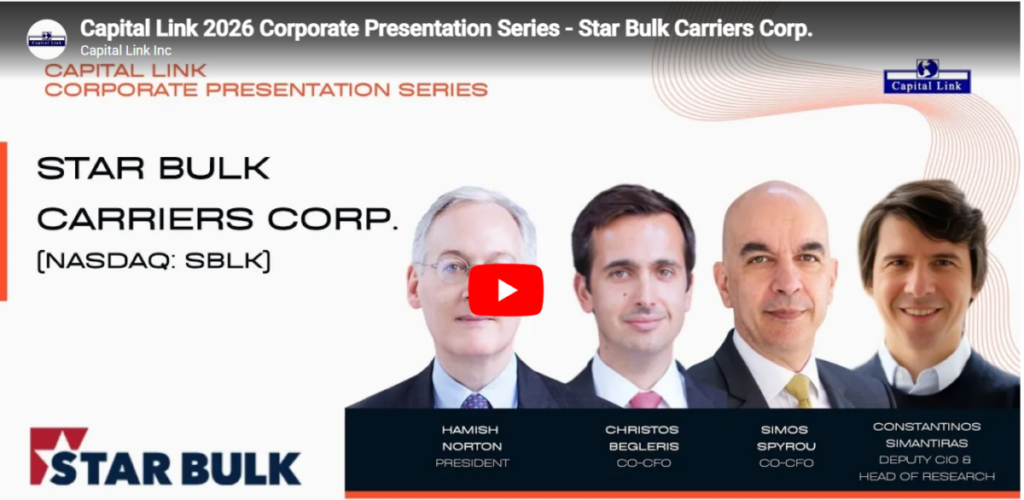
Star Bulk Highlights Operating Leverage As Dry Bulk Fundamentals Strengthen
Benzinga· 2026-03-30 18:35
Company Positioning and Scale - Fleet growth is expected to increase modestly to approximately 3.5% over the next two years, but structural inefficiencies, including increased drydock activity due to aging vessels, may reduce effective fleet growth by at least 0.5% annually [1][2] Market Dynamics: Supply Side - The order book remains low at approximately 12.5% of the fleet, with shipyard capacity constrained through at least the second half of 2029, as yards prioritize complex vessel types like LNG carriers and container ships [2] - Environmental regulations and efficiency requirements are expected to incentivize slower steaming and fleet renewal, supporting tighter effective supply [2] Geopolitics and Rate Support Dynamics - Geopolitical developments have driven bunker fuel prices significantly higher, which can support freight markets and incentivize slower vessel speeds, thereby reducing available capacity [3] Demand Outlook and Trade Flows - In 2025, dry bulk trade volumes increased by approximately 5% year-over-year, supported by strong export growth, particularly in bauxite shipments from West Africa and stable iron ore demand [4] - China's import profile remained stable, with a first-half decline offset by a second-half recovery, although elevated inventory levels may present potential downside risks [5] - Outside China, imports grew by approximately 3.2% in 2025, supported by lower commodity prices, a weaker U.S. dollar, and resilient demand across Southeast Asia, India, the Middle East, and Africa [5] Strategic Acquisitions and Fleet Expansion - Management expressed confidence in the strategic rationale behind the proposed conditional acquisition of vessels linked to the Diana Shipping–Genco transaction, which would enhance Star Bulk's scale, earnings capacity, and market positioning if completed [6]

Hapag-Lloyd: Updating On Shipping In 2026E
Seeking Alpha· 2026-03-30 17:13
I was actually about to prepare an article where I wanted to analyze the surprising surge in earnings that happened to one of the shippers I review - Hapag-Lloyd (HPGLY). The article was about 30% done, and the research with it, when the company promptly dropped - and continued dropping to this day. Today, the day of writing this article, the company is down more than 11% for the ADR HPGLY as I am writing the piece. That means that my original thesis, which I am now updating and have actually been holding f ...

Intercont (Cayman) Limited Announces Effective Time of Share Consolidation/Reverse Share Split to Regain NASDAQ Compliance
Globenewswire· 2026-03-30 14:00
Core Viewpoint - Intercont (Cayman) Limited will implement a 25-for-1 reverse share split effective April 2, 2026, to comply with Nasdaq's minimum bid price requirement of $1.00 per share [1][3]. Group 1: Share Consolidation Details - The reverse share split will result in every 25 shares being combined into one share, reducing the total number of authorized ordinary shares from 1,000,000,000 to 40,000,000 [4]. - The par value of the shares will change to $0.0025 per share, and no fractional shares will be issued; any resulting fractional shares will be rounded up [4]. - The company's Class A ordinary shares will continue to trade under the symbol "NCT" but will have a new CUSIP number, G48049111, post-split [2]. Group 2: Shareholder Approval and Implementation - Shareholders approved the reverse split and granted the board the authority to determine the final ratio and timing if the share price fell below $1.00 within 180 days of the approval at an Extraordinary General Meeting on January 26, 2026 [3]. - The board of directors approved the 25-for-1 ratio on March 22, 2026, for implementation [3]. Group 3: Shareholder Actions - Registered stockholders holding shares in book-entry form will not need to take any action to receive their post-split shares [5]. - Stockholders with shares in brokerage accounts will have their positions automatically adjusted according to their brokers' processes [5]. Group 4: Company Overview - Intercont (Cayman) Limited is a global shipping enterprise focused on environmentally friendly transportation solutions and innovative business models [6].

Intercont (Cayman) Limited Announces Effective Time of Share Consolidation/Reverse Share Split to Regain NASDAQ Compliance
Globenewswire· 2026-03-30 14:00
Core Viewpoint - Intercont (Cayman) Limited will implement a 25-for-1 reverse share split effective April 2, 2026, to comply with Nasdaq's minimum bid price requirement of $1.00 per share [1][3]. Group 1: Share Consolidation Details - The reverse share split will combine every 25 shares into one, reducing the total number of authorized ordinary shares from 1,000,000,000 to 40,000,000, with a new par value of $0.0025 per share [4]. - The Class A ordinary shares will continue to trade under the symbol "NCT" but will have a new CUSIP number, G48049111, starting April 2, 2026 [2]. Group 2: Shareholder Approval and Implementation - Shareholders approved the reverse split and authorized the board to determine the final ratio and timing if the share price fell below $1.00 within 180 days of the approval at an Extraordinary General Meeting on January 26, 2026 [3]. - The board of directors approved the 25-for-1 ratio on March 22, 2026, for the reverse share split [3]. Group 3: Shareholder Actions and Adjustments - Shareholders holding shares in book-entry form will not need to take action to receive post-split shares, while those in brokerage accounts will have their positions automatically adjusted [5]. Group 4: Company Overview - Intercont (Cayman) Limited is a global shipping enterprise focused on environmentally friendly transportation solutions and innovative business models [6].

Brent crude rises after Trump says he wants to ‘take the oil' in Iran and Yemeni Houthis launch second attack on Israel – business live
The Guardian· 2026-03-30 12:28
Group 1: Oil Market Dynamics - Brent crude is on track for a record monthly rise of nearly 60%, currently trading at $116.051 a barrel, up 59% in March [1][41] - The entry of Yemen's Houthi rebels into the conflict has led to increased military hostilities, which analysts believe will further support crude prices [2][42] - Natural gas prices have also risen, with Dutch month-ahead futures increasing by 1.6% to over €55 per megawatt-hour amid supply disruption concerns [3][43] Group 2: UK Fuel Prices and Inflation - Average petrol prices in the UK have reached 152p per litre, the highest in 28 months, while diesel prices have topped 180p [4][5] - The financial strain on motorists is increasing, with costs to fill a typical petrol car rising by £10.55 and diesel by £21.35 since the start of the Iran conflict [4][5] - UK inflation has jumped to an annual rate of 2.8% in March, driven by rising energy prices due to the ongoing conflict [7][8] Group 3: Aluminium Market Impact - Aluminium prices have surged to four-year highs, rising nearly 5% to $3,453 a tonne following Iranian airstrikes on major Middle Eastern producers [16][19] - The conflict has raised fears of a supply shock, with analysts warning that the fragile market could face record prices due to reduced global inventories [16][20] Group 4: Consumer Sentiment and Economic Outlook - Pessimism is growing in the UK, with half of households struggling to afford essentials, driven by rising prices of oil, gas, and raw materials [26][27] - Confidence in the UK economy has plummeted, with a significant drop in the consumer insight tracker score [26][27] - UK mortgage approvals rose to 62,600 in February, the highest in three months, but expectations of higher borrowing costs may dampen future demand [28][29]

中远海控:业绩后 NDR 要点 -2026 年供给过剩收窄,欧洲合约运价小幅下滑
2026-03-30 05:15
COSCO SHIPPING Holdings (601919.SS) Conference Call Summary Company Overview - **Company**: COSCO SHIPPING Holdings - **Stock Codes**: 601919.SS (A-shares), 1919.HK (H-shares) - **Market Cap**: Rmb244.4 billion / $35.4 billion - **Enterprise Value**: Rmb172.4 billion / $25.0 billion - **Current Price**: Rmb15.26 (A-shares), HK$14.95 (H-shares) - **12-month Price Target**: Rmb13.50 (A-shares), HK$10.60 (H-shares) - **Rating**: Sell Key Industry Insights - **Supply-Demand Dynamics**: Management expects the industry net supply to narrow to only 1 percentage point (ppt) in 2026, with demand growth slowing to 3-4% YoY compared to 4-5% YoY in 2025. Supply growth is projected at 4-5% YoY, excluding any disruptions related to Hormuz [2][19] - **Cargo Volume Trends**: 1Q cargo volumes were dampened due to front-loading in 4Q25, but volumes began rebounding in late March. A weaker 3Q seasonality is anticipated, potentially starting earlier this year due to precautionary restocking amid inflation concerns [2][18] - **Europe Contract Renewals**: The majority of long-term contracts in Europe have been renewed with a modest YoY price decline, reflecting lower spot rates during negotiations in late 2025 [2][19] Financial Performance and Projections - **Revenue Forecasts**: Projected revenues for FY25 are Rmb219.5 billion, declining to Rmb210.1 billion in FY26E and further to Rmb208.8 billion in FY27E [6][12] - **EBITDA and EPS**: EBITDA is expected to decrease from Rmb53.5 billion in FY25 to Rmb42.3 billion in FY26E, with EPS dropping from Rmb1.96 to Rmb1.31 over the same period [6][12] - **Cost Management**: Fuel costs have doubled since late February, and management plans to partially pass these costs onto customers. However, they do not foresee a fuel supply shortage at major hub ports like Singapore and Rotterdam [2][19] Strategic Initiatives - **Fleet Management**: Management is considering new orders for smaller vessels (2-3k TEU) for feeder services to replace aging fleet capacity and mitigate high rental costs. As of December 2025, there are 54 vessels on order, with an additional 18 orders placed in January 2026 [2][19] - **Capital Return Policy**: The company aims for a dividend payout ratio of 30-50% through 2027, with recent payouts trending towards the higher end of this range. Share buybacks have included four batches totaling 866 million shares (Rmb9.8 billion) since 2023 [2][19] Risks and Considerations - **Market Risks**: Key risks include stronger-than-expected cargo volumes or slower supply growth, potential disruptions to effective capacity and freight rates, and the attractiveness of dividend yields in 2026E [19][20] - **Geopolitical Factors**: The impact of Middle East disruptions on global container trade is noted, with management redirecting cargoes to ports outside the Gulf and resuming bookings to Gulf destinations as of March 25 [19][20] Conclusion COSCO SHIPPING Holdings is navigating a challenging environment with expectations of narrowing supply-demand dynamics and declining freight rates. The company is focusing on strategic fleet management and maintaining a robust capital return policy while addressing rising operational costs and geopolitical risks. The current sell rating reflects concerns over profitability and market conditions in the near term.
中远海能20260327
2026-03-30 05:15
Summary of the Conference Call for COSCO Shipping Energy Transportation Co., Ltd. Industry Overview - The shipping industry is currently facing significant disruptions due to geopolitical tensions in the Middle East, particularly affecting oil transportation routes and pricing dynamics [2][3][4][8][12]. Key Points Fleet Deployment and Market Strategy - Approximately 10 VLCCs (Very Large Crude Carriers) have been redirected to Yanbu Port in Saudi Arabia, reducing the Middle East cargo share to a historical low of 50% [2][9]. - The company maintains a cautious approach to the spot market, keeping the VLCC time charter ratio between 10% and 15%, while all Aframax vessels are operated in-house to retain performance flexibility in a high freight rate environment [2][6]. - The company has deployed 4-5 Aframax vessels in the Atlantic region and is exploring "white oil to black oil" operations [2][5]. Freight Rate Performance - Current TCE (Time Charter Equivalent) rates are approximately $130,000-$140,000 per day for VLCCs on West Africa/Gulf of Mexico routes and $170,000-$180,000 per day for Red Sea routes, while Aframax vessels in the Atlantic region are nearing $150,000 per day [2][10][11]. - The company’s TCE levels for its fleet are competitive, with Aframax rates benefiting from increased regional crude procurement in Europe and temporary exemptions from the Jones Act [5][11]. Domestic and International Trade Dynamics - Domestic shipping capacity is constrained due to national energy security requirements, limiting the ability to shift LR1/LR2 vessels to international trade [2][6]. - The company has noted a significant reduction in cargo from the Middle East, with current cargo share from this region at about 50%, which is historically low [9][12]. Cost Management and Risk Mitigation - Increased operational costs due to geopolitical risks have been incorporated into TCE calculations, with the potential for these costs to be passed on to charterers [2][9]. - The company is monitoring the market closely and adjusting its fleet deployment based on trade flow changes and safety conditions in the Middle East [4][12]. Market Volatility and Future Outlook - The market is expected to experience significant volatility, with freight rates likely to fluctuate dramatically based on geopolitical developments and inventory replenishment needs [3][8]. - If the Strait of Hormuz returns to normal operations, freight rates will depend heavily on global trade patterns and the overall volume of oil exports from producing countries [8][12]. Operational Adjustments - The company has adjusted its operational strategies in response to the changing market, ensuring that vessels are deployed efficiently to meet demand while maintaining safety and service quality [12][16]. - The company has not reported any demurrage income from vessels waiting in the Gulf due to the current geopolitical situation, as these delays are considered force majeure [10][12]. Strategic Partnerships and Industry Trends - Major oil companies are increasingly concerned about future capacity shortages and are seeking to secure long-term contracts with compliant shipowners [14]. - The shipbuilding capacity is constrained, with shipyards fully booked until 2029, limiting the ability to increase fleet size in the short term [14]. Conclusion - The company is navigating a complex and rapidly changing market landscape, focusing on maintaining operational flexibility and responding to shifts in trade flows while managing costs and risks associated with geopolitical tensions. The outlook remains cautious, with an emphasis on adapting to market conditions and ensuring the safety and efficiency of operations.
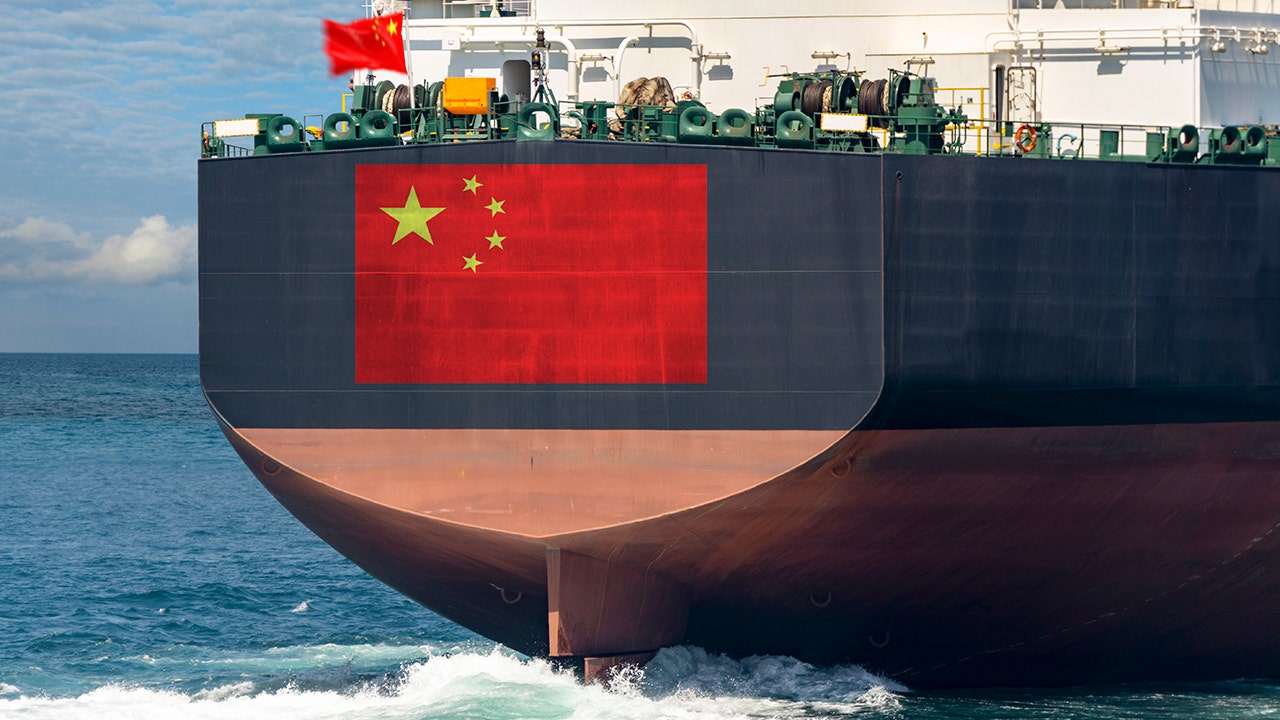
Multiple Chinese vessels retreat at Strait of Hormuz after Iran warnings in rare ally move
Fox Business· 2026-03-30 03:06
Core Insights - At least three Chinese-linked vessels made abrupt U-turns while attempting to cross the Strait of Hormuz, indicating a shift in the typically friendly relations between Tehran and Beijing amid ongoing regional tensions [1][2]. Group 1: Vessel Movements - Two ships owned by China's state-run Cosco Shipping, the CSCL Indian Ocean and CSCL Arctic Ocean, along with the Hong Kong-owned Lotus Rising, turned back near Larak Island, as reported by MarineTraffic and FDD [2]. - This incident marks the first attempted outbound transit by major Cosco container ships since tensions escalated in the Strait of Hormuz on February 28, which has disrupted 20% of the world's oil supply [3]. Group 2: Iranian Regulations - The vessels reportedly violated Iranian regulations that prohibit traffic to and from countries perceived as supportive of the United States and Israel, including the UAE and Saudi Arabia, as stated by the IRGC [3][6]. - The IRGC Navy warned the ships that sailing to and from ports of allies of the "Zionist-American enemies" is prohibited, leading to their return [6]. Group 3: Diplomatic Implications - The incident underscores a discrepancy between Iran's previous diplomatic assurances that China and other friendly nations could coordinate safe passage through the Strait of Hormuz [11]. - Despite the Cosco ships broadcasting their Chinese ownership and crew to signal friendliness to Iran, this was deemed insufficient by Iranian authorities at the checkpoint [12].
Oil Prices Spike and Global Markets Retreat as Middle East Conflict Escalates
Stock Market News· 2026-03-29 22:38
Energy Market Reactions - Oil prices surged significantly, with Brent Crude futures increasing by $2.72 to settle at $115.29 per barrel, and US West Texas Intermediate (WTI) crude futures rising by $2.36 to reach $102.00, driven by fears of supply disruptions due to the Yemeni Houthi rebels' involvement in the conflict [2][10] - The price increase is attributed to Houthi missile strikes targeting military sites in southern Israel, raising concerns about potential attacks on commercial shipping in the Red Sea and the risk of closing the Bab el-Mandeb strait, which is crucial for global energy exports [3] Equity Market Trends - Wall Street is experiencing a downturn, with S&P 500 E-minis down 0.5% and Nasdaq 100 futures down 0.6%, as geopolitical tensions overshadow domestic economic data, prompting investors to seek defensive assets [4][10] - Reports of an attack on a petrochemical plant in Tabriz, Iran, have further dampened market sentiment, despite Iranian state media claiming no environmental damage occurred [5][10] Geopolitical Developments - The conflict's human toll was highlighted by the death of a UN peacekeeper in southern Lebanon, with another in critical condition, amid escalating exchanges between Israeli forces and Hezbollah [6][10] - In response to the instability, UK Prime Minister Keir Starmer is convening a high-level roundtable with executives from major energy companies like Shell and BP, as well as shipping firms and financial institutions, to address the economic implications of the regional conflict [7][10] - UK Chancellor Rachel Reeves is expected to caution G7 partners against unilateral trade actions, advocating for a coordinated international response to alleviate inflationary pressures stemming from the ongoing war and the closure of critical trade routes [8]