Cybersecurity

Search documents
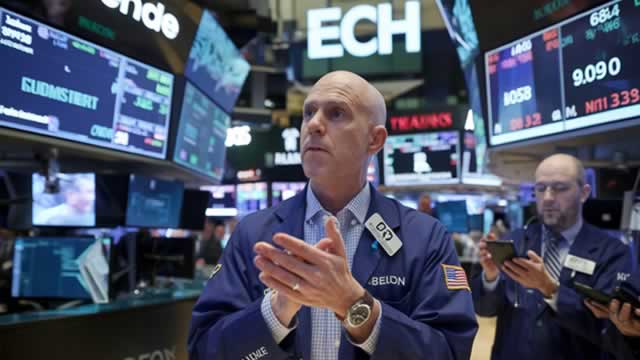
Stocks Fall as Middle East War Widens | Closing Bell
Youtube· 2026-03-03 21:19
Market Overview - The S&P 500 experienced a significant drop of about 2.4%, reaching its lowest level of the year at one point during the trading day [2][5] - The market has been trading within a tight range of approximately 200 points for the past three months, despite underlying sector and factor rotations causing volatility [2][3] Sector Performance - All 11 sectors in the S&P 500 closed in the red, with materials down 2.7%, industrials down 2%, and healthcare down 1% [6][7] - Financials were the relative outperformers, only declining by 0.2% [7] - Retailers such as Target and Best Buy showed better-than-expected performance, with Target's stock closing at its highest level in over a year [8][9] Company Earnings - Ross Stores reported a first-quarter EPS estimate of $1.06 to $1.70, slightly above the consensus estimate of $1.63 [21] - CrowdStrike's revenue increased by 23% year-over-year, aligning with estimates at approximately $1.3 billion [22] - Ross Stores' fourth-quarter comparable sales rose by about 9%, significantly exceeding the estimate of 4.92% [24] Consumer Spending Insights - Despite economic disruptions, consumer spending remains resilient, as indicated by strong performances from retailers [26][28] - The K-shaped recovery is highlighted, with credit card defaults primarily affecting lower-income consumers, while higher-income consumers continue to drive economic activity [27][28] - The success of discount retailers like Ross and Walmart suggests a potential "trade down" trend among consumers, which may not signal overall consumer health [29]

X @Bloomberg
Bloomberg· 2026-03-03 21:18
CrowdStrike projected quarterly sales that were roughly in line with analysts’ estimates, signaling steady demand in an era when artificial intelligence has heightened concerns over cybersecurity threats https://t.co/dSf7zrsSY0 ...
Rapid7 to Attend the Stifel 2026 NYC Technology One-on-One Conference
Globenewswire· 2026-03-03 21:05
Core Insights - Rapid7, Inc. is a global leader in AI-powered managed cybersecurity operations, focusing on enhancing organizations' cyber resilience [2] Company Overview - Rapid7 integrates security data with AI and threat intelligence, leveraging 25 years of expertise to reduce risk and disrupt attackers [2] - The company serves over 11,500 customers worldwide, recognized for its preemptive managed detection and response (MDR) services [2] Upcoming Events - Rapid7 will attend the Stifel 2026 NYC Technology One-on-One Conference on March 10, 2026 [1]


Gen Digital Inc. (GEN) Presents at Morgan Stanley Technology, Media & Telecom Conference 2026 Transcript
Seeking Alpha· 2026-03-03 20:42
Core Insights - The discussion centers around the recent acquisition of MoneyLion by Gen Digital, highlighting its transformative impact on the business model and its alignment with consumer security services [2]. Group 1: Acquisition Impact - The MoneyLion acquisition is seen as a significant transformation for Gen Digital, enhancing its trust-based business model [2]. - The integration of MoneyLion is expected to complement Gen Digital's existing consumer security offerings, indicating a strategic alignment between the two businesses [2].


Gen Digital (NasdaqGS:GEN) 2026 Conference Transcript
2026-03-03 19:02
Summary of Gen Digital Conference Call Company Overview - **Company**: Gen Digital (NasdaqGS:GEN) - **Industry**: Cybersecurity and Financial Wellness Key Points Business Transformation and Acquisition - Gen Digital has transformed its Cyber Safety platform, expanding from 20 million to over 200 million active users and 500 million endpoints [4][5] - The acquisition of MoneyLion was driven by the need to enhance financial health services for consumers, integrating banking and credit monitoring into their offerings [5][6] Financial Health Focus - The company has identified financial health as a top consumer need, leading to the integration of banking services into their platform [5] - MoneyLion has been growing at a rate of 40%-50% since its acquisition, with a 15% increase in bank account connections among users [7] AI Integration and Market Evolution - Gen Digital views AI as a significant opportunity, enhancing consumer experience and software development speed [8][12] - The company is transitioning from a device-centric to a user-centric approach, aiming to simplify the digital experience for consumers [12] Marketplace Development - The MoneyLion business is diverse, with two main segments: Personal Finance Management (PFM) and a marketplace for financial tools, both growing at approximately 40% [16][20] - The marketplace allows for automated financial services, enhancing customer engagement and retention [26][27] Membership Model Transition - Gen Digital is moving towards a subscription-based model for MoneyLion, aiming to provide ongoing value to consumers rather than relying solely on transaction fees [29][30] - The company plans to gradually introduce membership options as consumer adoption increases [30] Economic Context and Consumer Support - In a K-shaped economy, Gen Digital provides solutions for both struggling consumers and those with assets to protect, addressing diverse financial needs [34][35] - The company offers PFM solutions to help consumers living paycheck to paycheck, while also catering to wealthier clients through its marketplace [35][41] Cross-Selling and Partnership Strategies - The company is focused on cross-selling between Cyber Safety and Trust-Based Solutions, with a goal of increasing adoption of financial wellness services among existing customers [49][50] - Partnerships, particularly in employee benefits and telecommunications, are key to expanding market reach and customer engagement [78][80] Financial Performance and Margins - Cyber Safety maintains robust margins over 60%, while Trust-Based Solutions operates at around 30% [54][58] - The company is committed to operational efficiency, aiming to reinvest savings into growth initiatives [56][58] M&A Strategy - Gen Digital is open to M&A opportunities that align with its consumer-focused strategy, emphasizing the importance of cultural fit and technological compatibility [66][68] - The company has a disciplined approach to capital allocation, balancing organic growth with potential acquisitions [71] Monitoring Progress - Investors are encouraged to monitor user growth, financial wellness adoption, and the integration of Trust-Based Solutions with Cyber Safety offerings as indicators of success [85][86] Additional Insights - The company is adapting to the evolving digital landscape, positioning itself as a trusted partner for consumers navigating financial and cybersecurity challenges [87][88]
Gen Digital (NasdaqGS:GEN) 2026 Conference Transcript
2026-03-03 19:00
Summary of Gen Digital Conference Call Company Overview - **Company**: Gen Digital (NasdaqGS:GEN) - **Industry**: Cybersecurity and Financial Wellness Key Points Business Transformation and Acquisition - Gen Digital has transformed its Cyber Safety platform from 20 million users to over 200 million active users and 500 million endpoints, enhancing consumer value through various entry points such as security, identity protection, and data privacy [4][5] - The acquisition of MoneyLion was driven by the need to address consumer demands for financial health protection, integrating banking and credit monitoring into their services [5][6] Financial Performance and Growth - MoneyLion has been growing at a rate of 40%-50%, with a 15% increase in bank account connections among users in the last quarter [7][8] - The PFM (Personal Finance Management) segment of MoneyLion is growing at 40%, contributing significantly to the overall business momentum [18][20] AI Integration and Market Position - Gen Digital views AI as a significant opportunity, enhancing software development speed and consumer engagement [8][12] - The company is transitioning from a device-centric to a user-centric approach, aiming to simplify the digital experience for consumers [12][14] Marketplace and Ecosystem Development - The marketplace model is seen as a powerful tool for expanding consumer offerings, allowing for personalized financial solutions without developing products in-house [26][28] - The integration of the marketplace into existing applications aims to enhance user engagement and retention [50][52] Economic Context and Consumer Needs - In a K-shaped economy, Gen Digital provides solutions for both struggling consumers and those with significant assets, addressing diverse financial needs [34][36] - The company is focused on helping consumers living paycheck to paycheck through accessible financial solutions [36][40] Cross-Selling and Monetization Strategies - Cross-selling between Cyber Safety and trust-based solutions is a key focus, with ongoing efforts to increase adoption and engagement [48][49] - The company is exploring membership models to transition from transaction-based to subscription-based revenue streams, aiming for gradual adoption by consumers [29][30] Financial Margins and Efficiency - Cyber Safety maintains a robust margin of over 60%, while trust-based solutions have a solid margin of 30% [54][57] - Gen Digital emphasizes operational efficiency and continuous improvement to fuel sustainable growth [56][58] M&A Strategy - The company is disciplined in its M&A approach, focusing on organic growth and consumer needs before considering acquisitions [60][65] - Gen Digital is open to M&A opportunities that align with its strategic goals, particularly in enhancing its product offerings [66][70] Partnership and Distribution Channels - Partnerships, especially in employee benefits and telecommunications, are crucial for expanding market reach and customer engagement [77][78] - The company aims to leverage its marketplace to enhance partnerships and provide modular offerings to consumers [80][82] Monitoring Progress - Investors are encouraged to monitor customer growth, financial wellness metrics, and the adoption of trust-based solutions as indicators of success [84][85] - The company is positioned to capture opportunities in the evolving digital economy, focusing on building trust and understanding consumer needs [86][87]
CrowdStrike Earnings, Geopolitical Cyber Threats Put Guidance In Spotlight Tonight
Benzinga· 2026-03-03 15:28
Core Viewpoint - CrowdStrike Holdings Inc is facing a critical moment as it prepares to release its fourth-quarter earnings, with investors concerned about the impact of geopolitical tensions and the evolving landscape of cybersecurity due to AI advancements [1][2]. Financial Performance Expectations - Analysts anticipate CrowdStrike will report revenue of approximately $1.30 billion, an increase from $1.06 billion year-over-year, and earnings of $0.74 per share, while focusing on the company's ability to maintain double-digit growth and strong recurring revenue [2]. - The earnings report is expected to create significant volatility in the stock, particularly in light of the ongoing "AI disruption trade" that raises concerns about traditional cybersecurity spending [2][3]. Market Sentiment and Stock Performance - CrowdStrike's stock is currently trading 9.8% below its 100-day simple moving average (SMA), indicating a bearish trend, and is closer to its 52-week lows than highs, with shares down approximately 15% over the past year [5]. - The stock carries a Buy Rating with an average price target of $538.70, reflecting a generally positive outlook despite recent performance challenges [6]. Analyst Actions and Recommendations - Recent analyst actions include Piper Sandler upgrading the stock to Overweight, suggesting that AI presents more opportunities than threats, while Wells Fargo initiated coverage with an Overweight rating [3][6]. - Baird has maintained a Neutral rating but lowered its target price to $450.00, indicating mixed sentiments among analysts regarding the stock's future performance [6].


Arqit (ARQQ), 6WIND Partner to Launch Quantum-Safe VPN Services
Yahoo Finance· 2026-03-03 15:19
Core Insights - Arqit Quantum Inc. has partnered with 6WIND to launch integrated, quantum-safe VPN services aimed at telecommunications providers and enterprises, enhancing security for site-to-site connectivity and cloud infrastructure [1][2]. Group 1: Partnership and Product Offering - The collaboration combines Arqit's NetworkSecure encryption key generation with 6WIND's virtual service routers, providing scalable security solutions [1]. - The services are designed to operate on universal customer premises equipment and virtualized environments, ensuring high availability and flexibility for B2B applications [2]. Group 2: Cybersecurity Implications - The integrated solution addresses the increasing threat posed by quantum computing to traditional public-key infrastructure, particularly the risk of 'harvest now, decrypt later' attacks [2]. - By delivering an on-device IPsec solution, the partnership aims to set a new standard in cyber defense, protecting critical data against both current and future cryptographic threats [3]. Group 3: Company Overview - Arqit Quantum Inc. provides cybersecurity services through satellite and terrestrial platforms in the UK, offering QuantumCloud, a Platform as a Service that generates unbreakable software encryption keys [4].

FatPipe Awarded 2025 TMCnet Zero Trust Security Excellence Award by TMCnet
Accessnewswire· 2026-03-03 15:00
Core Insights - FatPipe, Inc. has been recognized for its innovative cybersecurity solutions, specifically the FatPipe Total Security 360, which has been awarded the 2025 TMCnet Zero Trust Security Excellence award [1] Company Overview - FatPipe, Inc. is a leader in enterprise-class Secure SD-WAN and cybersecurity solutions, holding multiple patents in software-defined wide area networking [1] Industry Recognition - The TMCnet Zero Trust Security Excellence award highlights the importance of innovative security solutions in combating complex cyber threats faced by organizations [1]

Here's How Much Traders Expect CrowdStrike Stock To Move After Earnings
Investopedia· 2026-03-03 14:23
Core Viewpoint - CrowdStrike is expected to report earnings after the market closes on Tuesday, with traders anticipating significant stock movement following the results [1] Company Summary - CrowdStrike is a cybersecurity provider that is preparing to release its earnings report [1]