General Merchandise Retail

Search documents
As holidays approach, value players Walmart and T.J. Maxx are drawing the cash-strapped and the wealthy
CNBC· 2025-11-20 18:26
Core Insights - Major retailers like Walmart and TJX are outperforming others by increasing their full-year forecasts and showing optimism for the holiday season, while competitors like Home Depot, Lowe's, and Target have lowered their profit outlooks [2][3] - Consumer spending patterns indicate a shift towards value-seeking behavior, with both Walmart and TJX reporting strong sales growth as they attract shoppers from various income levels [3][4] - The performance of value-oriented retailers may positively influence other off-price chains and value-focused companies, which are expected to report earnings soon [4] Retail Performance - Walmart and TJX have seen a "strong start" to the holiday quarter, with both companies confident that consumers will continue to prioritize value in their purchases [3] - Shares of Walmart and TJX increased despite a downturn in major U.S. stock indexes, indicating investor confidence in their business models [3] Economic Context - Recent economic factors, including job market concerns and potential stock market bubbles, have created uncertainty regarding retail performance and the broader economy [5] - Consumer sentiment has declined significantly, yet retail sales showed growth in October, highlighting a disconnect between consumer feelings and actual spending behavior [6] Holiday Sales Expectations - The National Retail Federation forecasts holiday sales growth of 3.7% to 4.2%, projecting total sales to exceed $1 trillion for the first time [7] - In contrast, PwC predicts that consumers plan to reduce their average holiday spending by 5% compared to the previous year, indicating mixed expectations for the holiday season [7]


Walmart CFO talks earnings; plus, how to trade foreign stocks
Youtube· 2025-11-20 17:52
Core Insights - The article highlights a strong performance in the stock market driven by a positive jobs report, Nvidia's impressive earnings, and Walmart's raised sales outlook, indicating a resilient consumer environment [1][2][3] Stock Market Performance - Major indices are experiencing significant gains, with the Dow up over 650 points (1.4%), S&P 500 up 1.9%, and Nasdaq Composite gaining 2.5% [1] - The positive jobs report for September exceeded expectations, despite a downward revision for August, contributing to the market rally [1][2] Nvidia's Earnings - Nvidia shares rose approximately 4.5% following a strong earnings report, reaffirming its revenue forecast for its Blackwell and Reuben chip lines, projected to exceed $500 billion through 2026 [1][2] - The company addressed investor concerns regarding demand and execution, indicating confidence in future performance [2][3] Walmart's Performance - Walmart reported a 6% growth in top-line sales and an 8% increase in profits, driven by consumer demand for value and convenience [3][4] - The e-commerce segment grew by 27%, with all three business segments experiencing over 20% growth [3][4] - Walmart raised its full-year profit outlook, reflecting strong consumer behavior and market positioning [3][4] Consumer Trends - There is a noticeable disparity in spending between low-income and upper-income consumers, with Walmart gaining market share across all income cohorts [3][4] - The company is focused on providing value and convenience, which is resonating with consumers amid economic challenges [3][4] Future Outlook - Walmart plans to transition its stock listing to NASDAQ, signaling a focus on innovation and technology in its next chapter [4] - The company is preparing for the holiday season with a ramp-up in hiring, emphasizing a people-led, tech-powered approach [4][5]

Kohl's Q3 Earnings Coming Up: Factors Investors Need to Understand
ZACKS· 2025-11-20 15:10
Core Insights - Kohl's Corporation is expected to report declines in both sales and earnings for the third quarter of fiscal 2025, with sales estimated at $3.49 billion, reflecting a 5.9% decrease year-over-year, and an earnings loss of 19 cents per share, a 195% decline from the previous year [1][3]. Group 1: Earnings Performance - The consensus earnings estimate for Kohl's has decreased by 2 cents over the past month, indicating a significant year-over-year plunge [1]. - Kohl's has historically delivered an earnings surprise of 29.2% on average over the last four quarters, with a notable 69.7% surprise in the most recent quarter [2]. Group 2: Market Conditions - The company is facing a challenging demand environment, particularly among its core lower- to middle-income customers, leading to soft store traffic and reduced sales from Kohl's Card customers [3]. - Comparable sales are projected to decline by 4.6% in the upcoming quarter due to subdued discretionary spending [3]. Group 3: Cost and Pricing Pressures - Kohl's is experiencing increasing cost pressures, including expanded coupon eligibility and potential tariff impacts, which are expected to affect margins in the fiscal third quarter [4]. - The company has been focusing on stronger value messaging and higher digital penetration, which have limited near-term margin expansion despite improved proprietary brand mix and disciplined inventory management [4]. Group 4: Category Trends - There are uneven trends across product categories, with Kids and Men's categories lagging, although some improvement has been noted in denim and backpacks [5]. - The company is in the process of rebuilding inventory depth after earlier reductions, which may temper short-term gains [5]. Group 5: Earnings Whispers - The current model predicts a potential earnings beat for Kohl's, supported by a positive Earnings ESP of +1.77% and a Zacks Rank of 3 [6]. - Other companies with favorable earnings combinations include Five Below, which is expected to report a 15% increase in revenues, contrasting with Kohl's anticipated declines [8].


Market Rebounds Ahead of Nvidia Earnings and Key Economic Data
Stock Market News· 2025-11-19 21:07
Market Overview - U.S. stock markets experienced a modest rebound on November 19, 2025, with major indexes closing higher, breaking a multi-day losing streak as investors awaited Nvidia's earnings report [1] - The S&P 500 rose 0.4%, the Nasdaq Composite increased by 0.6%, and the Dow Jones Industrial Average edged up 0.1%, halting their respective losing streaks [2] Economic Indicators - The yield on the 10-year Treasury note increased to 4.13% from approximately 4.11% [3] - The U.S. dollar index rose by 0.7% to 100.19 [3] - WTI crude futures declined over 2% to settle at $59.50 per barrel, while gold futures advanced 0.2% to $4,075 per ounce [3] Key Company News - Nvidia (NVDA) shares climbed by as much as 3.2% ahead of its fiscal third-quarter earnings report, with analysts expecting earnings of $1.25 per share on revenue of $54.9 billion [5] - Alphabet (GOOGL) saw a 3% increase in shares, reaching an all-time intraday high following the announcement of its AI model, Gemini 3 [5] - Lowe's (LOW) shares rose 4% after reporting stronger-than-expected third-quarter profits and raising its full-year sales projection [5] - Target (TGT) shares fell 2.7% after reporting disappointing sales figures and lowering its full-year profit forecast [5] - Walmart (WMT) shares were down nearly 1% as investors awaited its earnings report [5] - Constellation Energy (CEG) rallied 5% after receiving a $1 billion loan from the U.S. Department of Energy [5] - Medtronic plc (MDT) jumped 4.7% after surpassing earnings estimates [5] - Amer Sports, Inc. (AS) surged 8.5% on strong earnings, while Magic Software Enterprises Ltd. (MGIC) fell 4.4% after missing expectations [5] Upcoming Events - Nvidia's fiscal 2026 third-quarter earnings report is expected to be a major market mover, influencing sentiment across technology and AI sectors [6] - The September jobs report, delayed due to a government shutdown, is set to be released on November 20, providing insights into the labor market [10] - Walmart's earnings report is anticipated to offer further indications of consumer spending and retail sector health [10] - Preliminary PMI data for November will be released on November 21, providing clues on global economic growth and business confidence [10]


S&P 500 Kicks Higher at Finish. Now It's Nvidia Time.
Barrons· 2025-11-19 21:03
CONCLUDED Stock Futures Climb After Nvidia Earnings Last Updated: 2 hours ago S&P 500 Kicks Higher at Finish. Now It's Nvidia Time. By Karishma Vanjani The U.S. stock market took off in the final minutes of regular trading, before Nvidia shared its quarterly earnings, a report that will vibe check the optimism on artificial intelligence. The S&P 500 closed 0.4% higher, breaking a four-day streak of losses. Dow gained 0.1%. Nasdaq led the pack, rising 0.6%. Much of this afternoon, the S&P 500 did basically n ...
Target Corporation's (NYSE:TGT) Earnings Overview
Financial Modeling Prep· 2025-11-19 19:00
Core Insights - Target Corporation reported an EPS of $1.78, exceeding the estimated $1.71 and the Zacks Consensus Estimate of $1.76, but showing a decline from the previous year's EPS of $1.85 [1][2][6] - Revenue for the quarter was $25.28 billion, slightly missing the forecasted $25.33 billion, indicating challenges in meeting sales expectations due to consumer financial constraints [1][2][6] Financial Metrics - The company has a P/E ratio of 10.25, suggesting a reasonable valuation compared to its earnings [3][6] - Target's price-to-sales ratio is 0.38 and the enterprise value to sales ratio is 0.56, reflecting the market's valuation of its sales performance [3] - The enterprise value to operating cash flow ratio stands at 9.34, indicating efficient cash flow management [4] - An earnings yield of 9.76% is attractive to investors, while a debt-to-equity ratio of 1.32 highlights reliance on debt for financing [4][6] - The current ratio of 0.99 suggests that Target is just able to cover its short-term liabilities with its short-term assets [4] Market Challenges - As the holiday shopping season approaches, Target faces challenges due to a decline in sales, impacted by financial constraints on consumers affecting discretionary spending [5]


Target Predicting Weak Holiday Sales As Consumer Angst Weighs On Season
Forbes· 2025-11-19 18:05
ToplineThe holiday season isn’t expected to be a bright one for Target this year after the retail giant reported tumbling third quarter profits and said it expects to see sales slump in the coming months, underscoring broader concerns about consumer spending heading into the holidays. A view of a Target store on March 5, 2025 in Novato, California.Getty ImagesKey FactsTarget, which saw its CEO step down in August before saying it would cut about 1,800 corporate jobs in October, on Wednesday said it expects ...
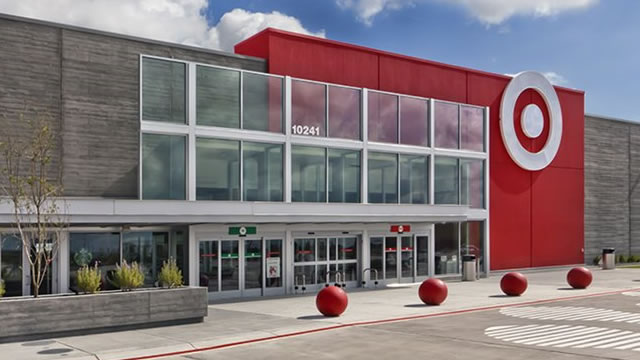
Target Q3 earnings beat estimates but sales slip amid consumer headwinds
Proactiveinvestors NA· 2025-11-19 14:57
Group 1 - Proactive provides fast, accessible, informative, and actionable business and finance news content to a global investment audience [2] - The news team covers medium and small-cap markets, as well as blue-chip companies, commodities, and broader investment stories [3] - Proactive's content includes insights across various sectors such as biotech, pharma, mining, natural resources, battery metals, oil and gas, crypto, and emerging technologies [3] Group 2 - Proactive is committed to adopting technology to enhance workflows and content production [4] - The company utilizes automation and software tools, including generative AI, while ensuring all content is edited and authored by humans [5]

Market Minute 11-19-25- Markets Awaiting Nvidia, Jobs Data
Yahoo Finance· 2025-11-19 14:15
Market Overview - Wall Street has experienced volatility recently, with stocks attempting to stabilize. Gold and silver prices are rising, while crude oil is declining. Treasuries and the dollar remain mostly flat [1]. Nvidia Corp. (NVDA) - Nvidia is set to report its quarterly results, with analysts expecting earnings per share of $1.25 and revenue of approximately $55 billion for Q3. The performance of Nvidia is critical as it may influence the broader AI stock market, which has faced significant declines recently [2]. Employment Data - The September jobs report is scheduled for release, with expectations of a job gain of about 50,000. This report was delayed due to the government shutdown, leaving investors and policymakers with limited information [3]. Lowe's Cos. (LOW) - Lowe's reported better-than-expected earnings per share, exceeding estimates by six cents. The company highlighted strong digital and contractor sales. Recently, Lowe's acquired Foundation Building Materials for $8.8 billion to enhance sales to contractors [5]. Target Corp. (TGT) - Target reported disappointing results, with same-store sales declining more than anticipated. The company has reduced its full-year earnings per share forecast and plans to invest $5 billion in store remodels and increasing shelf space for lower-priced seasonal items to regain momentum [6]. Adobe Inc. (ADBE) - Adobe is reportedly acquiring Semrush Holdings for $1.9 billion, translating to $12 per share, which is a significant premium over Semrush's previous closing price of $6.76. This acquisition aims to enhance Adobe's product offerings in online advertising and social media research [6].



Stock Market Today: Dow Futures Waver as Investors Await Nvidia Earnings
WSJ· 2025-11-19 08:38
Core Viewpoint - Earnings reports are anticipated from Lowe's and Target, indicating potential insights into retail sector performance and consumer spending trends [1] Group 1: Company Earnings - Lowe's is expected to release its earnings report, which may provide valuable information regarding its financial health and operational efficiency [1] - Target is also set to announce its earnings, which could reflect its market position and consumer engagement strategies [1] Group 2: Industry Implications - The earnings reports from these major retailers will be closely monitored for indications of broader retail industry trends and economic conditions [1]