
科创板

Search documents
20cm跌停!又有公司爆大雷
Sou Hu Cai Jing· 2025-11-04 09:14
Group 1 - The stock market this year has shown a stark contrast, with AI stocks experiencing significant gains while traditional companies have not performed well [1] - Investors in traditional companies might have seen minimal losses or even small profits despite the market conditions [2] - In contrast, investors in companies facing severe issues, such as Qingyue Technology, have suffered substantial losses, with a single-day drop of 20% due to regulatory investigations [3] Group 2 - Qingyue Technology (stock code: 688496) faced a trading halt on November 3, following a notice from the China Securities Regulatory Commission (CSRC) regarding an investigation into false financial reporting [3] - The CSRC's investigation could lead to significant penalties, and if the company is found guilty of major violations, it may face mandatory delisting from the Shanghai Stock Exchange [3]



“超42亿元天价索赔”震动科创圈 别让股权激励变纠纷导火索!
Mei Ri Jing Ji Xin Wen· 2025-11-04 01:17
Core Viewpoint - The recent lawsuit involving Cambrian (SH688256) for a compensation claim of approximately 4.287 billion yuan has highlighted the growing issues surrounding equity incentives in the tech sector, emphasizing the need for careful management of these incentives to avoid disputes [1][2]. Summary by Sections Equity Incentive Disputes - The lawsuit has drawn attention to the significant discrepancies in equity valuation before and after a company goes public, which can lead to disputes over substantial financial interests [1]. - The complexity of equity incentive agreements and insufficient rigor in related contracts are direct triggers for disputes, as these agreements span multiple legal domains [2]. Importance of Equity Incentives - Despite the risks, equity incentives remain essential for tech companies to attract and retain top talent, aligning individual interests with corporate growth [2]. Recommendations for Companies - Companies should meticulously design contract terms, clearly defining potential risk points and scenarios to minimize future disputes [3]. - It is crucial to address various situations, such as employee departures and performance issues, within the contracts to prevent ambiguity [3]. Recommendations for Employees - Employees should thoroughly review contract terms before signing, paying close attention to restrictive clauses that may affect their rights [3]. - Seeking independent legal advice is recommended to assess potential risks associated with equity agreements [3]. Professional Involvement - Companies should engage professional legal and tax advisors when designing incentive plans to ensure clarity and compliance with legal requirements [4]. - Both companies and employees should leverage professional expertise to create robust legal frameworks that support effective equity incentive programs [4].

上交所:三季报显示科创板公司稳健发展 多个领域取得突破性进展
Zheng Quan Shi Bao Wang· 2025-10-31 11:48
Core Insights - The Shanghai Stock Exchange reported that as of October 31, all listed companies in the Shanghai market have disclosed their Q3 2025 financial results [1] Group 1: Industry Performance - The companies listed on the Sci-Tech Innovation Board (STAR Market) have shown steady development, with 588 companies achieving a total operating revenue of 1.01 trillion yuan, representing a year-on-year growth of 6.6% [1] - Since the launch of the STAR Market, these companies have experienced continuous revenue growth, with a median R&D intensity of 12.4% [1] Group 2: Company Performance - Among the 33 unprofitable companies that have disclosed their Q3 results, there has been a significant increase in revenue, with a year-on-year growth of 35.1% [1] - These companies have also reduced their net losses by 45.4% year-on-year while continuing to increase R&D investments, with a median R&D intensity of 44.3% [1]
投教宣传|3分钟了解科创成长层
野村东方国际证券· 2025-10-31 10:11
Group 1 - The core point of the article highlights a historic moment for the Sci-Tech Innovation Board, as three unprofitable companies have officially listed, marking the first batch of newly registered companies in the Sci-Tech Growth tier, which reflects the board's support for hard technology enterprises [1] - The listing of these companies signifies the implementation of the "1+6" reform on the Sci-Tech Innovation Board, showcasing its commitment to fostering innovation and growth in the technology sector [1]

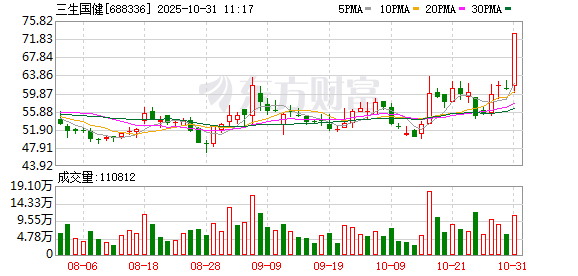
三生国健盘中涨停
Zheng Quan Shi Bao Wang· 2025-10-31 03:17
Core Viewpoint - The stock of Sanofi (三生国健) has reached its daily limit increase, with a trading price of 72.96 yuan and a trading volume of 736 million yuan, indicating strong market interest and performance [2] Group 1: Stock Performance - As of October 31, 407 stocks on the Sci-Tech Innovation Board have risen, while 174 have fallen, with Sanofi leading the gains at 20% [2] - Other notable gainers include Foxit Software (福昕软件) and Spring Medical (春立医疗), which increased by 14.91% and 12.37% respectively [2] - Conversely, the largest declines were seen in Zhengfan Technology (正帆科技), Stone Technology (石头科技), and Tiande Yu (天德钰), with decreases of 13.72%, 11.99%, and 10.26% respectively [2] Group 2: Financial Data - Sanofi reported a revenue of 1.116 billion yuan for the first three quarters, reflecting a year-on-year growth of 18.80%, and a net profit of 399 million yuan, which is a significant increase of 71.15% year-on-year [3] - The stock experienced a net inflow of 676,900 yuan in the last trading session, but a net outflow of 129 million yuan over the past five days [3] - The latest margin trading data shows a total margin balance of 252 million yuan, with a financing balance of 251 million yuan, which increased by 208,100 yuan, a rise of 0.08% [3] Group 3: Institutional Ratings - In the past month, Sanofi received buy ratings from two institutions, with a target price set at 72.96 yuan by Huatai Securities [3]

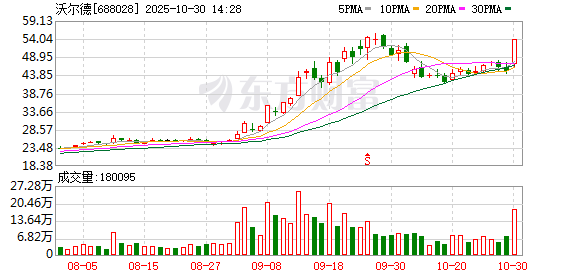
沃尔德涨停 13只科创板股涨超10%
Zheng Quan Shi Bao Wang· 2025-10-30 06:27
Market Performance - On October 30, the stock of Wald surged to the daily limit, reaching a price of 53.96 yuan with a trading volume of 794 million yuan and a turnover rate of 10.61%, showing a volatility of 18.41% [2] - Among the stocks listed on the Sci-Tech Innovation Board, 205 stocks rose while 378 stocks fell, with notable gainers including C Yicai-U, C Heyuan-U, and C Bibete-U, which increased by 12.90%, 5.52%, and 1.65% respectively [2] - Other significant gainers included Wald, GuoDun Quantum, and WeiDe Information, which rose by 19.99%, 16.63%, and 16.15% respectively, while Minxin Co., DingTong Technology, and LiGong Navigation saw declines of 12.00%, 9.81%, and 9.27% respectively [2] Fund Flow - On the previous trading day, Wald experienced a net outflow of 21.47 million yuan in main funds, but saw a net inflow of 42.93 million yuan over the past five days [3] - As of October 29, the latest margin trading balance for Wald was 553 million yuan, with a financing balance of 553 million yuan, reflecting an increase of 3.05 million yuan or 0.55% from the previous trading day [3] - Over the past ten days, the total margin trading balance increased by 47.74 million yuan, marking a growth of 9.46%, with the financing balance also growing by 9.46% during this period [3] Financial Performance - The third-quarter report released on October 30 indicated that Wald achieved a total operating revenue of 539 million yuan for the first three quarters, representing a year-on-year growth of 9.05% [3] - However, the net profit for the same period was 71.40 million yuan, which reflects a year-on-year decline of 6.67% [3]

A股午评:沪指站稳4000点,北证50涨超2%,电池、量子科技板块领涨
Ge Long Hui· 2025-10-30 03:44
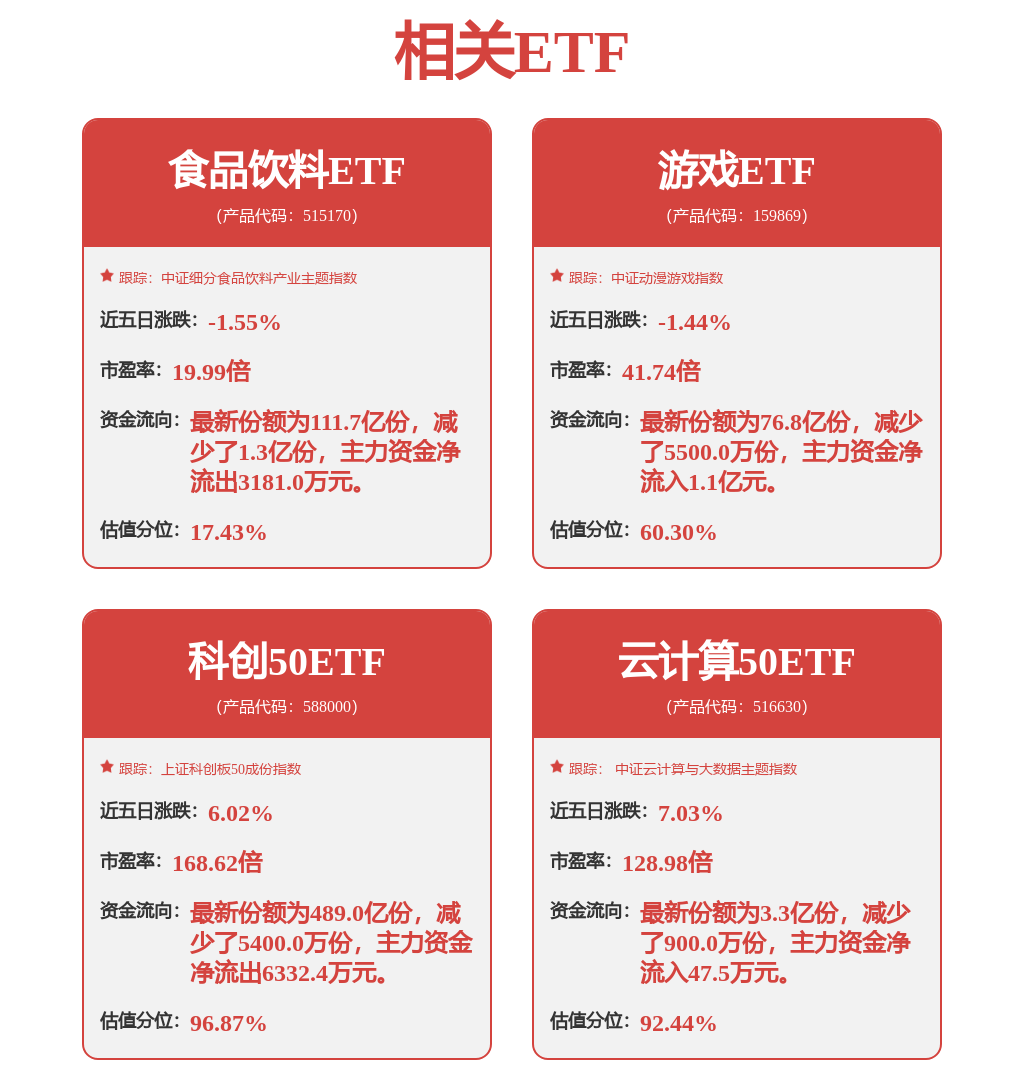
Market Overview - The A-share market showed mixed performance with the Shanghai Composite Index rising by 0.06% to 4018.86 points, reaching a new high in over 10 years [1] - The Shenzhen Component Index fell by 0.02%, and the ChiNext Index decreased by 0.23% [1] - The North Star 50 Index increased by over 2% [1] Trading Volume - The total trading volume in the Shanghai, Shenzhen, and Beijing markets reached 1.5591 trillion yuan, an increase of 125 billion yuan compared to the previous day [1] - Over 3200 stocks in the market experienced declines [1] Sector Performance - Leading sectors included batteries, steel, and quantum technology [1] - The precious metals and coal mining sectors saw the largest declines [1] - CPO concept stocks generally retreated, with New Yi Sheng dropping over 6% due to Q3 performance falling short of expectations [1] ETF Insights - Food and Beverage ETF (Product Code: 515170) saw a decline of 1.55% over the past five days, with a PE ratio of 19.99 and a net outflow of 31.81 million yuan [3] - Gaming ETF (Product Code: 159869) decreased by 1.44% in the last five days, with a PE ratio of 41.74 and a net inflow of 110 million yuan [4] - Sci-Tech 50 ETF (Product Code: 588000) increased by 6.02% recently, with a high PE ratio of 168.62 and a net outflow of 63.32 million yuan [4] - Cloud Computing 50 ETF (Product Code: 516630) rose by 7.03%, with a PE ratio of 128.98 and a minimal net inflow of 47,500 yuan [4]
科创板今日大宗交易成交1.02亿元
Zheng Quan Shi Bao Wang· 2025-10-29 13:38
Core Insights - A total of 6 stocks on the STAR Market experienced block trading today, with a cumulative transaction amount of 102 million yuan [1][2] Group 1: Trading Overview - On October 29, there were 18 block trades involving 6 STAR Market stocks, with a total trading volume of 3.2987 million shares and a total transaction value of 102 million yuan [1] - The stock with the highest transaction amount was Zhuoyi Information, with a trading volume of 828,700 shares and a transaction value of 48.943 million yuan [1] - Other notable stocks in terms of transaction value included Artis and Huahai Chengke, with transaction amounts of 25.68 million yuan and 12.6162 million yuan, respectively [1] Group 2: Price and Performance Analysis - All stocks involved in block trading today were sold at a discount, with the highest discount rates observed for Dekeli, Artis, and Zhiyang Innovation, at 15.01%, 13.48%, and 10.97%, respectively [1] - The STAR 50 Index rose by 1.18% today, with 296 stocks (50.17%) in the STAR Market experiencing price increases [1] - The average increase for stocks involved in block trading was 2.80%, with Artis, Dekeli, and Huahai Chengke leading the gains at 19.97%, 2.09%, and 1.05%, respectively [1] Group 3: Institutional Participation - Among the block trades, there were 6 transactions involving institutional buyers or sellers, with the highest buying amounts for Zhuoyi Information, Huahai Chengke, and Dekeli, at 48.943 million yuan, 9.934 million yuan, and 495,000 yuan, respectively [2] - In terms of capital flow, three stocks saw net inflows from major funds, with Artis, Huahai Chengke, and Dekeli receiving net inflows of 418 million yuan, 33.355 million yuan, and 53,040 yuan, respectively [2] - Conversely, stocks like Xindong Link, Zhuoyi Information, and Zhiyang Innovation experienced net outflows, with amounts of 103 million yuan, 33.099 million yuan, and 205,770 yuan, respectively [2]


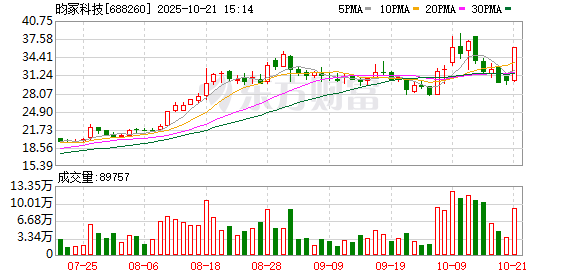
昀冢科技尾盘涨停 523只科创板股上涨
Zheng Quan Shi Bao Wang· 2025-10-21 07:13
Group 1 - The core point of the news is that Yunzhu Technology's stock reached the daily limit, closing at 36.17 yuan with a trading volume of 291 million yuan and a turnover rate of 7.28% as of 14:52 on October 21 [2] - Among the stocks listed on the Sci-Tech Innovation Board, a total of 523 stocks were up, with 6 stocks rising more than 10%, including Yunzhu Technology, Zhengyuan Dixin, and Fangyuan Co., while 61 stocks were down, with notable declines in Huasheng Lithium Battery, Sinan Navigation, and Chaozhuo Aerospace Technology, which fell by 5.83%, 5.55%, and 3.87% respectively [2] Group 2 - In terms of capital flow, Yunzhu Technology experienced a net outflow of 7.68 million yuan in the previous trading day, with a total net outflow of 52.52 million yuan over the past five days [3] - The latest margin trading data as of October 20 shows that the margin balance for Yunzhu Technology is 307 million yuan, with a decrease of 6.21 million yuan from the previous trading day, representing a decline of 1.98%; over the past ten days, the total margin balance increased by 48.74 million yuan, an increase of 18.87%, with the financing balance also growing by 18.87% during this period [3]

正元地信盘中涨停 511只科创板股上涨
Zheng Quan Shi Bao Wang· 2025-10-21 03:48
Group 1 - The core point of the news is that Zhengyuan Dixin's stock has reached the daily limit increase on the STAR Market, with a price of 5.08 yuan and a trading volume of 339 million yuan, indicating strong market interest [1] - Among STAR Market stocks, 511 stocks are reported to be rising, with 6 stocks having an increase of over 10%, including Zhengyuan Dixin, Fangyuan Co., and Yuanjie Technology, which rose by 20.09%, 20.06%, and 16.67% respectively [1] - Conversely, 75 stocks are reported to be declining, with significant drops from Sinan Navigation, Chaozhuo Hangke, and Zhejiang Haideman, which fell by 5.37%, 4.82%, and 3.42% respectively [1] Group 2 - In terms of capital flow, Zhengyuan Dixin experienced a net outflow of 216,400 yuan in the previous trading day, with a total net outflow of 9.7285 million yuan over the past 5 days [2] - The latest margin trading data shows that as of October 20, the total margin balance for the stock is 123 million yuan, with a financing balance of 123 million yuan, which increased by 829,000 yuan, representing a growth of 0.68% [2] - Over the past 10 days, the total margin balance has increased by 7.1922 million yuan, with a growth rate of 6.19%, and the financing balance also grew by 6.19% during this period [2]
