
Wholesale Clubs

Search documents
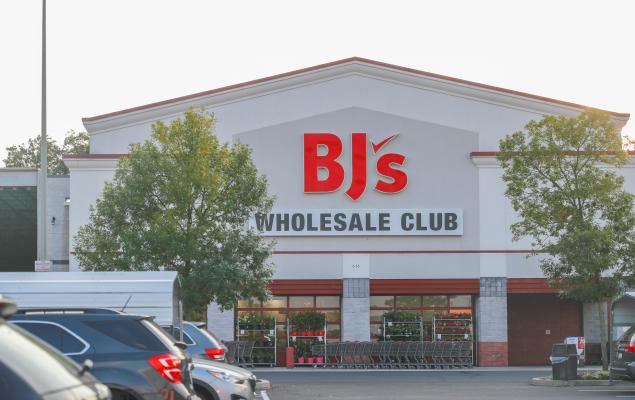
Toys and Prices That Will Wow: BJ's Wholesale Club Unveils Must-Have Toys of 2025
Businesswire· 2025-10-07 10:30
Core Viewpoint - BJ's Wholesale Club is positioning itself as a key player in the holiday toy market by offering popular toys at competitive prices, aiming to attract early holiday shoppers [1] Group 1: Product Offering - The company is featuring must-have toys from well-known brands such as Disney, Barbie, LEGO®, Play-Doh, and Hot Wheels, catering to a wide range of customer preferences [1] - BJ's is emphasizing unbeatable prices on these toys, which may enhance its competitive edge during the holiday shopping season [1] Group 2: Shopping Convenience - To facilitate early holiday shopping, BJ's is providing free shipping on all toys, making it more appealing for customers to shop online [1] - The availability of shopping through the BJ's mobile app and online at BJs.com/To adds convenience for customers, potentially increasing sales [1]

Buy BJ's Wholesale And Hold Costco: A Tale Of Two Clubs
Seeking Alpha· 2025-10-07 07:23
Group 1 - The author has been a Costco member since 2008 but has not invested in its stock, which is now seen as a painful oversight given the company's performance [1] - The author has a background as a corporate lawyer with an MBA and has been operating a boutique law firm for the last 10 years, focusing on investment transactions and disputes [1] - The author's investment goals include identifying reasonably priced companies with steady long-term growth and uncovering small- and mid-cap companies with potential for exponential growth through fundamental analysis [1] Group 2 - The author believes that educated individuals can outperform the market if they have the right temperament and are willing to learn basic accounting and financial principles [1]


BJ's Wholesale Club Digital Push Lifts Sales and Membership Growth
ZACKS· 2025-10-01 15:05
Core Insights - BJ's Wholesale Club Holdings, Inc. is significantly advancing its digital transformation, with a 34% increase in digitally enabled comparable sales in Q2 of fiscal 2025, resulting in a two-year stacked increase of 56% [1][7] - The company processes over 90% of digital orders through its clubs, enhancing efficiency and member loyalty, with digitally engaged customers being twice as valuable as traditional shoppers [2][7] - Membership has reached an all-time high of 8 million, with higher-tier memberships representing 41% of the base, indicating deeper engagement [3] Digital Strategy - The mobile app plays a central role in member engagement, with over half of members using it for various services, contributing to record membership fee income of $123.3 million, a 9% year-over-year increase [2][7] - The hybrid model of integrating physical clubs with online services is a key differentiator for BJ's, positioning the company to capture long-term growth opportunities [6] Competitive Landscape - Competitors like Walmart and Costco are also enhancing their digital capabilities, with Walmart reporting a 25% increase in e-commerce sales and Costco achieving a 15.6% growth in e-commerce comparable sales for the fiscal year [4][5] - BJ's faces the challenge of sustaining its momentum against these formidable competitors while continuing to expand its digital capabilities [6]
Costco Investors Will Get A “Special” Treat For Christmas
MarketBeat· 2025-09-29 13:05
Core Viewpoint - Costco Wholesale is expected to announce a special dividend this December, potentially exceeding $10 per share, with a yield of approximately 1% to 1.5% [2][3] Financial Performance - In FQ4, Costco achieved 8.1% year-over-year revenue growth, surpassing market expectations, driven by a 6.4% system-wide comparable sales increase and growth in membership [2][3] - Net income rose nearly 10% and GAAP earnings increased by 11%, indicating strong cash flow to support capital spending and special dividends [4][5] Membership and Growth Metrics - Membership increased by 6.3%, and digital sales grew by 13.6%, contributing to overall growth [3] - The company plans to open up to 35 new stores in FY2026, representing a 3.8% increase in store count [4] Balance Sheet Strength - Costco's cash reserves increased by 43% in F2025, with current assets rising by $4.1 billion (12%) and total assets by $7 billion (10%) [5] - The company's leverage remains low, with total liabilities approximately 1.6 times equity, supporting its ability to pay special dividends [6] Analyst Sentiment and Stock Forecast - Analysts maintain a Moderate Buy rating for Costco, with a 12-month price forecast averaging $1,069.58, indicating a potential upside of 16.77% [7][8] - Institutional ownership stands at 58%, with a bullish trend in buying activity throughout the year [9] Technical Outlook - The stock is currently holding above critical support levels, with expectations of a rebound as dividend hunters enter the market [10] - A move to new highs could initiate a sustained rally, potentially reaching the analysts' high-end target near $1,225 [11]

Wall Street rises and snaps out of its 3-day losing streak
Yahoo Finance· 2025-09-26 04:09
Market Overview - U.S. stocks experienced a rise on Friday, with the S&P 500 increasing by 0.6%, the Dow Jones Industrial Average gaining 299 points (0.7%), and the Nasdaq composite adding 0.4%, helping to reduce weekly losses [1][2] Inflation and Economic Impact - Inflation in the U.S. accelerated to 2.7% in August from 2.6% in July, which, while above the Federal Reserve's 2% target, aligned with economists' forecasts [2][3] - The expectation of continued interest rate cuts by the Federal Reserve is critical for Wall Street, as it has contributed to a significant rise in U.S. stocks since April [3][4] Tariffs and Market Reactions - President Trump's announcement of new tariffs on imports, including pharmaceutical drugs and heavy trucks, has the potential to increase inflation, although details were limited [5][6] - The stock market reacted with mixed results; Paccar, associated with truck brands, rose by 5.2%, while major pharmaceutical companies like Eli Lilly and Pfizer saw slight increases of 1.4% and 0.7%, respectively [6] - Companies in the home furnishings sector experienced volatility, with Williams-Sonoma fluctuating between gains and losses, while RH dropped by 4.2% [7] Company-Specific Performance - Costco Wholesale's stock fell by 2.9% despite reporting stronger-than-expected quarterly profits, attributed to slower membership renewal rates and disappointing underlying revenue growth [8]
Costco plans to open new locations at a quicker pace as it tackles busy warehouses
Business Insider· 2025-09-26 00:27
Core Insights - Costco is experiencing increased traffic in its warehouses and is strategically expanding its locations to tap into new markets and enhance capacity in existing areas [1][4] - The company plans to open 35 new locations in the current fiscal year, a significant increase from 27 openings in the previous year, indicating a busy expansion phase [2] - New warehouse openings are strategically placed near successful existing locations to optimize sales and alleviate congestion [3][4] Expansion Plans - The first four new locations will open in October in Fruitport, Michigan; Mechanicsburg, Pennsylvania; Indian Land, South Carolina; and Mississauga, Ontario [3] - This year's expansion includes five relocations of existing warehouses, which are expected to enhance sales and customer access [4] Operational Strategy - The average age of Costco warehouses in the US is around 20 years, and relocations provide an opportunity to refresh operations and maintain high service standards [8] - Old warehouses that are vacated can be repurposed into Costco Business Centers, catering to larger-volume customers [8] - New locations also create job opportunities for individuals seeking to start or advance their careers within the company, which is recognized as a competitive employer in the retail sector [9]
Top Wall Street Forecasters Revamp Costco Expectations Ahead Of Q4 Earnings
Benzinga· 2025-09-25 08:20
Core Insights - Costco Wholesale Corporation is set to release its fourth-quarter earnings results on September 25, with analysts expecting earnings of $5.81 per share, an increase from $5.29 per share in the same period last year [1] - The projected quarterly revenue for Costco is $86.06 billion, up from $79.7 billion a year earlier, indicating a strong growth trajectory [1] - Costco has consistently exceeded analyst revenue estimates, achieving this in two consecutive quarters and five out of the last ten quarters [1] Stock Performance - Shares of Costco increased by 0.2%, closing at $945.27 on Wednesday [2] - The latest analyst ratings for Costco can be accessed on the Analyst Stock Ratings page, allowing for sorting by various criteria [2] Analyst Ratings and Price Targets - Telsey Advisory Group analyst Joseph Feldman maintains an Outperform rating with a price target of $1,100 [4] - JP Morgan analyst Christopher Horvers has an Overweight rating and raised the price target from $1,115 to $1,160 [4] - Evercore ISI Group analyst Greg Melich maintains an Outperform rating but reduced the price target from $1,075 to $1,060 [4] - Morgan Stanley analyst Simeon Gutman has an Overweight rating and increased the price target from $1,150 to $1,225 [4] - Loop Capital analyst Laura Champine maintains a Buy rating and slightly reduced the price target from $1,115 to $1,110 [4]

Costco is getting a traffic boost from opening early for executive members
Business Insider· 2025-09-24 15:06
Core Insights - Costco's decision to extend shopping hours for executive members is proving to be beneficial, as foot traffic data indicates an increase in shopper visits and frequency [1][3] - The adjustment has led to a shift in foot traffic patterns, with more shoppers visiting during the 9 a.m. hour, suggesting a positive reception of the new schedule [2][3] - Shorter shopping trips are being reported, with visits decreasing from an hour to 30-45 minutes, which is expected to drive additional visits and enhance overall shopping experience [4] Financial Impact - Costco's fiscal year ended on August 31, and the upcoming fourth-quarter results will provide insights into the financial effects of the extended hours, with analysts anticipating a positive contribution to sales growth [3][14] - The extended hours are expected to be "accretive" to the company's already strong sales performance this year [3] Customer Behavior - The extended hours have resulted in a more balanced flow of foot traffic, improving the shopping experience for all customers, regardless of membership tier [3] - There is a noted increase in younger consumers, particularly millennials and Gen Z, who are starting families, contributing to a slight decrease in average income among Costco's customer base [12] Membership Dynamics - The potential for new shoppers to become long-term members is significant, especially with the upgrade from Gold Star to Executive membership, which doubles fee revenue from those members [13] - The upcoming earnings call may provide further insights into the growth of Costco's membership tiers [14] Operational Strategies - Costco is testing various strategies to manage increasing store traffic, with extended hours being one of the most visible initiatives [5] - A new "scan and go" approach is being trialed, allowing store workers to scan items in customers' carts to streamline the checkout process [6]

Costco's Supply Chain Strength Could Be Its Secret Weapon Against Tariff Pressures
Yahoo Finance· 2025-09-23 16:00
Core Insights - Costco Wholesale Corp. demonstrated steady sales growth in August, reflecting strong consumer demand across various categories [1] - The company reported a 6.9% year-over-year increase in consolidated comparable sales, with notable growth in U.S. (6.7%), Canada (9.4%), and international markets (5.3%), alongside an 18.3% surge in e-commerce [1][2] Sales Performance - Traffic trends remained robust, with worldwide visits up approximately 4% and U.S. traffic increasing by 4.3%, indicating continued strength in food, sundries, and nonfood items [2] - The sales growth was slightly impacted by gasoline price deflation, which trimmed about 60 basis points from reported sales [4] Analyst Ratings and Forecasts - Raymond James reaffirmed an Outperform rating for Costco ahead of its fiscal fourth-quarter earnings release, citing the company's scale, supply-chain efficiency, and loyal membership base as advantages in managing tariff and inflation risks [3][5] - Analysts adjusted the fourth-quarter EPS estimate to $5.83 from $5.90, while maintaining the fiscal year 2026 EPS forecast at $20.20 [3][4] Valuation and Market Position - Costco's stock trades at approximately 52 times forward earnings, significantly above its three-year median multiple of 38, with a price forecast set at $1,070 based on an EPS estimate of $21.80 for fiscal year 2027 [5][6] - The company's consistent market share gains and durable earnings growth support its premium valuation in the market [6]
BJ's Wholesale Club (BJ) is a Top-Ranked Growth Stock: Should You Buy?
ZACKS· 2025-09-10 14:46
Core Insights - Zacks Premium offers various tools for investors to enhance their stock market engagement and confidence [1] - The Zacks Style Scores are designed to help investors select stocks with the highest potential to outperform the market in the short term [2] Zacks Style Scores Overview - Stocks are rated from A to F based on value, growth, and momentum characteristics, with A being the highest score [3] - The Style Scores are categorized into four types: Value Score, Growth Score, Momentum Score, and VGM Score [3][4][5][6] Value Score - The Value Score identifies attractive stocks using financial ratios such as P/E, PEG, and Price/Sales, focusing on undervalued stocks [3] Growth Score - The Growth Score evaluates stocks based on projected and historical earnings, sales, and cash flow to identify sustainable growth opportunities [4] Momentum Score - The Momentum Score helps investors capitalize on price trends, utilizing metrics like weekly price changes and monthly earnings estimate shifts [5] VGM Score - The VGM Score combines all three Style Scores, providing a comprehensive indicator for selecting stocks with strong value, growth, and momentum [6] Zacks Rank Integration - The Zacks Rank uses earnings estimate revisions to simplify portfolio building, with 1 (Strong Buy) stocks historically yielding an average annual return of +23.75% since 1988 [7][8] - To maximize returns, investors should focus on stocks with a Zacks Rank of 1 or 2 and Style Scores of A or B [9] BJ's Wholesale Club Analysis - BJ's Wholesale Club has become a preferred shopping destination, focusing on simplifying product assortments and enhancing digital capabilities [11] - The company is rated 3 (Hold) on the Zacks Rank, with a VGM Score of A and a Growth Style Score of B, indicating a projected year-over-year earnings growth of 6.7% for the current fiscal year [12] - BJ's earnings estimates have been revised upward, with a Zacks Consensus Estimate of $4.32 per share and an average earnings surprise of +16.4% [12][13]