
Investment Banking

Search documents
More 'tug-of-war' between growth and value stocks expected next year
Yahoo Finance· 2025-12-02 11:00
Core Viewpoint - Investors are optimistic about the stock market extending its rally into next year, with major firms setting bullish price targets for the S&P 500 by the end of 2026 [2][7]. Group 1: Price Targets and Market Projections - RBC Capital Markets projects the S&P 500 to reach 7,750 by December 2026, indicating a potential gain of approximately 13% from current levels [2][7]. - Other firms like HSBC and Deutsche Bank have set their 2026 targets at 7,500 and 8,000 respectively, reflecting a consensus of double-digit percentage gains by the end of next year [7]. Group 2: Market Dynamics and Stock Performance - Analysts at RBC highlight a competition between growth and value stocks, suggesting that while value stocks currently have an edge, the market dynamics could shift [3][4]. - The success of the top 10 market cap names has defined this year, but there is an expectation of leadership rotation influenced by market sentiment and concerns over AI concentration [4][6]. Group 3: Economic Influences and Market Sentiment - The tug-of-war between growth and value stocks is expected to be influenced by familiar themes such as the labor market, AI developments, and political risks [8]. - Analysts caution against overemphasizing the Federal Reserve's meeting-by-meeting decisions, suggesting that broader economic trends will have a more significant impact on the market's trajectory [10].
Billionaire Ken Griffin Buys an Index Fund That's Crushing Bitcoin, Nvidia, and the S&P 500 in 2025
The Motley Fool· 2025-12-02 09:12
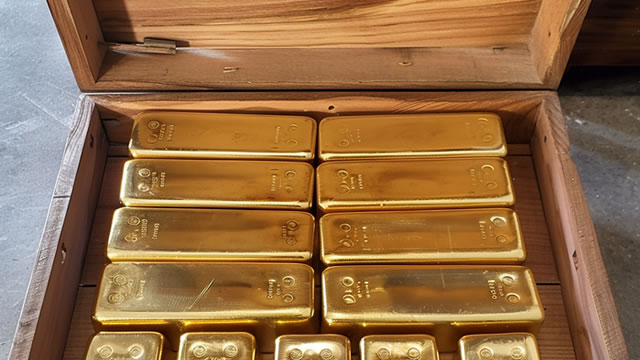
Core Viewpoint - The SPDR Gold Shares ETF has significantly outperformed Bitcoin, Nvidia, and the S&P 500 in 2023, indicating a strong demand for gold as a safe-haven asset amid economic uncertainties [1][2]. Group 1: Performance Comparison - The SPDR Gold Shares ETF has returned 60% year to date, while Nvidia has returned 32%, Bitcoin has declined by 2%, and the S&P 500 has gained 16% [2]. - Citadel Advisors, led by Ken Griffin, has outperformed the S&P 500 by 7 percentage points over the last three years, showcasing the hedge fund's strong performance [1]. Group 2: Hedge Fund Activity - Ken Griffin initiated a position in the SPDR Gold Shares ETF in the third quarter, and Citadel also holds call options on the fund, making it the fourth-largest position in their portfolio [3]. - Other hedge fund billionaires, such as Israel Englander and Paul Tudor Jones, have also increased their exposure to gold during the same period, indicating a trend among institutional investors [4]. Group 3: Gold Market Dynamics - The SPDR Gold Shares ETF allows investors to participate in the gold market without the logistical challenges of buying and storing physical gold [4]. - Gold has historically shown a low and negative correlation to many financial asset indexes, providing a hedge during market downturns, as evidenced by its performance during the last three bear markets [5]. Group 4: Demand Factors - Demand for gold typically increases during economic distress, with concerns about inflation and recession driving investor interest [8]. - Goldman Sachs projects that gold prices could reach $4,745 per troy ounce in the next 12 months, suggesting a potential upside of 13% from the current price of $4,200 per troy ounce [9]. Group 5: Economic Influences - Economic policies, such as tariffs imposed by the Trump administration, have raised concerns about economic growth and contributed to increased demand for gold [10].

Swiggy plans ₹10,000 crore share sale next week
BusinessLine· 2025-12-02 07:56
Food deliverer Swiggy Ltd. is preparing to raise as much as ₹10,000 crore ($1.1 billion) from institutional investors as early as next week, according to people familiar with the matter.The company has shortlisted three banks to manage the share sale — the Indian units of Citigroup Inc. and JPMorgan Chase & Co., as well as Kotak Mahindra Capital Co. — the people said, asking not to be identified because the information is private.Swiggy’s board approved plans on November 7 to raise up to 100 billion rupees ...
跨资产聚焦-市场反弹-Cross-Asset Spotlight-Markets Rebound
2025-12-02 02:08
Summary of Key Points from the Conference Call Industry Overview - The report focuses on the global financial markets, particularly US equities, UK gilts, and commodities like silver. Core Insights and Arguments - **US Equities Performance**: The S&P 500 index increased by 3.7% last week, recovering losses from November, indicating a bullish outlook from US equity strategists who view recent corrections as buying opportunities [8][10] - **UK Gilts Rally**: UK gilts experienced a bull-flattening move following the Budget announcement, which revealed increased fiscal headroom and a supportive fiscal stance. This led to a bullish outlook for nominal longs and linkers, with supply expected to remain low until April 2026 [8][19] - **GBP Movement**: The GBP saw a rally post-Budget as investors unwound hedges, although strategists anticipate limited positive catalysts for the currency due to expected rate cuts [8] - **Silver Surge**: Silver prices climbed by 13.1%, reaching an all-time high, outperforming broader commodity indices [8][72] Important but Overlooked Content - **Market Sentiment**: The Market Sentiment Indicator (MSI) aggregates various data points to quantify market stress and sentiment, indicating a shift towards risk-on sentiment [59] - **Cross-Asset Flows**: The report tracks daily fund flows across approximately 5,000 ETFs globally, covering around $7 trillion in assets, providing insights into cross-asset sentiment and positioning [22] - **Credit Spreads**: US high-yield credit spreads tightened by 32 basis points, reflecting improved market conditions [72] - **Currency Trends**: The DXY index lost 0.7%, with both developed and emerging market currencies gaining against the dollar, indicating a shift in currency dynamics [72] Forecasts and Projections - **Morgan Stanley's Forecasts**: The report includes forecasts for various asset classes, indicating expected returns and volatility for Q4 2026, with a focus on equities, fixed income, and commodities [3][18] - **Equity Sector Performance**: Materials and communication services led gains in global equity sectors, with materials up by 5.2% and communication services by 4.7% [72] This summary encapsulates the key points from the conference call, highlighting the performance of various asset classes, market sentiment, and future forecasts.

X @The Wall Street Journal
The Wall Street Journal· 2025-12-01 20:35
Acquisition - Goldman Sachs 将以大约 20 亿美元收购 Innovator Capital Management [1] ETF Market - 此次收购是 Goldman Sachs 对 ETF 市场一个角落的押注,该市场被称为退休婴儿潮一代的糖果 (candy for retired baby boomers) [1]

文化铸魂赋能发展为金融强国建设注入中金力量
Zhong Guo Zheng Quan Bao· 2025-12-01 20:25
"十五五"规划建议提出,要"激发全民族文化创新创造活力,繁荣发展社会主义文化",同时明确"加快 建设金融强国""坚持把发展经济的着力点放在实体经济上"。 "在服务建设金融强国的关键时期,加强文化建设不仅是贯彻中央决策部署的必然要求,也是证券公司 构筑长远优势的战略根基,更是落实国家战略、打造国际一流投行的必由之路。"中金公司党委书记、 董事长陈亮日前在接受中国证券报记者专访时,系统阐述了中金公司以文化铸魂赋能发展的思考与实 践。 ● 本报记者 徐昭 刘英杰 凝聚三十年精神内核 面对行业发展的新形势、新要求,中金公司将文化建设提升至全局高度进行战略谋划。恰逢成立三十周 年的"而立之年",公司正式发布了涵盖初心使命、愿景目标、中金价值观、中金共识和中金准则五大组 成部分的企业文化理念体系。这一体系是中国特色金融文化、行业文化有机融入现代投行实践的生动阐 释,兼顾中国特色与国际实践,融合问题导向、时代特征和效果导向,构建起承载历史、立足当下、面 向未来的文化价值坐标,为打造百年金融老店注入持久动力。 "这套体系的每一个表述,都凝结着中金三十年的基因与传承。"陈亮解释道,初心使命——"植根中国 融通世界",浓缩了公司 ...
JEF INVESTORS: Jefferies Financial Group Inc. Investors are Notified to Contact BFA Law about its Ongoing Investigation after SEC Probe into Point Bonita Disclosures
Newsfile· 2025-12-01 20:18
Core Viewpoint - Jefferies Financial Group Inc. and its trade finance arm, Point Bonita Capital, are under investigation for potential violations of federal securities laws following a probe by the SEC related to their exposure to First Brands Group, which filed for bankruptcy in September 2025 [1][5]. Group 1: Investigation Details - The SEC is investigating whether Jefferies provided adequate information to investors regarding their exposure to the auto business, which had $12 billion in debt at the time of bankruptcy [5]. - Bleichmar Fonti & Auld LLP is conducting an investigation into whether Jefferies and Point Bonita made materially false and misleading statements to investors concerning their significant exposure to First Brands [6]. Group 2: Financial Impact - On October 8, 2025, Jefferies disclosed approximately $715 million in exposure to First Brands' receivables, which constituted about 25% of Point Bonita's trade finance portfolio [4]. - Following this announcement, Jefferies' stock price dropped by $4.66 per share, or approximately 8%, from $59.10 on October 7, 2025, to $54.44 on October 8, 2025 [4]. Group 3: Company Background - Jefferies is an investment banking and capital markets firm, with Point Bonita Capital serving as its trade finance arm [3]. - Both Jefferies and Point Bonita were closely associated with First Brands Group, an auto parts supplier that went bankrupt [3].


Evercore Stock Soars Nearly 38% in 6 Months: Is There More Room to Run?
ZACKS· 2025-12-01 20:11
Core Viewpoint - Evercore Inc. (EVR) has demonstrated strong stock performance, with shares rising 37.9% over the past six months, outperforming both the industry and the S&P 500 Index [1][10] Price Performance - EVR's stock performance has surpassed that of peers Moelis & Company (12.8% increase) and Stifel Financial Corp. (31% increase) during the same period [1][10] Factors Supporting Performance - Strong Investment Banking Franchise: The company benefits from a solid business foundation, with its Investment Banking segment showing a healthy CAGR of 8.6% from 2017 to 2024, supported by a recovery in global M&A markets in 2024 [4][5][7] - Healthy Liquidity Position: As of September 30, 2025, cash and cash equivalents were $851.9 million, with total investment securities and certificates of deposit at $1.6 billion, indicating a strong liquidity position [8][11] - Stable Capital Return Policy: The company raised its quarterly dividend by 5% to 84 cents per share in April 2025, with a 10.4% CAGR in annual dividends over the past six years [12][13] - Strong Return on Equity (ROE): EVR's trailing 12-month ROE stands at 29.56%, significantly above the industry average of 15.87% [14] Near-Term Challenges - Weak Investment Management Performance: The Investment Management segment has faced challenges, contributing a small share of total revenues and experiencing subdued growth due to restructuring [15] - Rising Expense Base: The company's expenses have increased at a CAGR of 9.8% over the past seven years, with higher employee compensation and travel costs expected to constrain profitability [16] Earnings Estimates - The Zacks Consensus Estimate for earnings per share has been revised upward to $13.53 for 2025, indicating projected growth of 43.6% [17][18] Valuation - EVR stock is currently trading at a trailing P/E ratio of 17.9X, higher than the industry average of 14.6X, suggesting it may be considered expensive relative to peers [19] Long-Term Outlook - Evercore's strong advisory momentum, solid liquidity, and consistent capital distribution strategy are expected to support long-term performance, particularly in an improving M&A environment [21]


Goldman Sachs to buy Innovator Capital Management in $2B push into active ETFs
Proactiveinvestors NA· 2025-12-01 20:03
Group 1 - Proactive provides fast, accessible, informative, and actionable business and finance news content to a global investment audience [2] - The news team covers medium and small-cap markets, as well as blue-chip companies, commodities, and broader investment stories [3] - Proactive has bureaus and studios in key finance and investing hubs including London, New York, Toronto, Vancouver, Sydney, and Perth [2] Group 2 - The company is focused on sectors such as biotech and pharma, mining and natural resources, battery metals, oil and gas, crypto, and emerging digital and EV technologies [3] - Proactive adopts technology to enhance workflows and improve content production [4] - All content published by Proactive is edited and authored by humans, ensuring adherence to best practices in content production and search engine optimization [5]

X @Bloomberg
Bloomberg· 2025-12-01 19:56
JPMorgan Chase & Co.’s global co-head of health-care investment banking Ben Carpenter has left the firm for a role at Evercore Inc., according to people familiar with the matter. https://t.co/Rbac8xfNKU ...