
Technology

Search documents
The Big 3: WULF, APLD, UUUU
Youtube· 2025-10-10 17:20
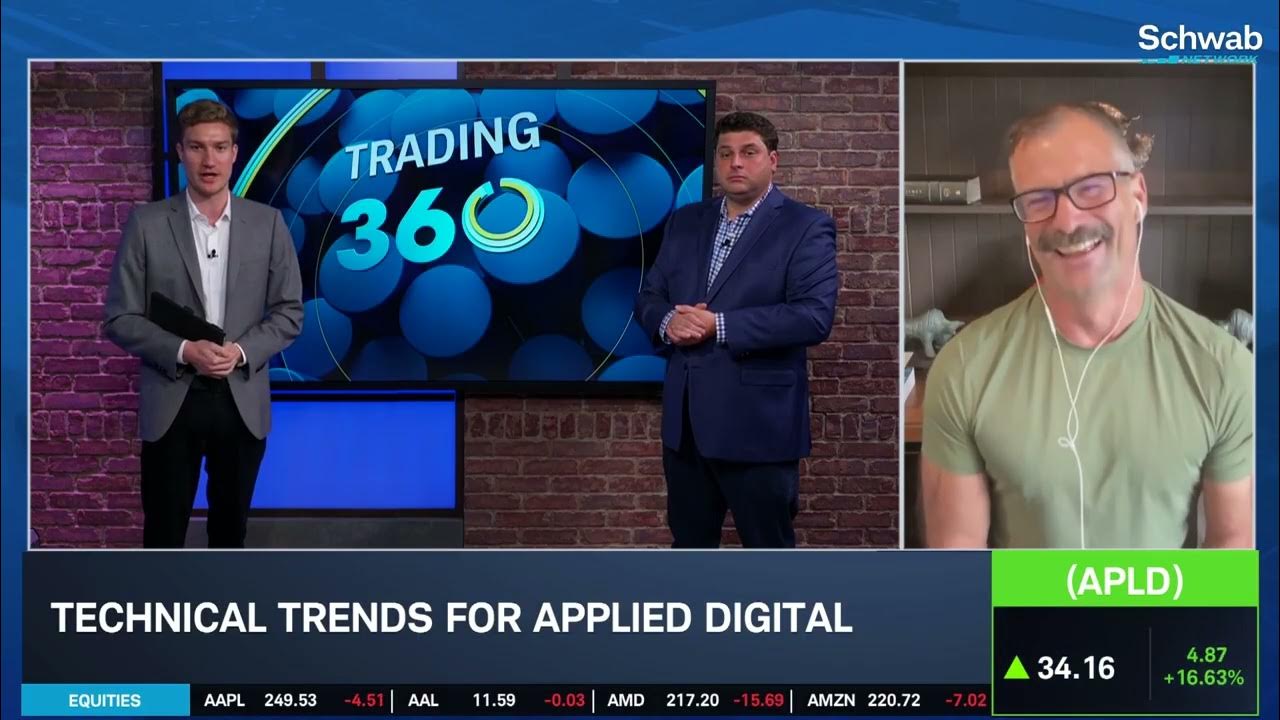
Group 1: Market Overview - The market is experiencing fluctuations, with stocks flipping from green to red as the week closes [1] - Historical patterns indicate that significant pullbacks often present dip-buying opportunities [2][3] - The current market sentiment remains cautious, but there is a belief that these fluctuations can lead to advantageous buying positions [3] Group 2: Stock Analysis - Terrell Wolf (WULF) - Terrell Wolf has shown a strong performance, increasing by 30-40% since the last recommendation [6] - The stock is perceived as part of a larger trend in AI and data centers, which are expected to continue growing despite market volatility [5][6] - Technical analysis indicates a breakout from standard deviation channels, with potential resistance at 14.88 and support near 12.50 [10][12] Group 3: Stock Analysis - Applied Digital (APLD) - Applied Digital focuses on cooling solutions for data centers, which is critical for managing energy and capacity as demand grows [15][17] - The stock has seen significant gains, up nearly 20% recently, reflecting strong market interest [18] - Technical indicators suggest a potential pullback to around 33 or 30, with previous highs near 39.07 being a key level to watch [21][22] Group 4: Stock Analysis - Energy Fuels (UUUU) - Energy Fuels is positioned as a major player in the nuclear energy sector, which is gaining renewed interest as a long-term solution to energy needs [25][26] - The stock has shown resilience, reacting positively to market fluctuations, indicating strong investor confidence [27] - Technical analysis highlights a consistent upward trend, with key levels to monitor around 20 and 22.33 [33][35]


1 Vanguard ETF to Invest In That Can Turn $500 Monthly Into $800,000
Yahoo Finance· 2025-10-10 11:30
Core Insights - The Vanguard Growth ETF (VUG) has demonstrated the ability to transform small monthly investments into significant returns over time, with potential growth to around $800,000 from $500 monthly investments over a couple of decades [2]. Group 1: Investment Strategy - Investing in ETFs like VUG can simplify the investment process, allowing investors to benefit from the performance of multiple companies without extensive research [1]. - VUG provides access to large-cap growth stocks, offering a balance of high growth potential and long-term stability due to the financial strength and competitive advantages of these companies [4]. Group 2: Performance Metrics - Since its inception in January 2004, VUG has averaged around 12% annual returns, indicating strong performance in the large-cap growth stock segment [6]. Group 3: Portfolio Composition - VUG is heavily weighted towards technology companies, with over 61% of the ETF comprised of tech stocks and nine of its top ten holdings being tech firms [5]. - The top holdings of VUG include Nvidia (12.29%), Microsoft (11.49%), and Apple (10.53%), highlighting its tech-centric focus [5][7]. Group 4: Diversification Considerations - Due to its tech-heavy nature, it is advisable for investors to complement VUG with other ETFs to ensure diversification and avoid excessive overlap in holdings, particularly with major tech stocks [8].




AI扩散风险迫在眉睫,谷歌前CEO:防不住的危机来了?
Huan Qiu Wang Zi Xun· 2025-10-10 03:50
来源:环球网 【环球网科技综合报道】10月10日消息,据CNBC报道,谷歌前首席执行官埃里克·施密特日前发出强烈 警示,人工智能(AI)的扩散风险正成为亟待解决的重大问题,同时,在AI泡沫论甚嚣尘上的当下, 他对AI的未来依然充满信心。 施密特指出,人工智能存在严重的扩散风险。这种风险主要体现在技术可能落入不良行为者手中,进而 被重新利用和滥用。他举例称,无论是封闭模型还是开放模型,都存在被黑客攻击、移除防护机制的可 能。在训练过程中,AI可能学到不良行为,甚至学会如何杀人。尽管各大公司都在努力确保模型不会 回答危险问题,但仍有证据表明这些模型可以被逆向工程。 AI系统的脆弱性还体现在易受多种攻击手段的影响,如提示注入和越狱攻击。黑客可以通过隐藏恶意 指令,诱使AI分享私人数据或执行有害命令;也可以操纵AI的回应,使其无视安全规则,生成受限或 危险内容。 面对如此严峻的形势,施密特坦言,目前还没有一个有效的"防扩散机制"来遏制AI的危险。然而,他并 没有因此对AI失去信心。相反,他认为AI技术没有得到应有的关注,甚至被低估了。 在AI领域投资热潮不断、泡沫论频现的背景下,施密特的乐观态度显得尤为突出。他认为, ...
Stocks Likely to Rally Into Year-End, Says Nuveen's Malik
Youtube· 2025-10-09 20:10
POPPI. DANI: IT DOESN'T HAVE SUGAR. LORD KNOWS WHAT ELSE IS IN IT.MATT: EXPECTATIONS, NUVEEN'S SAIRA MALIK SAYS COMPANIES ARE LIKELY TO BEAT E. P. S.IN THE PRESENCE AGGREGATE DRIVEN BY TECH. I THINK WE'RE LOOKING FOR, SAIRA, ABOUT 7%, 8% IN THE THIRD QUARTER. WE'VE HAD DOUBLE-DIGIT EARNINGS GROWTH IN THE PREVIOUS COUPLE OF QUARTERS.DO YOU THINK WE'RE GOING TO GET THAT HIGH. I THINK THAT WE LIKELY WILL END THIS QUARTER WITH BEATING OUR SEASONS AGAIN. WHAT IS INTERESTING IS NORMALLY WHEN YOU GO INTO AN EARNIN ...

How Trump’s $100K H-1B Visa Fee Will Reshape Big Tech
CNBC· 2025-10-09 16:01
H-1B Visa Program Changes & Impact - US President Trump proposed a $100,000 fee on H-1B visas, significantly higher than the current typical fee of a couple thousand dollars, aiming to incentivize the hiring of American workers [1][2] - The H-1B visa program, established by the IMMACT 1990, aims to attract highly skilled talent to the US, with a statutory cap of 65,000 visas annually, plus an additional 20,000 for those with US master's degrees or higher, totaling 85,000 [4][5] - The program grants a three-year visa, renewable once for a total of six years, designed to address labor supply gaps, particularly in the technology sector, requiring beneficiaries to hold at least a bachelor's degree [5][6][7] Beneficiaries & Concerns - India is the largest beneficiary of the H-1B program, followed by China, with Amazon being the top company beneficiary, holding approximately 10,000 visas [7][8] - Concerns exist that the H-1B program may function to bring in cheaper labor, potentially displacing American workers and suppressing wages [10] - The proposed changes, including higher wages for selection in the lottery, could disproportionately affect startups and smaller businesses with limited budgets [3][12] Economic & Strategic Implications - The new policy is expected to decrease demand for H-1B visas, leading companies to seek domestic talent, potentially increasing demand for US workers [14] - Restrictions on H-1B visas may induce multinational companies to offshore more vigorously, potentially benefiting countries like India in the medium term [17] - Stricter US immigration policies could create opportunities for other countries, such as the UK, Europe, and China, to attract global talent, with China already streamlining its visa process [18][19] - The changes are viewed by some as an attack on legal immigration, potentially harming US innovation and fostering innovation in emerging markets [13][20][21]

Dell: Re-Rating In Process, More Upside Likely, Raising My Price Target
Seeking Alpha· 2025-10-09 15:10
The Information Technology sector has been the clear standout area of the S&P 500 since the market bottom six months ago. The Information Technology Select Sector SPDR ETF ( XLK ) is actually the lone outperforming sector fund since April 9. ThrowFreelance Financial Writer | Investments | Markets | Personal Finance | RetirementI create written content used in various formats including articles, blogs, emails, and social media for financial advisors and investment firms in a cost-efficient way. My passion is ...


DGRO: An Ideal Dividend ETF For Steady Retirement Income
Seeking Alpha· 2025-10-09 11:33
Core Insights - Since the end of 2022, the U.S. equity market has been primarily influenced by technology stocks, particularly the "magnificent 7" and companies investing in AI infrastructure [1] Group 1: Market Trends - The dominance of tech stocks in the U.S. equity market has been notable, with a significant focus on AI-related investments [1]
AI isn’t in a bubble—the cash (and the hype) are real, these analysts say
Fortune· 2025-10-09 11:22
Core Viewpoint - The S&P 500 reached a new all-time high, primarily driven by technology stocks, despite warnings from the IMF and the Bank of England regarding a potential AI bubble and stock market correction [1] Group 1: AI Sector Growth - Analysts express skepticism about the sustainability of AI sector growth, suggesting a potential bubble, as indicated by rising gold prices which reflect investor hedging against tech stock declines [2] - Dan Ives from Wedbush predicts a robust earnings season for tech companies, estimating that major firms will spend $3 trillion on AI over the next three years [2] - Major tech companies like Amazon, Alphabet, and Microsoft are experiencing strong AI enterprise demand, with investments expected to exceed $400 billion by 2026, funded by operating cash flows rather than debt [3][4] Group 2: Market Valuation and Economic Impact - Concerns about stock overvaluation are noted, with a significant portion of S&P 500 gains attributed to a few tech companies, creating concentration risk [4] - The forward price-to-earnings ratio of the S&P 500 remains below levels seen during the dotcom era, suggesting that while large-cap stocks are expensive, they are not at extreme valuations [5] - The economic fundamentals of AI are considered more robust than during the dotcom era, with capital expenditures primarily funded by internal cash flows rather than debt [5] - Even if the AI sector experiences a downturn, it is projected to have a limited impact on the U.S. economy, with estimates suggesting a 0.3% point boost to GDP growth from AI capex [6]



2 International ETFs Your Portfolio May Be Missing
The Motley Fool· 2025-10-09 09:00
With the U.S. stock market hovering near all-time highs, investors may want to diversify into markets in other geographies.Whether it's the U.S. government shutdown, the broader market hitting all-time highs, or perhaps too much exuberance around artificial intelligence (AI), there's plenty of reason to question the elevated valuations of U.S. stocks. U.S. markets are the envy of the world, but every asset has an appropriate value, which is why it can be beneficial for investors to broaden their horizons an ...
全球战略报告-为何我们目前尚未处于泡沫之中-Global Strategy Paper_ Why we are not in a bubble... yet
2025-10-09 02:39
Summary of Key Points from the Conference Call Industry Overview - The report discusses the current state of the technology sector, particularly focusing on the implications of artificial intelligence (AI) and the potential for a market bubble [4][5][6]. Core Insights and Arguments 1. **Market Bubble Concerns**: There are concerns that the equity bull market and the rise of leading technology companies may indicate a bubble, driven by exuberance around transformative technologies [4][5]. 2. **Investor Behavior**: Current investor behavior shows similarities to previous bubbles, such as rising absolute valuations and high market concentration, but key differences exist [4][5]. 3. **Fundamental Growth vs. Speculation**: The appreciation in the technology sector is attributed to fundamental growth rather than irrational speculation, with leading companies maintaining strong balance sheets [4][5]. 4. **Valuation Metrics**: While technology sector valuations are becoming stretched, they are not yet at levels consistent with historical bubbles. Current P/E ratios are above previous highs but not excessively so [4][5][27]. 5. **Market Concentration**: The top five US technology companies account for approximately 16% of the global public equity market, raising concerns about market concentration [6][64]. 6. **IPO and M&A Activity**: There is an increase in IPO and M&A activity, with starting day premiums for new issues averaging 30% in the US, the highest since the late 1990s technology bubble [5][6]. 7. **Earnings Growth**: The technology sector has experienced extraordinary earnings growth, which has justified the rise in valuations, contrasting with previous bubbles where speculation drove prices [20][24]. 8. **Capex Spending**: There is a notable increase in capital expenditure (capex) among dominant technology companies, raising concerns about potential over-investment and the sustainability of future returns [86][88]. Additional Important Insights 1. **Historical Context**: The report draws parallels with historical bubbles, noting that many past bubbles were driven by rapid price increases and speculative behavior, which is not fully evident in the current market [10][19]. 2. **Diversification Focus**: Given the high levels of market concentration, the report emphasizes the importance of diversification in investment strategies [4][55]. 3. **Future Risks**: The biggest risk identified is the potential for earnings disappointments, which could lead to a significant market correction, although this is not expected to trigger a broader collapse [54][55]. 4. **Long-Term Market Dynamics**: Historical trends suggest that dominant companies often face challenges from new entrants, indicating that current leaders may not maintain their positions indefinitely [84][82]. This summary encapsulates the key points discussed in the conference call, providing a comprehensive overview of the current state of the technology sector and the potential implications for investors.