Nuclear Energy

Search documents
The U.S. Nuclear Buildout Is Complicated. Analysts Ask if Oklo Can Come to the Rescue.
Barrons· 2025-10-09 16:01
Core Viewpoint - Canaccord Genuity has initiated coverage on the shares of a nuclear start-up, assigning a Buy rating to the stock [1] Company Summary - The nuclear start-up is positioned to capitalize on the growing demand for clean energy solutions [1] - The initiation of coverage indicates a positive outlook from Canaccord Genuity, suggesting potential for growth in the company's stock value [1] Industry Summary - The nuclear energy sector is experiencing renewed interest as countries seek to reduce carbon emissions and transition to sustainable energy sources [1] - The start-up's entry into the market aligns with global trends towards decarbonization and energy innovation [1]


Jim Cramer on Oklo: “Just Stay the Course”
Yahoo Finance· 2025-10-09 14:58
Company Overview - Oklo Inc. (NYSE:OKLO) designs advanced fission power plants aimed at delivering clean and reliable energy at scale [2] - The company also develops nuclear fuel recycling technology that converts waste into usable reactor fuel [2] Investment Sentiment - Jim Cramer highlighted Oklo Inc. as a stock of interest, noting a caller's experience of buying shares at $72, selling half at $140, and contemplating further purchases after a pullback to $110 [1] - Cramer expressed strong confidence in the stock's upward trajectory, advising to maintain the current position without making changes [1] Market Comparison - While Oklo is recognized for its potential, there are opinions suggesting that certain AI stocks may offer greater upside potential and lower downside risk [3]
After AI Hyperscaler Deal, Is Aehr Test Systems Stock on Sale?
MarketBeat· 2025-10-09 14:14
Core Viewpoint - Aehr Test Systems experienced a significant stock drop following its latest earnings report, despite beating revenue and earnings estimates. The lack of guidance for future performance, primarily due to tariff uncertainties, has disappointed investors [2][3]. Financial Performance - Aehr reported fiscal Q1 2026 revenues of $11 million, a 16% decrease from $13.1 million year-over-year, but slightly above Wall Street's estimate of $10.8 million [2]. - The company posted adjusted earnings per share (EPS) of 1 cent, matching analysts' expectations [2]. Guidance and Market Reaction - The absence of guidance for the next quarter or full fiscal year was a key disappointment for the market, attributed to tariff-related uncertainties affecting 63% of revenues from Asian customers [3]. - The U.S. and China have postponed the implementation of significant tariffs until November 10, allowing for negotiations, which adds to the uncertainty [3]. Orders and Backlog - Aehr's hyperscaler orders did not significantly impact its bookings or backlog, which were reported at $11.4 million and $15.5 million, respectively, showing only slight improvements from the previous quarter [4]. - The market expected a more substantial increase in these figures following the announcement of new orders [4]. AI Market Position - The company is still in the early stages of capitalizing on AI growth, with AI sales representing 40% of total sales last year, up from 0% the previous year [5]. - Despite the decline in other markets, Aehr believes its AI opportunity is three to five times larger than its silicon carbide opportunity, indicating potential for long-term growth [5]. Valuation Metrics - Aehr's price-to-sales (P/S) ratio was nearly 17x prior to the earnings release, making it one of the highest among U.S. chip stocks with revenues over $50 million [6]. - Following the earnings report, the P/S ratio dropped to approximately 14x, still considered high compared to many peers [7]. Investment Outlook - Aehr's value proposition remains compelling, focusing on cost savings for customers by testing chips for failures before deployment [7]. - The company is viewed as one to watch closely, with potential for significant growth if it can gain traction in the AI market [7].

Can DOE's Fuel Line Project Accelerate OKLO's Growth Story?
ZACKS· 2025-10-09 14:05
Core Insights - Oklo Inc. has been selected by the U.S. Department of Energy for its Advanced Nuclear Fuel Line Pilot Projects, aimed at enhancing the domestic nuclear supply chain and reducing reliance on imports, which is crucial for national energy security [1][9] - The initiative involves the construction and operation of three advanced fuel-fabrication facilities to support Oklo's Aurora reactors and other next-generation designs, positioning the company at the forefront of U.S. nuclear infrastructure revitalization [2][9] - Oklo's market capitalization has increased significantly, with shares surging over 500% this year, as it merges nuclear technology with AI-driven energy solutions, establishing itself as a key player in the nuclear and AI energy sectors [3][8] Industry Developments - Entergy Corporation is advancing next-generation nuclear technology, having obtained a permit for a new reactor site in Mississippi and exploring partnerships with industrial and tech clients to deploy small modular reactors (SMRs) [4] - Dominion Energy is also progressing with SMR technology, having signed a memorandum of understanding with Amazon to study the installation of SMRs at its North Anna facility in Virginia, addressing the rising electricity demand from AI data centers [5] Valuation and Market Position - Oklo is currently trading at a significant premium in terms of the trailing 12-month price-to-book (P/B) ratio compared to the industry average, carrying a Value Score of F [10] - The stock has a Zacks Rank of 4 (Sell), indicating a cautious outlook from analysts [12]
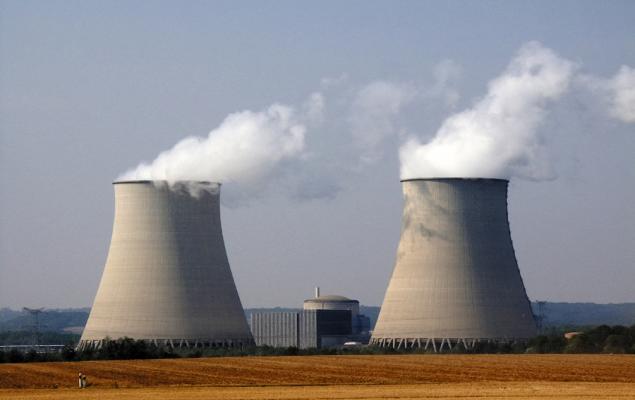
Lightbridge Completes Loading of Capsules Containing Lightbridge Fuel Material Samples into an Experiment Assembly for Irradiation Testing in the Advanced Test Reactor
Globenewswire· 2025-10-09 11:00
Core Insights - Lightbridge Corporation has successfully completed the loading of capsules containing enriched uranium-zirconium alloy fuel material samples into an experiment assembly, which is now ready for irradiation testing at the Advanced Test Reactor (ATR) later this year [1][5]. Group 1: Achievement Highlights - The loading of capsules into the experiment assembly is a significant milestone for Lightbridge Fuel development, bringing the company closer to obtaining critical irradiation testing data necessary for regulatory approval and commercialization [3][5]. - The enriched uranium-zirconium alloy samples were manufactured under stringent quality control and process validation protocols at Idaho National Laboratory (INL) [5]. - The irradiation testing will be conducted in accordance with a Cooperative Research and Development Agreement (CRADA) between Lightbridge and INL [5]. Group 2: Future Plans and Implications - The planned irradiation testing program, along with post-irradiation examination activities, will provide essential performance data to support Lightbridge's regulatory licensing activities and advance its commercialization efforts [5]. - Lightbridge is focused on developing advanced nuclear fuel technology that enhances reactor safety, economics, and proliferation resistance, aiming to deliver clean energy solutions [15][16].


2025年展望:驾驭全球能源格局研究报告
Sou Hu Cai Jing· 2025-10-09 09:08
Core Insights - The report "2025 Outlook: Navigating the Global Energy Landscape" by Nextcontinent analyzes key trends, structural changes, and challenges in the global energy sector as it transitions towards sustainability by 2025 [1] Group 1: Global Energy Demand and Supply - Global energy demand is projected to grow by 2.2% in 2024, with electricity demand increasing by 4.3%, driven by high temperatures, electrification, and digitalization [2][15] - Renewable energy sources are expected to account for 38% of the growth in global energy supply in 2024, with solar PV contributing approximately 480 TWh, doubling every three years since 2016 [2][16][17] - Fossil fuels will still dominate global energy supply, accounting for 65% of electricity generation in 2024, but their growth rate is slowing, with oil's share in total energy demand dropping below 30% for the first time in fifty years [2][16] Group 2: Geopolitical Influences - Geopolitical tensions, particularly in regions like the Middle East and Ukraine, are disrupting fossil fuel supply chains, highlighting the importance of key transit routes [3][43] - The concentration of critical mineral supply chains in China poses new vulnerabilities, with 85-95% of battery components and 80% of solar panels produced there [3][45] - Western nations are responding to these risks by localizing clean energy manufacturing through policies like the U.S. Inflation Reduction Act and the EU's Net Zero Industry Act [3][46] Group 3: Investment Trends - Global energy investment is expected to exceed $3 trillion in 2024, with around $2 trillion directed towards clean energy technologies [3] - Investment in solar energy is projected to surpass $50 billion, while other areas like grid infrastructure and battery storage are also seeing growth [3] - There are significant regional disparities in clean energy investment, with the U.S. reducing its clean energy funding while China and the EU continue to increase their investments [3] Group 4: Technological Innovations - Digitalization and technological advancements are reshaping the energy sector, with AI optimizing energy grid efficiency and predictive maintenance reducing unplanned outages by 35% [4] - The demand for electricity from data centers is surging, consuming between 240-340 TWh in 2022, which is expected to grow rapidly [4] - The energy sector is facing a skills gap, necessitating the development of talent in renewable energy, nuclear energy, and digital grid management [4] Group 5: Regional Insights - In North America, energy demand is declining due to efficiency gains, while renewable energy capacity is expected to triple by 2035 [27][28] - The European Union is rapidly reducing emissions, with a target of sourcing 80% of electricity from renewables by 2030 [29][30] - Asia, particularly China, is the fastest-growing energy market, accounting for over two-thirds of global oil demand growth and leading in renewable energy production [31]

NANO Nuclear (NNE) Snaps 5-Day Jump on $400-Million Share Sale
Yahoo Finance· 2025-10-09 08:57
Core Insights - NANO Nuclear Energy Inc. (NASDAQ:NNE) experienced a significant decline of 16.93% on Wednesday, closing at $47.04 after a five-day rally, primarily due to profit-taking by investors following a $400 million share sale [1][3]. Group 1: Share Issuance and Financial Strategy - NANO Nuclear announced the issuance of 8.49 million common shares priced at $47, expected to close on October 10, subject to closing conditions [2]. - The proceeds from the share sale will be utilized to advance the development, construction, and regulatory licensing of the KRONOS MMR Energy System, along with other micro reactor projects and nuclear energy-related business lines [3]. - Remaining funds will be allocated for potential strategic acquisitions and general corporate purposes [3]. Group 2: Market Position and Index Inclusion - NANO Nuclear was recently added to the S&P Global Broader Market Index (BMI), enhancing its public exposure as funds tracking the index will need to include its stock in their portfolios [4]. - The S&P Global BMI captures the global investable equity universe across 48 developed and emerging market countries, representing over 99% of available market capitalization worldwide [5].

收评:沪指站稳3900点续创10年新高,贵金属、可控核聚变板块掀起涨停潮
Xin Lang Cai Jing· 2025-10-09 07:01
Market Performance - The three major A-share indices collectively rose, with the Shanghai Composite Index increasing by 1.32%, the Shenzhen Component Index by 1.47%, and the ChiNext Index by 0.73%, while the Northbound 50 Index fell by 0.18% [1] - The total trading volume in the Shanghai and Shenzhen markets reached 26,718 billion yuan, an increase of 4,746 billion yuan compared to the previous day [1] - Over 3,100 stocks in the market experienced gains [1] Sector Performance - The sectors with the highest gains included precious metals, controllable nuclear fusion, rare earth permanent magnets, energy metals, wind power equipment, steel, and storage chips [1] - Conversely, the sectors that saw the largest declines were film and television, tourism and hotels, liquor, and duty-free shops [1] Notable Stocks - The surge in international gold prices led to a collective explosion in the non-ferrous and precious metals sectors, with stocks such as Xingye Silver Tin, Yunnan Copper, Shandong Gold, Sichuan Gold, and Zhaojin Gold hitting the daily limit [1] - The controllable nuclear fusion sector also performed strongly, with stocks like Western Superconducting, Guoguang Electric, and Haheng Huaton reaching the daily limit [1] - The rare earth permanent magnet sector saw a rebound in the afternoon, with stocks such as Northern Rare Earth, China Rare Earth, and China Ruilin hitting the daily limit [1] - Other sectors like storage chips, wind power equipment, and steel also showed performance during the trading session [1] Declining Stocks - The film and television sector experienced significant declines, with stocks such as Bona Film, Hengdian Film, and China Film hitting the daily limit down [1] - The tourism and hotel sector also performed poorly, with stocks like Caesar Travel, Tianfu Cultural Tourism, and Xiyu Tourism showing the largest declines [1]
Nano Nuclear Becomes Stock Darling Amid AI Boom
Yahoo Finance· 2025-10-08 19:24
Nano Nuclear Energy has no revenue, no license from the US Nuclear Regulatory Commission and no operating power plant. Yet investors have driven its valuation past $2 billion, a figure that may be built more on optimism than fundamentals. The company is being lifted by Wall Street's latest obsession: the idea that artificial intelligence will require vast new sources of electricity. Jay Yu, founder and executive chairman at Nano Nuclear Energy, speaks with Scarlet Fu on "Bloomberg Markets." ...
Nuclear Energy Stocks on the Rise: Get Exposure in NUKZ
Etftrends· 2025-10-08 19:24
Core Insights - The shift in U.S. policy under the Trump administration has negatively impacted the renewable energy sector, while electricity demand, particularly from AI-driven data centers, has surged, creating a potential opportunity for nuclear energy stocks [1] - The Range Nuclear Renaissance Index ETF (NUKZ) has shown strong performance, returning 76.3% over the past year, outperforming other nuclear energy ETFs [2] Nuclear Energy ETF Overview - NUKZ focuses on a diverse range of nuclear energy stocks, including utilities, advanced reactors, construction & services, and fuel, allowing for exposure to both innovation and stable utility investments [3] - The ETF charges an 85 basis point fee and tracks the Range Nuclear Renaissance Index [2] Key Holdings and Performance - Constellation Energy Corporation (CEG) is the largest holding in NUKZ, contributing significantly to its performance with a year-to-date return of 60.8% and a 23% return on equity [3] - Quanta Services (PWR) also plays a crucial role in the ETF, returning 33% year-to-date and benefiting from infrastructure needs related to AI [4] Investment Considerations - With increasing electricity demand, NUKZ may be a strategic addition to an equities allocation for investors looking to capitalize on the nuclear energy sector [5]